
What are the best practices for maintaining cleanliness post-construction?
The best post-construction cleaning practice is to remove dust, debris, cement residue and construction waste systematically, then inspect surfaces for remaining contamination or damage. Maintain cleanliness through scheduled inspections, prompt spill and dust removal, suitable cleaning methods for each material, safe waste handling and clear site-access controls.
Maintaining cleanliness after construction requires a planned transition from the initial builders’ clean to routine inspections, prompt removal of new contamination and scheduled specialist cleaning. The aim is to prevent construction dust, cement residue, packaging waste, stains and surface damage from becoming established, while keeping the site safe, accessible and presentable for occupants, visitors and contractors.
Complete a documented handover inspection before the building or external areas move into normal use. Inspect floors, walls, façades, cladding, roofs, loading areas, car parks, plant areas and access routes in suitable lighting. Check for fine dust, grout or cement haze, adhesive residue, paint splashes, sealant marks, metal filings, oily deposits and blocked drainage points. Record defects separately from cleaning issues so that construction teams can correct damage or incomplete work rather than allowing it to be treated as routine cleaning.
Where possible, retain photographs and a simple area-by-area checklist. This creates a useful baseline for future inspections and helps identify whether a recurring mark is caused by cleaning, building use, water run-off, plant operation or a defect in the building fabric.
Remove dust before it spreads. Fine construction dust can settle again after an initial clean, particularly when ventilation systems start operating or when people begin using the building. Use suitable vacuum equipment and controlled damp-cleaning methods rather than dry brushing, which can redistribute particles and affect air quality. Pay attention to ledges, service voids, door heads, beams, window frames, cable trays, plant rooms and other areas that are easily missed during a visual clean.
Ventilation and air-handling systems should be managed in line with the building’s commissioning requirements. Filters may need inspection or replacement, and air intakes should be checked for dust contamination. Cleaning teams should not enter or clean plant areas without following the site’s access, isolation and permit procedures.
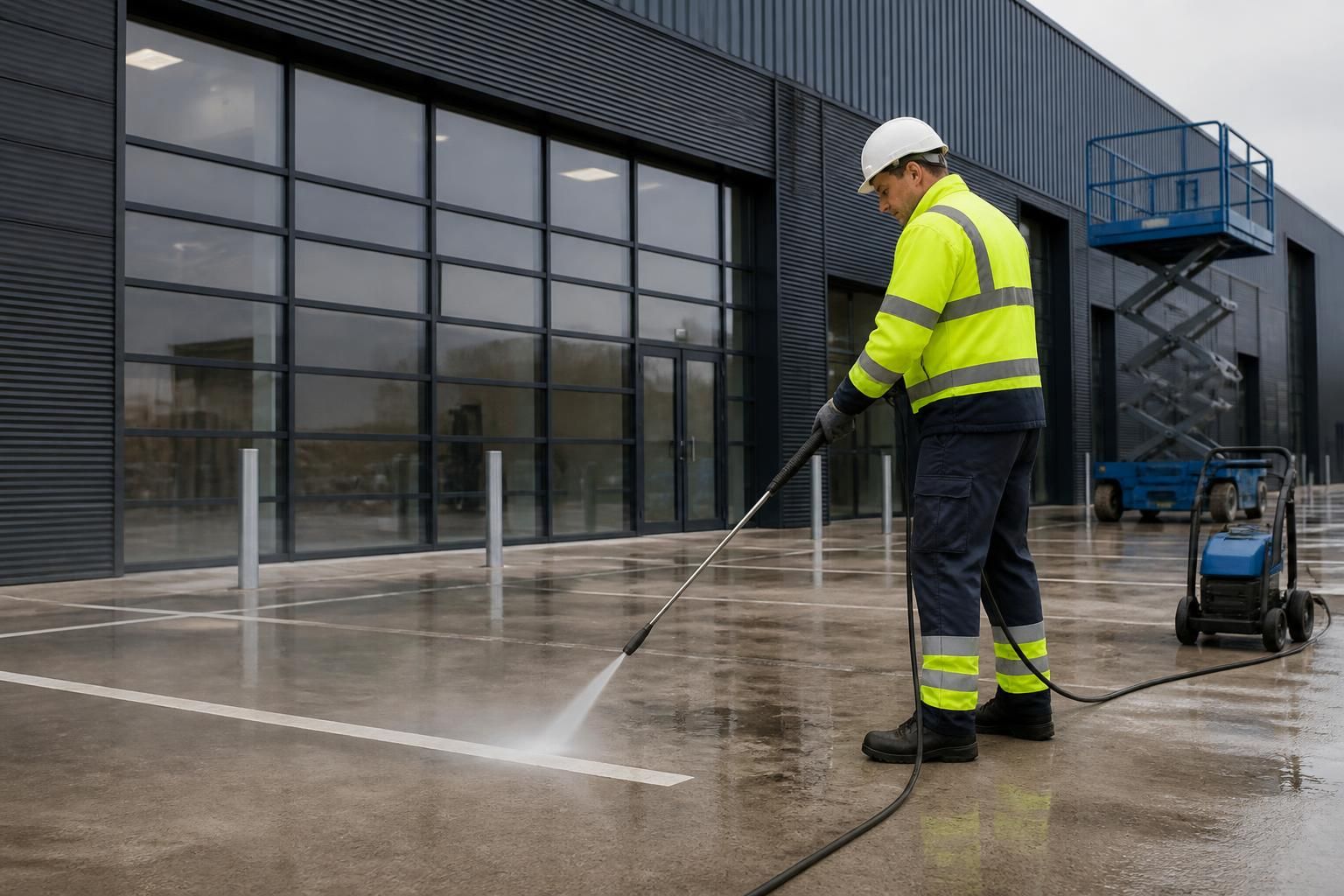
Deal with spills and residues promptly. Cement, grout, plaster, paint, oils and adhesive residues are generally more difficult to remove once they have cured or bonded to a surface. Establish a reporting process so that spills are isolated, identified and treated using a method compatible with the affected material. Do not use aggressive acids, solvents, abrasive pads or high-pressure water simply because a deposit is difficult to remove. An unsuitable method can etch concrete, dull polished finishes, strip coatings, damage sealants or force water into sensitive construction details.
For cement and grout haze, the correct treatment depends on the substrate, the age of the residue and the manufacturer’s instructions. Test any chemical or mechanical process in an inconspicuous area first. Protect nearby metalwork, painted surfaces, joints, drainage systems and vegetation, and collect contaminated wash water rather than allowing it to enter surface-water drains.
Match routine cleaning to the material. A maintenance plan should identify the approved method for each significant surface, including:
- hard floors, resin floors and polished concrete;
- natural stone, ceramic tiles and concrete paving;
- painted walls, powder-coated metal and architectural cladding;
- glass, frames, doors and protective coatings;
- roof coverings, gutters and drainage channels; and
- tarmac, block paving, loading bays and car parks.
For each material, specify the appropriate equipment, pressure, temperature, chemical dilution, dwell time and rinsing method. Some areas may require low-pressure washing or steam cleaning, while others should only receive controlled manual cleaning. Keep product safety data and manufacturer guidance available to cleaning operatives, particularly where detergents, biocides or solvent-based products are used.
Use scheduled inspections rather than waiting for visible deterioration. The inspection frequency should reflect how the site is used, the level of vehicle and pedestrian traffic, exposure to weather, nearby construction activity and the type of contamination present. Review external façades, entrances, service yards and car parks more often where mud, exhaust deposits, algae, litter or oil contamination can affect safety and appearance. Roofs, gutters and drainage points should be checked as part of planned building maintenance, with additional inspections after severe weather or nearby works.
Record findings by location and prioritise issues that create immediate slip, trip, fire, access or environmental risks. A blocked drain, unstable debris, contaminated walkway or oil spill should be addressed before lower-risk cosmetic cleaning. Where access equipment is required, plan the work around pedestrian and vehicle movements and use competent operators.
Keep access and waste controls in place. Construction waste should not be left in service yards, plant areas, fire routes or drainage channels after handover. Separate waste streams where required and use suitable containers for sharp materials, contaminated absorbents, chemical containers and other controlled waste. Maintain clear routes for occupants, emergency services and maintenance contractors, using barriers and warning signs whenever a cleaning operation creates a temporary hazard.
External cleaning can move silt, detergent and contaminated deposits into drainage systems. Use drain covers, containment, wet-vacuum recovery or other appropriate controls where needed. Dispose of collected material through authorised routes and follow the site’s environmental procedures. This is particularly important for industrial premises, vehicle areas and sites near watercourses.
Control dust and contamination during later works. Construction, fit-out, repairs and deliveries may continue after the main cleaning project has finished. Require contractors to protect completed areas, use designated cutting or mixing zones, remove waste promptly and clean their work areas before leaving. Where dusty work is unavoidable, segregate the area, protect adjacent surfaces and arrange a follow-up clean before returning it to normal use.
Maintain a clear responsibility matrix covering the building manager, occupiers, contractors and specialist cleaning providers. It should state who reports contamination, who authorises chemical use or access equipment, who checks completed work and who keeps cleaning and waste records. Clear responsibilities prevent small issues from remaining unresolved until they require more intensive cleaning.
Review the maintenance plan after each inspection or specialist clean. Repeated staining may indicate a leaking vehicle, defective seal, poor drainage, damaged coating or unsuitable cleaning method rather than inadequate routine cleaning. Investigate the source, correct the underlying issue and update the cleaning instructions. This approach protects finishes, reduces avoidable remedial work and helps the site remain safe and professional throughout its operational life.
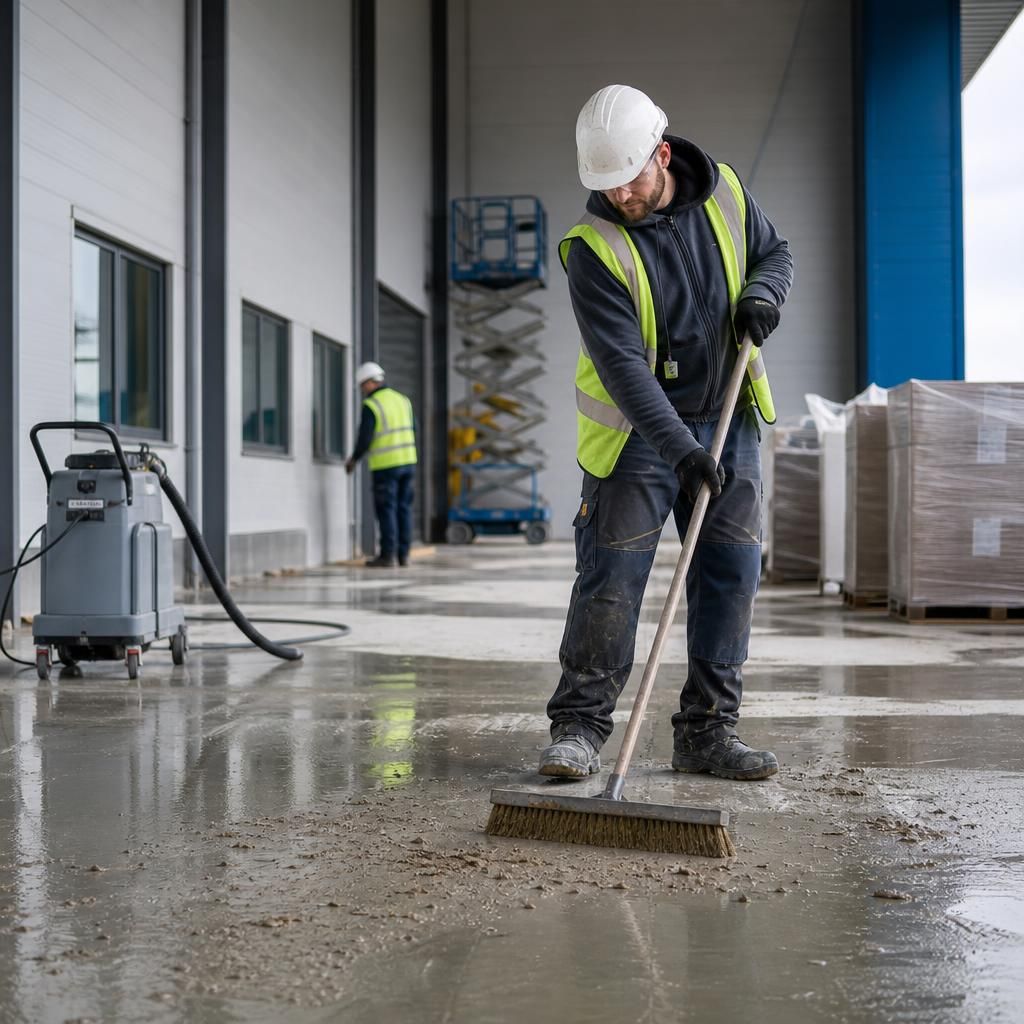
A post-construction cleanliness maintenance plan sets out how dust, residues, waste and new contamination will be identified, removed and prevented after the initial builders’ clean. It should turn the handover inspection into clear, repeatable tasks for the building manager, occupiers, contractors and cleaning team.
The plan should record approved cleaning methods for each surface, inspection points, reporting routes and response priorities. Fine dust, cement haze, paint splashes and adhesive residue need prompt attention because they can become harder to remove or cause permanent damage when they cure. Cleaning operatives should use the least aggressive effective method, testing chemicals, pressure and heat on an inconspicuous area before wider application.
- Inspect entrances, service yards, car parks, drainage points and high-traffic areas at an agreed frequency.
- Remove spills, debris and blocked drainage promptly, giving priority to slip, trip, access and environmental hazards.
- Protect completed areas during continuing fit-out, repairs, deliveries or contractor works.
- Record findings with photographs or an area checklist so recurring contamination can be traced to its source.
- Review the plan when inspections identify leaking vehicles, defective seals, poor drainage or unsuitable cleaning methods.
This approach maintains a safe, professional site while reducing unnecessary abrasion, chemical use and remedial cleaning. It also provides a clear record of what was inspected, which method was used and what further action is required.
Arrange your post-construction cleaning maintenance plan
Arrange your post-construction cleaning maintenance plan with Encanto Exterior Cleaning to keep inspections, approved cleaning methods, waste controls and follow-up work clearly organised. Contact our team to discuss scheduled maintenance for your Birmingham, West Midlands or UK site.