
How does post-construction cleaning ensure compliance with safety and environmental regulations?
Post-construction cleaning supports safety and environmental compliance by removing hazardous dust, debris, chemical residues and construction waste before the site is occupied or handed over. Using controlled methods, appropriate waste handling and documented procedures helps reduce risks to workers, occupants and drainage systems while supporting the project’s regulatory obligations.
Post-construction cleaning helps a project meet safety and environmental obligations by removing hazardous dust, debris, residues and waste before the premises are occupied, handed over or brought into use. A compliant clean combines risk assessment, suitable equipment and chemicals, controlled waste management, protection of drainage systems and clear records. It supports the duties of the principal contractor, site management team and building owner, but does not replace their responsibility to comply with the specific requirements applying to the project.
Safety compliance begins with identifying construction-related hazards. Dust from cement, plaster, brick, concrete and insulation can affect respiratory health and may remain on floors, ledges, plant, ventilation components and external surfaces. Sharp offcuts, fixings, broken materials and packaging can create cut, trip and puncture risks. Wet residues may also make access routes slippery, while cleaning chemicals, sealants, oils and other substances may require control under the Control of Substances Hazardous to Health Regulations (COSHH).
A professional cleaning plan should therefore be based on a site-specific risk assessment and method statement. These documents normally identify:
- the areas and surfaces to be cleaned, including façades, roofs, loading areas, plant rooms, car parks and access routes;
- dust, cement residue, chemical contamination, sharps, unstable materials and other foreseeable hazards;
- the cleaning methods, pressure levels, temperatures and chemicals selected for each surface;
- requirements for work at height, access equipment, exclusion zones and traffic management;
- the personal protective equipment and respiratory protection required;
- how wastewater, sludge, debris and contaminated materials will be contained and removed; and
- the inspection and sign-off process before the area is released for use.
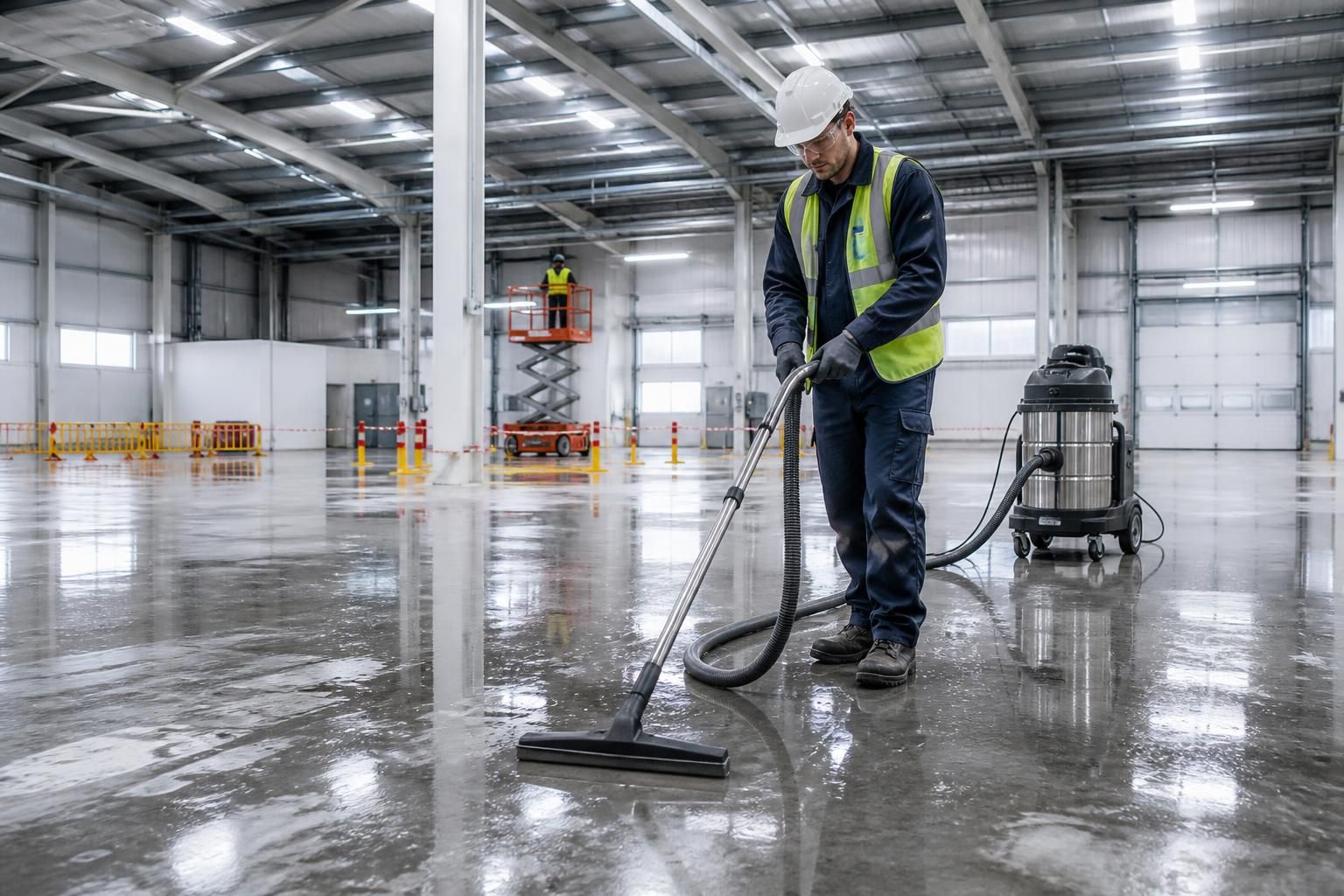
Controlled cleaning reduces exposure and prevents hazards being spread. Dry sweeping can disturb fine dust, so vacuum extraction, damp methods or suitably controlled pressure washing may be more appropriate, depending on the material and the risk assessment. Steam cleaning can remove some residues with limited chemical use, while pressure washing must be controlled to prevent splashback, aerosol formation, damage to surfaces or the movement of contaminants into adjoining areas. Cleaning teams should use suitable extraction, containment and ventilation where dust, vapour or wastewater could affect workers or other contractors.
Work at height requires particular attention on construction sites. Roofs, canopies, cladding and upper façades may be accessed using mobile elevating work platforms, towers, scaffolding or other equipment. The chosen system should reflect the height, surface condition, ground stability, weather, proximity to edges and presence of overhead services. Equipment must be suitable, inspected and operated by competent personnel. Ground-level exclusion zones and clear communication help protect other workers, visitors and members of the public from falling objects, spray and moving plant.
Environmental compliance depends on preventing pollution at the point of cleaning. Wash water from cement, grout, render, paint, oils and other construction residues should not be allowed to enter surface-water drains, watercourses or unprotected ground. Construction sites may have separate foul and surface-water drainage, and a surface-water drain will not normally provide treatment for contaminated water. Before cleaning starts, drain locations should be identified and protected, with bunding, drain covers, silt socks, wet vacuums, interceptor systems or other appropriate containment used where necessary.
Wastewater should be collected, filtered, settled, treated or removed according to its composition and the site arrangements. The correct approach depends on the contaminants, the drainage network and any permission required from the relevant water or sewerage authority. Discharging water without checking the receiving system can create pollution and may breach site rules or environmental requirements. Where there is uncertainty, the cleaning contractor and site management team should agree the disposal route before work begins.
Solid waste must also be segregated and managed responsibly. Packaging, rubble, timber, metals, plasterboard, contaminated absorbents and chemical containers may require different handling. The duty of care under UK waste legislation requires waste to be stored securely, described accurately, transferred to an authorised carrier and taken to an appropriately authorised facility. Hazardous waste must be identified and handled through the relevant controls rather than mixed with general construction waste. Waste transfer documentation and consignment records should be retained where applicable.
The cleaning method must protect the building as well as the environment. Excessive pressure, aggressive abrasives, unsuitable acids or prolonged chemical contact can damage coatings, mortar joints, stone, concrete, metals, glazing, sealants and drainage components. Before broad application, the team should check manufacturer information, review the surface condition and carry out a controlled test area where appropriate. Water ingress risks should be considered around joints, vents, electrical installations, doors, windows and incomplete building fabric. Protecting vulnerable materials prevents avoidable repairs and reduces the environmental impact associated with replacing damaged components.
Product selection is part of compliance. Safety data sheets and manufacturer instructions should be reviewed for dilution, storage, incompatible substances, required PPE, first-aid measures and disposal requirements. Chemicals should be labelled and secured, and they should never be mixed unless the manufacturer specifically permits it. Using the least hazardous effective product, limiting quantities and applying it accurately can reduce risks to workers, surfaces and drainage systems. Chemical containers, residues and absorbent materials should be dealt with through the agreed waste procedure.
Good records provide evidence that controls were applied. Depending on the project, useful records can include the risk assessment and method statement, COSHH assessments, equipment inspection records, training or competency details, product information, test-panel approvals, waste transfer notes, wastewater disposal documentation, incident reports and completion checklists. Photographs may help demonstrate the condition before and after cleaning, particularly where residues, staining or waste have been removed from concealed or difficult-to-access areas.
Final inspection should confirm more than visual appearance. The site team should check that access routes are free from trip hazards, dust and residue have been removed from relevant surfaces, drains and service points remain clear, wastewater has not escaped containment, waste has been removed, temporary protections have been taken down safely and cleaned areas are suitable for the next stage of work or occupation. Any defects, inaccessible areas or outstanding construction activity should be recorded rather than assumed to be complete.
For projects operating under the Construction (Design and Management) Regulations, cleaning activities should be coordinated with the wider construction plan. This includes managing interfaces with other trades, maintaining safe access, controlling simultaneous operations and communicating restrictions to the site team. The clean may also support the information needed for handover and the health and safety file, although the project’s appointed duty holders determine what information must be included.
Requirements can vary between a live construction site, a newly completed industrial facility, a public building and an occupied commercial premises. Local site rules, planning conditions, building requirements, environmental permits, drainage arrangements and client specifications may all affect the method. Encanto Exterior Cleaning can work from the project’s existing documentation and coordinate the cleaning sequence with the responsible site contacts, ensuring that safety controls, environmental safeguards and completion records are agreed before work starts.
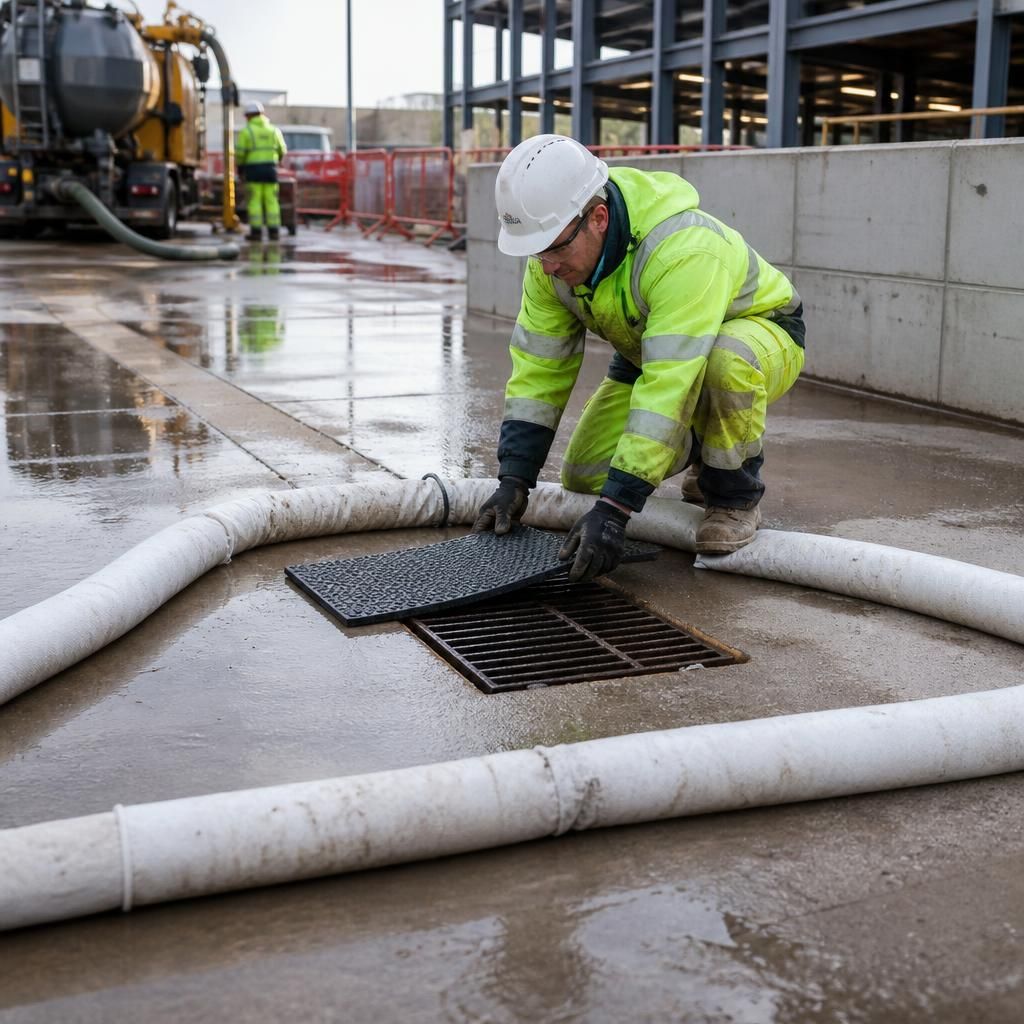
Controlling wastewater is a central part of compliant post-construction cleaning because cement, grout, paint, oils and other residues can pollute surface-water drains, watercourses or unprotected ground. Before work starts, the cleaning team should identify the drainage layout and agree how wash water will be contained, collected and disposed of.
Depending on the contamination and site arrangements, suitable controls may include drain covers, bunding, silt socks, wet vacuums, settlement or filtration equipment. Wastewater should not be discharged until the receiving system and any required permission have been confirmed. Keeping disposal records, alongside photographs and completion checks, provides a clear audit trail that environmental controls were applied and helps the site team demonstrate responsible handover.