
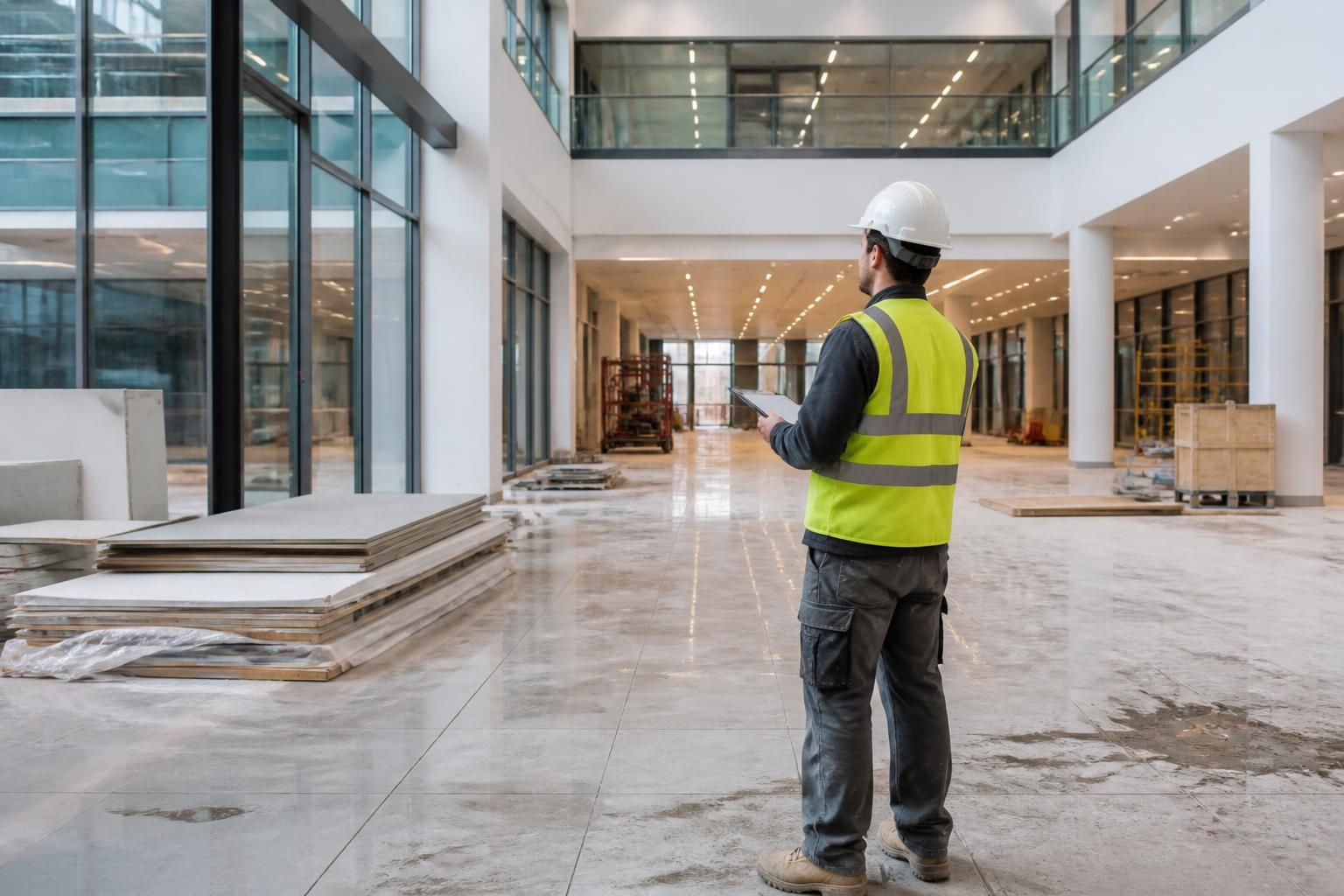
How do I prepare my site for post-construction cleaning?
Prepare your site for post-construction cleaning by removing loose debris, securing unfinished work, identifying sensitive surfaces and providing clear, safe access to all areas requiring cleaning. Share site plans, hazards, access restrictions and the required completion standard with the cleaning team before work begins so the correct equipment and methods can be planned.
Prepare your site for post-construction cleaning by completing unfinished works where possible, removing loose construction debris, protecting vulnerable surfaces, confirming safe access and sharing site information with the cleaning team. Good preparation allows the cleaning method, equipment and access arrangements to be selected accurately while reducing the risk of damage, delays, contamination or re-cleaning.
Complete and isolate construction activities
Coordinate the cleaning programme with the principal contractor and other trades. Dust-producing work, cutting, drilling, plastering, painting and installation should be complete in the areas scheduled for cleaning. If some works must continue, identify the zones clearly and agree how they will be separated from the cleaning operation.
- Secure or remove tools, materials, fixings and temporary equipment that could obstruct the work.
- Make sure unfinished electrical, plumbing and mechanical installations are isolated, capped or protected.
- Prevent other contractors from entering freshly cleaned areas until surfaces are dry and the agreed handover inspection is complete.
- Identify any areas where access is still restricted because of curing concrete, incomplete flooring, temporary structures or outstanding inspections.
Cleaning should not begin on surfaces that are still curing or drying unless the relevant manufacturer or construction guidance confirms that the proposed method is suitable. Water, steam and pressure can affect uncured concrete, coatings, sealants, adhesives and other recently installed materials.
Remove loose debris without spreading contamination
Clear larger items of waste, packaging, timber, metal offcuts and surplus materials before the cleaning team arrives. This does not mean attempting to remove bonded cement, grout haze, paint or other construction residues yourself. Those deposits may require controlled chemical treatment, agitation, pressure washing, steam cleaning or specialist tools.
Separate waste streams where required and keep hazardous or contaminated materials under the control of the responsible contractor. Loose dust should not be blown across the site with compressed air, as this can spread fine particles into finished areas, ventilation systems and occupied premises.
Provide clear access and working space
Access arrangements should be agreed before mobilisation. The team may need room for pressure-w washing equipment, steam-cleaning machinery, hoses, water supply, recovery equipment, access platforms or other equipment appropriate to the building and surface. Confirm the following in advance:
- The site entrance, delivery route and vehicle parking or unloading point.
- Internal routes through doors, corridors, stairways, loading bays and service areas.
- Any height, width, weight or ground-bearing restrictions affecting access equipment.
- Permission to use lifts, loading areas, water points, drainage points and electrical supplies.
- Areas where hoses, cables or equipment could create trip hazards or obstruct fire routes.
- Requirements for permits, inductions, escorts, security passes or out-of-hours access.
Keep access routes free from stored materials and mark fragile floors, voids, temporary covers and uneven surfaces. If a platform, scaffold, cherry picker or other access system is already installed, confirm that it is suitable, inspected and available for the planned cleaning activities. The cleaning contractor should assess whether additional access equipment is needed rather than relying on unverified temporary arrangements.
Identify surfaces and items requiring protection
Provide a site plan or marked-up drawings showing the areas to be cleaned and any materials that must not be treated. This is particularly important where a project contains a mixture of concrete, brick, stone, metal cladding, glass, painted surfaces, render, timber, resin flooring, membranes or specialist coatings.
Before work starts, point out vulnerable items such as:
- Newly painted or powder-coated surfaces.
- Unsealed stone, brickwork or concrete.
- Timber, decorative finishes and sensitive flooring.
- Windows, seals, gaskets, vents and louvres.
- Electrical equipment, sensors, alarms, control panels and communications equipment.
- Fire protection systems, insulation, signage and safety-critical markings.
- Landscaping, planted areas and drainage features.
Protect items that cannot be removed using suitable sheeting, masking or physical barriers. Protection must be secure and compatible with the surface; poorly applied coverings can trap moisture, transfer adhesive or cause abrasion. Windows and ventilation openings may need particular attention where water, cleaning solution or fine residue could enter the building.
Confirm water, drainage and waste arrangements
Discuss the source and availability of water, the permitted discharge points and the method for collecting or containing wastewater. Construction residues such as cement, grout, paint and fine dust must not be allowed to enter surface-water drains or escape into neighbouring areas. Where runoff could be contaminated, use suitable recovery, filtration or containment arrangements and follow the site’s environmental controls.
Check that drains are identifiable and accessible, but do not assume that every drain is suitable for cleaning discharge. Confirm who is responsible for authorising discharge and disposing of collected waste. If the site has sensitive areas, water restrictions or no-discharge requirements, tell the cleaning team before the quotation or method statement is finalised.
Share site information and known hazards
Give the cleaning team the information needed for a suitable risk assessment and method statement. This should include the site layout, construction materials, previous treatments, access restrictions and the required completion standard. Also disclose hazards such as asbestos or suspected asbestos-containing materials, lead-based coatings, chemical residues, contaminated ground, fragile roofs, confined spaces, work at height, live services and areas with poor ventilation.
Provide relevant COSHH information and manufacturers’ care instructions for newly installed products where available. Product data can determine whether a surface may be pressure washed, treated with an acidic or alkaline cleaner, exposed to steam or cleaned with mechanical abrasion. If the composition or condition of a residue is uncertain, it should be assessed before full-scale cleaning rather than treated speculatively.
Agree the cleaning scope and finish standard
Define precisely which surfaces are included, which deposits are to be removed and what constitutes an acceptable finish. Construction cleaning may involve several stages, including initial debris removal, residue treatment, rinsing or recovery, detailed cleaning and a final inspection. Agree whether the scope includes façades, cladding, roofs, floors, loading areas, plant spaces, windows, access routes or external hardstanding.
Some marks may be permanent staining, etching, substrate damage or colour variation rather than removable construction residue. A realistic completion standard should distinguish between removable deposits and defects that require repair, replacement or approval from the principal contractor. Where the surface or residue is unfamiliar, a small test area can confirm the proposed method and expected result before the wider clean proceeds.
Plan safety controls and site coordination
Arrange the site induction, welfare facilities, emergency procedures and contact details for the responsible person. Establish how the cleaning team will communicate with site management and how work will be stopped if conditions become unsafe. Exclusion zones may be required around work at height, pressure washing, wet floors, access equipment and areas where falling debris or overspray is possible.
Keep workers and occupants away from active cleaning areas, particularly where chemicals, steam, high-pressure water or contaminated residues are involved. Plan cleaning around deliveries, traffic movements, fire access, security arrangements and the presence of other trades. If the premises are partly occupied, agree how noise, water, odour, ventilation and temporary loss of access will be managed.
Complete a pre-start inspection
Before cleaning begins, walk the site with the contractor or nominated site representative. Record the condition of significant surfaces, existing stains, damage, cracks, failed coatings and items that are excluded from the scope. Confirm that access is available, protection is in place, utilities and drainage arrangements are understood, and the agreed test areas have been accepted.
Photographs and a short written record can help prevent disputes about pre-existing damage and provide a clear reference for the final inspection. Once these checks are complete, the cleaning team can work to an agreed method statement with fewer interruptions and a more consistent result.
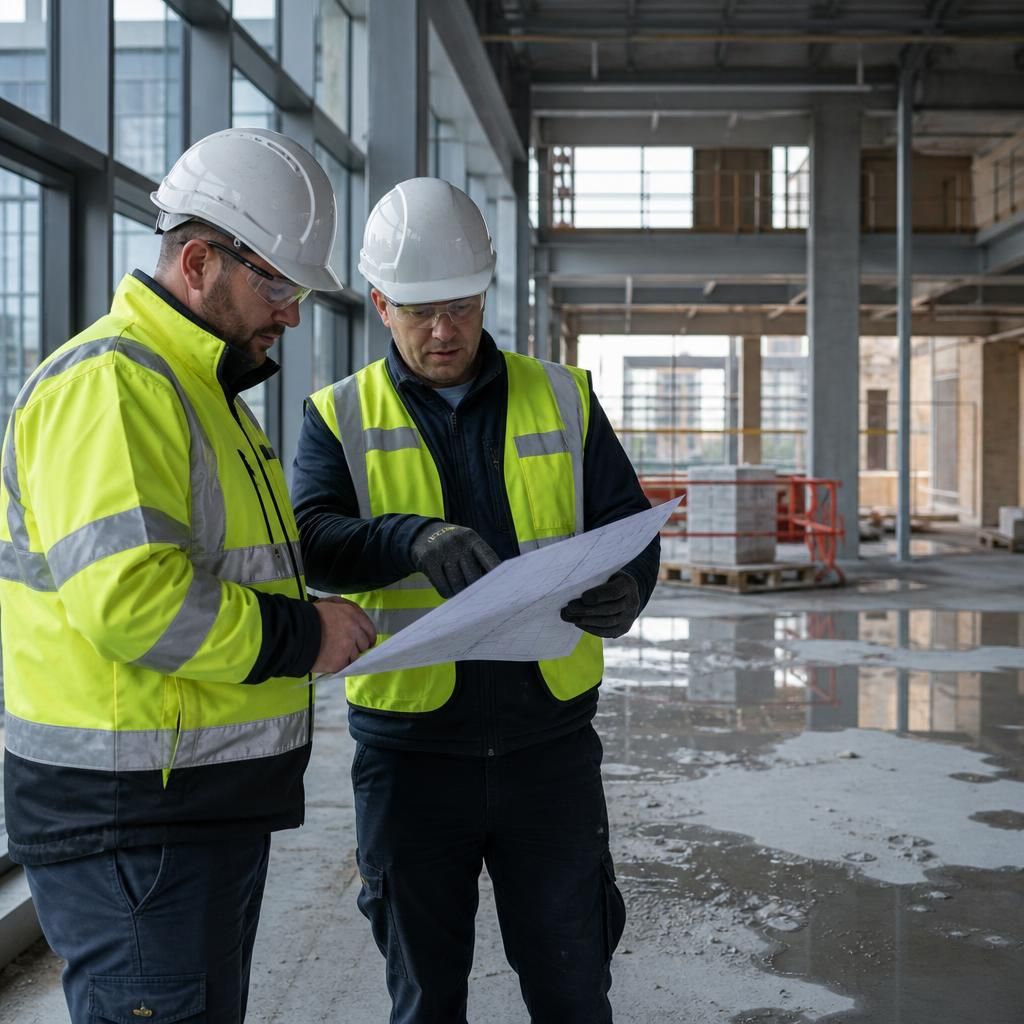
A pre-start site inspection confirms that the areas to be cleaned are accessible, safe and ready for the agreed method. Walk through the site with the cleaning team or nominated site representative to identify existing damage, fragile materials, unfinished work, restricted routes and items requiring protection.
Use marked-up plans or photographs to record exclusions and pre-existing defects. Confirm that water, drainage, power, access equipment and waste arrangements are available before work begins. This allows the method statement to reflect the actual site conditions and helps prevent delays, accidental damage and disputes during the final handover.