
What types of surfaces benefit most from industrial high-pressure cleaning?
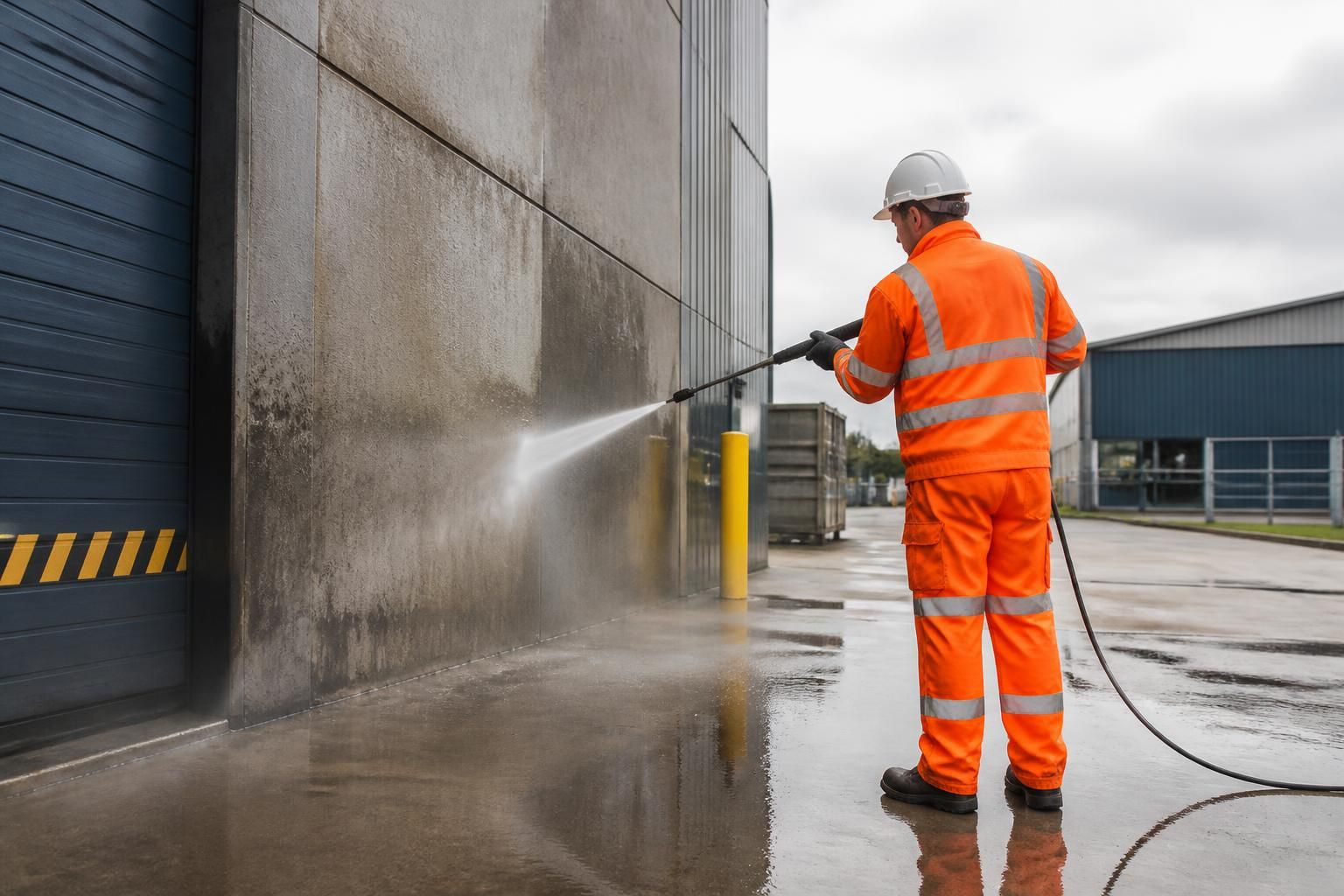
Industrial high-pressure cleaning is particularly effective on durable, hard surfaces such as concrete, paving, brickwork, cladding, roofs, loading areas and car parks. It removes ingrained dirt, oil, algae, moss, traffic film, construction residue and graffiti more efficiently than routine cleaning, provided the pressure and method are matched to the surface.
The surfaces that benefit most from industrial high-pressure cleaning are durable, non-porous or moderately porous areas that collect heavy soiling, traffic film, oil, algae, moss, cement residue and graffiti. Concrete, block paving, brickwork, industrial cladding, roofs, loading areas, service yards and car parks are particularly suitable, provided the water pressure, temperature, nozzle, detergent and cleaning technique are matched to the material.
Industrial cleaning is most effective where routine methods cannot remove deeply embedded contamination or where the area is too large for manual cleaning to be practical. The process can restore the appearance of hard surfaces, improve slip resistance by removing biological growth and prepare substrates for repair, repainting or other maintenance work. A site assessment remains important because excessive pressure can mark, erode or force water into vulnerable materials.
Concrete and reinforced concrete
Concrete paving, walls, ramps, plant areas and external structures commonly accumulate dirt, tyre marks, oil, algae, moss and construction debris. High-pressure water can remove surface contamination from the textured profile of concrete more effectively than brushing alone. It is also useful for cleaning concrete before repairs, coatings or line marking.
Oil and chemical staining may require a suitable cleaning agent, controlled dwell time and recovery of contaminated wash water rather than pressure alone. Care is needed around cracked or deteriorated concrete, exposed aggregate and joints, where aggressive cleaning may loosen material or worsen existing damage.
Block paving and other hard landscaping
Block paving, concrete slabs, stone paving and kerbs benefit from the removal of moss, algae, weeds, soil and general weathering. Cleaning can improve the definition of the paving and reduce slippery organic growth around entrances, walkways, courtyards and service areas.
Operators must control the spray around joints and bedding materials. Excessive pressure can remove jointing sand, dislodge blocks or spread contamination across adjacent areas. Where appropriate, joints can be re-sanded after cleaning, but this should be considered as a separate maintenance requirement rather than assumed to be part of every wash.
Brickwork, masonry and façades
External brickwork, concrete block, engineering brick and some stone façades can be cleaned of atmospheric dirt, algae, bird fouling, mortar splashes and other deposits. This is particularly useful on industrial buildings, commercial premises, boundary walls and structures affected by construction work.
Masonry is not automatically suitable for high pressure. Older brick, soft brick, friable mortar, painted surfaces and weathered stone may be damaged by an unsuitable nozzle or excessive water force. Cleaning should begin with the least aggressive effective method, using test areas to confirm that the face of the material, mortar joints and coatings remain intact.
Metal cladding and industrial façades
Profiled metal cladding, composite panels and coated façades often collect dust, traffic film, algae and run-off staining. Controlled pressure washing can clean large elevations efficiently, including warehouses, distribution facilities, retail units and production buildings. It is also useful around doors, loading points and areas exposed to vehicle exhaust.
The condition of the coating, seals, fixings and joints should be checked first. Water should not be directed unnecessarily into vents, electrical equipment, openings or damaged seals. Soft washing, steam cleaning or a lower-pressure approach may be more appropriate where the coating is aged or the panels are lightweight.
Roofs and rooftop structures
Selected roof surfaces, including robust metal roofing, concrete tiles and some industrial roof systems, can benefit from the removal of moss, algae, lichen, bird fouling and accumulated dirt. Keeping roof coverings and associated access routes clear can support planned maintenance and help identify defects that are hidden by organic growth.
Roof cleaning requires particular caution. The method must account for the roof covering, age, pitch, drainage, fragile areas, roof lights and waterproofing details. High pressure is not suitable for every roof and can lift tiles, damage protective coatings or drive water beneath laps and flashings. In many cases, low-pressure cleaning or steam is safer than a powerful water jet.
Car parks, service yards and loading areas
Car parks, loading bays, delivery aprons, ramps and service yards are among the most frequent applications for industrial high-pressure cleaning. These surfaces are exposed to tyre marks, diesel and oil drips, mud, litter residue, algae and heavy foot or vehicle traffic. Cleaning can improve the presentation of the site and help reduce contamination on pedestrian routes.
Drainage and water management must be planned before work begins. Oils, silt and detergents should not be allowed to enter surface-water drains without suitable controls. Degreasing, vacuum recovery, drain protection and collection of wastewater may be required, particularly at industrial premises or sites near watercourses.
Graffiti-affected surfaces
Brick, concrete, masonry, cladding and some coated surfaces can be treated for graffiti using pressure washing, steam, specialist cleaning products or a combination of methods. The correct approach depends on the paint type, substrate and age of the marking. A controlled treatment helps remove the graffiti without creating a visible patch or stripping the underlying finish.
Surfaces requiring a more cautious approach
High pressure is not automatically the best option for glass, timber, painted finishes, delicate render, aged masonry, asphalt, insulation panels or surfaces with failed joints and coatings. These materials may need soft washing, steam cleaning, hand cleaning or a specialist restoration method. Electrical installations, ventilation equipment, seals and vulnerable landscaping also require protection during the work.
For every surface, the best result comes from assessing the material and contamination first, testing the proposed method, protecting nearby assets and managing wastewater correctly. Industrial high-pressure cleaning is therefore most beneficial on robust external surfaces with heavy or ingrained soiling, but professional surface selection is essential to achieve thorough cleaning without avoidable damage.
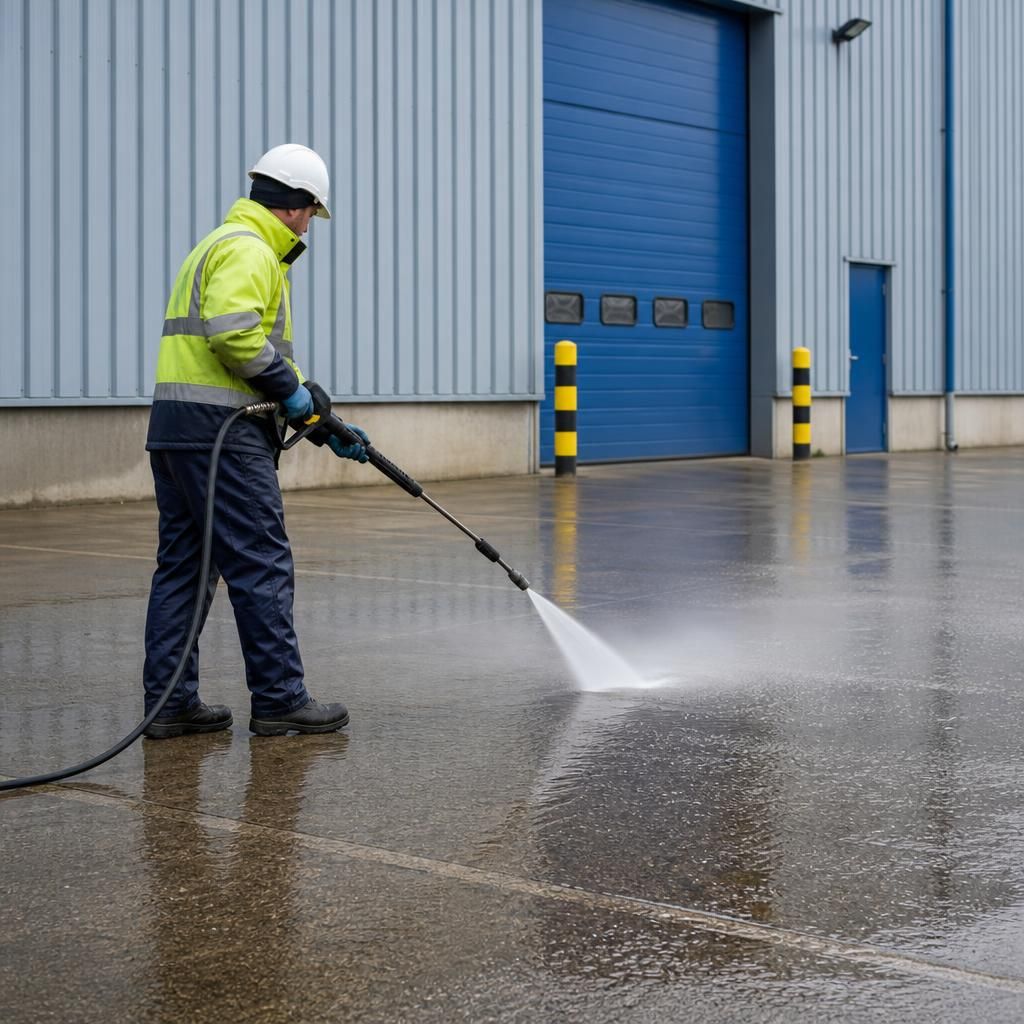
Industrial high-pressure cleaning benefits robust external surfaces that have heavy or ingrained contamination, including concrete, block paving, brickwork, cladding, loading areas and car parks. The water jet can remove traffic film, oil residue, algae, moss, soil and construction debris more effectively than routine brushing, helping restore appearance and improve the condition of frequently used areas.
The cleaning method must still be matched to the surface. Pressure, temperature, nozzle type and detergents should be selected after checking the material, joints, coatings and drainage. For example, aged masonry, fragile roof coverings and coated panels may require lower-pressure washing, steam cleaning or soft washing to remove contamination without causing surface damage.