
What surfaces can be cleaned using industrial high-pressure cleaning?
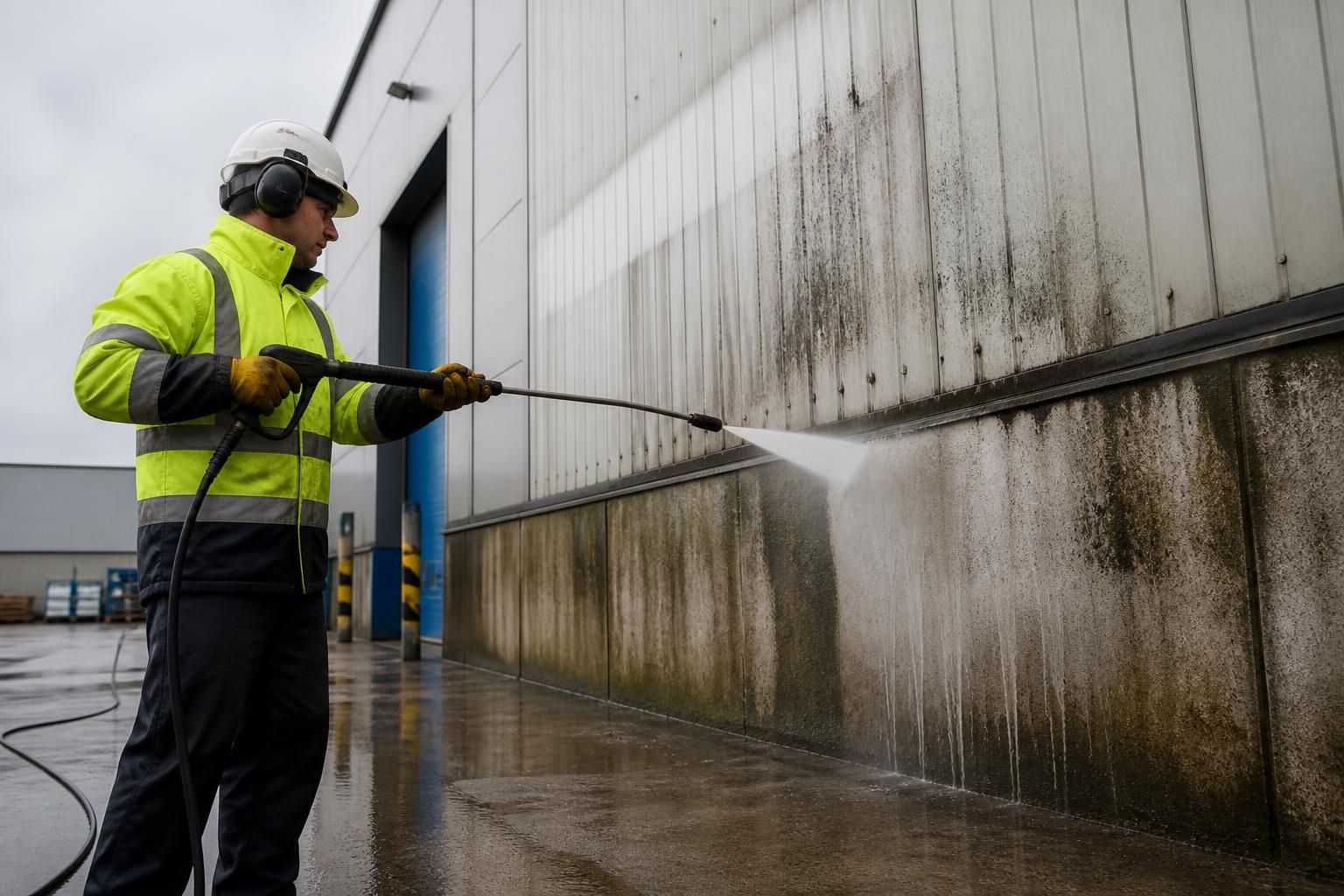
Industrial high-pressure cleaning can be used on durable surfaces including building façades, brickwork, concrete, paving, roofs, cladding, loading areas and car parks. The pressure, water temperature and cleaning method are adjusted to suit each material, helping remove dirt, oil, algae, moss, coatings and graffiti without unnecessary surface damage.
Industrial high-pressure cleaning is suitable for many hard, durable external surfaces, including building façades, brickwork, concrete, paving, roofs, cladding, loading areas and car parks. The cleaning method is selected for the material and the type of contamination, with pressure, water temperature, nozzle choice, distance and detergent use adjusted to remove soiling without unnecessarily damaging the surface.
Commonly cleaned surfaces include:
- Brickwork and masonry: Brick façades, boundary walls and other masonry can be cleaned to remove general dirt, atmospheric deposits, algae, moss, lichen and some staining. Older, weathered or previously damaged brickwork may require lower pressure, steam cleaning or a controlled soft-washing approach to avoid eroding the face of the brick or loosening mortar.
- Concrete: Concrete façades, floors, steps, retaining walls, service yards and external structures respond well to high-pressure cleaning. It can remove ingrained dirt, algae, tyre marks, mud and some oil-related contamination. Cracked, spalled or weak concrete must be assessed first, as water pressure can worsen existing defects.
- Paving and block paving: Concrete paving, paving slabs and block-paved areas can be cleaned to remove moss, weeds, soil, algae and general traffic grime. Jointing material may be displaced during cleaning, so the surface may need re-sanding or another suitable joint treatment after it has dried.
- Car parks and access roads: Concrete, tarmac and other hard-surfaced traffic areas can be treated for dirt, mud, algae, tyre marks, chewing gum and some oil staining. Degreasers, hot water and recovery equipment may be used where appropriate. Oil and chemical contamination should be managed carefully so that polluted wash water does not enter surface-water drainage systems.
- Industrial yards and loading areas: Loading bays, warehouse yards, ramps and hard-standing areas often accumulate hydraulic fluid, grease, rubber deposits, dust and delivery traffic grime. The cleaning specification should account for drainage, vehicle movements, working-time restrictions and the need to collect or contain wastewater.
- Metal cladding and architectural metalwork: Steel, aluminium and coated metal panels can generally be cleaned using controlled pressure and suitable detergents. The operator must consider the coating, joints, fixings, sealants and any areas of corrosion. Excessive pressure or unsuitable chemicals can damage finishes and force water behind panels or into vulnerable details.
- Roofing materials: Certain tiled, profiled and flat roof surfaces can be cleaned of moss, algae, bird fouling and atmospheric dirt. Roof cleaning requires particular care because tiles, membranes, coatings, flashings and seals can be damaged by aggressive pressure. In many cases, low-pressure cleaning, steam or a treatment applied at controlled flow is more appropriate than maximum-pressure washing.
- Façades and external walls: Rendered, stone, concrete, brick and composite façades may be cleaned as part of planned building maintenance. The method depends on the façade system, age, condition, previous repairs and the type of deposit. Test cleaning is useful for confirming that the selected process gives the required result without altering colour, texture or surface profile.
- Graffiti-marked surfaces: Concrete, brick, stone, render, metal and other robust substrates can often be treated for graffiti. Removal may combine hot water, steam, pressure and a substrate-compatible graffiti remover. A protective coating can sometimes make future removal easier, but it must be compatible with the surface and the building’s appearance requirements.
- Stone and natural paving: Granite, some sandstone, limestone and other natural stones can benefit from professional cleaning, although their porosity, hardness and condition vary considerably. Softer or friable stone may be etched, discoloured or stripped by excessive pressure or inappropriate chemicals, so a small test area and a carefully controlled method are important.
Surfaces that need additional care include painted finishes, timber, rendered systems, delicate stone, resin-bound paving, waterproof membranes, ageing roofs and surfaces with open joints or failing coatings. These materials may still be cleanable, but high pressure is not automatically the correct technique. Soft washing, steam cleaning, low-pressure rinsing or a specialist chemical treatment may provide a safer result.
Glass can be rinsed as part of an exterior cleaning programme, but high-pressure washing is not normally used directly against windows or sealed units at close range. Pressure can damage seals, force water into frames and affect adjacent finishes. Window cleaning equipment and a suitable low-pressure method are usually more appropriate.
The visible surface is not the only consideration. The cleaning assessment should also cover joints, sealants, drainage channels, electrical fittings, vents, doors, windows, expansion joints and areas where water could penetrate. Loose coatings, hidden defects and previous repairs can react differently from the surrounding material.
Contamination also influences the process. Loose dust and soil may need a lower-pressure rinse, while oil, grease and chewing gum may require hot water or a compatible detergent. Moss and algae may be removed mechanically and followed by a treatment to slow regrowth. Efflorescence, rust, paint and deeply embedded staining may require a separate specialist process rather than repeated high-pressure washing.
Before work starts, a competent contractor should inspect the substrate, identify the deposits, confirm the required finish and carry out a discreet test clean where there is any uncertainty. This allows the pressure, flow, temperature, nozzle and cleaning agent to be set for the actual surface rather than relying on a standard setting. It also helps identify areas that need repair before cleaning.
Industrial high-pressure cleaning is therefore best understood as a controlled method for cleaning suitable external surfaces, not as an instruction to use the highest available pressure. Correct surface identification, appropriate equipment, safe access, protection of nearby assets and responsible wastewater management are what determine whether the process is effective and preserves the condition of the site.
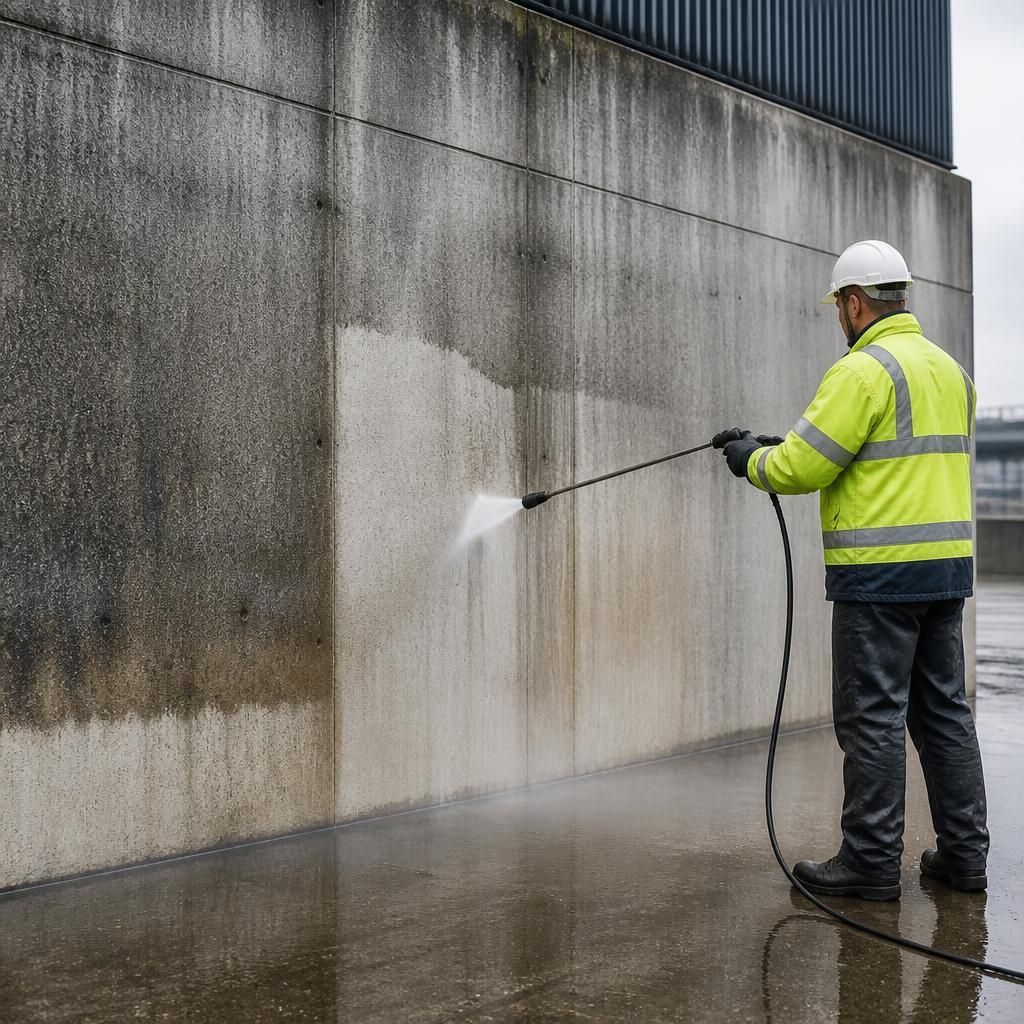
Industrial high-pressure cleaning is suitable for many robust external surfaces, but the equipment settings must be matched to the material and contamination. Brickwork, concrete, paving, cladding and hard-surfaced yards can often be cleaned effectively, while delicate stone, ageing roofs, painted coatings and rendered systems may require lower pressure, steam or soft washing instead.
A competent operator should inspect the surface and carry out a discreet test clean before proceeding. This confirms that the selected pressure, water temperature, nozzle and detergent remove the deposit without stripping coatings, eroding masonry, displacing jointing material or forcing water into vulnerable joints and fittings.
Arrange an industrial surface cleaning assessment
Arrange an industrial surface cleaning assessment with Encanto Exterior Cleaning to confirm the most suitable method for your building, hard-standing or external structures. We will assess the surface condition, contamination, access and wastewater requirements before recommending the work.