
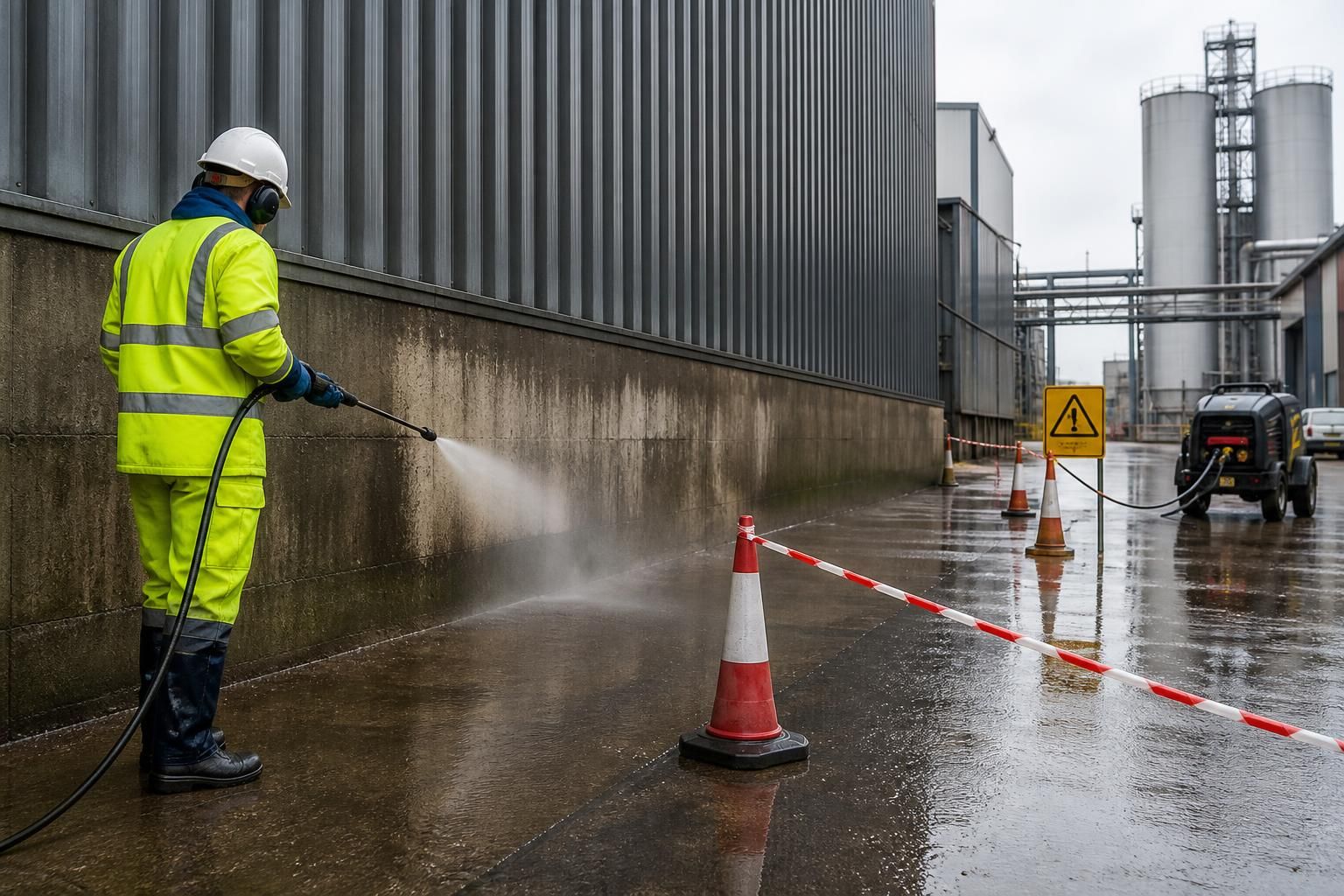
What safety measures are taken during industrial high-pressure cleaning?
Industrial high-pressure cleaning is controlled through site-specific risk assessments, trained operatives, suitable personal protective equipment (PPE), and clearly managed work zones. Operators also check the equipment, adjust water pressure for the surface, control spray and runoff, and follow safe access procedures to protect people, property and the surrounding environment.
Industrial high-pressure cleaning is made safe through a planned combination of site-specific risk assessments, trained operatives, suitable personal protective equipment (PPE), inspected equipment and controlled work areas. The cleaning method is selected for the surface and site conditions, with controls in place to protect workers, building occupants, visitors, the public, property and the environment.
Site assessment and planning
Before work starts, the cleaning team assesses the site, the surfaces to be treated and the hazards associated with the work. This normally covers access routes, pedestrian and vehicle movements, fragile materials, overhead obstructions, electrical installations, drainage, contaminated areas, weather conditions and nearby businesses or members of the public.
The findings are recorded in a suitable risk assessment and method statement. These documents set out the proposed equipment, operating procedure, control measures, PPE, access arrangements, water management and emergency actions. Where conditions change during the work, the assessment is reviewed rather than continuing with an unsuitable method.
Competent and trained operatives
High-pressure cleaning is carried out by operatives who understand the equipment, the risks of pressurised water and the characteristics of the surfaces being cleaned. They are trained to maintain a stable stance, control the lance safely, identify unsafe conditions and stop work when necessary. They also need to understand the relevant site rules and how to respond to equipment failure, injury, chemical exposure or loss of containment.
Operatives are briefed before work begins, particularly where several contractors are working on the same premises. A nominated person can coordinate the work area and maintain communication with the client or site representative.
Personal protective equipment
PPE is selected after the risks have been assessed. Depending on the task, this can include:
- water-resistant protective clothing or coveralls;
- protective gloves suitable for the equipment and any cleaning products used;
- eye protection or a full face shield to guard against spray, debris and chemical splashes;
- slip-resistant safety footwear with suitable toe and sole protection;
- hearing protection where equipment creates hazardous noise levels; and
- head protection, respiratory protection or additional specialist PPE where the site assessment identifies a need.
PPE is not a substitute for safe planning or guarding the work area. It is used alongside engineering and procedural controls, and must be maintained, correctly fitted and replaced when damaged.
Equipment checks and safe operation
Pressure washers, hoses, lances, nozzles, pumps and connections are checked before use. Operatives look for worn hoses, damaged couplings, leaks, blocked nozzles, defective trigger controls and signs that equipment is not operating correctly. Hoses are routed to reduce trip hazards and protected from vehicles, sharp edges and excessive bending.
The lance is kept under control, and the trigger is not left unattended or directed towards people, animals, vehicles or unprotected equipment. The system is depressurised before adjustments, nozzle changes, clearing blockages or maintenance. Electrical equipment is kept away from water where practicable, with suitable supplies and protection used for the site conditions.
Pressure, flow, temperature and the choice of nozzle are adjusted to suit the material being cleaned. Starting at a lower setting and testing an inconspicuous area helps prevent damage to coatings, joints, sealants, masonry, cladding, glazing and other vulnerable surfaces. Excessive pressure can create flying fragments, force water behind panels or seals, remove protective finishes and damage pointing.
Controlled work zones
A clearly defined exclusion zone prevents unauthorised access to the spray area. Barriers, cones, warning signs and, where required, banksmen or temporary traffic controls are used to separate the operation from pedestrians and vehicles. Doors, entrances and shared routes are managed so that people are not exposed to spray, debris, slippery surfaces or moving equipment.
The team also considers overspray and wind direction. Work may be paused if spray could reach occupied areas, electrical systems, passing traffic or neighbouring property. Communication between the operative and the person controlling access is particularly important when visibility is restricted or when work takes place above ground level.
Safe access and work at height
Façades, roofs, high-level cladding and structures are accessed using suitable equipment and a planned system of work. Depending on the site, this may include mobile elevated work platforms, scaffolding, towers or other specialist access equipment. Access equipment must be selected for the ground conditions, working height, reach and forces created by the spray lance.
Operatives follow the equipment manufacturer’s instructions and site requirements, including pre-use checks, exclusion zones and fall-protection arrangements. Ladders are not used as a substitute for a suitable work platform where the task requires prolonged work, forceful operation or both hands for safe control. Tools and hoses are managed to prevent dropped objects and entanglement.
Water, chemicals and contamination controls
Runoff is controlled so that dirty water, detergents, paint residues, oils, biological growth and other contaminants do not enter unsuitable drains, watercourses or neighbouring premises. Drain covers, bunding, collection systems, wet vacuums or temporary containment may be used where appropriate. The disposal route is considered before cleaning starts.
Where detergents, biocides or other substances are required, the product’s safety information and COSHH assessment are followed. Chemicals are stored, diluted and applied according to the manufacturer’s instructions, and they are not mixed unless the instructions specifically permit it. Operatives use the appropriate gloves, eye protection and respiratory controls, and prevent contact with incompatible materials.
Protection of buildings and nearby assets
Before cleaning, vulnerable features such as vents, electrical fittings, door thresholds, open windows, air-conditioning intakes, cameras and sensitive machinery are identified and protected or isolated. The team checks that water cannot enter the building through defective seals, open joints or damaged roofing. Any pre-existing defects that could affect safe cleaning are reported to the client or site contact.
Test cleaning is used where the surface response is uncertain. This confirms that the selected pressure, temperature, nozzle and cleaning product will remove the contamination without causing etching, staining, coating loss or water penetration.
Emergency arrangements and completion checks
A safe system includes a response for injuries, chemical splashes, burst hoses, equipment faults, uncontrolled runoff and contact with services. Operatives know how to isolate the equipment, raise the alarm and obtain first aid or medical assistance. The work area is inspected after cleaning to confirm that barriers can be removed safely, surfaces are not presenting an avoidable slip hazard, hoses and equipment have been cleared, and runoff has been managed.
These controls are applied proportionately to the site and the cleaning method. A professional contractor should be able to explain the proposed risk controls, access arrangements, PPE, surface protection and water-management procedure before work begins. Sharing accurate site information, including restricted areas, known defects, hazardous substances and changes to access conditions, helps ensure that the planned controls remain effective throughout the project.
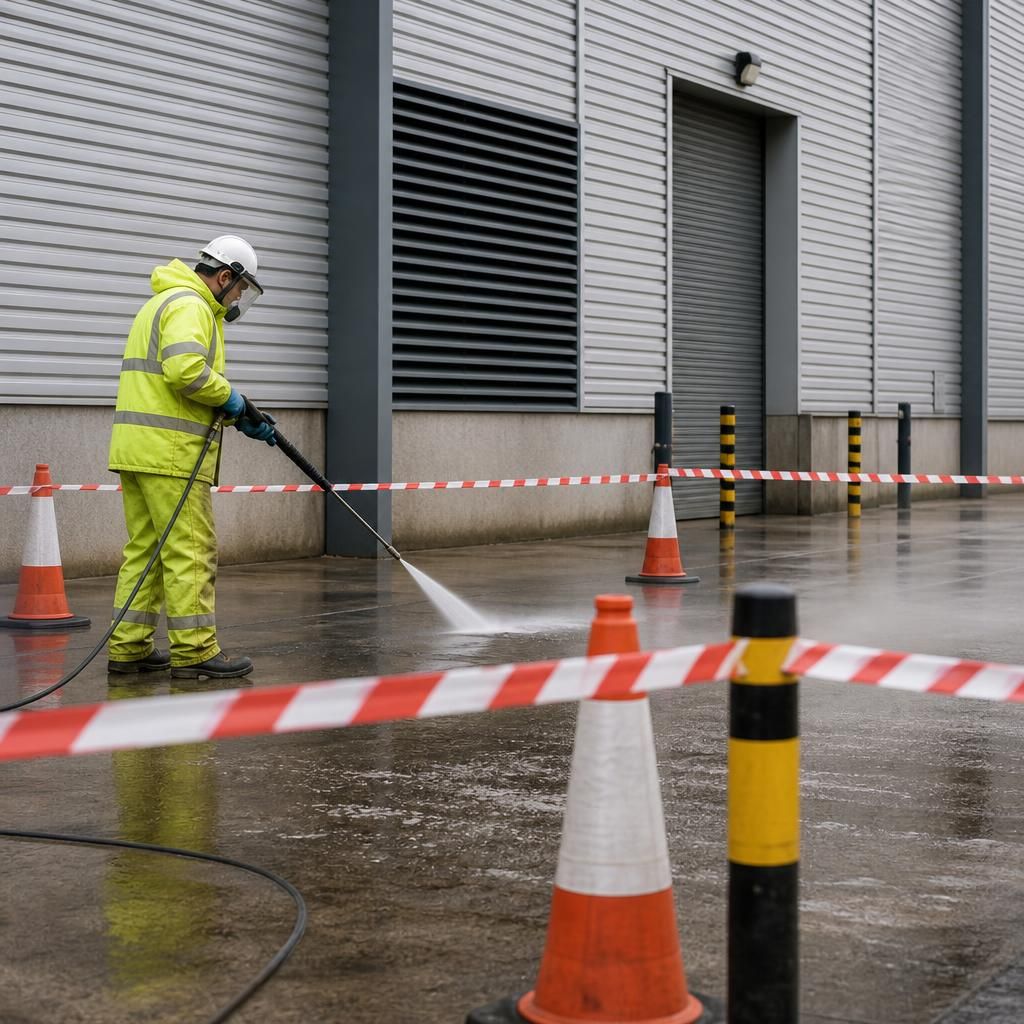
A controlled work zone is one of the most important safety measures during industrial high-pressure cleaning. Barriers, cones and warning signs keep pedestrians, visitors and vehicles away from pressurised water, debris, hoses and slippery surfaces. Where visibility or traffic movement is restricted, a trained banksman or site contact can control access and maintain communication with the cleaning operative.
The zone is also planned around overspray, wind direction, entrances, electrical installations and nearby equipment. Cleaning is paused or revised if spray could reach occupied areas, passing traffic or neighbouring property. This control works alongside suitable PPE, equipment checks and safe access arrangements to protect people and the surrounding premises throughout the work.
Discuss your industrial cleaning safety requirements
Discuss your industrial cleaning safety requirements with our team before work begins, including access arrangements, exclusion zones, PPE, surface protection and runoff controls. We can help confirm the appropriate safe system of work for your site.