
What is the role of pressure adjustment in industrial high-pressure cleaning?
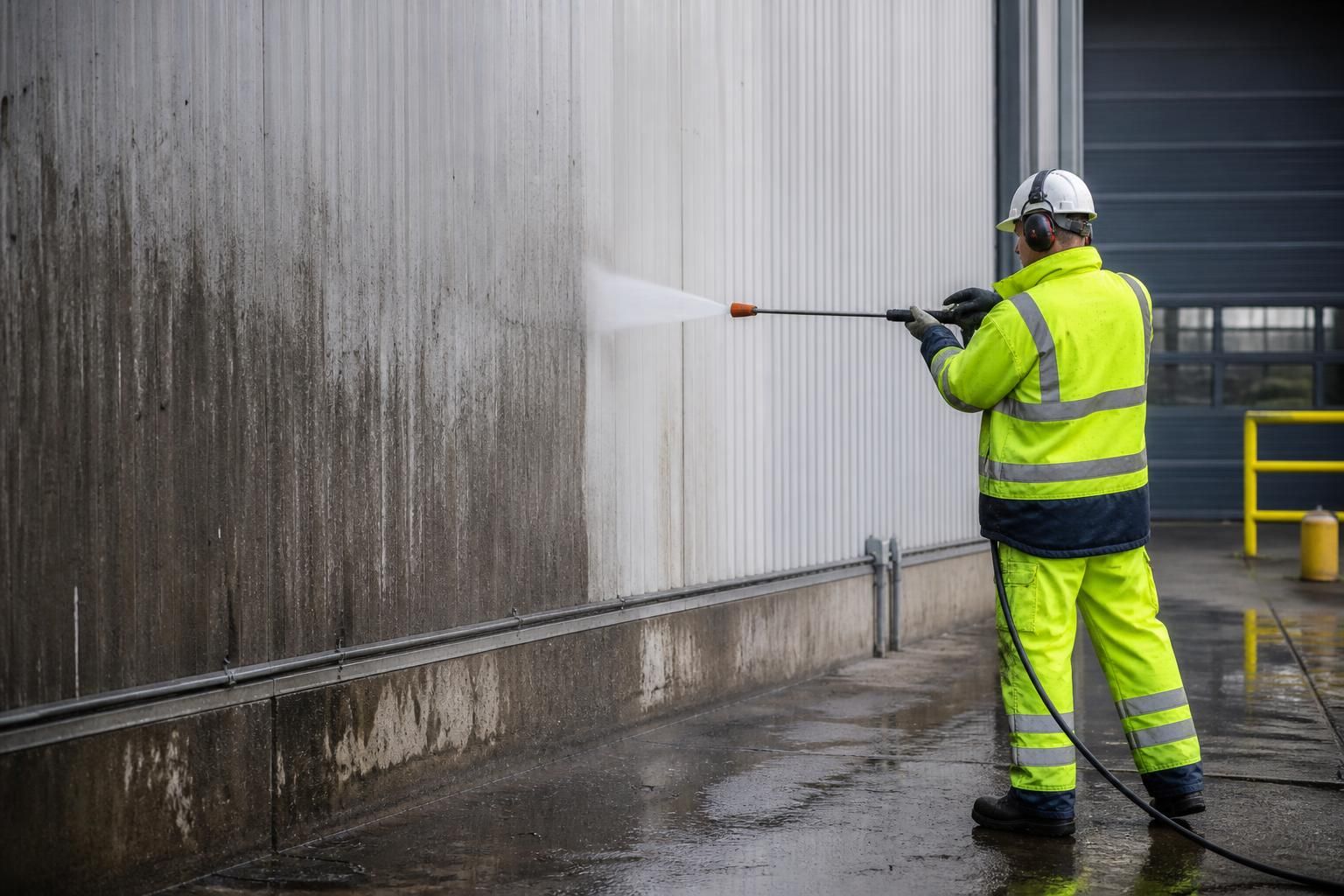
Pressure adjustment controls the force of water applied during industrial high-pressure cleaning, allowing the operator to remove contamination effectively without damaging the underlying surface. Using the appropriate pressure for each material improves cleaning results, protects coatings and finishes, and supports safer, more efficient work.
Pressure adjustment controls the force delivered by water during industrial high-pressure cleaning. Setting the pressure to suit the contamination and substrate enables effective cleaning while reducing the risk of etching, coating failure, surface erosion, water ingress and unnecessary overspray. The correct setting is therefore a balance between cleaning performance, surface preservation, operator safety and efficient use of water.
Industrial cleaning is carried out across a wide range of materials, including concrete, brickwork, stone, metal, cladding, painted surfaces, roofs and specialist coatings. These materials do not tolerate the same level of mechanical force. A pressure setting that is suitable for heavily soiled concrete may damage a painted panel, weaken pointing or drive water beneath a roof covering. Adjustment is essential because the operator must respond to the condition and construction of each area rather than applying one setting throughout a site.
Pressure is only one part of the cleaning process. The result also depends on water flow, nozzle type, spray pattern, temperature, cleaning distance, angle of application, dwell time and any detergent or treatment used. Increasing pressure is not always the most effective solution. In some cases, a greater water flow, heated water or an appropriate cleaning agent removes contamination more efficiently without requiring excessive force.
How pressure adjustment affects different surfaces
- Concrete and hard paving: These surfaces can generally withstand more mechanical action, particularly where oil, tyre marks, algae or embedded dirt have accumulated. However, excessive pressure can expose aggregate, create streaking or damage weak, aged or previously repaired areas.
- Brick, masonry and stone: Pressure must take account of porosity, weathering, mortar condition and the type of stone. Excessive force can remove the surface face, erode joints or increase water penetration. Softer stone and historic masonry usually require a more controlled approach.
- Cladding and painted metal: Lower pressure and a suitable spray pattern help prevent denting, coating damage and water being forced behind panels or seals. The condition of the finish is checked before cleaning begins.
- Roofs: The correct method depends on the roofing material, pitch, age and existing defects. Pressure may need to be reduced around laps, flashings, seals and fragile coverings to avoid displacement or water ingress.
- Industrial floors and coated surfaces: Coatings can lift, blister or become marked if the pressure, nozzle or cleaning distance is unsuitable. A controlled test area helps establish whether the surface can withstand the planned method.
Adjustment also controls the quality of the finish. Too little pressure may leave residues, biological growth or traffic marks behind, resulting in repeat work. Too much pressure can create visible lines, patching, differential wear or damage that becomes more noticeable after the surface dries. Operators adjust the pressure and maintain a consistent working distance and movement speed to produce an even finish across the cleaned area.
Before full-scale work, the surface should be inspected for existing damage, loose material, failing coatings, open joints and vulnerable fixtures. A small test area is then cleaned using a conservative setting. The operator reviews the result when wet and, where necessary, after drying. This confirms whether the contamination is being removed, whether the substrate remains intact and whether the pressure, nozzle and cleaning solution need to be changed.
Pressure adjustment is particularly important around sensitive details. Windows, doors, vents, electrical equipment, signage, sealants, expansion joints, drainage outlets and exposed services may require shielding or a separate, lower-pressure technique. The spray should not be directed into openings or behind cladding, membranes and other components that are not designed to receive pressurised water.
Correct adjustment improves safety as well as cleaning performance. Higher pressure increases reaction force at the lance and can cause splashback, flying debris and loss of control if the equipment is not handled correctly. Using the lowest effective pressure helps reduce these hazards, while suitable personal protective equipment, exclusion zones, controlled access and protection of nearby people and property remain necessary. Operators should also manage run-off and prevent contaminated water from entering drains or adjacent areas.
Using an appropriate pressure setting can reduce wasted water, limit overspray and avoid repeat cleaning caused by an unsuitable first attempt. It may also reduce the need for aggressive detergents or mechanical abrasion. These benefits depend on selecting the complete cleaning method correctly; lowering pressure alone will not compensate for an unsuitable nozzle, poor technique or contamination that requires treatment before washing.
For large commercial and industrial sites, pressure adjustment should form part of the method statement and site-specific risk assessment. The cleaning team should record the surface type, contamination, equipment configuration, test results, access arrangements, run-off controls and any areas requiring a different setting. This provides a consistent process when several operatives or separate sections of a site are involved.
In practice, the aim is not to use the highest available pressure but the lowest effective pressure for the required result. A suitably trained operator will adjust the equipment as the substrate and contamination change, combining pressure control with the correct flow, temperature, nozzle, distance and cleaning treatment. This approach delivers thorough industrial cleaning while preserving the condition and service life of the surfaces being maintained.
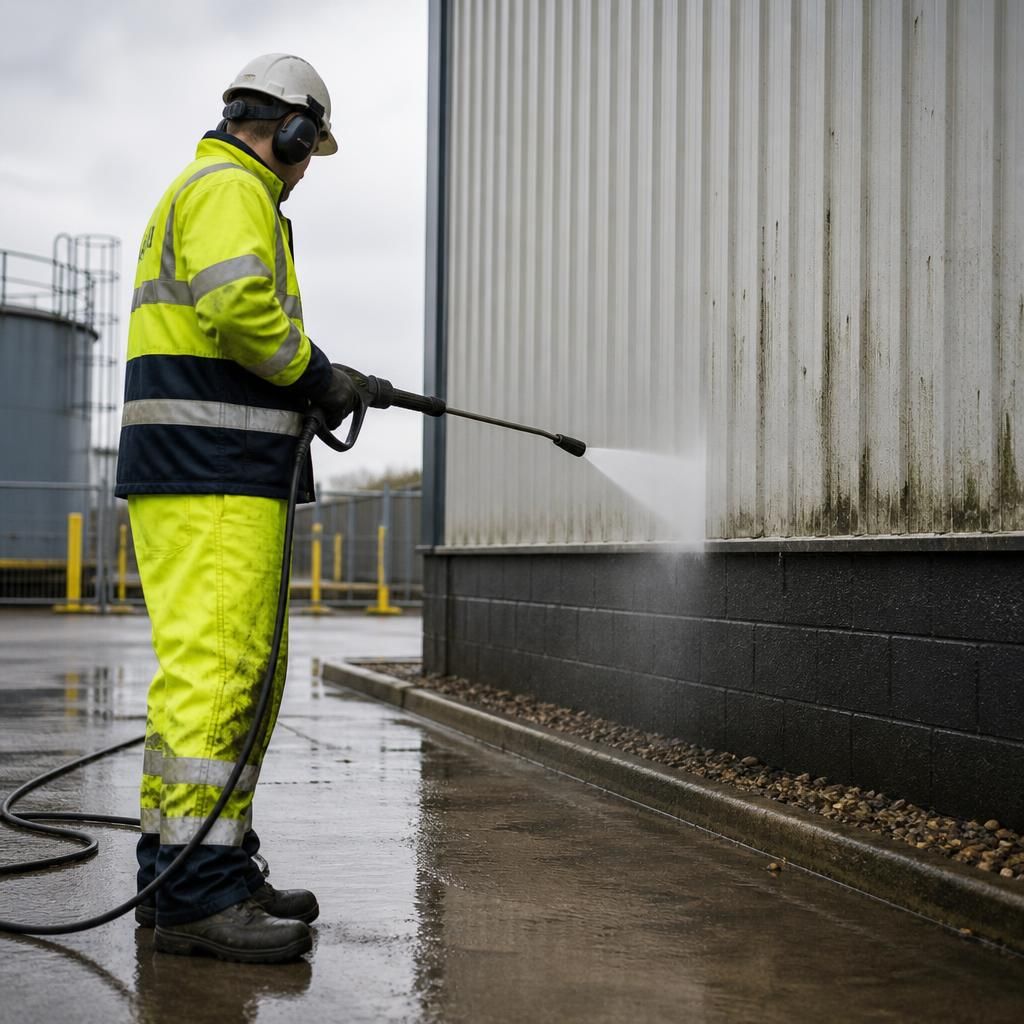
Pressure adjustment allows the operator to match the water force to the surface and contamination, using the lowest effective setting rather than maximum pressure. This is particularly important on painted cladding, brickwork, stone, roof coverings and coated floors, where excessive force can remove finishes, erode joints or drive water behind vulnerable components.
A controlled test area should be cleaned before the main work begins. The operator can then assess whether the contamination has been removed without marking or weakening the substrate, and adjust the pressure, nozzle, distance, water temperature or cleaning treatment as required. This process helps produce an even finish while protecting the condition and service life of the surface.