
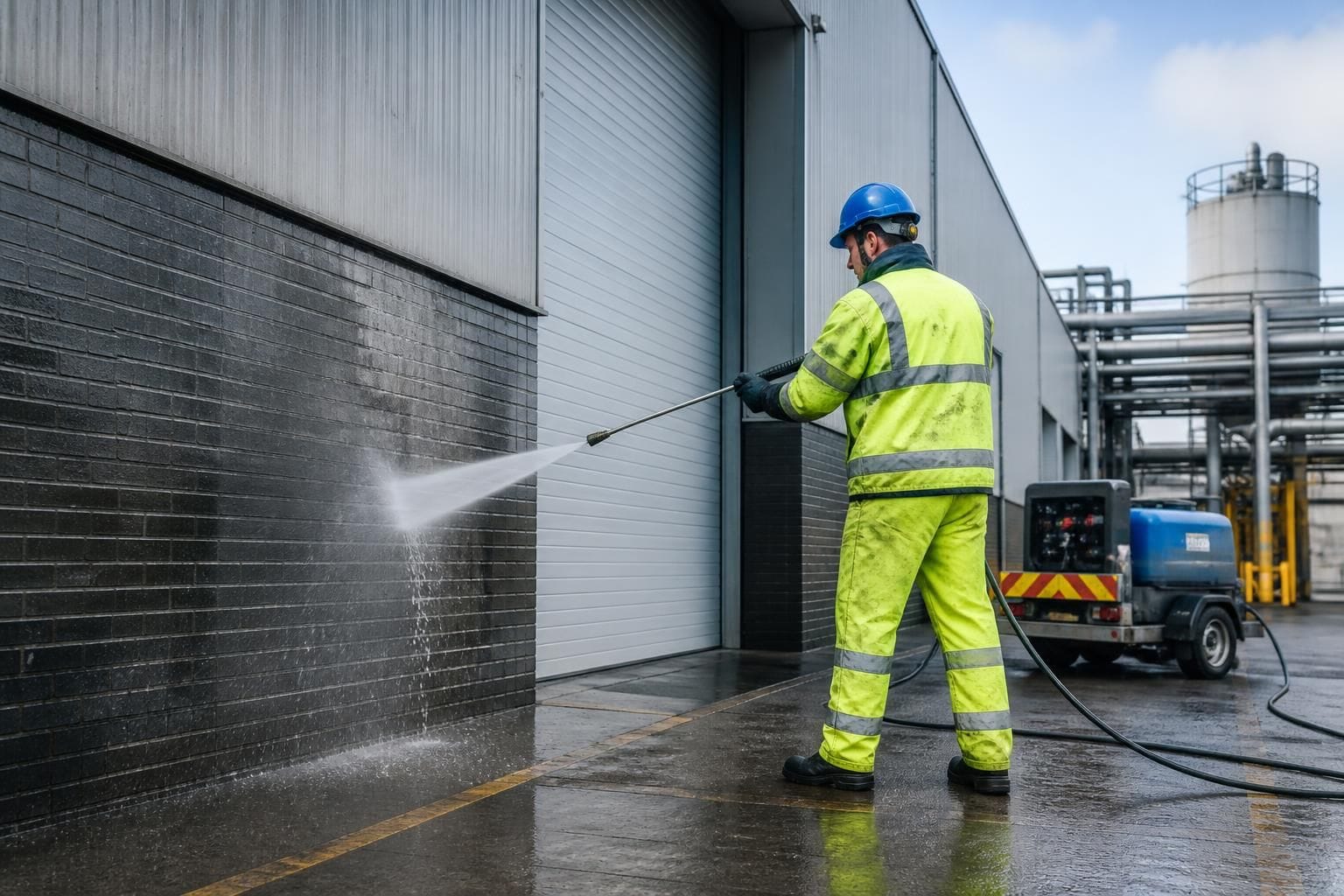
What factors should be considered when selecting an industrial high-pressure cleaning service?
When selecting an industrial high-pressure cleaning service, assess the contractor’s experience with comparable sites, understanding of different materials, equipment and pressure-control capabilities, health and safety procedures, environmental compliance, access arrangements and insurance. Confirm that the service includes a clear method statement, suitable wastewater management, realistic scheduling and a detailed quotation covering the required cleaning scope.
Select an industrial high-pressure cleaning service by comparing its experience, understanding of your surfaces, pressure-control capabilities, safety systems, environmental procedures, access arrangements, insurance and ability to deliver the work with minimal disruption. A suitable contractor should inspect the site before quoting, define the cleaning method and acceptance standard, and provide clear documentation covering risk controls, wastewater handling, programme and price.
Relevant experience and technical understanding
Industrial cleaning is not simply a matter of applying the highest available pressure. The contractor should have experience with sites comparable to yours, including the building type, level of soiling, operational constraints and access conditions. Ask whether they have worked on façades, cladding, roofs, loading areas, concrete yards, car parks, plant areas or other surfaces relevant to the project.
Experience should include recognising how different materials respond to water pressure, temperature, detergents and mechanical agitation. Brickwork, render, stone, painted metal, powder-coated cladding, concrete, block paving and roofing materials may each require a different approach. The contractor should be able to explain which methods are appropriate, which could cause damage and how the cleaning result will be assessed.
Method, pressure control and equipment
Request a clear description of the proposed process rather than accepting a generic pressure-washing specification. This should explain the equipment, operating pressures, water temperature, nozzle selection, detergents where required and any rinsing or recovery arrangements. Effective cleaning may involve pressure washing, steam cleaning, soft washing or a combination of techniques, depending on the surface and contamination.
Pressure should be adjustable and controlled at the point of use. Excessive pressure can remove coatings, erode mortar joints, drive water into vulnerable areas or damage seals and fittings. A competent contractor will normally test a discreet area first, record the agreed approach where appropriate and adapt the method if the surface reacts differently than expected.
Check that the equipment is suitable for the scale and location of the work. This may include specialist pumps, hot-water systems, surface cleaners, rotary equipment, water-recovery systems and access equipment. The contractor should also have a practical plan for transporting, positioning and operating equipment safely on your site.
Site survey and scope of work
A proper site survey helps identify issues that may not be apparent from photographs or a brief description. The survey should consider:
- the materials, coatings and condition of the surfaces;
- the type and severity of soiling, such as oil, algae, carbon deposits, cement residue or graffiti;
- fragile areas, joints, drainage points, electrical equipment and water-sensitive fixtures;
- vehicle and pedestrian routes, working heights and restricted areas;
- available water, power, drainage and suitable equipment locations;
- the need for barriers, traffic management, cleaning outside normal operating hours or phased work;
- where dirty water, slurry and removed contaminants will be collected and taken for appropriate disposal.
The quotation should identify the areas included, preparation and protection requirements, cleaning method, access provisions, waste arrangements, exclusions and any assumptions. Clarify whether remedial work, stain treatment, sealant removal, repainting or repairs are outside the cleaning scope. This prevents disagreements when the condition of the substrate becomes clearer during the work.
Health and safety arrangements
High-pressure water can cause serious injury and can project debris, loosen materials or create hazardous surfaces. The contractor should provide suitable risk assessments and method statements, together with evidence that operatives are trained and supervised for the equipment and access methods being used.
Ask how the service will control water jets, flying debris, slips, moving vehicles, work at height, electricity, chemicals and public access. Appropriate measures may include exclusion zones, signage, barriers, personal protective equipment, secure hose management, isolation of vulnerable services and a planned emergency procedure. Where mobile elevating work platforms, towers or other access equipment are required, confirm that the equipment and operators are suitable for the task and site conditions.
For work in an occupied commercial or industrial environment, the contractor should be able to coordinate with your site rules, permit systems, inductions, fire routes and operational requirements. A low-cost quotation is not adequate if it omits necessary controls or transfers avoidable risk to your staff and visitors.
Environmental and wastewater controls
Cleaning can mobilise oils, silt, paint particles, chemicals, biological growth and other pollutants. Before work starts, confirm how wastewater will be contained, filtered, recovered, stored and disposed of. It should not be allowed to enter surface-water drains or the wider environment without appropriate controls and permission.
The contractor should explain its approach to detergent selection, water use, spill prevention and waste transfer. Where recovery is required, check that the proposed equipment is suitable for the quantity and type of wastewater expected. Environmental controls should be included in the method statement rather than treated as an optional extra after cleaning has begun.
Insurance, compliance and documentation
Verify that the contractor holds suitable public liability and employers’ liability insurance, with cover appropriate to the nature and scale of the work. Depending on the site and activities, you may also need evidence relating to plant, vehicles, access equipment, waste handling and specific site accreditation requirements.
Useful documents to request or agree before mobilisation include:
- a written quotation and defined scope;
- risk assessments and method statements;
- insurance certificates;
- equipment inspection and maintenance records where relevant;
- operator training or competence records for specialist equipment;
- chemical safety information and control measures where detergents are used;
- wastewater and waste-disposal arrangements;
- the proposed programme, site contacts and communication process.
Documentation should be proportionate to the work, but reluctance to explain basic safety, environmental or insurance arrangements is a reason to seek clarification before appointing the contractor.
Access, scheduling and business disruption
Access requirements can affect both safety and cost. Establish whether the contractor can provide or coordinate suitable access equipment and whether ground conditions, overhead obstructions, restricted entrances or working-at-height controls will affect the plan. Confirm who is responsible for permits, traffic management, lifting arrangements and protection of adjacent property.
Agree a realistic schedule that accounts for weather, drying time, water availability, site shutdowns and any testing or approval stages. For active premises, the work may need to be phased around deliveries, staff movement, tenants, customers or production. The contractor should explain how it will leave work areas safe at the end of each shift and how changes to the programme will be communicated.
Quality standards and aftercare
Define what a satisfactory result means before cleaning starts. Removing loose dirt is different from removing ingrained staining, corrosion, old coatings, oil contamination or biological growth. Some staining may be permanent or may require restoration rather than cleaning. A professional contractor should identify these limitations and avoid promising a result that the substrate cannot safely support.
For larger projects, agree an inspection process, sample area or staged approval where appropriate. Ask how damage, missed areas or unexpected substrate conditions will be reported and resolved. If the cleaned surface needs protection, such as a compatible treatment or coating, confirm that this is specified separately and that the surface will be prepared correctly.
Price and contract clarity
Compare quotations on a like-for-like basis. The lowest initial price may exclude access equipment, wastewater recovery, out-of-hours working, traffic management, specialist treatments or preparation and protection. A useful quotation should separate the cleaning scope from optional work and state whether charges can change if concealed conditions or additional contamination are found.
Before approval, confirm payment terms, cancellation arrangements, responsibilities for water and power, treatment of variations and any applicable guarantee. The objective is not simply to secure a low price; it is to appoint a contractor whose method, controls and resources are appropriate for the site.
For an industrial or commercial premises, the strongest selection is therefore based on demonstrated competence and a well-defined delivery plan. Experience with comparable surfaces, controlled equipment, robust safety and wastewater procedures, suitable insurance, dependable access arrangements and transparent pricing provide a more reliable basis for appointment than pressure capability or price alone.
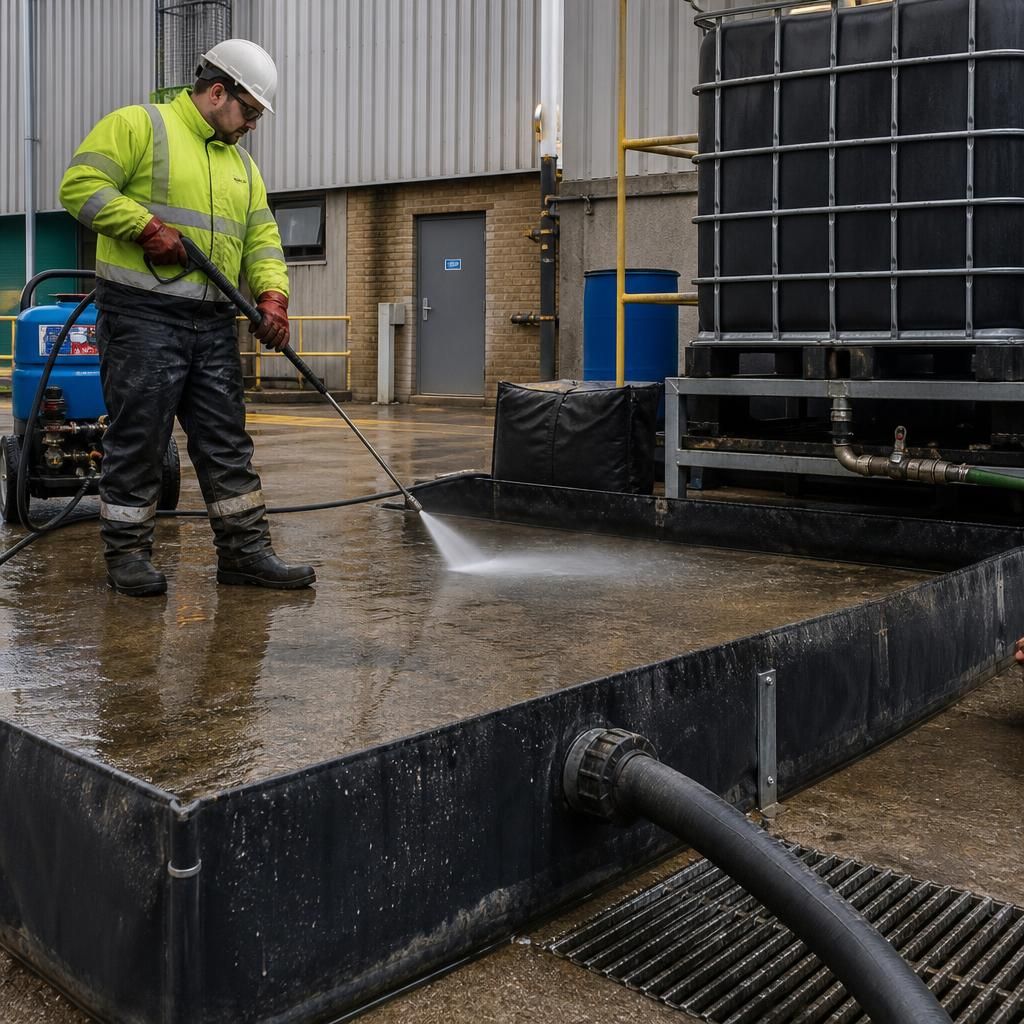
Wastewater management is a key factor when selecting an industrial high-pressure cleaning service. The process can loosen oil, silt, detergents, paint particles and biological contamination, so dirty water must be controlled rather than allowed to enter surface-water drains or surrounding ground.
Before appointing a contractor, ask how wastewater will be contained, filtered, recovered, stored and disposed of. The proposed arrangements should reflect the type and volume of contamination expected and should be included in the method statement. A suitable service will also explain its approach to spill prevention, detergent use and waste-transfer documentation, helping your site remain compliant while the cleaning work is carried out.
Discuss your industrial high-pressure cleaning requirements
Discuss your industrial high-pressure cleaning requirements with Encanto Exterior Cleaning so we can assess the site, cleaning scope, access arrangements and wastewater controls. We can then recommend a suitable method and provide a clear quotation for the work.