
What equipment is used in industrial high-pressure cleaning?
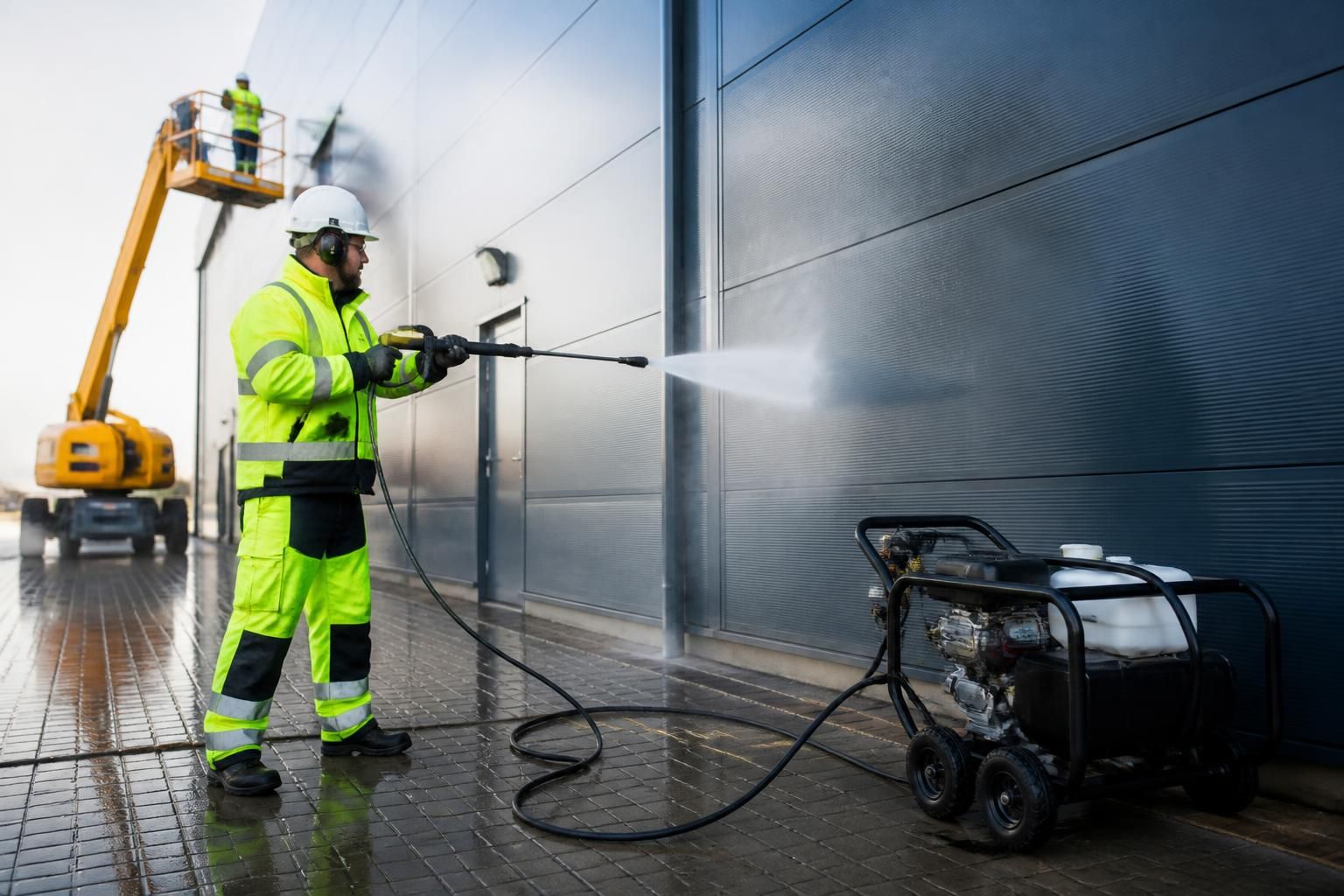
Industrial high-pressure cleaning uses commercial pressure washers, specialist lances and nozzles, surface cleaners, water tanks, filtration or recovery systems, and access equipment such as towers, platforms and powered access machines. The equipment is selected and adjusted to suit the surface, cleaning method, working height, water supply and site safety requirements.
Industrial high-pressure cleaning uses commercial pressure washers, specialist pumps, lances and nozzles, surface-cleaning attachments, water-management systems and access equipment. The equipment is selected for the material being cleaned, the type of contamination, the available water supply, the working height and the site’s safety and environmental requirements.
Unlike domestic pressure washers, industrial systems are designed for sustained use on larger areas and more difficult deposits. They provide a controlled combination of water pressure, flow rate, temperature and cleaning time. Using the correct combination is important: excessive pressure can damage coatings, joints or masonry, while insufficient flow may leave contamination behind or make the work unnecessarily slow.
Commercial pressure washers
The main power source is a professional pressure washer. These machines may be cold-water or hot-water units. Cold-water systems are suitable for removing loose dirt, dust, algae, mud and some surface deposits. Hot-water machines are used where heat helps break down oil, grease, traffic film, food residues and other substances that do not readily dissolve in cold water.
Industrial washers are generally built with more durable pumps, hoses, frames and controls than domestic equipment. They may be powered electrically or by fuel, depending on the site, the available supply and whether the work is being carried out indoors or outdoors. Flow rate is considered alongside pressure because a strong water flow helps carry loosened material away from the surface and can improve productivity on large areas.
Pumps, hoses and control equipment
The pump creates the working pressure, while high-pressure hoses transfer water to the cleaning attachment. Industrial hoses are selected for the pressure, temperature, length and working conditions involved. Couplings, shut-off controls, pressure regulators and trigger assemblies allow the operative to start, stop and adjust the water safely.
Pressure regulation is particularly important when cleaning painted façades, cladding, render, natural stone, brickwork or older surfaces. The operative can reduce the output where a substrate is vulnerable and use a stronger setting only where the material and condition allow it. This helps maintain cleaning effectiveness without treating every surface with the same force.
Lances, guns and nozzles
Lances and trigger guns provide reach and control, helping the operative work at a safe distance from the surface. Extensions may be used for façades, roofs and other elevated areas, although they must be compatible with the access method and manageable in the working position.
Different nozzles produce different spray patterns and levels of impact:
- Fan nozzles distribute water across a wider area and are commonly used for general washing.
- Narrower spray patterns concentrate cleaning power on stubborn deposits, but require greater care around fragile finishes, joints and coatings.
- Low-pressure or chemical-application nozzles apply detergents or biocidal treatments before rinsing.
- Rotary or turbo-style nozzles provide a concentrated rotating action for suitable hard surfaces, but are not appropriate for every façade, coating or masonry type.
- Specialist nozzles may be used for blocked drains, detailed edges, awkward recesses or particular industrial residues.
Nozzle selection is based on the required coverage, the distance from the surface, the material and the type of contamination. A competent operative will test the chosen method in an inconspicuous area before proceeding across the full elevation or floor area.
Surface cleaners and rotary attachments
Surface cleaners are enclosed, wheeled attachments with rotating spray bars. They are used on relatively flat areas such as concrete yards, loading bays, pavements, car parks and hard-standing. The enclosure helps contain spray and reduces uneven striping compared with using a hand-held lance over a large floor.
Rotary brushes and other mechanical attachments may be used where agitation is needed, particularly on textured surfaces or where deposits have bonded to the substrate. These attachments must still be matched to the surface. A mechanical action that is suitable for robust concrete may be unsuitable for decorative paving, aged coatings or delicate cladding.
Water tanks and supply equipment
Industrial cleaning can use a mains supply where the site can provide adequate volume and pressure. Water tanks may be brought to site where the supply is restricted, intermittent or located too far from the work area. Tanks also help support a consistent cleaning operation on large sites or remote areas.
Hoses, reels, inlet filters and backflow protection help manage the water supply. The arrangement is planned to avoid trip hazards, protect site users and prevent connections from being damaged by vehicles or equipment. Where a clean or controlled water source is required, additional filtration or treatment may be fitted to remove sediment and reduce the risk of marking the surface.
Water recovery and filtration systems
Some industrial projects require the wash water to be contained rather than allowed to enter surface-water drains or surrounding ground. Recovery equipment can include bunds, drain covers, wet vacuums, pumps, collection tanks, silt filters and oil-water separation systems.
These systems collect contaminated water and suspended solids so they can be managed appropriately. They are particularly relevant where cleaning removes oil, fuel, chemicals, paint, heavy silt, biological growth or other controlled residues. The correct approach depends on the site drainage, the material removed and the applicable waste and discharge requirements.
Detergent and chemical application equipment
Pressure washing is sometimes combined with a suitable detergent, degreaser, biocidal wash or other treatment. Chemical injectors, downstream applicators, foaming equipment and low-pressure sprayers allow the product to be applied evenly before rinsing.
The chemical must be compatible with the substrate and the contamination. It should be used in accordance with its instructions, with suitable controls to protect people, plants, drainage systems and surrounding materials. Applying a chemical at low pressure can be preferable to forcing it into joints or sensitive surfaces at high pressure.
Steam-cleaning equipment
Steam or very hot-water equipment is used where heat assists with grease removal, chewing gum, biological growth, food residues or delicate cleaning tasks that benefit from reduced chemical use. It can be useful on façades, paving, machinery surrounds and other areas where a controlled thermal cleaning process is appropriate.
Heat is not automatically suitable for every material. Some coatings, sealants, plastics and composite products can soften, discolour or deform. The operating temperature, distance and dwell time must therefore be controlled according to the surface manufacturer’s guidance or the results of a preliminary test.
Access equipment
Cleaning elevated façades, roofs, canopies and cladding may require access equipment in addition to the washing system. Depending on the height, reach, ground conditions and site layout, this can include scaffold towers, mobile access platforms, powered access machines, roof access systems and telescopic lance equipment.
Access equipment is chosen through a site-specific assessment. Factors include the strength and levelness of the ground, overhead obstructions, exclusion zones, pedestrian and vehicle movements, wind conditions and the weight and movement of hoses. The cleaning method must work safely from the access position rather than encouraging an operative to overreach or use an unstable platform.
Inspection, protection and personal safety equipment
Supporting equipment is also essential. This may include pressure-rated fittings, hose ramps, warning signs, barriers, drain protection, lighting, communication equipment and spill-control materials. Personal protective equipment can include waterproof protective clothing, gloves, eye and face protection, hearing protection, safety footwear and respiratory protection where the risk assessment requires it.
Before work starts, equipment is checked for damage, leaks, secure connections and suitable operating condition. Electrical equipment, fuel systems, access machinery and lifting arrangements require their own relevant inspections and controls. The work area is normally segregated where spray, noise, contaminated water or moving machinery could affect other people.
How the equipment is selected
The equipment package is normally determined after considering the substrate, contamination, scale of the area, access, drainage and operational constraints. For example, a large concrete yard may require a high-flow hot- or cold-water washer, a rotary surface cleaner and water recovery equipment. A sensitive façade may need low-pressure detergent application, soft agitation and controlled rinsing from suitable access equipment.
Industrial cleaning is therefore not simply a matter of using the most powerful machine available. Effective results depend on matching pressure, flow, temperature, nozzle pattern, cleaning product and access method to the surface and the site. This approach provides better control, reduces the risk of damage and supports safe, compliant cleaning across commercial and industrial premises.
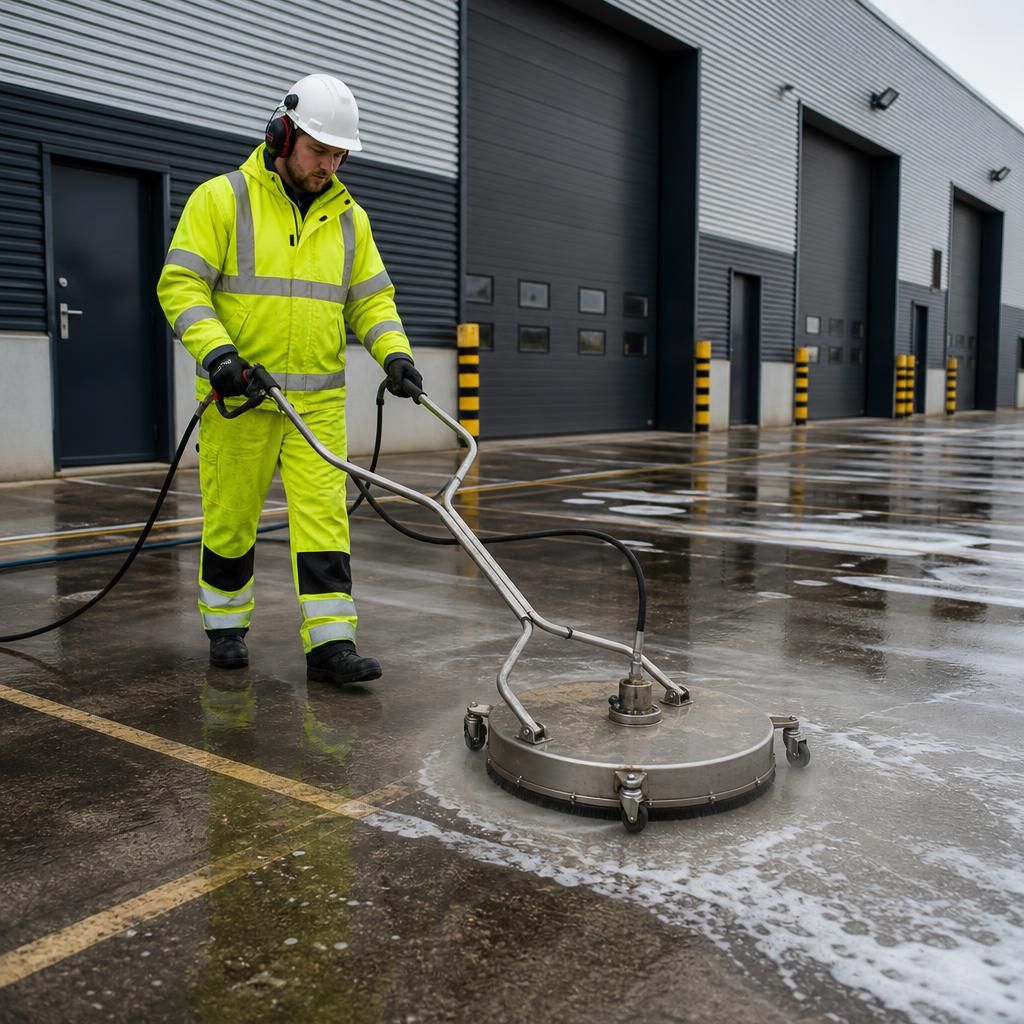
Surface cleaners are enclosed attachments fitted to industrial pressure washers for cleaning large, relatively flat areas such as car parks, loading bays, concrete yards and paved access routes. Internal rotating spray bars distribute water evenly beneath the housing, helping to reduce overspray and visible striping compared with a hand-held lance.
The attachment must still be matched to the surface and cleaning conditions. The operative considers the material, condition, contamination and available water flow before selecting the working pressure and movement speed. Rotary attachments can improve productivity on robust hard surfaces, but may be unsuitable for fragile coatings, aged paving, decorative finishes or damaged concrete. A test area confirms that the equipment is cleaning effectively without marking or loosening the surface.