
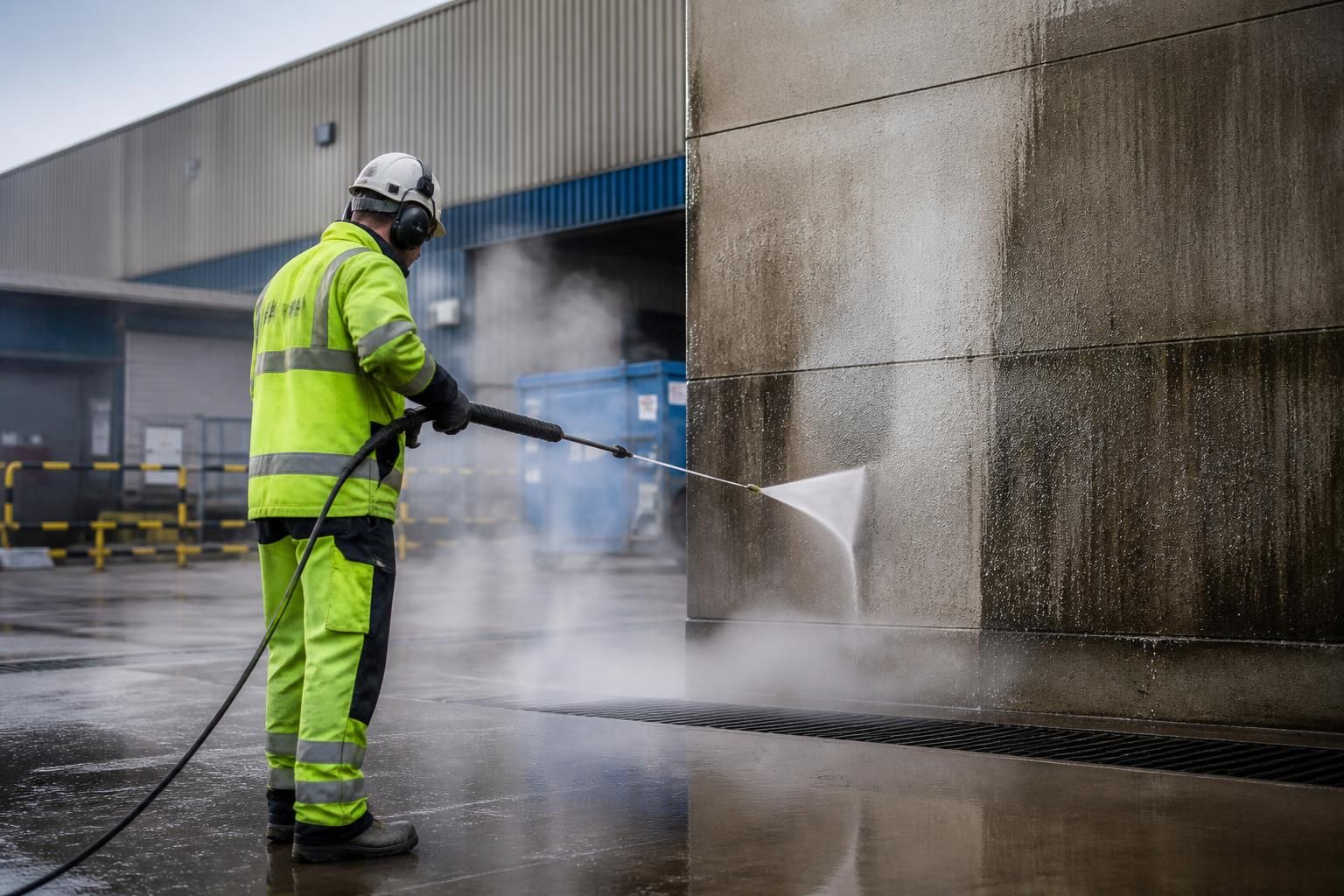
What are the environmental benefits of using industrial high-pressure cleaning?
Industrial high-pressure cleaning can reduce environmental impact by using water more efficiently, limiting the need for chemical cleaners and removing contaminants quickly from large areas. When pressure, detergents and wastewater are properly controlled, the process also helps prevent polluted runoff and supports responsible maintenance of commercial and industrial premises.
Industrial high-pressure cleaning can reduce the environmental impact of maintaining commercial and industrial premises by using water more efficiently, reducing reliance on chemical cleaners and removing contaminants quickly. Its environmental performance depends on how the work is planned: pressure and flow must be matched to the surface, detergents used only where necessary, and wastewater contained and disposed of responsibly.
More efficient use of water
High-pressure equipment uses the force of water to detach dirt, algae, oil residues, traffic film and other deposits from surfaces. This can achieve effective cleaning with less water than some low-pressure or prolonged manual washing methods, particularly when the operator uses the correct nozzle, flow rate and working distance. The objective is not simply to use the highest pressure available, but to use the lowest effective combination of pressure, flow and dwell time for the task.
Water efficiency is improved further through careful preparation. Removing loose debris before washing, treating heavily soiled areas selectively and avoiding unnecessary repeat passes can reduce both water consumption and the volume of wastewater produced. On larger sites, a planned cleaning pattern also helps prevent water being directed repeatedly over areas that are already clean.
Reduced need for chemical cleaners
The mechanical action of pressurised water can remove many deposits without detergents. This is particularly useful for general dirt, dust, moss, algae, bird fouling and some surface staining. Where a chemical treatment is needed, high-pressure rinsing can help distribute and remove it efficiently, rather than relying on excessive quantities or prolonged application.
Using fewer chemicals can reduce the risk of harmful substances entering soil, drains or watercourses. It can also reduce packaging waste and the environmental impact associated with manufacturing, transporting and storing cleaning products. However, chemical use should not be eliminated where it is necessary for effective, safe or hygienic cleaning. The appropriate product, dilution, application method and recovery arrangements remain important.
Better control of pollutants and runoff
Industrial cleaning can release oil, grease, heavy dirt, paint fragments, biological growth and other contaminants. If these materials are allowed to enter surface-water drains, they may contribute to pollution. Responsible high-pressure cleaning therefore includes identifying drainage routes, protecting sensitive areas and controlling the water generated during the work.
Depending on the site and the contaminant, wastewater may need to be collected, filtered, treated or removed by an appropriate waste contractor. Clean and contaminated water should not be treated in the same way, and wastewater should never be discharged to a drain or watercourse without confirming that the discharge is permitted. Site-specific controls are particularly important when cleaning car parks, industrial yards, loading areas, workshops, roofs or surfaces affected by oil, chemicals or coatings.
Lower waste and longer asset life
Regular removal of corrosive, abrasive or organic deposits can help protect building materials and external assets. Salt, traffic film, bird fouling, algae, moss and industrial residues may hold moisture against a surface or contribute to deterioration over time. Removing these deposits can support planned maintenance and reduce the need for premature replacement of cladding, paving, roofing components, walls and external equipment.
Extending the usable life of existing materials can reduce the environmental effects associated with manufacturing, transporting and installing replacement products. Cleaning does not replace repairs or protective treatments, and it cannot prevent all forms of corrosion or weathering. It is most effective as part of a wider inspection and maintenance programme that identifies defects before cleaning begins.
Potentially lower energy use than replacement or intensive restoration
Cleaning can sometimes restore the appearance and function of an existing surface without removing and replacing it. This may avoid the energy, transport and material use associated with major refurbishment. The benefit depends on the condition of the asset, the equipment selected, travel requirements and how frequently the work is carried out.
High-pressure systems do use energy, especially when powered pumps, hot-water units or access equipment are required. A responsible assessment should therefore consider the whole process rather than assuming that pressure washing is automatically low impact. Efficient equipment, sensible scheduling, appropriate pressure settings and avoiding unnecessary heating can help limit energy use.
Steam and hot-water cleaning considerations
Steam or hot-water cleaning can be effective where grease, oil, chewing gum or ingrained deposits are difficult to remove with cold water. Heat may reduce the amount of detergent required and shorten the cleaning process. It also has the potential to reduce the mechanical force needed on sensitive surfaces.
Heating water requires additional energy, so it should be used only where its cleaning advantage justifies the extra fuel or electricity consumption. The operator should also consider the effect of heat on coatings, sealants, membranes and other materials, as damage could increase waste and lead to replacement work.
How to maximise the environmental benefit
- Survey the surface and the type of contamination before selecting pressure, flow, temperature and cleaning products.
- Use the lowest effective pressure and water flow rather than treating maximum pressure as the default setting.
- Remove loose material first and concentrate cleaning effort on areas that need it.
- Use biodegradable or lower-impact detergents where suitable, while following the product’s safety and disposal requirements.
- Prevent contaminated water from entering unprotected surface-water drains or nearby watercourses.
- Use drain covers, bunding, vacuum recovery, filtration or other controls where the site risk requires them.
- Separate, store and dispose of recovered wastewater and solid residues through suitable routes.
- Choose equipment that is properly maintained and avoid running pumps, heaters or access equipment unnecessarily.
- Record the cleaning method and any environmental controls so that future maintenance can be planned more efficiently.
The environmental benefit of industrial high-pressure cleaning is therefore a result of controlled practice, not pressure alone. A competent contractor will assess the surface, contamination, drainage and surrounding environment before work starts, then select an efficient method and manage the resulting wastewater. For commercial and industrial sites, this approach can provide effective cleaning while reducing avoidable water use, chemical use, pollution risk, waste and premature material replacement.
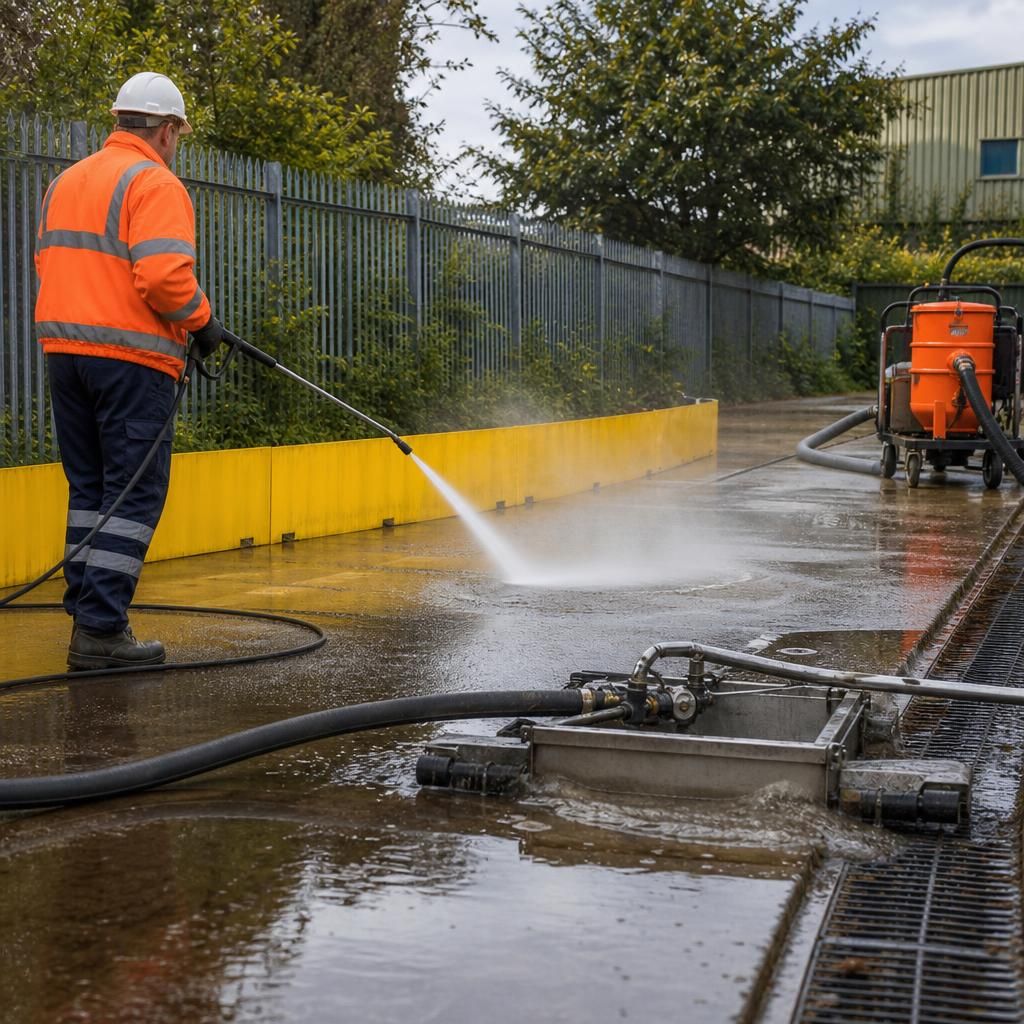
Controlling wastewater is one of the most important environmental benefits of professionally managed industrial high-pressure cleaning. During work on car parks, yards, workshops and other contaminated areas, the cleaning process can mobilise oil, grease, sediment, paint particles and other pollutants. Collecting and managing this water helps prevent contaminants entering surface-water drains, soil or nearby watercourses.
Before cleaning starts, the drainage layout and contamination risk should be assessed. Drain covers, bunding, vacuum recovery, filtration or wastewater collection may be appropriate, followed by disposal through a suitable, permitted route. This approach makes the environmental benefit of pressure cleaning practical: contaminants are removed from the surface and kept under control rather than simply being washed into the surrounding environment.
Plan a more sustainable industrial cleaning programme
Speak to Encanto Exterior Cleaning about planning a more sustainable industrial cleaning programme, including suitable pressure settings, chemical use and wastewater controls for your site. We can assess the surfaces, contamination and drainage arrangements before recommending an appropriate cleaning method.