
What are the environmental benefits of industrial high-pressure cleaning?
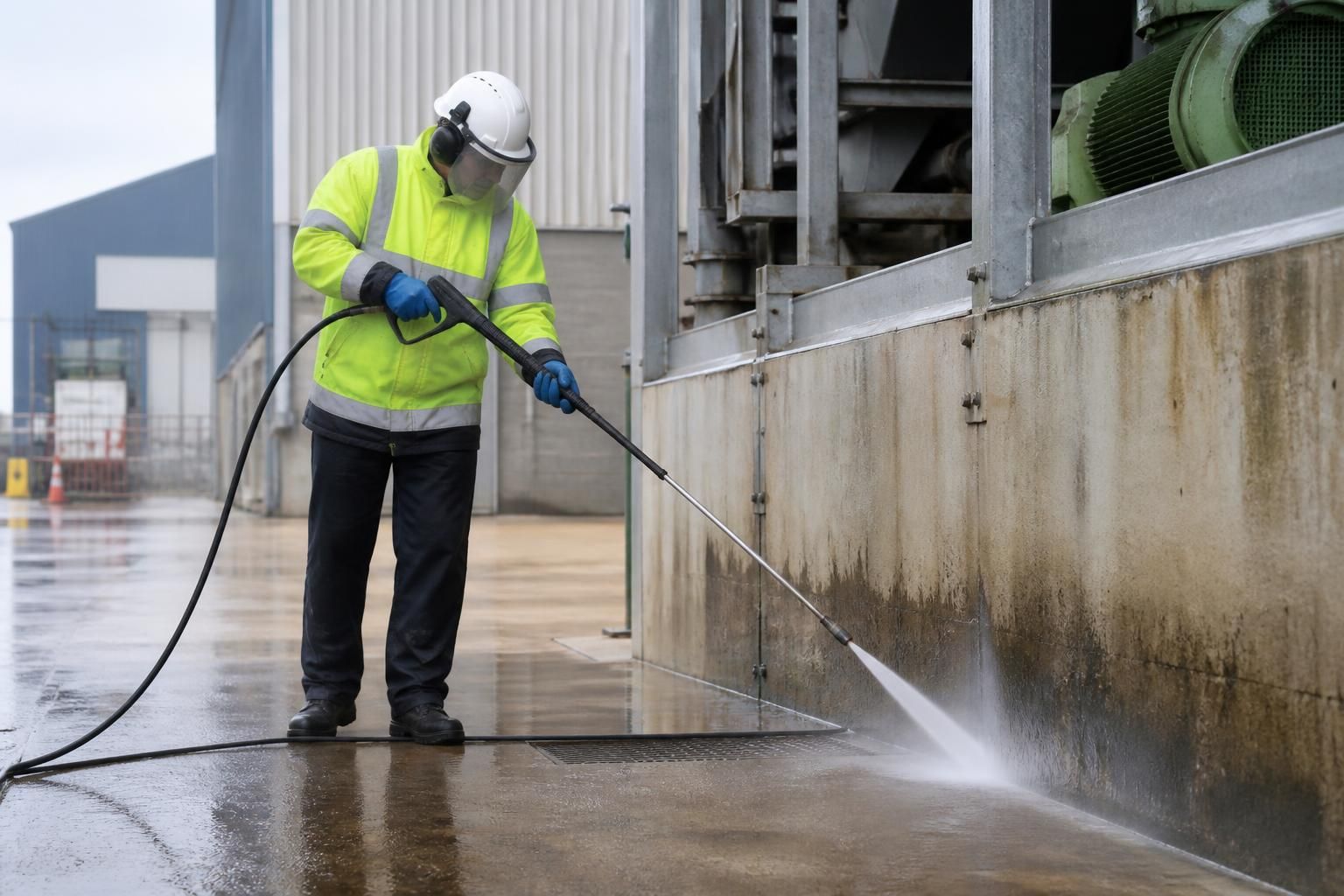
Industrial high-pressure cleaning can reduce environmental impact by using targeted water pressure to remove dirt, oil, coatings and organic growth with less reliance on harsh chemicals and abrasive methods. When pressure, water use and wastewater capture are properly controlled, it also helps limit chemical runoff, waste and unnecessary damage to surfaces.
Industrial high-pressure cleaning can reduce the environmental impact of maintaining commercial and industrial premises by removing contamination with a controlled amount of water, rather than relying mainly on chemical treatments, abrasive media or replacement of damaged surfaces. The benefit depends on correct pressure selection, responsible detergent use, efficient equipment and proper collection and disposal of wastewater.
Reduced use of cleaning chemicals
High-pressure water can remove dust, mud, algae, moss, bird fouling, oil residues and loose coatings without chemical treatment in every application. Where detergents or degreasers are necessary, mechanical water pressure can reduce the quantity, contact time or strength required. This may lower the risk of harmful substances entering soil, surface water or drainage systems.
Chemicals are still sometimes appropriate, particularly for heavy oil contamination, biological growth or specialist industrial residues. They should be selected for the surface and contaminant, applied at the lowest effective concentration and prevented from entering uncontrolled drainage. Chemical use should not be described as unnecessary in every high-pressure cleaning project; environmental performance comes from using the right method and controlling the whole process.
Lower water consumption through targeted cleaning
High pressure increases the cleaning force delivered by the water jet, allowing operators to target soiling more effectively than an uncontrolled hose or repeated manual washing. Pressure, flow rate, nozzle selection and working distance can be adjusted to suit the surface. This helps avoid prolonged rinsing and reduces water used on areas that do not require intensive cleaning.
Water efficiency is not achieved by using the highest possible pressure. Excessive pressure can damage coatings, mortar joints, cladding, pointing or fragile surfaces, creating additional waste and the need for remedial work. Experienced operators balance pressure and flow with the material, contamination and access conditions rather than treating maximum pressure as the most environmentally responsible option.
Less reliance on abrasive cleaning and replacement
Some conventional preparation methods use abrasive media that can create dust, spent material and additional waste. Water-based high-pressure or specialist low-pressure cleaning can often remove deposits while preserving the underlying substrate. Protecting sound brickwork, concrete, metal, cladding and paving extends the service life of those materials and reduces the environmental burden associated with repairs, resurfacing and replacement.
Surface preservation is dependent on assessment and technique. A suitable test area should be used where the substrate, coating or finish could be affected. Pressure, nozzle type, temperature and cleaning distance must be controlled to avoid removing protective coatings or exposing the material beneath.
Better control of contaminated wastewater
Industrial cleaning can mobilise oil, heavy metals, paint particles, biological matter and other pollutants that were previously attached to a surface. The environmental advantage comes from managing this wastewater rather than allowing contaminated runoff to reach a road, watercourse or unsuitable drain. Drain covers, bunding, wet vacuums, silt control and temporary collection systems may be used according to the site and the contaminants present.
Collected water should be assessed before discharge, treatment or removal. Drainage arrangements, local requirements and the type of contamination determine what is permitted. Wastewater containing oil, chemicals or solids may require filtration, separation, treatment or disposal by an authorised waste contractor. Water should not be discharged simply because the visible surface appears clean.
Reduced dust and airborne contamination
Water-based cleaning suppresses dust during the removal of dirt, deposits and some coatings. This can reduce airborne particles around occupied premises and limit the spread of dry debris across neighbouring areas. It is particularly useful where dry brushing, abrasive blasting or mechanical preparation could create nuisance dust or expose workers and site users to airborne contaminants.
Water suppression does not make every contaminant safe. Older coatings, industrial residues and unknown materials may require investigation and specific controls before cleaning begins. If hazardous substances are suspected, the work method should be reviewed and suitable containment, personal protective equipment and waste arrangements put in place.
Lower waste generation
High-pressure cleaning generally produces less disposable material than methods that depend on large quantities of wipes, absorbent pads, abrasive media or single-use cleaning products. When captured water and removed solids are segregated appropriately, waste can be handled according to its actual contamination rather than spreading it over a larger area.
Waste reduction also comes from maintaining surfaces before contamination becomes difficult to remove. Planned façade, roof, yard and car park cleaning can prevent the accumulation of organic growth, oil deposits and grime that may otherwise require stronger chemicals, more intensive treatment or replacement of surface finishes.
Potential energy savings when methods are selected carefully
Pressure washing can be more efficient than prolonged manual scrubbing, while targeted steam cleaning can remove certain grease and biological deposits with limited chemical input. However, hot-water and steam systems require energy, so they should be used where their cleaning performance justifies it. Cold-water high-pressure cleaning may be the more suitable option for loose dirt, mud and general surface deposits.
Equipment condition also affects environmental performance. Well-maintained pumps, hoses, nozzles and recovery systems operate more efficiently and reduce avoidable water loss, fuel use and repeat cleaning. The appropriate choice depends on the contaminant, surface, access arrangements and wastewater controls.
How to maximise the environmental benefit
- Survey the surface and identify the contaminant before selecting pressure, temperature and cleaning agents.
- Use the lowest effective pressure and flow rate that achieves the required result without damaging the substrate.
- Choose biodegradable or lower-impact detergents where they are technically suitable, while still controlling their discharge.
- Protect drains and sensitive areas, and capture or divert contaminated wastewater where required.
- Separate solids, oils and other contaminants so they can be treated or disposed of correctly.
- Use water recovery or reuse systems where site conditions and contamination levels make this safe and practical.
- Plan regular maintenance to prevent heavy build-up and reduce the need for intensive restoration cleaning.
- Keep equipment maintained and check hoses, nozzles and recovery equipment for leaks or inefficient operation.
Industrial high-pressure cleaning is therefore not automatically environmentally beneficial simply because it uses water instead of chemicals. Its environmental performance is determined by the complete cleaning process: assessment, equipment selection, pressure control, chemical management, runoff prevention, wastewater handling and responsible waste disposal. When those controls are built into the method statement and carried out by trained operators, high-pressure cleaning can maintain commercial and industrial surfaces while reducing unnecessary resource use and pollution risk.
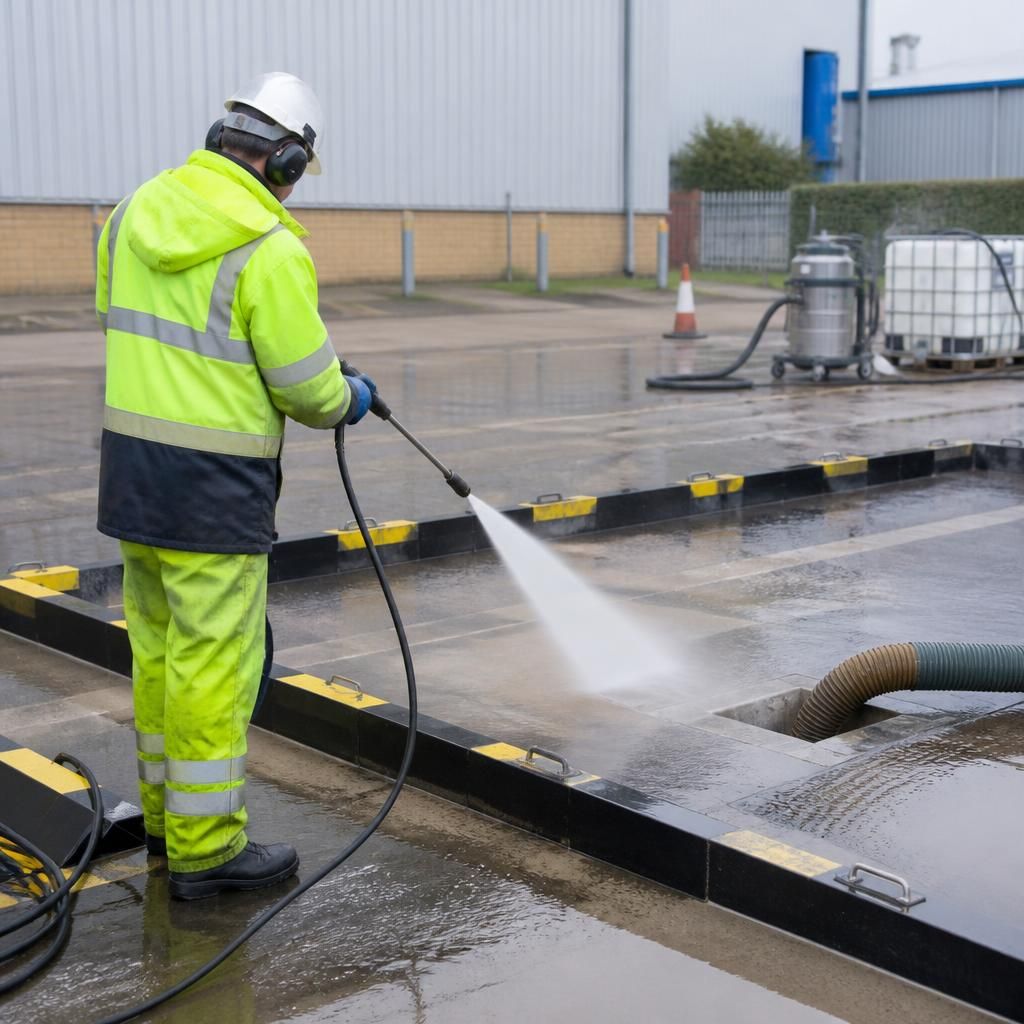
One of the main environmental benefits of industrial high-pressure cleaning is the controlled removal and management of contaminated wastewater. Water pressure can dislodge oil, sediment, paint particles and biological matter, but these pollutants must be contained rather than allowed to enter roads, soil or surface-water drains.
Depending on the site and contamination, operators may use drain covers, bunding, wet vacuums, silt control and temporary collection systems. Collected water and solids can then be assessed and treated, discharged appropriately or removed by an authorised waste contractor. This approach reduces the risk of spreading pollutants beyond the area being cleaned and supports responsible maintenance of commercial and industrial premises.