
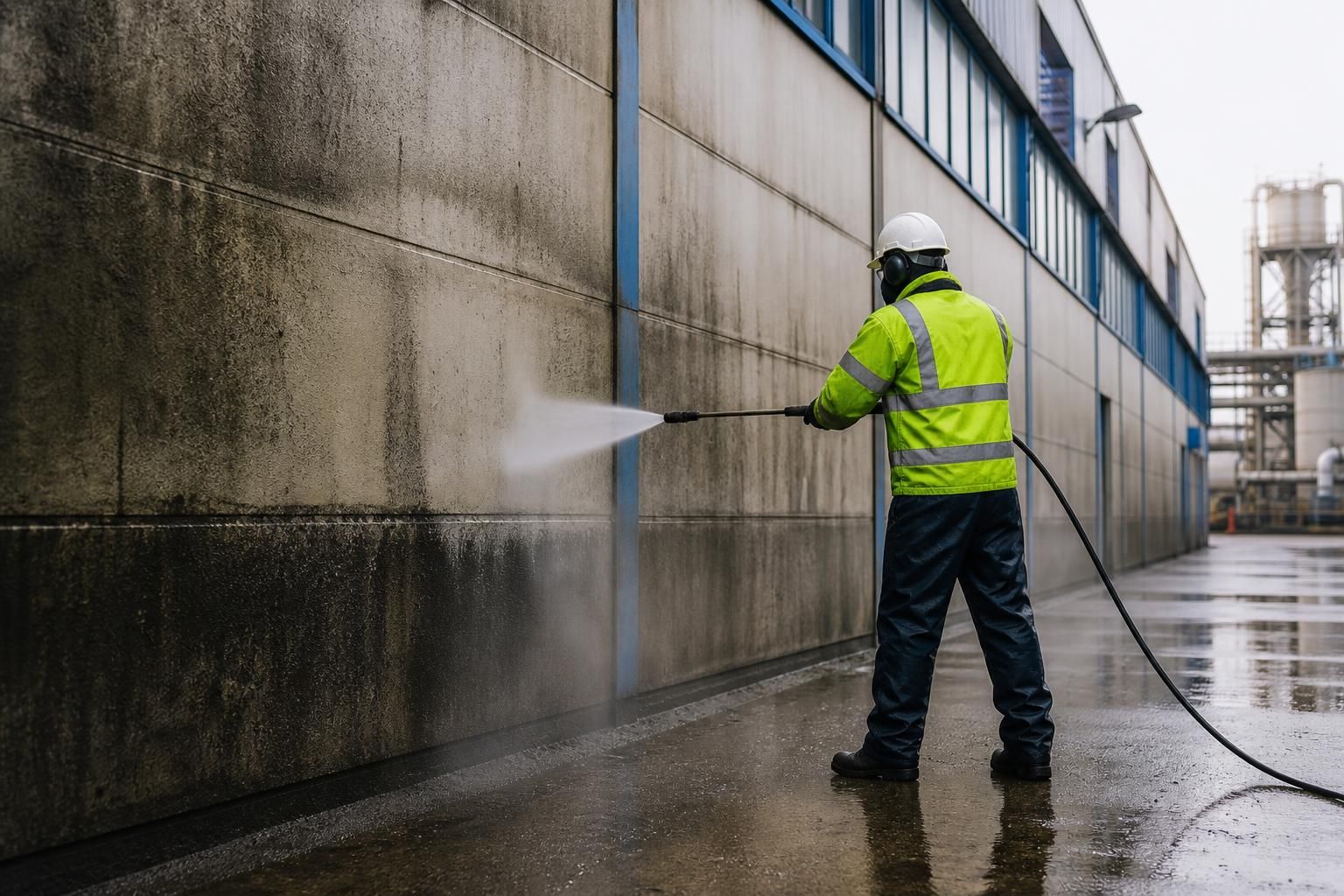
How does industrial high-pressure cleaning ensure safety and surface preservation?
Industrial high-pressure cleaning ensures safety and surface preservation by combining controlled water pressure, suitable nozzles and the correct cleaning method for each material. Experienced operators remove hazardous grime, oil, algae and contaminants without using excessive force that could damage façades, cladding, concrete, roofing or other industrial surfaces.
Industrial high-pressure cleaning ensures safety and surface preservation through controlled pressure, appropriate water temperature, suitable nozzles and a cleaning method matched to the material and contaminant. Skilled operators remove oil, algae, dirt, biological growth, loose coatings and other deposits without applying unnecessary force to façades, cladding, concrete, roofing, paving or industrial equipment.
Safety starts with a site assessment. Before cleaning begins, the work area is reviewed for hazards such as vehicle movements, pedestrians, electrical equipment, fragile surfaces, overhead services, open edges, drainage points and contaminated residues. The cleaning method, access arrangements and exclusion zones can then be planned around the site rather than treating every surface in the same way.
- Work areas can be isolated with barriers, signs and controlled access where spray, debris or wet surfaces could affect other people.
- Plant, vehicles, machinery and electrical equipment can be protected or temporarily relocated before water is introduced.
- Operators use appropriate personal protective equipment, which may include eye and face protection, waterproof clothing, gloves, hearing protection and safety footwear.
- Where work at height is required, suitable access equipment and fall-prevention controls are selected for the building and the task.
- Run-off is considered in advance so contaminated water, detergents and loosened deposits do not enter unsuitable drains or surrounding areas.
Pressure is controlled rather than simply maximised. High pressure is only useful when it is appropriate for the surface and the deposit being removed. Excessive pressure can strip paint, open joints, erode soft masonry, damage seals, force water behind cladding or lift protective coatings. Operators adjust pressure, flow, nozzle type, spray angle and working distance to create enough cleaning effect without causing avoidable wear.
A controlled test area is often used before the main clean. This helps confirm whether the selected method removes the deposit effectively and shows how the surface, coating and joints respond. The results can be used to refine the pressure and technique before work continues across a larger façade, roof, yard or car park.
The cleaning method is matched to the contaminant. Oil and grease may require a suitable detergent or degreasing process before rinsing. Algae, moss and other biological growth may need treatment as well as physical removal, particularly on paving and external walls. Soot, atmospheric staining and ingrained dirt may respond to hot water, steam or a carefully controlled pressure wash. Graffiti removal requires particular care because the cleaning process must remove the unwanted coating while limiting damage to the original substrate and any surrounding finish.
Temperature can also improve cleaning performance. Hot water or steam can soften grease and biological deposits, reducing the need for aggressive mechanical action. This does not make every surface suitable for heat: temperature-sensitive coatings, plastics, sealants and some roofing systems need a lower-temperature approach and a careful assessment.
Surface preservation depends on understanding the substrate. Concrete, brick, natural stone, render, metal cladding, painted surfaces, roof membranes and block paving each have different tolerances. Joints, cracks, corrosion, failing coatings and previous repairs may be more vulnerable than the surrounding material. Water can also penetrate through defective seals or damaged areas, so cleaning is not a substitute for repairs. Any pre-existing weakness should be identified and recorded where it may affect the cleaning method or result.
- Concrete and paving: Controlled pressure can remove tyre marks, algae, oil and accumulated grime, while avoiding unnecessary surface etching and damage to joints.
- Brick and masonry: Lower-pressure techniques, suitable nozzles and careful rinsing help reduce mortar erosion, surface spalling and water penetration.
- Cladding and painted metal: The finish, panel joints and fixings need protection from excessive pressure and spray directed behind the panels.
- Roofs: The membrane, tiles, fixings, flashings and drainage routes must be considered, particularly where the roof is fragile or access is restricted.
- Façades and render: Existing cracks, loose coatings and vulnerable decorative details require a gentler method or localised treatment.
Good technique also controls water and debris. Operators work systematically, usually from cleaner areas towards more heavily soiled sections and from higher levels downwards where appropriate. Rinsing removes loosened material rather than redistributing it across the surface. Drainage points, collection areas and surrounding assets are protected so that contaminated run-off does not create a secondary hazard or leave staining elsewhere on the site.
After cleaning, the area should be checked for residual deposits, slippery patches, damaged coatings and remaining hazards. Surfaces may need time to dry before they are reopened to pedestrians, vehicles or site operations. Where relevant, the condition of the surface and any areas requiring repair can be reported to the responsible property or facilities team.
For ongoing industrial and commercial maintenance, a planned cleaning schedule can help prevent heavy build-up that would otherwise require more intensive treatment. Regular removal of oil, organic growth and airborne deposits supports safer walkways, clearer access areas and a more serviceable exterior, while allowing cleaning methods to remain proportionate to the condition of the surface.
In practice, safety and preservation are linked: a well-planned clean protects people from contamination and slip hazards while protecting the building from avoidable cleaning damage. The essential controls are a site-specific risk assessment, competent operators, suitable access equipment, controlled pressure, material-specific methods, responsible run-off management and a final inspection before the area is returned to normal use.
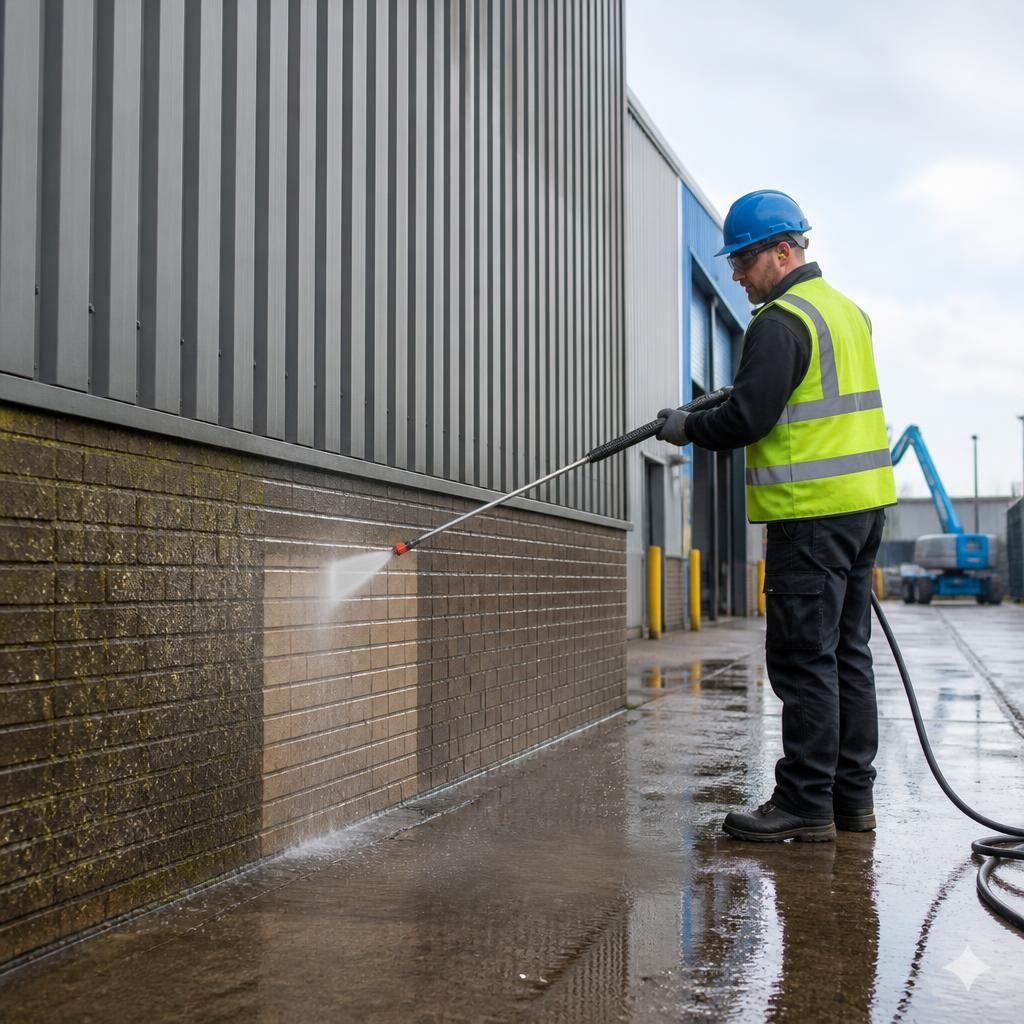
Industrial high-pressure cleaning protects people and surfaces when water pressure is adjusted to suit the material and contaminant, rather than used at its maximum setting. Operators select the appropriate pressure, nozzle, spray angle, water temperature and working distance to remove deposits without eroding masonry, stripping coatings or forcing water behind cladding and seals.
A small test area helps confirm that the chosen method is effective and safe before cleaning the wider surface. This is particularly important for painted façades, render, natural stone, roof membranes and older concrete, where existing cracks, weak joints or failing finishes may be vulnerable. The method can then be refined, reducing avoidable damage while maintaining a thorough clean.