
How does industrial high-pressure cleaning differ from traditional cleaning methods?
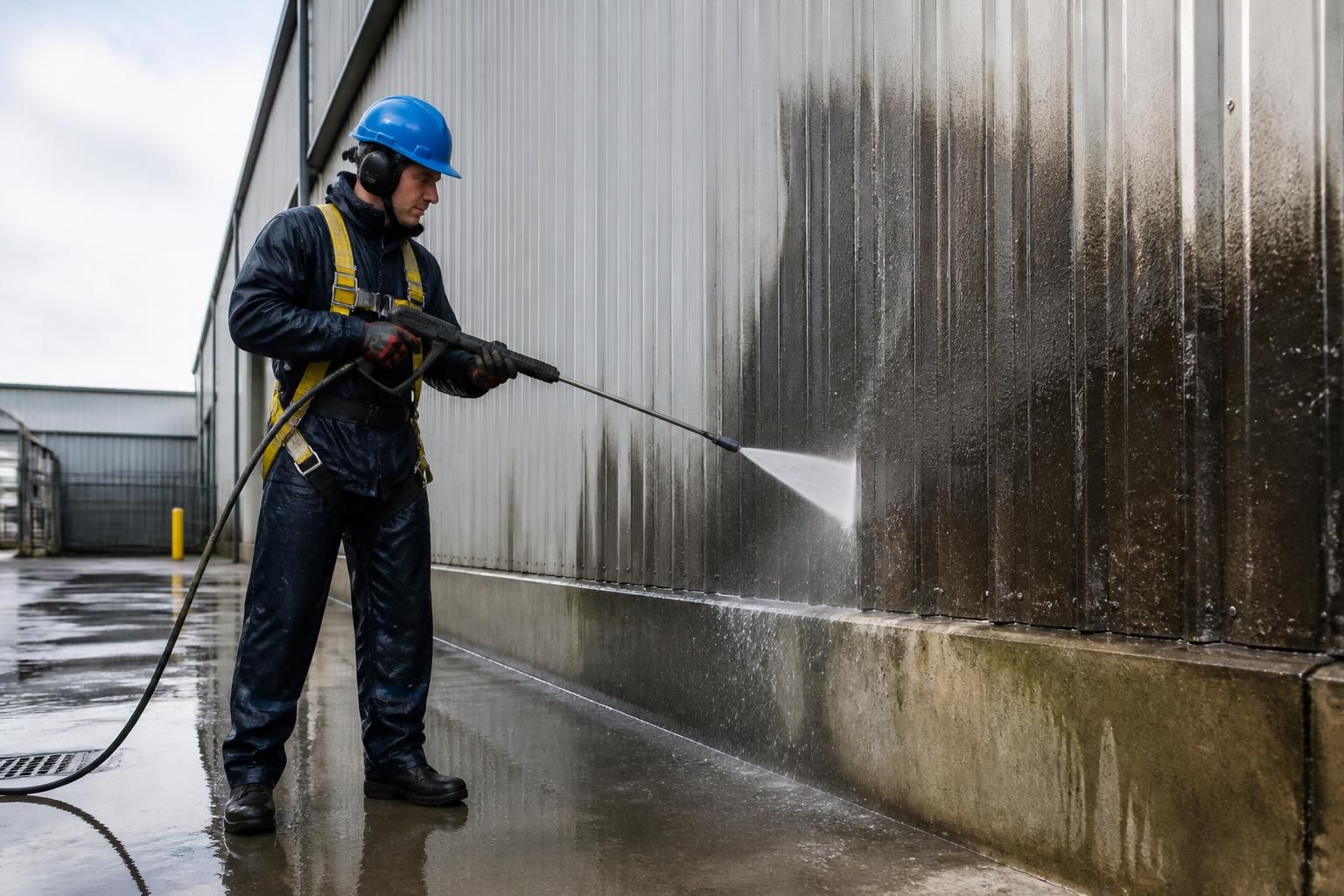
Industrial high-pressure cleaning uses controlled water pressure, flow and temperature to remove ingrained dirt, oil, algae, coatings and other contaminants, whereas traditional cleaning relies mainly on manual scrubbing, basic equipment and chemical products. It generally covers large areas more quickly and consistently, while adjustable pressure and suitable techniques help protect surfaces and reduce unnecessary chemical use.
Industrial high-pressure cleaning differs from traditional cleaning mainly in the way cleaning power is applied. Instead of relying primarily on hand scrubbing, mop-and-bucket methods or general-purpose chemical products, it uses controlled water pressure, flow and, where appropriate, temperature to remove contamination from large or difficult-to-clean surfaces. The equipment and settings can be adapted to the material, the type of soiling and the working environment.
Traditional cleaning methods remain suitable for routine internal cleaning, light dust and small areas. They can become inefficient, however, when dealing with ingrained dirt, oil, grease, algae, moss, traffic film, cement residue, chewing gum, loose coatings or graffiti across extensive external surfaces. Industrial high-pressure cleaning is designed for these more demanding conditions and is commonly used on façades, cladding, roofs, loading areas, yards, car parks, plant areas and other commercial premises.
The main differences are:
- Cleaning mechanism: Traditional methods depend largely on agitation from brushes, pads or cloths, supported by detergents. High-pressure cleaning uses the impact and flow of water to dislodge contamination, with detergents or specialist treatments added only where they are appropriate.
- Coverage and productivity: Pressure washing equipment can treat broad external areas more efficiently than manual scrubbing. This is particularly useful for commercial sites where access, traffic management and operational downtime must be carefully planned.
- Ability to remove difficult contamination: Controlled pressure can break down deposits that are firmly bonded to a surface. Hot-water or steam cleaning can improve the removal of oil, grease and other substances that do not respond well to cold water or manual cleaning.
- Consistency: Professional equipment provides a more uniform application of water and cleaning solution than repeated manual effort. Operators can maintain a suitable technique across large façades, paving areas or cladding panels, reducing obvious variations in the finished appearance.
- Reduced dependence on chemicals: Water pressure, heat and dwell time can often perform much of the cleaning work. This may reduce the quantity of chemical product required, although some contaminants still need a carefully selected detergent, biocide or coating-removal treatment.
- Access to challenging areas: Industrial cleaning can be combined with access equipment, extension systems and specialist attachments to reach high façades, roofs, canopies and awkward structures. Traditional tools are more limited where surfaces are elevated, extensive or difficult to reach safely.
Industrial high-pressure cleaning is not simply a matter of using the highest available pressure. The operator must assess the substrate and select the appropriate nozzle, spray pattern, water flow, temperature and working distance. Excessive pressure or an unsuitable technique can damage masonry, strip protective coatings, force water behind cladding or mark softer materials. Traditional cleaning may be slower, but its lower mechanical force can be preferable for delicate details or small areas requiring close manual control.
Surface condition also affects the choice of method. Concrete and robust paving may tolerate a more intensive approach, while rendered façades, painted surfaces, timber, aged brickwork and some cladding systems require lower pressure and greater care. A professional assessment should identify existing defects, failed joints, loose finishes, drainage points and sensitive areas before cleaning begins. Test cleaning can help confirm that the proposed process will remove the contamination without affecting the substrate.
There are differences in water and waste management as well. Manual cleaning can produce contaminated cloths, used mop water and spent chemical solutions. High-pressure cleaning can reduce manual consumables, but it may generate significant wash water containing oil, silt, paint particles or other pollutants. On commercial and industrial sites, this water must be controlled, collected or directed in accordance with the site’s drainage arrangements and relevant environmental requirements. Good planning is therefore part of the cleaning method, not an afterthought.
Safety procedures are also more demanding. High-pressure water can cause serious injury, damage nearby property and create slip hazards. Trained operators use suitable personal protective equipment, establish exclusion zones, protect vulnerable equipment and services, and manage hoses, runoff and access routes. Where work is carried out at height or near vehicles, pedestrians or operational plant, the method statement and site controls must reflect those risks.
For ongoing commercial maintenance, the most effective approach is often a planned combination of methods. High-pressure or hot-water cleaning can remove heavy external contamination, while softer washing, manual detailing and targeted chemical treatments can be used for sensitive areas. Selecting the method according to the surface and contamination produces a safer and more durable result than applying one process indiscriminately.
In practical terms, traditional cleaning is generally best for light contamination, detailed work and smaller controlled areas. Industrial high-pressure cleaning is better suited to large-scale external cleaning, deeply embedded soiling and surfaces where rapid, consistent removal is required. The important distinction is not maximum force, but the controlled use of the right equipment and technique for the site.
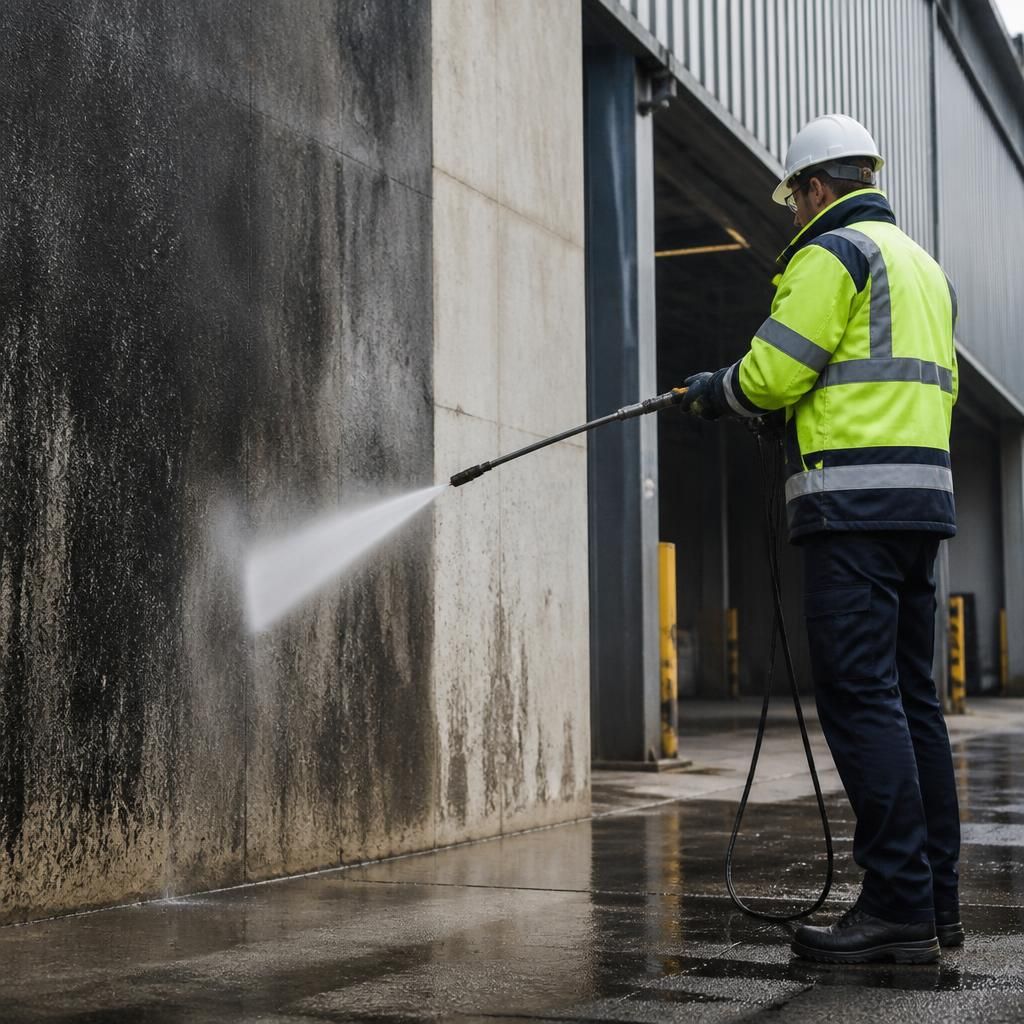
Industrial high-pressure cleaning differs from traditional cleaning by using controlled water pressure, flow and temperature to remove contamination, rather than relying mainly on manual scrubbing and general-purpose chemicals. This makes it more suitable for large external surfaces and ingrained dirt, while pressure settings can be adjusted to protect the substrate.
Professional operators select the nozzle, spray pattern, working distance and temperature according to the surface and the type of soiling. Robust concrete and paving may tolerate stronger cleaning, whereas painted finishes, aged brickwork, render and cladding usually require a gentler approach. Traditional hand cleaning can still be preferable for delicate details or small areas where close control is more important than speed.