
What methods are used to clean industrial surfaces safely?
Industrial surfaces are cleaned safely by selecting the right method for the material, contamination and working environment. Common approaches include controlled pressure washing, steam cleaning, soft washing and specialist treatments, supported by risk assessments, suitable access equipment and appropriate wastewater controls.
Industrial surfaces are cleaned safely by matching the cleaning method to the surface material, contamination, surrounding risks and wastewater requirements. The main methods are controlled pressure washing, steam cleaning, soft washing and specialist treatments. A professional process also includes a site survey, risk assessment, suitable access equipment, controlled water use, protection of nearby assets and responsible collection or disposal of runoff.
Cleaning method selection
No single method is suitable for every industrial surface. Before work begins, the cleaning team should identify the substrate, coating condition, type of soiling and any hazards created by the building or process. Concrete, brick, metal cladding, painted surfaces, roofing membranes and plastics can all respond differently to pressure, heat and chemicals. A small test area is often used to confirm that the selected method removes contamination without causing etching, coating failure, water penetration or colour change.
The condition of the surface is equally important. Loose coatings, corroded metal, damaged pointing and failed sealants may deteriorate further if exposed to excessive pressure or heat. Where defects are found, they should be recorded and considered in the method statement rather than treating the surface as if it were sound.
Controlled pressure washing
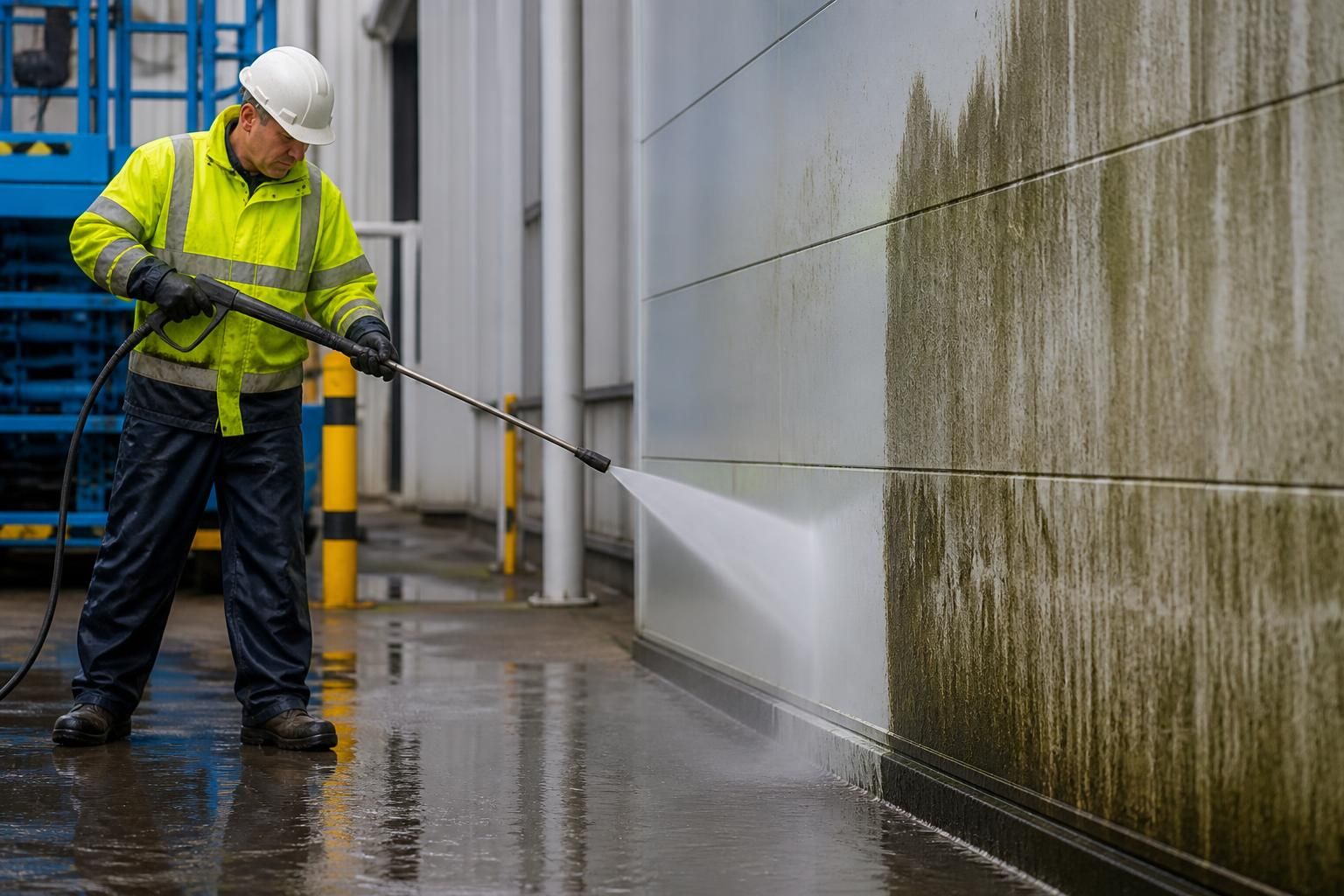
Pressure washing uses pressurised water to remove dirt, algae, moss, traffic film, loose coatings and other deposits. It is effective on robust surfaces such as concrete yards, loading areas, kerbs, masonry and some types of cladding, provided the pressure, nozzle pattern, water volume and working distance are controlled.
Safe pressure washing is not simply a matter of using the highest available pressure. Excessive pressure can damage mortar joints, force water behind cladding, strip protective coatings or mark softer materials. Operators should use the lowest effective setting, select an appropriate nozzle and maintain a consistent distance from the surface. Particular care is required around vents, doors, electrical equipment, seals, joints and areas where water could enter the building.
Where contamination is strongly bonded, controlled pressure may be combined with a suitable detergent or pre-treatment. The chemical should be compatible with the surface and rinsed or removed in accordance with the product instructions and site controls.
Steam cleaning
Steam cleaning applies heated water at relatively low pressure to soften and lift oil, grease, organic growth, traffic film, chewing gum, deposits and some residues. The heat can reduce the need for aggressive mechanical action, making the method useful for sensitive façades, detailed architectural surfaces, signs, equipment exteriors and areas where minimising water volume is important.
Steam is not automatically suitable for every coating or material. Heat can affect certain plastics, sealants, paints and membranes, so a test patch and manufacturer guidance should be considered. Operators must also control the risk of burns, vapour, condensation and slippery surfaces. In enclosed or poorly ventilated areas, ventilation and atmospheric conditions need to be assessed before steam is used.
Soft washing and chemical treatments
Soft washing uses a low-pressure application of a compatible cleaning solution to treat organic contamination such as algae, moss, lichen and some staining. It can be appropriate for coated cladding, roofing materials, rendered surfaces and other substrates that may be damaged by aggressive pressure. The treatment is normally followed by a controlled rinse or allowed to work according to the product instructions.
Chemical treatments must be selected and handled carefully. The cleaning team should check the product data, dilution requirements, contact time, surface compatibility, required personal protective equipment and environmental precautions. Nearby vegetation, drainage channels, watercourses, vehicles, painted surfaces and air-handling equipment may need protection. Chemical residue should not be allowed to enter a drain or watercourse unless the discharge is permitted and appropriately controlled.
Specialist and low-abrasion methods
Some industrial cleaning projects require methods beyond water and standard detergents. Specialist options may include dry-ice cleaning, abrasive or non-abrasive blasting, mechanical cleaning, stain treatments and controlled coating removal. These methods are selected for particular contaminants such as hardened deposits, corrosion, adhesive residue, paint, carbon or persistent industrial staining.
Blasting and other abrasive techniques can alter the surface profile, generate dust and remove protective finishes. They therefore require careful containment, suitable respiratory and eye protection, and confirmation that the substrate can tolerate the treatment. Dry-ice cleaning can reduce secondary water and abrasive waste in suitable applications, but it still creates displaced contamination and may be unsuitable for fragile materials or poorly ventilated spaces.
Safe access and work controls
Industrial surfaces are frequently located at height or above active yards, walkways and production areas. Access arrangements should be planned around the building and the cleaning method. Depending on the task, this may involve mobile elevated work platforms, powered access, scaffold, towers, rope access or long-reach equipment. Equipment must be suitable for the ground conditions, working height, reach and loading restrictions, and operators must be trained and competent to use it.
A site-specific risk assessment and method statement should address falls from height, falling objects, pressurised equipment, electrical hazards, vehicle movements, contact with chemicals, restricted access, unstable surfaces and exposure to dust or vapour. Exclusion zones, barriers and clear signage help separate the work area from employees, visitors and members of the public. Where cleaning could affect machinery, stock or production, relevant equipment may need to be isolated, covered or temporarily taken out of service.
Managing water, runoff and contamination
Runoff is a key part of safe industrial cleaning. Water from yards, workshops and loading areas may contain oil, fuel, detergents, metals, paint residue or other contaminants. Before work starts, the team should identify drainage routes and determine whether runoff can be contained, filtered, recovered or discharged lawfully. Drain covers, bunding, wet vacuums, collection tanks and temporary barriers may be used where appropriate.
Wastewater should never be directed into a surface-water drain simply because it is convenient. The correct arrangements depend on the contaminant, site drainage system and applicable environmental requirements. Solid waste, removed coatings and contaminated absorbents should also be collected and handled through appropriate waste procedures.
Personal protective equipment and equipment checks
Personal protective equipment is selected according to the hazards identified during the assessment. This may include waterproof protective clothing, gloves, eye or face protection, hearing protection, safety footwear and respiratory protection. PPE supports, but does not replace, safer equipment settings, isolation, ventilation and other control measures.
Hoses, lances, pumps, boilers, electrical leads, access equipment and recovery systems should be inspected before use. Operators should check connections, guards, emergency controls and signs of wear, and remove defective equipment from service. Cleaning equipment must be positioned so that hoses do not create trip hazards or interfere with vehicles and emergency routes.
A practical safe-cleaning sequence
- Survey the surface, contamination, access arrangements, drainage and nearby activities.
- Identify hazards and agree the risk assessment, method statement, work area controls and any required isolations.
- Select the least aggressive effective method and confirm compatibility with a test patch.
- Protect adjacent surfaces, equipment, vegetation, openings and drainage points.
- Carry out the cleaning with controlled pressure, temperature, chemical use and working distance.
- Collect, filter or otherwise manage wastewater and removed material in line with site and environmental requirements.
- Inspect the finished surface, remove temporary controls when safe and report defects or areas requiring further attention.
The safest result is therefore achieved through controlled application rather than maximum cleaning force. For industrial façades, cladding, roofs, yards and other external assets, the method should be documented, tested and adjusted to the actual conditions on site. This protects the substrate, reduces disruption and helps maintain a safe, compliant working environment.
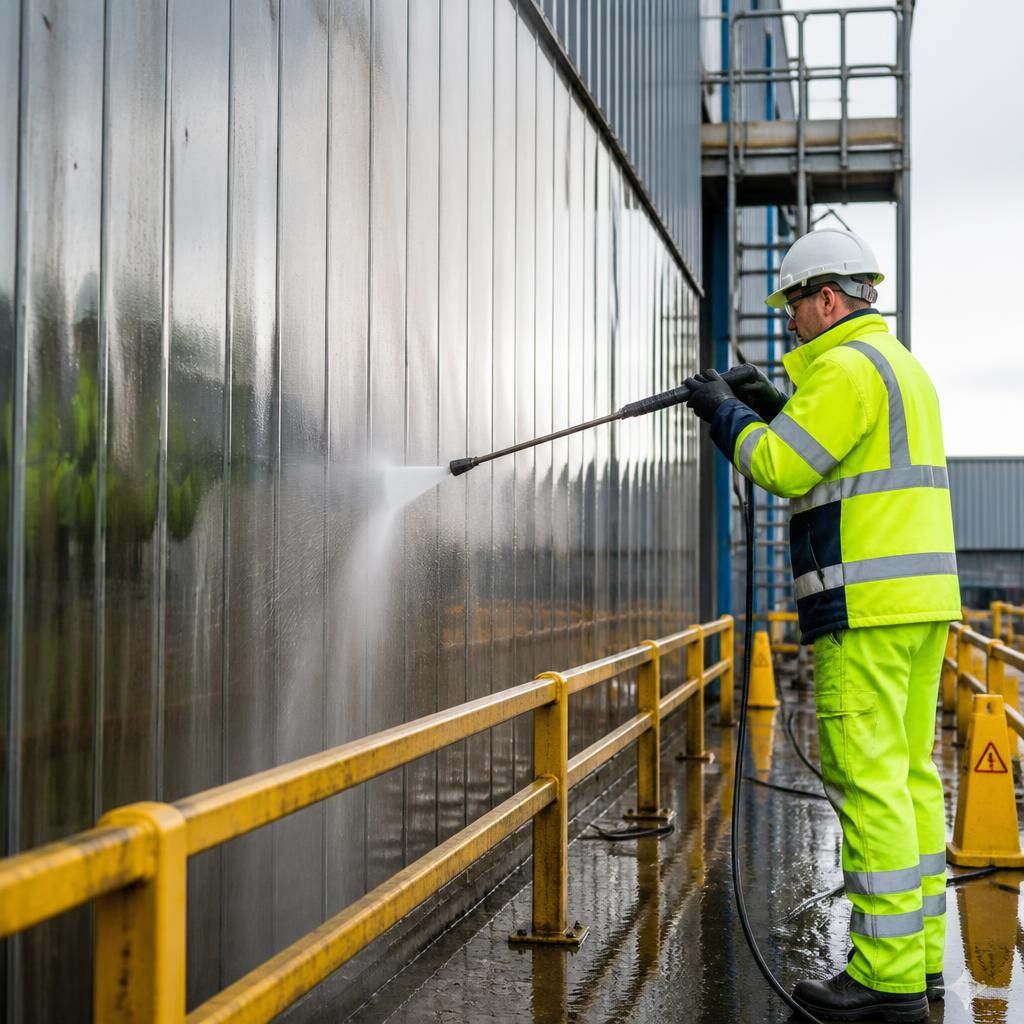
Safe industrial surface cleaning means using the least aggressive effective method for the substrate and contamination. A test patch helps confirm that the chosen pressure, temperature or cleaning solution removes the deposit without damaging coatings, pointing, seals, roofing membranes or cladding.
Before work starts, the area should be assessed for access, electrical equipment, drainage, nearby personnel and sensitive assets. Barriers, suitable protective equipment and controlled wastewater collection help prevent secondary risks while the cleaning is carried out.