
What are the environmental considerations when undertaking industrial exterior cleaning?
Environmental considerations in industrial exterior cleaning include controlling water use and contaminated runoff, selecting suitable detergents, managing waste responsibly and preventing damage to surrounding land, drainage systems and wildlife. Professional planning should match the cleaning method to the surface and site conditions, with recovery or containment measures used where pollutants could enter watercourses or foul drainage.
Environmental considerations in industrial exterior cleaning centre on preventing pollution while achieving the required cleaning result. This means controlling water consumption, containing and correctly disposing of contaminated runoff, choosing the least harmful effective cleaning products, protecting drainage systems and nearby land, and managing noise, energy use, waste and wildlife risks. The method should be selected only after assessing the surface, contaminants, drainage layout, surrounding environment and legal requirements of the site.
Begin with a site and environmental assessment. Before work starts, the cleaning contractor should identify surface materials, likely contaminants, nearby watercourses, gullies, soakaways, oil separators, foul and surface-water drains, landscaped areas and sensitive neighbouring premises. The assessment should establish whether deposits may contain oil, chemicals, heavy metals, cement residue, biological growth, paint particles or other pollutants. It should also consider the possibility that cleaning will dislodge hazardous coatings or residues from industrial buildings and equipment.
This information determines whether ordinary pressure washing is appropriate, whether lower-water steam cleaning would be safer, and whether runoff must be collected for treatment or disposal. It also informs the method statement, risk assessment, emergency arrangements and any permissions required from the site operator, sewer undertaker or environmental regulator.
Water use should be controlled rather than treated as an unlimited resource. High-pressure equipment can reduce the time and water required for some cleaning tasks, but the actual consumption depends on the equipment, pressure, flow rate, surface condition and operator technique. Steam cleaning can use less water for certain types of dirt and biological growth, although it is not automatically the most suitable option for every material or contaminant. A competent contractor should select equipment based on the work rather than using excessive pressure or flow as a substitute for preparation and control.
Practical measures include using correctly maintained equipment, avoiding unnecessary rinsing, cleaning in manageable sections and preventing water from running beyond the work area. Where appropriate, recovered water may be filtered or treated for reuse, provided that this is suitable for the contaminant and does not compromise cleaning quality or worker safety.
Runoff is often the main pollution risk. Water leaving a façade, roof, yard or plant area can carry silt, oil, detergents, metals, paint fragments, cementitious material and concentrated organic matter. It must not be allowed to enter a surface-water drain, stream, river, pond or unprotected ground simply because the water appears clear. Surface-water systems commonly discharge directly to the environment, whereas foul drainage may lead to a treatment works, but neither route should be used without confirming that the discharge is permitted.
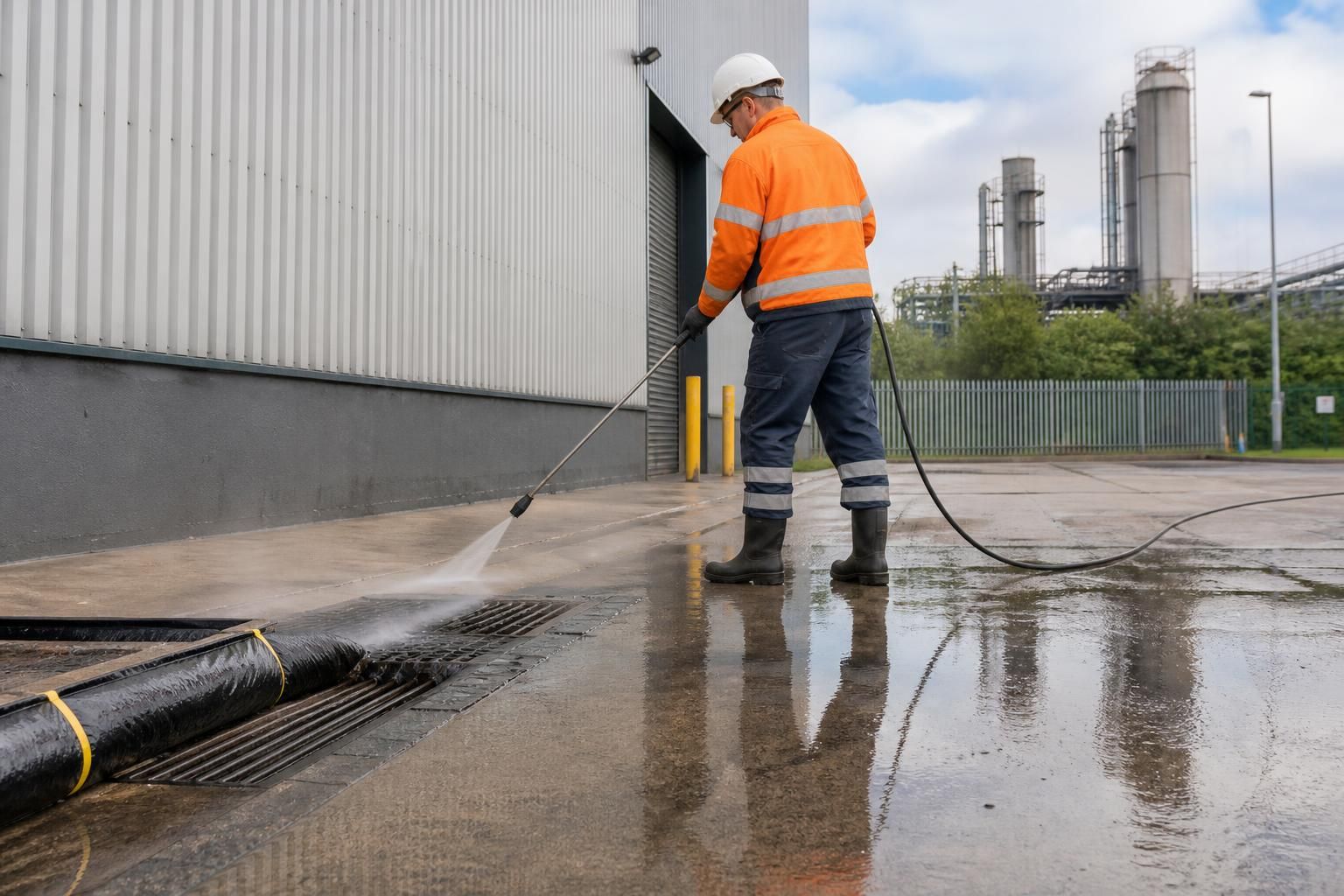
Containment may involve drain covers, bunding, temporary booms, collection mats, vacuum recovery equipment, portable tanks, gutter protection and carefully positioned barriers. The precise arrangement depends on the site and the volume and character of the wastewater. Collected water should be inspected and, where necessary, tested before an agreed discharge or disposal route is used. A spill response plan should be available, with suitable materials and equipment ready to stop contaminated water spreading if containment fails.
Drainage arrangements must be confirmed before cleaning begins. Site drawings should not be relied upon without checking them against the actual drainage layout, particularly on older industrial premises where connections may have been altered. Gullies should be traced where practical, and drains that could receive polluted water should be isolated or protected. Discharging trade effluent to a public foul sewer may require the consent of the relevant sewerage provider. Discharge to surface water, land or a watercourse may require separate regulatory approval, and requirements vary across the UK. If there is any uncertainty, the site operator and appropriate environmental authority should be consulted before work starts.
Cleaning chemicals should be chosen for necessity, compatibility and environmental impact. Detergents, biocides, degreasers, solvents, acidic products and alkaline cleaners can affect aquatic life, soil, vegetation, drainage infrastructure and the surface being cleaned. The preferred product is not simply the strongest one; it is the least hazardous product that will remove the specific contamination when used at the correct dilution and temperature.
Product labels and safety data sheets should be reviewed before use. The contractor should understand the product’s hazards, storage requirements, dilution instructions, personal protective equipment requirements and disposal arrangements. Chemicals must never be mixed unless the manufacturer expressly permits it, as incompatible products can generate harmful gases or damaging reactions. Biocidal treatments require particular care because residues and wash-off can affect plants and aquatic organisms. Where a chemical treatment is unnecessary, mechanical cleaning, controlled pressure or steam may reduce the environmental burden.
Runoff containing detergent or biocide should not be assumed to be safe merely because the product is described as biodegradable. Biodegradability does not remove the need for containment, correct dilution or an authorised disposal route. The environmental risk depends on the complete mixture, including the dirt and pollutants removed from the surface.
Waste must be classified and managed according to what has been removed. Sludge, silt, spent filters, contaminated absorbents, paint debris, used chemical containers and recovered wastewater may require separate handling. Waste should be stored securely, labelled where required and transferred using an appropriately authorised waste carrier to a suitable facility. Waste transfer documentation and other records should be retained in line with the applicable requirements. Hazardous waste arrangements may apply where the material contains substances such as oils, solvents, heavy metals or hazardous coating residues.
Dry debris should not be swept into drains or blown across the site. Vacuum collection, sealed containers and damp methods can reduce the spread of fine particles. If old coatings, concrete dust or other materials may contain hazardous substances, the work should be assessed before disturbance and specialist advice obtained where necessary.
Protecting surrounding land, vegetation and wildlife is part of the cleaning plan. Overspray, chemical mist, dirty water and falling debris can damage planting, soil, water features and adjacent property. Landscaped areas may need temporary sheeting, barriers or pre-wetting, although coverings must not trap heat or chemicals against vulnerable plants. Work should be stopped or modified if wind causes spray to drift outside the controlled area.
Industrial buildings can support nesting birds, bats and other protected species, particularly around roof edges, cladding gaps, eaves, ledges and disused structures. A pre-work inspection should consider whether access equipment, noise, vibration, chemicals or temporary sealing could disturb wildlife or affect a protected habitat. If signs of protected species are found, the work should pause in the relevant area and appropriate ecological advice should be obtained. Seasonal restrictions may be relevant, but legal protection depends on the species and circumstances rather than on a simple calendar rule.
Energy, air quality and noise should also be considered. Pressure washers, steam generators, vacuum recovery systems, pumps and access equipment all consume energy or fuel. Efficient, well-maintained equipment, sensible operating times and avoiding unnecessary idling can reduce emissions. Where electrically powered equipment is practical, it may reduce local exhaust emissions, but the full site requirements, available power and equipment suitability still need to be assessed.
Noise and vibration can affect workers, neighbouring businesses, residents and wildlife. The contractor should select equipment and working hours that are appropriate for the location, keep engines and pumps maintained, and use barriers or positioning to limit disturbance where necessary. Dust and aerosol formation should be controlled through suitable pressure, nozzle selection, wet methods, local containment and appropriate respiratory protection. These controls protect both the environment and people working nearby.
Surface protection prevents repeat cleaning and avoidable waste. Excessive pressure, aggressive chemicals or unsuitable heat can strip coatings, damage sealants, erode masonry, open joints or shorten the service life of cladding and roofing materials. That can lead to additional repairs, replacement materials and further cleaning. A responsible approach uses test patches, follows manufacturer guidance where available and adjusts pressure, temperature, dwell time and chemical concentration to the condition of the surface.
Environmental controls should be documented rather than left to individual judgement on the day. Useful records include the pre-cleaning survey, drainage checks, product information, quantities used, containment arrangements, wastewater testing where applicable, waste transfer documentation, equipment checks, incidents and any discharge approvals. A clear handover should identify what was cleaned, how runoff was managed and whether any defects or pollution risks were found.
For an industrial site, the most environmentally responsible cleaning plan is therefore not necessarily the one using the least water or no chemicals. It is the plan that controls the whole process: assessing the contamination, selecting a proportionate technique, preventing uncontrolled runoff, protecting sensitive areas, recovering or treating wastewater where required, and demonstrating that waste and discharges were handled lawfully. These controls should be agreed with the facilities or environmental team before mobilisation, especially where the site has its own permit, drainage consent, spill plan or strict contractor requirements.
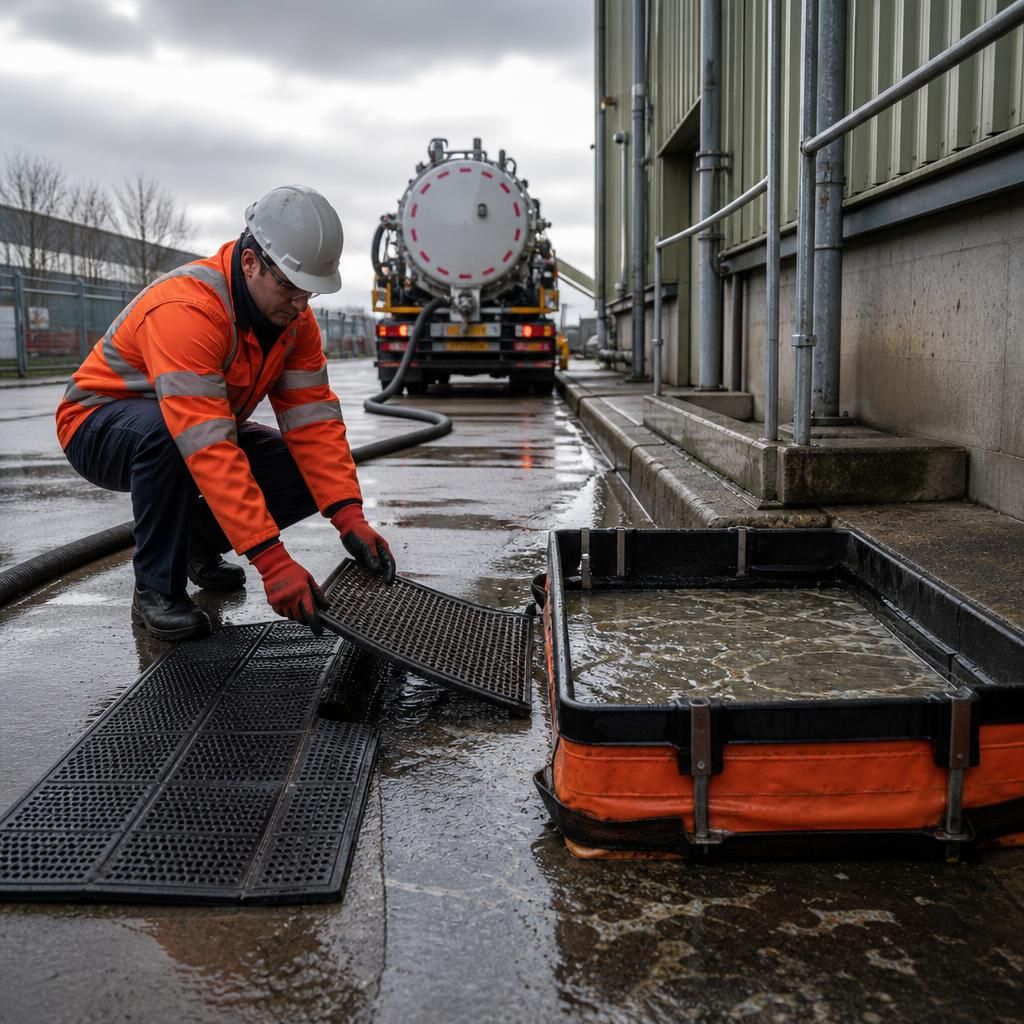
Containing contaminated runoff is one of the most important environmental controls during industrial exterior cleaning. Water from roofs, façades, yards and plant areas can carry oil, detergents, metals, paint fragments, silt and other pollutants into surface-water drains, soil or nearby watercourses.
Before cleaning begins, the drainage layout should be checked and vulnerable gullies protected using drain covers, bunding or collection mats. Where necessary, vacuum recovery equipment and temporary storage tanks can collect wastewater for inspection, treatment or authorised disposal. A clear spill response plan should also be in place so that cleaning can stop immediately if containment fails.
Plan Environmentally Responsible Industrial Cleaning
Speak to Encanto Exterior Cleaning about an environmentally responsible cleaning plan for your industrial site, including runoff control, suitable methods and waste management. We can assess your surfaces, drainage and site requirements before work begins.