How can industrial cleaning services help maintain safety and compliance in manufacturing facilities?
Industrial cleaning services help manufacturing facilities maintain safety and compliance by removing oil, dust, chemical residues, mould and other contaminants from roofs, cladding, floors and external areas. Planned, risk-assessed cleaning also reduces slip, fire and contamination hazards, protects equipment and supports the inspection and maintenance records required by site procedures and relevant regulations.
Professional industrial cleaning services help manufacturing facilities maintain safety and compliance by controlling contaminants, reducing workplace hazards and providing documented evidence that cleaning and maintenance tasks have been planned and completed. A properly managed programme can address oil, grease, dust, chemical residues, mould, algae, bird fouling, production waste and other deposits across roofs, cladding, façades, yards, loading areas, car parks and access routes.
Cleaning is part of a wider compliance system. It does not replace statutory inspections, engineering controls, maintenance or operator training, but it supports each of these activities. Clean surfaces are easier to inspect, safer to access and less likely to conceal defects, leaks, corrosion or damage that could affect people, equipment or production.
Reducing common workplace hazards
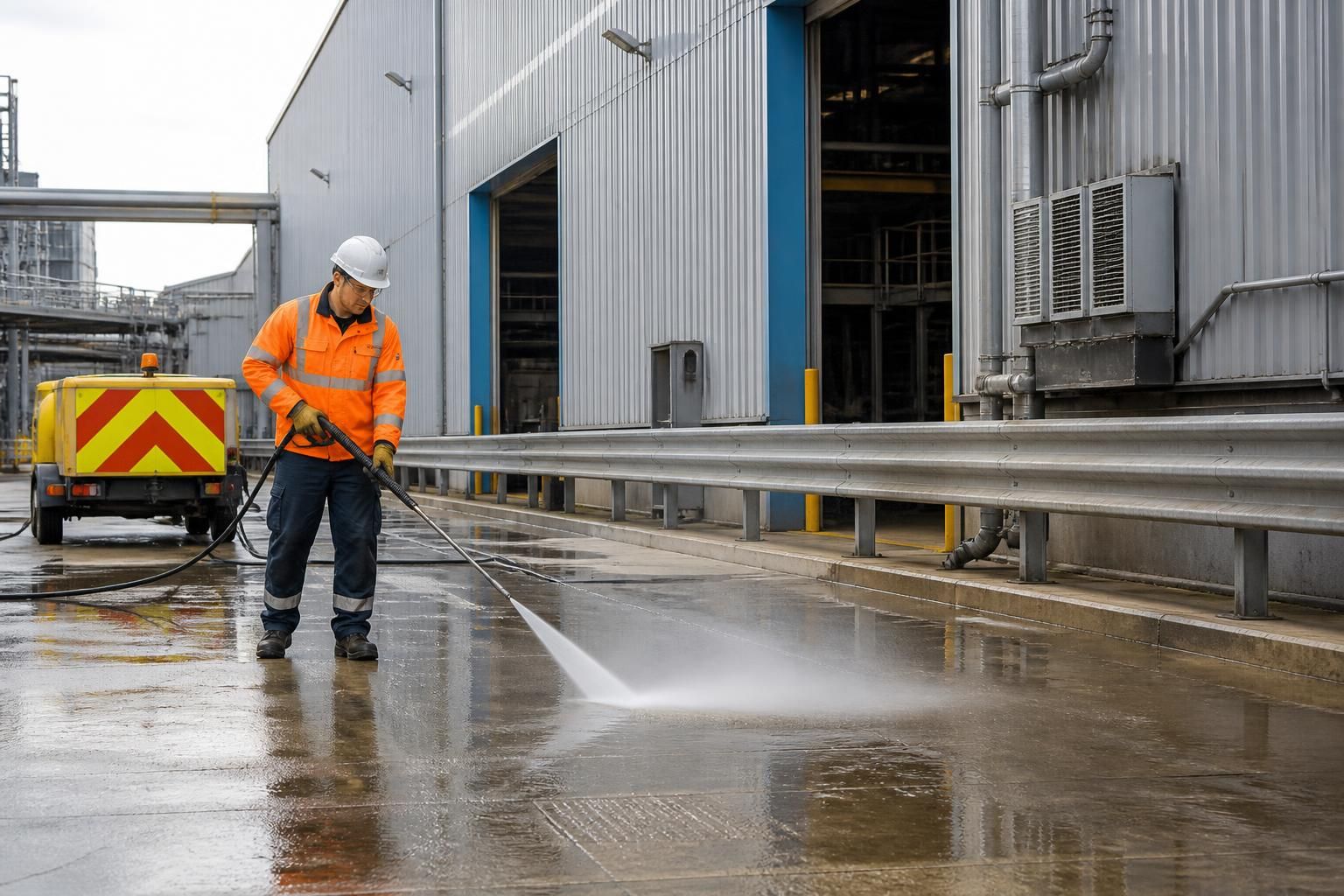
Manufacturing sites can accumulate contaminants quickly, particularly around loading bays, waste storage areas, plant rooms, service yards and production entrances. Oil and grease can create slip hazards, while loose dust, fibres and combustible residues may increase fire or contamination risks. Moss, algae and bird fouling can make external walkways, steps and roofs unsafe. Professional cleaning removes these deposits using methods selected for the surface, substance and operating environment.
- Pressure washing can remove ingrained dirt, mud, grease and general deposits from robust external surfaces.
- Steam cleaning can loosen grease and biological growth while using less water than some conventional methods.
- Soft washing or controlled low-pressure cleaning can reduce the risk of damaging coatings, seals, cladding and painted finishes.
- Specialist stain and residue removal can address localised contamination without treating an entire elevation unnecessarily.
- Industrial vacuuming and controlled collection can help prevent dust and wash water spreading into clean or sensitive areas.
The objective is not simply to make a site look cleaner. It is to remove or control substances that could cause slips, trips, falls, fire, contamination, corrosion, blocked drainage or unsafe access. Cleaning methods should always be matched to the site’s risk assessment and the condition of the surface.
Supporting COSHH and contamination controls
Manufacturing facilities may handle oils, solvents, powders, chemicals, fuels or other substances covered by the Control of Substances Hazardous to Health Regulations. Cleaning contractors should establish what contaminants are present before work starts and identify any relevant safety data sheets, exposure risks, required personal protective equipment and disposal arrangements.
Where residues may be hazardous, the work should include suitable controls for storage, handling, dilution, application and removal. This may involve restricting access, preventing spray drift, isolating drainage, using respiratory or skin protection and collecting contaminated water or debris for appropriate disposal. Cleaning should not begin until the contractor understands the substance involved and the client has provided the information needed for safe working.
Helping sites meet workplace safety duties
Under the Health and Safety at Work etc. Act and associated workplace safety legislation, employers must control risks to employees and others affected by their activities. Planned cleaning contributes to this duty by addressing foreseeable hazards in areas used by staff, contractors, visitors, delivery drivers and members of the public.
A responsible cleaning plan will consider:
- the location and nature of contamination;
- the people, vehicles and processes operating nearby;
- slips, trips, falls from height and falling-object risks;
- contact with chemicals, biological matter or contaminated water;
- plant, machinery, electrical installations and sensitive equipment;
- weather conditions, wind, temperature and drainage capacity;
- emergency access, fire routes, muster points and escape paths; and
- the need to keep production areas, public routes or neighbouring premises protected.
Cleaning may need to be scheduled during a planned shutdown, outside delivery periods or in sections so that safe routes and essential operations remain available. Barriers, warning signs, temporary closures and traffic management may be required while surfaces are wet or equipment is operating.
Managing work at height and access equipment
Industrial roofs, high-level cladding, canopies and façades often require powered access, mobile platforms, scaffold, specialist poles or other access systems. The Work at Height Regulations require work to be properly planned, appropriately supervised and carried out using suitable equipment. A cleaning contractor should assess the access method rather than defaulting to ladders or unsafe manual reach.
Where access equipment is used, the planning should cover ground conditions, overhead obstructions, exclusion zones, weather limits, operator competence, rescue arrangements and inspection requirements. Equipment used for lifting people or loads must be selected and maintained appropriately, with relevant examination records available where required. Preventing falls and dropped objects is as important as removing the contamination itself.
Protecting machinery, products and production processes
Water, steam, detergents and dislodged debris can damage electrical components, affect moving parts or contaminate raw materials and finished products. Before cleaning starts, the method statement should identify equipment that needs to be isolated, covered, shielded or excluded from the work area.
Depending on the process, controls may include electrical isolation, lockout procedures, temporary covers, the removal of exposed stock, protection of ventilation intakes and separation of clean and dirty zones. Cleaning near food, pharmaceutical or other controlled production environments may also need to follow site hygiene procedures, zoning requirements and validation arrangements. The client’s production and engineering teams should approve the proposed method where cleaning could affect plant or product integrity.
Supporting fire prevention and housekeeping
Accumulations of dust, oily deposits, packaging residue and waste can contribute to fire risk or obstruct inspection and emergency response. Cleaning high-level ledges, external plant areas, service yards and waste handling zones helps maintain effective housekeeping and can make defects, leaks and damaged insulation easier to identify.
Cleaning should be coordinated with the site’s fire risk assessment. Fire exits, access roads, hydrants, fire-fighting equipment and emergency routes must not be blocked during the work or left inaccessible because of equipment, hoses, waste or standing water. Where combustible dust or residues are involved, the selected cleaning technique should avoid creating an unnecessary airborne cloud or ignition risk.
Protecting roofs, cladding and building fabric
Deposits on roofs and cladding can retain moisture, obstruct gutters and outlets, encourage biological growth and conceal corrosion or coating failure. Regular, controlled cleaning helps reveal these issues so they can be referred for inspection and repair before they develop into more serious building defects.
Cleaning is not a substitute for a roof survey or structural inspection. Operatives should not assume that a surface is safe to walk on because it appears sound, particularly where fragile rooflights, aged sheets, corrosion or hidden voids may be present. The cleaning plan should identify safe access routes and define when a specialist survey or repair contractor is needed.
Controlling wastewater and environmental risks
Wash water can carry oil, chemicals, silt, paint particles, faecal matter and other pollutants into surface-water drains or surrounding ground. A compliant cleaning approach identifies drainage routes before work begins and specifies how wastewater, sludge and removed debris will be contained, filtered, recovered or disposed of.
Methods may include drain covers, bunding, wet vacuums, collection tanks, absorbent materials and staged cleaning. Detergents should be selected for the surface and contamination, used at the necessary concentration and kept away from watercourses and unauthorised drainage systems. Where contamination is significant, the site may need specialist waste advice or approval from the relevant authority before discharge or disposal.
Creating useful records for audits and inspections
Documented cleaning records help demonstrate that identified risks are being managed consistently. They can also support internal audits, contractor reviews, maintenance planning and investigations following an incident. Records should be accurate and specific rather than simply stating that an area was cleaned.
Depending on the work, useful documentation may include:
- the site survey and identified hazards;
- risk assessments and method statements;
- COSHH assessments and product information;
- training, competency and access-equipment records;
- permits, isolations and site induction details;
- the areas cleaned, equipment used and dates completed;
- photographs showing conditions before and after cleaning;
- details of defects, inaccessible areas or further work identified;
- waste transfer or disposal information where relevant; and
- client sign-off, follow-up actions and the proposed review date.
Photographs and inspection notes are particularly useful where contamination was hiding damaged cladding, blocked drainage, corroded fixings or deteriorated coatings. Any defect found during cleaning should be reported rather than covered up or treated as part of the cleaning scope without approval.
Building a risk-based cleaning schedule
The right frequency depends on the site’s processes, contamination levels, location, weather exposure, foot and vehicle traffic, drainage arrangements and compliance requirements. A high-traffic manufacturing entrance or loading yard may need more frequent attention than a lightly used elevation, while a site handling dusty or oily materials may require cleaning linked to production cycles or planned maintenance shutdowns.
Start with a condition survey and record areas where contamination creates a realistic safety, environmental or operational risk. Set priorities, define acceptable cleaning standards and review the schedule after incidents, process changes, construction work, severe weather or changes in site use. This produces a more defensible programme than applying the same interval to every surface.
What the facility should expect from a cleaning contractor
An industrial cleaning provider should be able to explain how the proposed method controls risk, protects the building and avoids disruption to production. Before appointing or instructing a contractor, confirm that they can provide suitable RAMS, trained operatives, appropriate access equipment, public and employer’s liability cover, safe chemical handling procedures and a clear plan for wastewater and waste.
The contractor should also work within the facility’s permit, induction, isolation, emergency and reporting systems. Clear communication between the cleaning team, facilities manager, engineering staff and production supervisors reduces the chance of conflicting activities or unexpected exposure to hazards.
When cleaning is planned in this way, it becomes a practical part of manufacturing site management. It reduces preventable hazards, supports COSHH and work-at-height controls, protects assets and makes compliance evidence easier to maintain, while ensuring that any wider inspection, repair or statutory duty is identified and managed by the appropriate person.
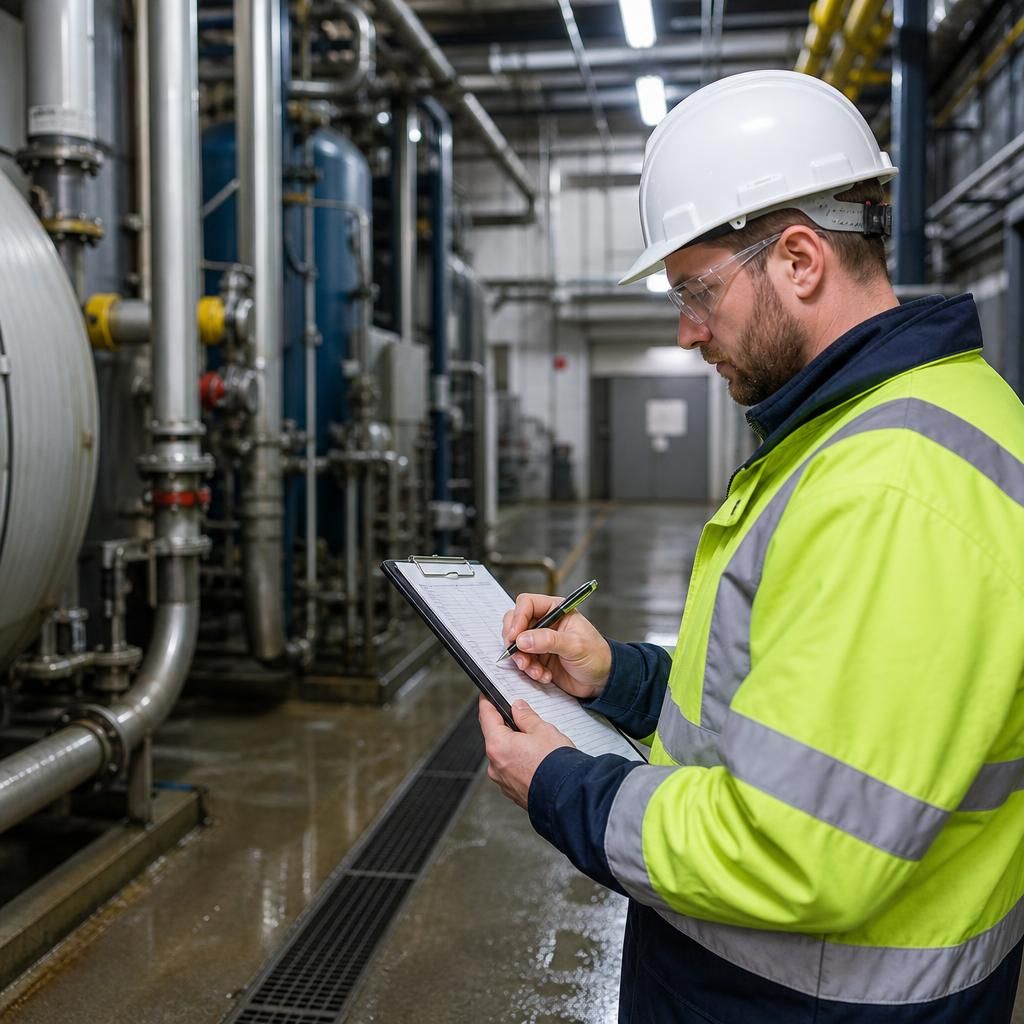
Documented industrial cleaning supports manufacturing safety and compliance by showing that identified contamination hazards have been assessed, controlled and reviewed. Records should link the cleaning task to the relevant area, method and site requirements rather than simply stating that cleaning was completed.
Useful evidence can include the risk assessment and method statement, COSHH information, access-equipment checks, cleaning dates, photographs, wastewater controls, defects identified and client sign-off. These records help facilities teams demonstrate consistent housekeeping during audits and provide a clear basis for follow-up inspections, repairs or changes to the cleaning schedule.
Discuss Your Manufacturing Facility’s Cleaning Requirements
Discuss your manufacturing facility’s cleaning requirements with Encanto Exterior Cleaning to identify suitable methods, access arrangements, safety controls and documentation for your site. We can help plan cleaning around production, maintenance and compliance needs.