
What types of industrial facilities benefit most from specialised cleaning services?
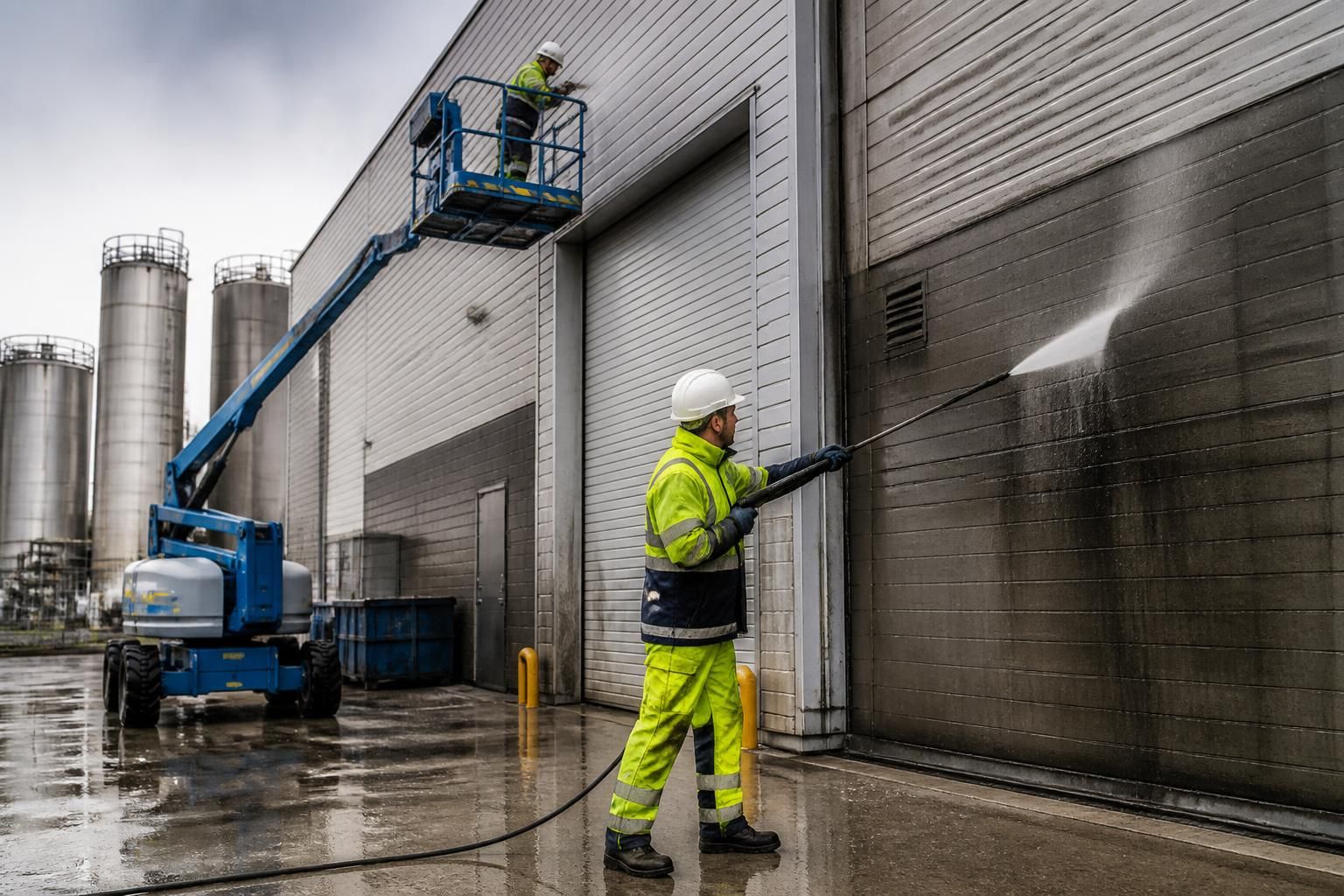
Industrial facilities that benefit most from specialised cleaning services include manufacturing plants, warehouses, food and pharmaceutical sites, energy facilities, transport depots, construction sites and large commercial premises. These environments require specialist equipment and controlled methods to remove heavy soiling, maintain safe working areas, protect buildings and equipment, and support regulatory or operational requirements.
Manufacturing plants, warehouses, food and pharmaceutical facilities, energy sites, transport depots, construction sites and large commercial premises benefit most from specialised industrial cleaning services. These environments produce heavy or hazardous soiling, operate around valuable equipment, or require controlled cleaning methods that go beyond routine janitorial work.
Specialist cleaning combines suitable pressure washing, steam cleaning, chemical treatment, manual methods and access equipment. The approach is selected according to the surface, contamination, working environment and operational risks. A planned service can remove ingrained dirt while helping to protect buildings, maintain safe access routes and support the site’s legal, maintenance and presentation requirements.
Manufacturing and engineering facilities
Factories, workshops and engineering plants commonly accumulate oil, grease, metal residues, dust, swarf, process deposits and traffic-related grime. These contaminants can affect floors, loading areas, façades, cladding, machinery surrounds and external storage zones.
Specialised cleaning is particularly useful where contamination has become embedded or where conventional methods would spread residues across the site. Degreasing, pressure washing, steam cleaning and controlled wastewater collection may be used for hard surfaces, depending on the material and the type of deposit. Cleaning around machinery also needs careful planning so that water, heat or chemicals do not damage electrical components, seals, controls or sensitive production areas.
Regular cleaning can help keep walkways, yards and working areas manageable, while planned façade and cladding cleaning removes deposits that can accelerate deterioration. It should complement, rather than replace, routine housekeeping, equipment maintenance and spill-response procedures.
Warehouses and distribution centres
Warehouses and logistics facilities experience constant movement from forklifts, delivery vehicles, staff and contractors. External yards, loading bays, dock levellers, roller doors, walls, car parks and pedestrian routes can become marked by tyre rubber, diesel residues, dust, mud and general traffic grime.
Specialist cleaning is valuable when a large area must be treated consistently without disrupting deliveries. Cleaning plans can be scheduled around quieter operating periods and divided into practical zones. This helps maintain access while addressing areas such as loading bays, service yards, perimeter paving and building façades.
Floor cleaning may also be required where dust or residues affect traction, visibility or the operation of handling equipment. The correct method depends on the floor finish, drainage arrangements and whether the area can be taken out of service temporarily.
Food production and processing sites
Food facilities require a particularly controlled approach because cleaning must support hygiene management without introducing contamination or damaging building materials. Deposits may include fats, oils, food residues, organic matter and persistent grime around service areas, waste compounds, external paving and delivery points.
Specialist contractors should work to the site’s documented hygiene procedures, access controls and chemical requirements. Cleaning methods, equipment and water use must be agreed in advance, especially near production rooms, drainage points, storage areas and sensitive plant. Cleaning external areas can help reduce the transfer of mud and contamination into operational spaces, but it must be coordinated with the facility’s own food safety controls.
Steam cleaning can be appropriate for some applications because it uses heat and comparatively little water, although the method still needs to be assessed against the surface and contamination. No cleaning technique should be treated as universally suitable; site-specific procedures and validation remain essential.
Pharmaceutical, laboratory and healthcare-related facilities
Pharmaceutical and laboratory environments often require stricter control of access, cleaning agents, residues and airborne particles than general industrial premises. Specialist services may be most appropriate for external façades, roofs, plant areas, service yards, car parks and non-production spaces where dirt or biological growth has accumulated.
Cleaning near controlled areas requires a documented risk assessment and clear separation between external works and sensitive operations. Contractors may need to follow gowning, permit, escort, isolation and waste-handling procedures set by the facility. The aim is not simply to make surfaces look clean; it is to prevent the cleaning activity itself from affecting production, testing or environmental controls.
Energy, utilities and infrastructure sites
Power generation sites, substations, water facilities, treatment works and other utility locations are exposed to weather, industrial deposits, algae, moss, mineral staining, oils and difficult access conditions. They may also contain high-voltage equipment, pressurised systems, confined spaces or restricted operational zones.
Specialist cleaning can be used for buildings, tanks, hardstanding, access roads, plant compounds and external structures, provided the work is planned around the site’s engineering controls. Isolation requirements, safe approach distances, drainage protection and water management must be addressed before work begins. In some locations, low-pressure, steam or manual techniques are preferable to high-pressure washing because they reduce the risk of driving water into equipment or disturbing coatings.
Transport depots, fleet yards and aviation-related premises
Bus depots, rail facilities, fleet yards, haulage compounds and similar sites are affected by vehicle fluids, brake dust, tyre marks, mud and exhaust deposits. Cleaning may be required for maintenance bays, wash-down areas, forecourts, ramps, platforms, external walls and staff or visitor routes.
These sites need careful traffic management because vehicles may continue to move while cleaning takes place. A suitable plan identifies exclusion zones, safe pedestrian routes, drainage points and periods when vehicles can be relocated. Oil and chemical residues should be managed in line with the site’s drainage and environmental procedures rather than simply washed into surface-water systems.
Construction sites and developments under handover
Construction and refurbishment projects often require cleaning at several stages. Specialist teams may remove cement residue, mortar splashes, dust, traffic mud, paint marks, adhesive deposits, algae or general building-site grime from façades, paving, access roads, cladding and newly completed external areas.
The cleaning method must reflect the construction materials and their curing condition. Excessive pressure or unsuitable chemicals can mark masonry, strip coatings, damage joints or affect newly installed finishes. Cleaning is therefore normally preceded by surface inspection and a small test area, particularly where the work involves rendered surfaces, delicate stone, coated metal or specialist cladding.
Post-construction cleaning can also support practical completion and handover by presenting external areas in a usable condition. It should be coordinated with other trades so that cleaned surfaces are not subsequently contaminated by landscaping, deliveries or outstanding building work.
Commercial estates, shopping centres and public buildings
Large offices, retail parks, schools, hospitals, civic buildings and managed commercial estates may not be industrial in the traditional sense, but they often have industrial-scale cleaning requirements. High footfall, vehicle movements, litter, chewing gum, algae, atmospheric pollution and weathering can affect entrances, façades, car parks, service yards and pedestrian paving.
Specialised cleaning is useful where appearance, accessibility and public safety all matter. Work can be planned around opening hours and may include pressure washing of hardstanding, steam treatment for sensitive areas, façade cleaning, graffiti removal and high-level access work. The contractor should identify slip risks, protect visitors and staff, control overspray and maintain suitable access throughout the task.
Facilities with graffiti, biological growth or difficult access
Any industrial or commercial site may benefit from specialist support when it has persistent graffiti, moss, algae, bird fouling, staining or high-level contamination. These problems are often difficult to resolve with standard equipment, particularly on large façades, roofs, towers, canopies and cladding systems.
Graffiti removal requires the paint to be assessed alongside the underlying surface. The wrong solvent, abrasive or pressure setting can cause permanent staining or coating damage. Biological growth may also need more than a single wash; the treatment should consider the cause of the growth, the condition of the surface and whether follow-up maintenance is required.
How to identify whether a facility needs specialised cleaning
- The site contains heavy oils, process residues, biological contamination or ingrained dirt.
- Cleaning involves roofs, façades, cladding, canopies or other areas requiring access equipment.
- Water, chemicals, runoff or airborne debris could affect people, equipment, drainage or the environment.
- The premises must remain partly operational while work is carried out.
- Surfaces are delicate, coated, aged or difficult to identify before treatment.
- The facility has formal hygiene, permit-to-work, security, environmental or contractor-control procedures.
- Cleaning covers a large area and requires consistent results across several buildings or locations.
Before work starts, the cleaning provider should inspect the site, identify the contamination and surface materials, review access and drainage, and agree the required controls with the responsible site manager. A method statement and risk assessment should reflect the actual task rather than rely on a generic template. Where the surface or deposit is uncertain, a test patch can help confirm the safest effective method.
For ongoing requirements, a planned maintenance schedule is generally more effective than waiting until contamination becomes severe. The schedule can prioritise high-risk walkways, loading areas, entrances, drainage-sensitive zones and surfaces where dirt or biological growth may accelerate deterioration. Records of completed work, access restrictions and any defects observed during cleaning can also support the facility’s wider maintenance programme.
Specialised industrial cleaning is therefore most valuable where scale, contamination, access, surface sensitivity or operational risk makes ordinary cleaning unsuitable. Matching the method to the facility allows cleaning to be carried out safely and consistently while protecting assets, supporting compliance and reducing disruption to day-to-day operations.
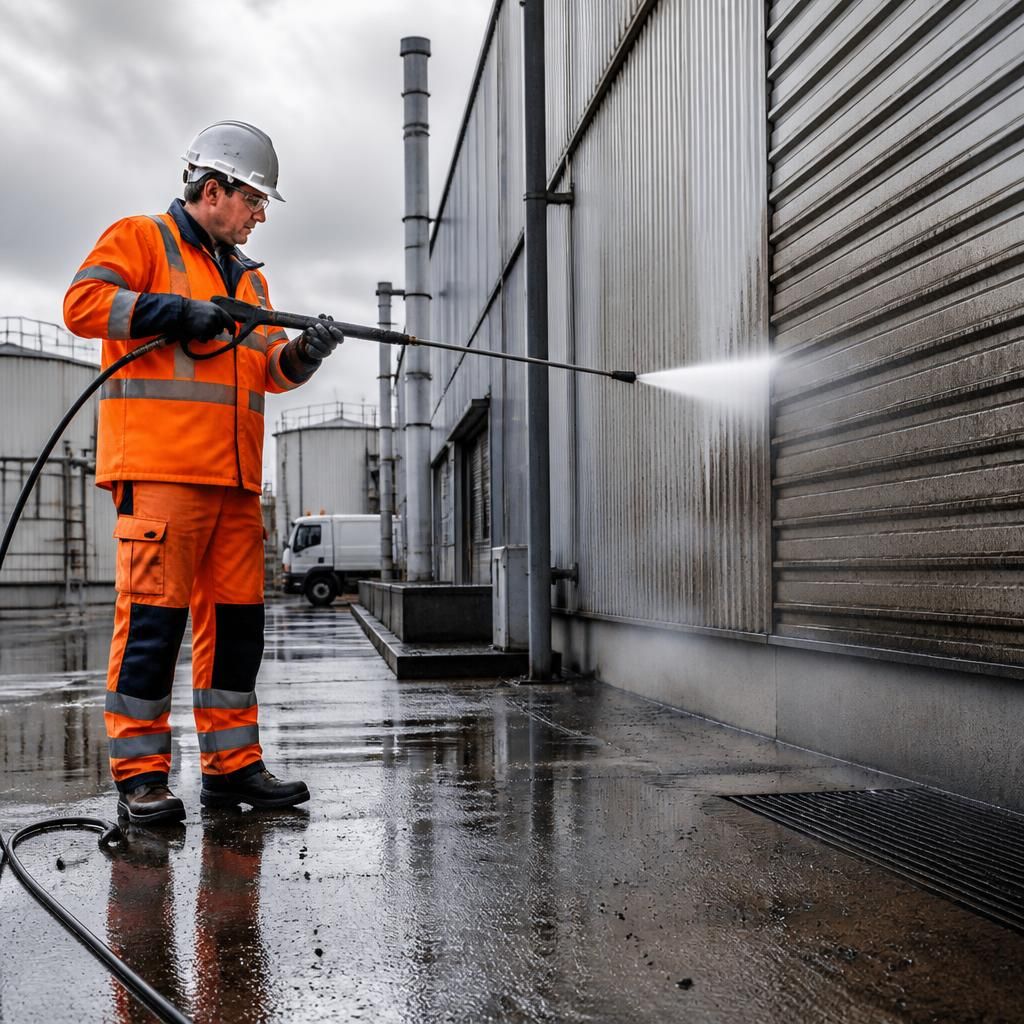
Facilities with sensitive equipment, strict hygiene controls or complex access requirements benefit most from specialised industrial cleaning. Food production sites, pharmaceutical facilities, utilities, manufacturing plants and transport depots cannot always use standard pressure washing or general-purpose chemicals. Their cleaning plans must account for surface materials, electrical equipment, drainage, contamination risks and ongoing operations.
A specialist contractor can assess the area, select an appropriate combination of pressure washing, steam cleaning, manual treatment or access equipment, and set controls for runoff, exclusion zones and safe access. This helps remove heavy or persistent contamination without damaging assets or interrupting essential site activities.