
What measures ensure safety during industrial cleaning operations?
Industrial cleaning safety depends on a documented risk assessment, suitable method statements, trained operatives, appropriate PPE and effective control of hazards such as chemicals, machinery, work at height, traffic and contaminated surfaces. Safe operations also require suitable access equipment, site coordination, clear exclusion zones, equipment checks and ongoing supervision throughout the work.
Safe industrial cleaning operations depend on structured planning, competent people and effective control of site-specific hazards. Before work starts, the cleaning contractor and site representative should agree a documented risk assessment and method statement, confirm the required training and equipment, establish exclusion zones, and coordinate the work with normal site activities. Controls must then be monitored throughout the operation rather than treated as a one-off paperwork exercise.
Complete a site-specific risk assessment. The assessment should identify hazards created by the building, the cleaning method, the substances present and the surrounding activities. It should consider surfaces, access routes, machinery, electrical installations, vehicles, pedestrians, fragile structures, drainage, weather and any contamination. A generic assessment may provide a starting point, but it cannot replace a review of the actual site and the planned work.
The findings should be translated into a clear method statement. This should explain the sequence of work, equipment and chemicals to be used, isolation requirements, access arrangements, control measures, emergency procedures and responsibilities. Operatives should understand the method statement before beginning work, and it should be reviewed if conditions change, such as a change in weather, unexpected contamination or a different access requirement.
Use trained and competent operatives. Industrial cleaning can involve pressure washing, steam cleaning, chemical application, high-level access, powered equipment and work near traffic or production areas. Operatives need suitable instruction, practical experience and supervision for the tasks they carry out. Training should cover the safe use of the equipment, chemical information, manual handling, working at height, site rules, emergency arrangements and the correct use of personal protective equipment.
Competence also includes knowing when work should stop. An operative should not improvise a method for an unfamiliar surface, damaged access system, unidentified substance or unsafe weather condition. Concerns should be reported to the supervisor so that the assessment and method can be reassessed before work continues.
Control cleaning chemicals under COSHH. The Control of Substances Hazardous to Health requirements apply where cleaning products, degreasers, disinfectants, solvents, acids, alkalis, fumes or contaminated residues could harm people. A COSHH assessment should identify the substance, route of exposure, possible health effects and appropriate controls. Safety data sheets should be available, but they should support rather than replace a site-specific assessment.
- Choose the least hazardous effective product and use dilution instructions supplied by the manufacturer.
- Prevent skin and eye contact through suitable gloves, coveralls, eye protection and, where required, respiratory protection.
- Provide ventilation or controlled application methods where vapours, aerosols or fumes may be generated.
- Never mix products unless the manufacturer specifically confirms that this is safe.
- Keep containers labelled, secure and upright, with incompatible substances separated.
- Control spills and prevent wash water or chemicals entering drains, watercourses or unapproved areas.
Where residues or deposits may contain oil, biological material, asbestos, lead, hazardous dust or other harmful substances, they should be identified before cleaning. Specialist surveys, containment, licensed removal or additional protective measures may be necessary. Operatives should not disturb suspected asbestos-containing materials or unknown hazardous deposits without appropriate specialist advice.
Select and maintain suitable PPE. Personal protective equipment is the final layer of protection after other controls have been considered. Depending on the task, this may include safety footwear with suitable grip, gloves compatible with the chemicals used, protective clothing, eye or face protection, hearing protection, head protection and respiratory protective equipment. Work at height may require a safety harness as part of a properly designed fall-prevention or fall-arrest system.
PPE must fit the wearer, be compatible when several items are used together, and be inspected before use. Damaged, contaminated or unsuitable equipment should be removed from service. Respiratory protective equipment requires correct selection, maintenance and face-fit arrangements where applicable; a disposable mask should not be treated as a universal solution for chemical vapours or hazardous dust.
Plan work at height and access equipment. Façades, roofs, cladding, canopies, tanks and high-level structures often require access equipment. The safest approach is to avoid work at height where possible, complete tasks from ground level where practicable, and then select suitable equipment for the remaining work. Access systems may include mobile elevating work platforms, towers, scaffolds, roof access systems or other purpose-designed equipment.
Access equipment should be selected by a competent person and used on ground capable of supporting it. Operators must receive the relevant training, pre-use checks must be completed, and equipment must be positioned away from edges, openings, overhead services and moving vehicles. Harnesses, lanyards and anchor points must be suitable for the system being used. The work area should also have a rescue plan; relying solely on emergency services is not an adequate substitute for planning how an immobilised or fallen worker will be recovered.
Roof work requires particular care because rooflights, fragile sheets, unprotected edges and hidden voids may not be obvious from ground level. Safe routes, edge protection, barriers, crawling boards or other controls may be required. Ladders should generally be used only for suitable short-duration, low-risk tasks and not as a substitute for a properly planned access system.
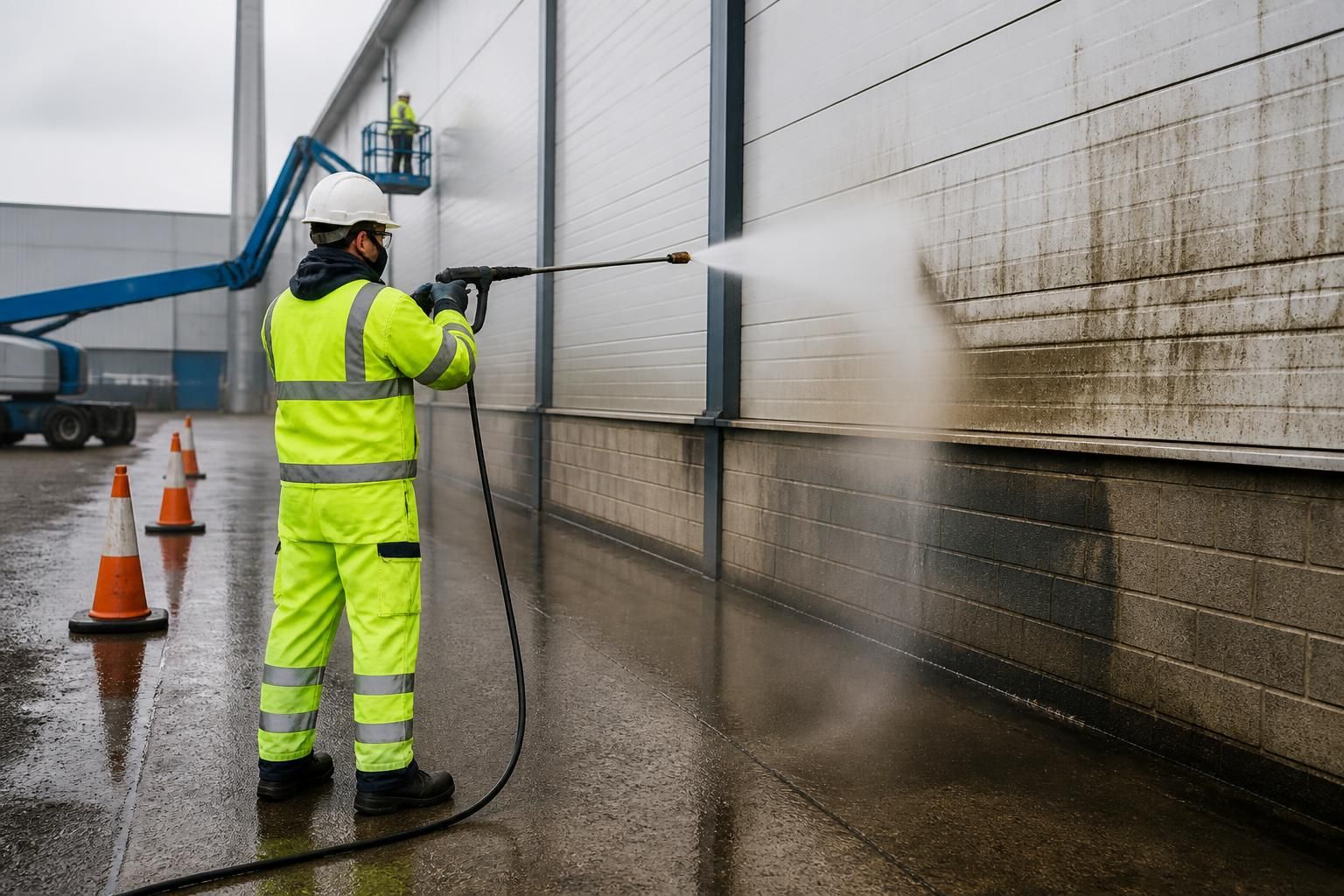
Control pressure, steam and powered equipment. Pressure washers and steam systems can cause injection injuries, burns, eye injuries, hearing damage and loss of control. Equipment should be checked before use, including hoses, couplings, trigger mechanisms, guards, cables and connections. Operators should use the correct nozzle, pressure and temperature for the surface and maintain a safe stance while working.
- Keep people outside the spray or discharge zone and never direct jets towards people, live electrical equipment or unprotected openings.
- Secure hoses and cables to reduce trip hazards and prevent damage from vehicles or machinery.
- Use residual-current protection and suitable electrical equipment where water is present.
- Allow steam equipment and heated surfaces to cool before inspection, adjustment or storage.
- Isolate, depressurise and make equipment safe before clearing blockages or carrying out maintenance.
- Use hearing protection where noise exposure cannot be adequately controlled by other means.
High-pressure water can damage coatings, seals, insulation, electrical components and building fabric. A controlled test area should be completed where the surface or underlying construction is uncertain. This protects the asset as well as the people carrying out the work.
Separate the cleaning area from other site activities. Exclusion zones, barriers and warning signs should prevent unauthorised access to spray, falling-object, chemical and wet-floor hazards. The boundary should be large enough to account for overspray, splash, debris and the movement of equipment. A spotter or banksman may be needed where the operator has restricted visibility or where pedestrians and vehicles are nearby.
Cleaning should be coordinated with the client’s production, delivery and maintenance schedules. Machinery may need to be shut down, guarded or isolated, and adjacent work may need to pause. Where there is a risk of unexpected start-up, stored energy or contact with moving parts, the relevant isolation and lock-off procedure must be agreed with the person responsible for the equipment. Cleaners should never assume that a machine is safe simply because it is not operating at the time.
Manage slips, trips, falls and manual handling. Water, detergent, oil, algae, mud and removed coatings can make floors and access routes hazardous. Wet areas should be controlled with barriers and signs, and water should be removed or directed to an approved drainage point as soon as practicable. Hoses, leads, tools and waste should be routed or stored so that they do not obstruct walkways, fire exits or emergency equipment.
Equipment and chemical containers should be moved using suitable handling methods. The assessment should consider the weight, shape and stability of items, as well as pushing and pulling forces over uneven or wet surfaces. Trolleys, lifting aids or team handling may reduce risk, but workers still need instruction in their safe use.
Control vehicle and pedestrian movements. Industrial premises commonly combine cleaning work with deliveries, forklifts, mobile plant and contractor traffic. A traffic management plan should identify vehicle routes, crossing points, reversing areas, parking locations and safe equipment-loading zones. Barriers, high-visibility clothing, a banksman and temporary route changes may be required. Cleaning should be scheduled during quieter periods where this is reasonably practicable, but timing alone is not a substitute for physical separation.
Protect against contamination and biological hazards. Sewage, food residues, animal waste, mould, stagnant water and heavily soiled surfaces may expose workers to infection or allergic reactions. Controls can include restricted access, hygiene facilities, hand washing, suitable gloves and protective clothing, safe waste handling and vaccination advice where identified by the risk assessment. Eating, drinking and smoking should not take place in contaminated work areas. Reusable equipment must be cleaned and disinfected appropriately, while disposable materials should be contained and disposed of through the correct waste route.
Consider weather and environmental conditions. Wind can carry spray, chemicals and debris beyond the planned work area and can make access equipment unstable. Rain, ice and low temperatures may increase slip risk, while heat and poor ventilation can contribute to dehydration or heat stress. Outdoor work should be paused or adapted when conditions exceed the limits of the equipment, chemicals or safe system of work. The assessment should also cover water use, run-off, waste capture and protection of drains, landscaping and neighbouring property.
Prepare emergency arrangements. Everyone involved should know how to raise the alarm, summon first aid, report an incident and contact the site representative. Arrangements should cover chemical splashes, burns, electric shock, falls from height, equipment failure, fire, uncontrolled water discharge and exposure to hazardous materials. Suitable first-aid supplies, eyewash and emergency washing facilities should be available for the hazards identified.
Emergency contact details, access points and the location of welfare facilities should be confirmed during the site briefing. Incidents, near misses and equipment defects should be recorded and investigated. Learning from these reports allows the method statement and risk assessment to be improved before the next operation.
Inspect, supervise and review the controls. Supervisors should check that barriers remain in place, PPE is being used correctly, chemicals are controlled, access equipment is stable and the work remains within the agreed method. Equipment inspection and maintenance records should be retained where required. The Provision and Use of Work Equipment Regulations, the Lifting Operations and Lifting Equipment Regulations, the Work at Height Regulations and other relevant UK requirements may apply depending on the equipment and task.
Safety is therefore achieved through a coordinated system rather than one measure. A properly planned industrial cleaning operation combines competent personnel, suitable equipment, chemical controls, isolation and traffic arrangements, safe access, environmental protection, emergency planning and active supervision. These controls should be agreed with the client before mobilisation and revisited whenever the site, process or cleaning method changes.
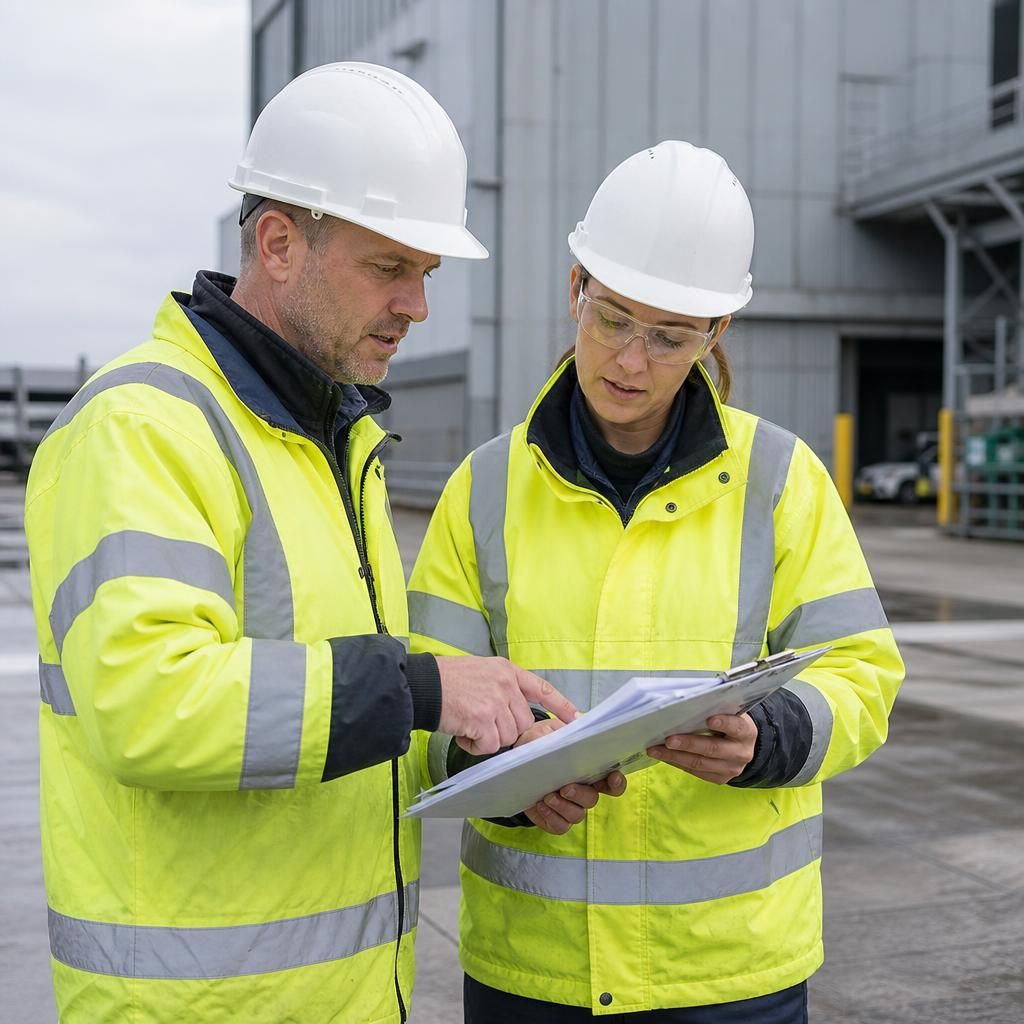
A site-specific risk assessment and method statement are the foundation of safe industrial cleaning. They identify hazards such as chemicals, live machinery, vehicle movements, fragile surfaces and work at height, then set out the controls, equipment, isolation requirements and emergency arrangements needed for the planned task.
These documents should be explained to every operative before work begins and reviewed if conditions change. Unexpected contamination, deteriorating weather, altered access or nearby production activity may require the cleaning method to be paused and reassessed before it is safe to continue.