
What eco-friendly industrial cleaning methods are available to maintain environmental compliance?
Eco-friendly industrial cleaning methods include water-efficient pressure washing, low-pressure steam cleaning, biodegradable detergents, dry cleaning techniques and the controlled capture and disposal of wastewater. Used with appropriate environmental risk assessments and waste-management procedures, these methods help reduce pollution, water consumption and chemical impact while supporting UK environmental compliance.
Eco-friendly industrial cleaning methods are techniques that minimise water use, chemical impact, emissions and waste while allowing contaminants to be safely removed and managed. For UK sites, environmental compliance depends not only on the cleaning method itself, but also on preventing polluted water from entering surface-water drains, controlling waste, using chemicals correctly and keeping suitable records.
The most appropriate approach is normally selected through an environmental risk assessment. This considers the type of contamination, the surface being cleaned, drainage arrangements, nearby watercourses, chemical requirements, access constraints and how removed material will be collected. A method that appears low-impact in isolation is not necessarily environmentally compliant if it releases oil, heavy metals, detergents or other pollutants into the environment.
Water-efficient pressure washing
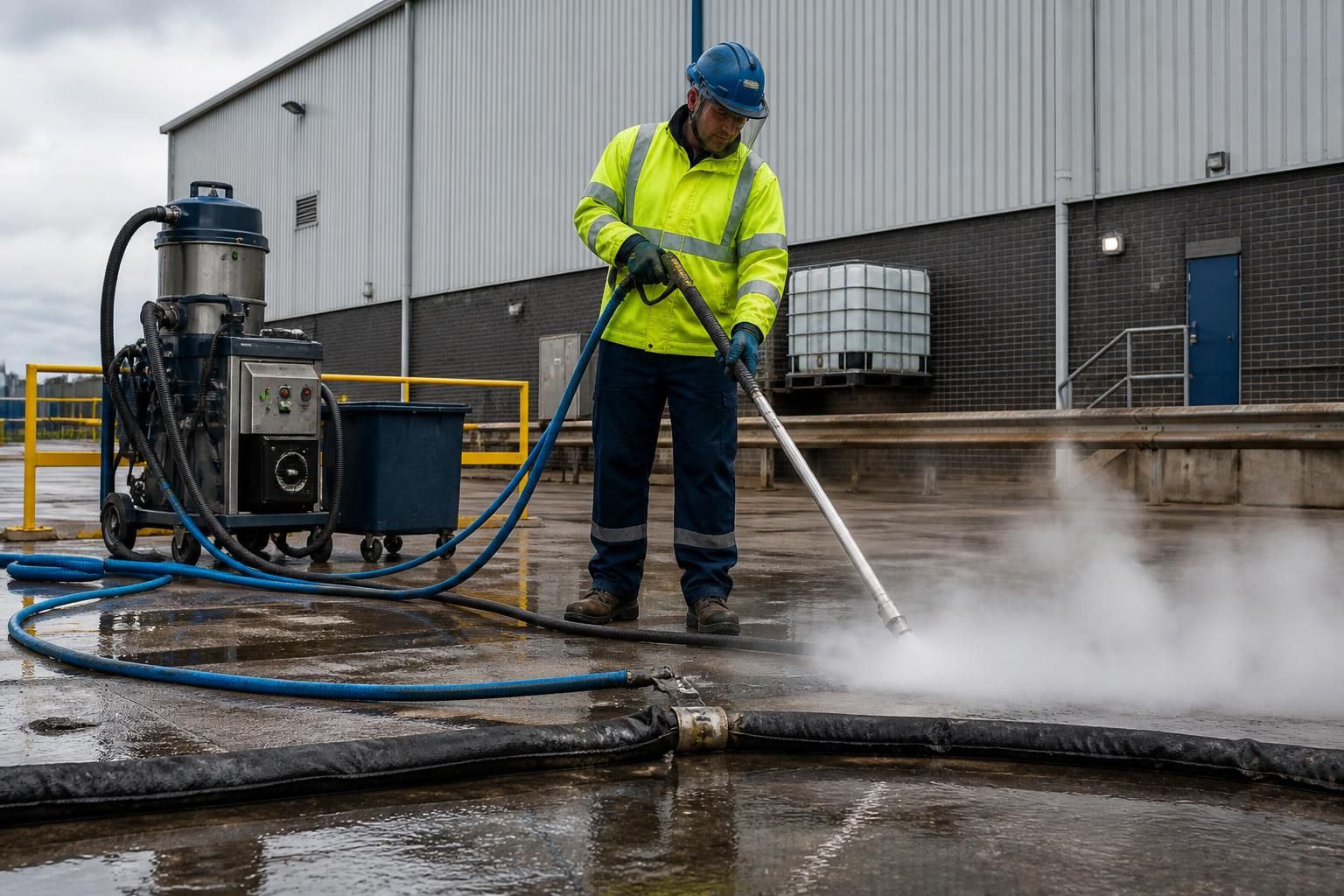
Pressure washing can use less water than an unrestricted hose because the water is delivered at controlled pressure and flow. Operators can further reduce consumption by selecting equipment suited to the surface, using rotary cleaning heads where appropriate, isolating sections of a façade or yard, and avoiding repeated passes over areas that are already clean.
Water-efficient cleaning still requires containment. On industrial sites, wash water may contain oils, silt, cement residues, metals, traffic-film contaminants or existing coatings. It should be prevented from entering surface-water drains and collected for suitable treatment, disposal or authorised discharge. Wet vacuums, drain covers, bunds, temporary barriers and recovery systems can help control the work area.
Low-pressure and steam cleaning
Low-pressure cleaning reduces the risk of damaging coatings, masonry, cladding and joints while allowing the operator to use a controlled amount of water. This can be useful where aggressive blasting would create additional waste or remove sound material that would later need replacing.
Steam cleaning uses heated water, often with little or no detergent. Heat can soften grease, biological growth and traffic film, allowing contaminants to be removed with reduced chemical reliance. It is not suitable for every substrate, and the heat, moisture and pressure must be controlled around electrical equipment, sensitive coatings, seals and occupied areas. The resulting residues still need to be captured and managed correctly.
Biodegradable and lower-impact cleaning products
Biodegradable detergents and degreasers can reduce the persistence of some cleaning chemicals, particularly when used at the lowest effective concentration. Products should be selected according to the contaminant and substrate, supported by current safety data sheets and used in line with the manufacturer’s instructions.
Biodegradable does not mean harmless or automatically suitable for discharge. A product may still affect aquatic life, alter water quality or require trade effluent approval. Strong acids, alkalis, solvents and disinfectants can also create environmental risks even when used in small quantities. Chemical selection should therefore consider biodegradability, toxicity, aquatic impact, pH, rinsing requirements and disposal arrangements rather than relying on a single environmental claim.
Dry and low-water cleaning techniques
Dry cleaning methods can be appropriate where water use or wastewater generation must be minimised. Examples include industrial vacuuming, dry brushing, controlled scraping, absorbent materials, dry ice blasting and selected low-moisture cleaning systems. These methods can be useful for loose dust, powder, surface deposits and some production residues.
Dry methods do not remove the need for environmental controls. Dust may require extraction or suppression to protect workers and prevent migration beyond the work area. Used absorbents, contaminated filters, removed coatings and collected debris must be classified and disposed of through an appropriate waste route. Dry ice blasting also requires ventilation and controls for carbon dioxide accumulation, particularly in enclosed spaces.
Wastewater recovery, filtration and treatment
For hardstanding, car parks, loading areas, workshops and industrial façades, wastewater recovery is often central to compliant cleaning. A typical system may use drain protection, a collection point, a wet vacuum or recovery unit, and filtration to separate solids from liquid. Oil-water separation or additional treatment may be needed where hydrocarbons or other contaminants are present.
Recovered water should not be discharged to a surface-water drain simply because it looks clear. Discharge to a foul sewer may require the agreement of the relevant sewerage undertaker, while discharge to a watercourse, ground or surface-water system may require permission or an environmental permit. Where discharge is not authorised or treatment is unsuitable, the water should be removed by an appropriately licensed waste contractor.
Mechanical cleaning and targeted removal
Mechanical methods such as rotary brushing, controlled vacuuming and specialist surface preparation can remove contamination without saturating the substrate. Targeted cleaning also avoids treating areas that do not require the same level of intervention, reducing water, chemical use and waste.
For graffiti, paint and coating removal, the least damaging effective method should be chosen. This may involve steam, a suitable low-impact remover, controlled abrasion or a combination of techniques. Removed paint, solvent residues and contaminated rinse water must be contained rather than washed into drainage systems.
How to maintain compliance during the work
- Complete a site-specific environmental risk assessment before starting, including drainage, nearby watercourses, sensitive surfaces and likely contaminants.
- Identify whether the work requires sewerage approval, an environmental permit, waste transfer documentation or other local controls.
- Use chemicals with suitable safety and environmental information, store them securely and prevent spills through bunding and controlled handling.
- Protect drains and establish a clear procedure for stopping work and containing a spill or unexpected discharge.
- Segregate sludge, debris, contaminated absorbents, packaging and wastewater where their disposal requirements differ.
- Keep records of the method used, products applied, waste movements, discharge permissions, incidents and any inspection or monitoring carried out.
Environmental compliance is therefore achieved through a controlled cleaning process rather than by choosing a product labelled green. Water-efficient pressure washing, steam cleaning, biodegradable detergents, dry techniques and wastewater recovery can all reduce environmental impact when matched to the site and supported by proper containment, waste management and documented procedures. For complex industrial premises, the cleaning plan should be reviewed with the site’s environmental, facilities or compliance manager before work begins.
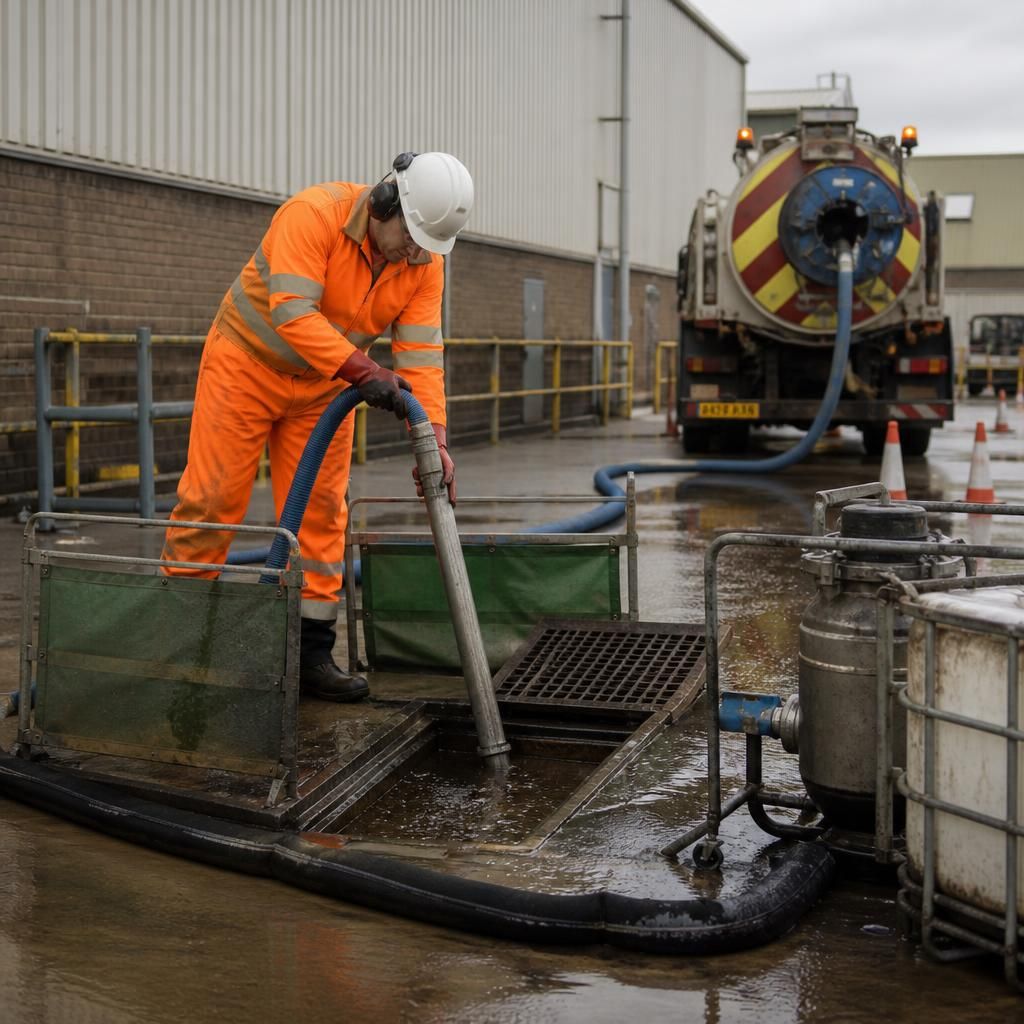
Wastewater recovery is a key eco-friendly cleaning method for industrial sites because it prevents contaminated wash water entering surface-water drains, soil or nearby watercourses. Water from pressure washing, steam cleaning and degreasing may contain oil, sediment, metals or cleaning residues, even when it appears clear.
Before work begins, drains should be protected and the recovery route agreed. Wet vacuums, drain covers, bunds and filtration systems can collect solids and contaminated water for authorised treatment, disposal or discharge. Keeping records of the cleaning method, waste transfer and any discharge approval provides evidence that environmental controls were followed.