
What are the most effective techniques for industrial floor cleaning?
The most effective industrial floor cleaning combines mechanical scrubbing, suitable detergents, controlled pressure washing or steam cleaning, and thorough recovery of wastewater. The correct method depends on the floor material, contamination type, drainage arrangements and operational risks, with regular planned cleaning helping prevent slips, surface damage and production disruption.
The most effective industrial floor cleaning combines mechanical scrubbing, correctly selected cleaning chemicals, controlled pressure washing or steam cleaning, and complete recovery of dirty water. The right approach depends on the floor material, the type of contamination, the condition of the surface, drainage arrangements and the risks created by the cleaning work. A planned process removes soil effectively without damaging the floor, interrupting operations unnecessarily or creating slip and environmental hazards.
Start with a site and surface assessment. Before selecting equipment or chemicals, identify whether the floor is concrete, resin, quarry tile, ceramic tile, asphalt or another material. Check for joints, cracks, damaged coatings, drainage channels, falls, machinery, electrical equipment and areas where water could enter production or storage spaces. The cleaning method should also reflect the contamination present, such as oil, grease, rubber deposits, food residue, dust, mud, chemical deposits, paint or general traffic soil.
A suitable assessment should consider how the floor is used. A warehouse aisle, food-handling area, workshop, loading bay and car park will not have the same cleaning requirements. Areas used by pedestrians or vehicles may need staged cleaning, barriers, temporary access routes and rapid drying. Where contamination could be hazardous, the waste must be contained and removed through an appropriate disposal route rather than washed into an uncontrolled drainage system.
Remove loose debris before introducing water. Sweeping, industrial vacuuming or mechanical collection removes dust, grit, packaging fragments and other dry material. This prevents debris from becoming an abrasive slurry and reduces the amount of contaminated water produced later. Vacuuming is particularly useful around expansion joints, drainage grates, plant bases and other locations where sweeping may simply redistribute fine dust.
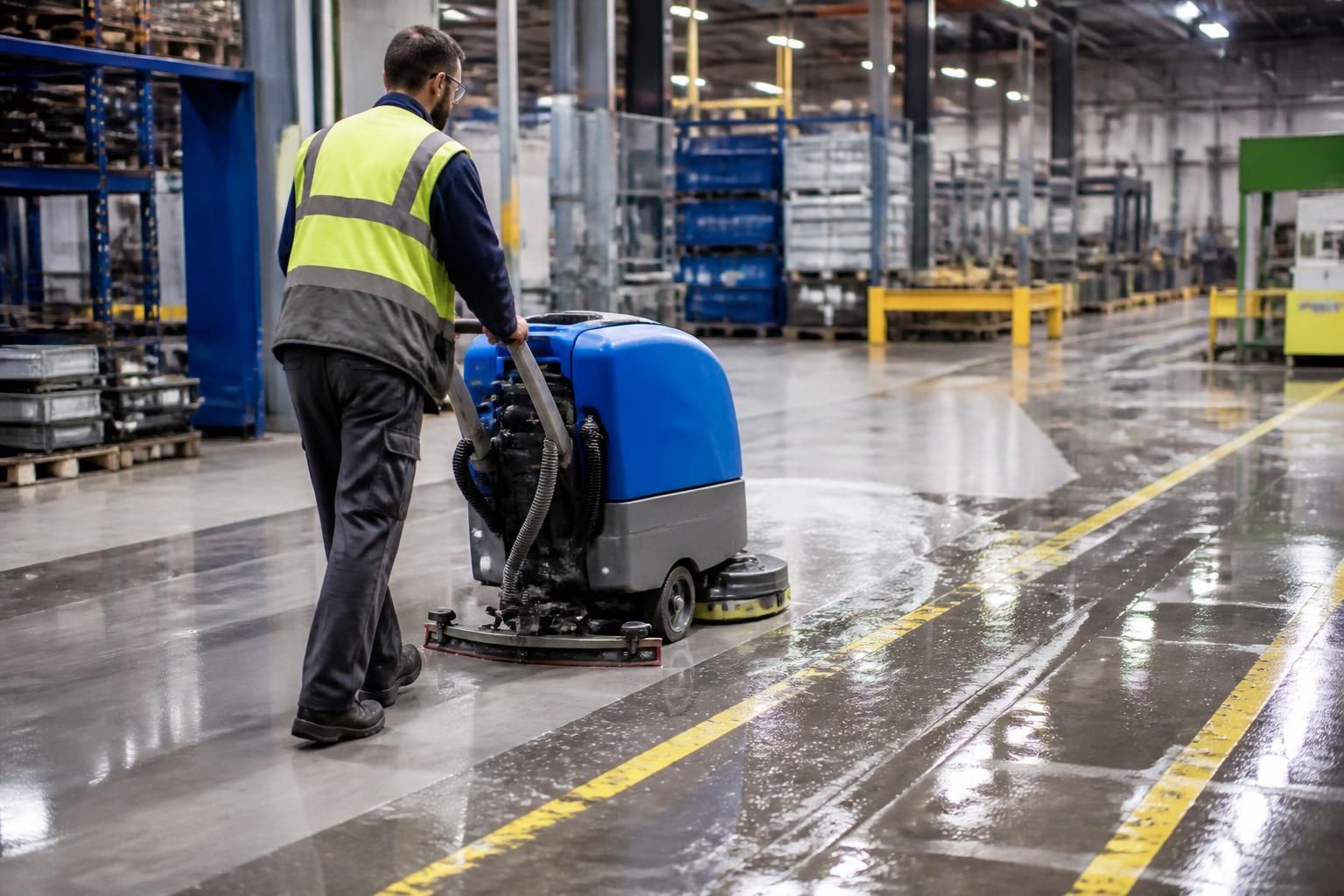
Use mechanical scrubbing for routine hard-floor cleaning. Rotary scrubber dryers, ride-on scrubber dryers and other floor machines provide consistent agitation across large areas. Their brushes or pads loosen embedded soil while the recovery system lifts dirty solution from the surface. This is usually more efficient and controlled than relying on manual mopping, especially in warehouses, workshops, distribution facilities and large circulation areas.
Brush or pad selection is important. Softer materials are appropriate for routine cleaning and surfaces that could scratch easily, while more aggressive pads or brushes may be needed for textured concrete and heavily soiled areas. Excessive pressure, unsuitable abrasives or prolonged use in one location can wear coatings, expose aggregate or mark the floor. Operators should follow the flooring manufacturer’s recommendations and test an inconspicuous area when the surface or coating is unfamiliar.
Select detergent according to the contamination. Neutral cleaners are generally suitable for routine soil and help minimise the risk of attacking protective coatings. Alkaline degreasers are more appropriate for many oil and grease deposits, while acidic products may be used for specific mineral or cementitious residues only where the floor and surrounding materials can tolerate them. Chemical choice should account for the floor finish, nearby metals, drainage system, ventilation and any site-specific environmental or production controls.
More chemical is not necessarily more effective. Correct dilution, adequate contact time and thorough rinsing are usually more important than excessive concentration. Allowing a detergent to work without letting it dry can improve soil removal, but the product should never be left on a surface longer than its instructions permit. Chemical safety data, personal protective equipment and the site’s control-of-substances procedures must be followed throughout the task.
Use pressure washing selectively and under control. Pressure washing is effective on robust concrete, loading areas, external service yards and heavily contaminated surfaces where there is suitable drainage and sufficient containment. It can remove mud, grease, algae, accumulated deposits and debris from textured floors more effectively than low-pressure wiping alone.
Pressure, water flow, nozzle type and working distance should be matched to the surface. Excessive pressure can erode concrete, force water into joints, damage resin coatings, remove line markings or drive contamination beneath equipment and wall edges. Indoor pressure washing requires particular care because overspray, aerosolised contamination and uncontrolled wastewater can affect stock, machinery and adjacent work areas. Where these risks cannot be managed, mechanical scrubbing or low-moisture methods may be more appropriate.
Apply steam cleaning where heat benefits the task. Steam or hot-water cleaning can soften grease and oily deposits and may reduce the need for strong chemicals. It is useful around machinery bases, thresholds, textured surfaces and difficult localised contamination. Steam cleaning still requires effective collection of loosened soil and wastewater; heat alone does not remove the contamination from the building.
Steam and hot water must be assessed against the floor system and surrounding equipment. Sudden temperature changes can affect some coatings, seals and sensitive materials. Moisture may also enter electrical components, bearings or stored goods. Operators should isolate or protect vulnerable equipment and use controlled application rather than treating the entire area indiscriminately.
Treat oil and grease before general washing. Heavy deposits should be scraped or absorbed where practical, followed by a compatible degreaser and mechanical agitation. Allowing the product to dwell for the specified period helps break down the contamination. The loosened residue should then be recovered using a wet vacuum, scrubber dryer or controlled collection method. Simply spreading grease with a mop or pushing it towards a drain can leave a slippery film and create a disposal problem.
For cement, scale or other mineral deposits, use a method specifically suited to the residue and flooring. Mechanical removal may be safer than an acidic treatment, particularly where the floor contains cementitious joints, metal fittings or a sensitive coating. Any chemical treatment should be tested first and neutralised or rinsed as required by the product instructions.
Recover wastewater rather than leaving it on the floor. A clean-looking surface is not sufficient if dirty solution remains in joints, channels or low points. Scrubber dryers, wet vacuums, extraction equipment, squeegees and temporary containment can help collect water and suspended contamination. Recovery is especially important where oil, chemicals, metal particles or other regulated substances are present.
Wastewater should be directed only to an approved drainage route and managed in accordance with the site’s environmental procedures and applicable requirements. Drain covers, bunding and temporary barriers may be needed to protect sensitive areas. If the floor has no suitable drainage, a low-moisture cleaning method or a planned collection and disposal arrangement should be used instead of allowing wastewater to escape uncontrolled.
Choose the method by floor type.
- Sealed or unsealed concrete: Mechanical scrubbing is effective for routine soil, while controlled pressure washing or degreasing can address heavier contamination. Damaged concrete may absorb oil and require repeated treatment rather than a single wash.
- Resin and coated floors: Use compatible, non-abrasive pads and detergents. Avoid aggressive pressure, harsh solvents and methods that could lift, dull or delaminate the coating.
- Quarry and ceramic tiles: Scrubbing can clean textured surfaces and joints, but excess water must be recovered. The grout condition should be checked before intensive washing.
- Loading bays and service yards: Pre-sweeping, degreasing and controlled pressure washing are often suitable, provided runoff is contained and vehicle or pedestrian movements are managed.
- Food or hygiene-sensitive areas: Follow the site’s approved chemical, rinsing, disinfection and verification procedures. Cleaning must not leave residues that could affect products or processes.
Plan cleaning around operations and safety controls. Isolate moving machinery where necessary, protect electrical installations, display warning signs and prevent access to wet or chemically treated areas. Operators should use suitable footwear, gloves, eye protection and other personal protective equipment identified by the risk assessment. Ventilation may be needed when using chemicals or equipment that produces vapour or aerosols.
Cleaning schedules should distinguish between daily or routine soil removal, periodic deep cleaning, spill response and remedial work. High-traffic routes, loading points, workshop areas and locations beneath leaking machinery may need more frequent attention than low-use areas. Promptly removing spills and repairing leaks reduces the amount of aggressive cleaning required later and helps preserve the floor.
Check the result before reopening the area. Inspect for remaining grease, visible residue, standing water, streaks, damaged coating, blocked drains and contamination transferred to walls or equipment. A floor can appear clean while retaining a slippery film, particularly where detergent has not been fully recovered. Where the site has specific hygiene, production or safety requirements, verification should follow the relevant procedure rather than relying on visual inspection alone.
For large or heavily contaminated premises, the most reliable programme usually combines routine scrubber-dryer cleaning with targeted degreasing, periodic pressure or steam cleaning where appropriate, and prompt response to spills. Encanto Exterior Cleaning can help assess the floor, contamination and access requirements before recommending a controlled cleaning method that protects the surface, manages wastewater and minimises disruption to the site.
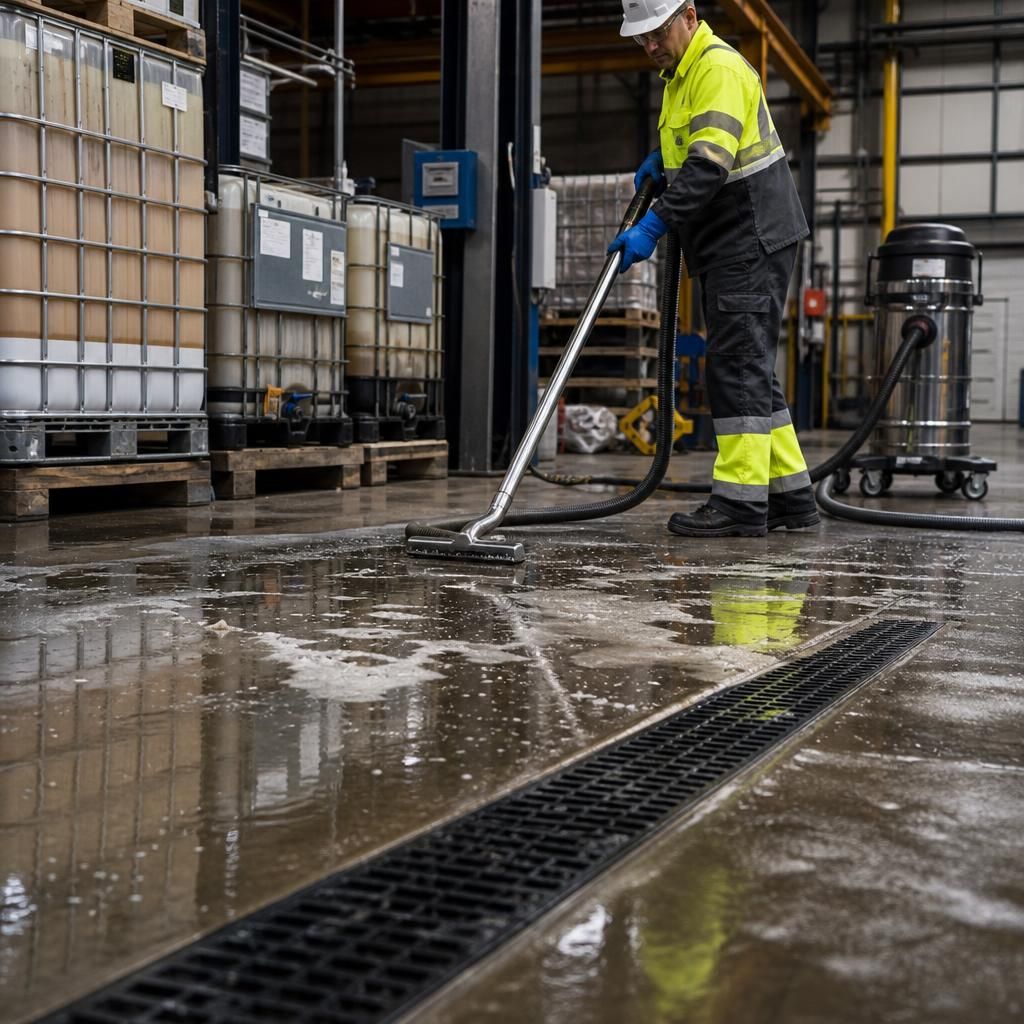
Wastewater recovery is a critical part of industrial floor cleaning because dirty solution can leave slippery residues, carry oil or chemicals into drainage systems, and contaminate nearby areas. Scrubber dryers, wet vacuums and controlled extraction equipment remove the loosened soil instead of simply spreading it across the floor.
Before cleaning begins, confirm the approved drainage route and protect sensitive areas with drain covers, bunding or temporary barriers where required. If no suitable drainage is available, use a low-moisture method or collect the wastewater for appropriate disposal. Inspect the floor afterwards for standing water, residue and blocked channels before reopening the area.