
What are the key safety protocols involved in industrial cleaning and maintenance?
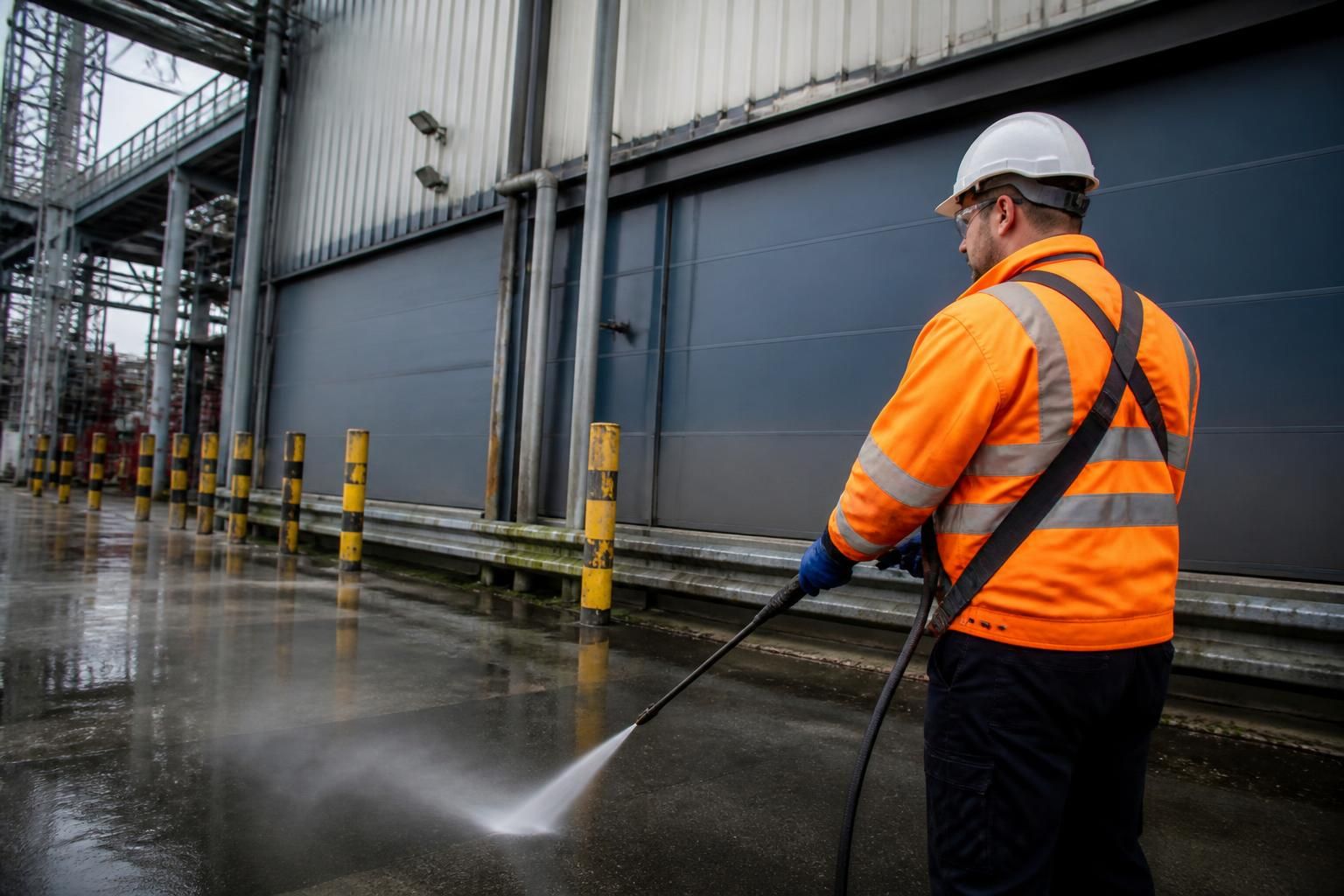
Key safety protocols for industrial cleaning and maintenance include site-specific risk assessments, method statements, appropriate personal protective equipment, controlled access, safe chemical handling, equipment inspections and clear communication between cleaning teams and site operators. Work should be planned around hazards such as vehicles, machinery, electricity, work at height, contaminated surfaces and wastewater, with trained personnel following current UK health and safety requirements.
Industrial cleaning and maintenance safety protocols are the documented and practical controls used to identify hazards, protect people, prevent damage and keep work compliant with UK health and safety requirements. They should cover the complete task, from site planning and equipment selection to access control, cleaning, waste handling and final inspection. A generic checklist is not sufficient: controls must reflect the premises, substances, equipment, surface condition, weather, access arrangements and activities taking place nearby.
Risk assessment and method statements
Before work begins, the contractor and site operator should review a task-specific risk assessment and method statement (RAMS). This should identify hazards, assess the associated risks, state the control measures and explain the safe sequence of work. Relevant issues may include moving vehicles, production machinery, electrical installations, fragile roofs, work at height, contaminated surfaces, chemical exposure, pressurised water, poor lighting, confined areas and members of the public.
The RAMS should also define who is responsible for each control, what equipment is required, how the area will be isolated and what to do if conditions change. Workers should receive a briefing before starting, with the opportunity to raise concerns. If the actual site differs materially from the assessment, work should pause until the method is reviewed and communicated again.
Competence, supervision and communication
Industrial cleaning must be carried out by people who are trained and competent for the equipment, substances and environment involved. Competence includes understanding operating instructions, recognising changing hazards, selecting suitable protective equipment and responding to emergencies. Specialist activities such as powered access, pressure washing, chemical use, confined-space entry or work near electrical systems require appropriate additional training and authorisation.
Clear communication is essential where cleaning takes place alongside the client’s employees, contractors, vehicles or production processes. A site induction, toolbox talk or pre-start briefing should explain exclusion zones, emergency arrangements, welfare facilities, reporting procedures and the agreed programme. Radios, signs and a nominated supervisor may be needed where noise, distance or restricted visibility makes ordinary communication unreliable.
Controlled access and segregation
Cleaning areas should be separated from people and activities that could be exposed to spray, falling materials, chemicals, noise, trip hazards or moving equipment. Suitable controls may include barriers, cones, warning signs, banksmen, temporary closures and designated pedestrian routes. Doors, gates and access points should be managed so that unauthorised people cannot enter the work area.
Vehicle routes and loading areas need particular attention. Cleaning should be scheduled away from vehicle movements where practicable, or traffic should be diverted and controlled. A banksman may be required for reversing or manoeuvring access equipment. Hoses, cables and tools should be routed and secured to prevent trips, damage and interference with emergency exits.
Personal protective equipment
Personal protective equipment (PPE) is selected after other controls have been considered; it does not replace isolation, guarding, ventilation or safe working methods. Depending on the task, PPE may include eye or face protection, gloves selected for the chemical and activity, protective footwear, hearing protection, suitable workwear, respiratory protective equipment and head protection.
PPE must be compatible with the work and with other items being worn. It should be inspected before use, kept clean, stored correctly and replaced when damaged or no longer effective. Tight-fitting respiratory protection requires suitable face-fit testing, and users must understand its limitations. Wet or contaminated PPE should be removed safely to prevent transferring substances to vehicles, welfare areas or clean parts of the site.
Safe use of chemicals and contaminated materials
Cleaning products should be selected for the surface, contamination and drainage conditions, and used in accordance with the manufacturer’s instructions and the relevant safety data sheet. COSHH controls should address storage, dilution, labelling, exposure routes, ventilation, PPE, spill response and disposal. Chemicals must never be mixed unless the manufacturer specifically permits it, as incompatible products can release dangerous gases or generate heat.
Decanted products should be kept in suitable, clearly labelled containers. Chemicals should be stored securely away from incompatible substances, heat sources and unauthorised access. Where surfaces may contain oils, biological contamination, asbestos-containing materials or other hazardous substances, the material should be identified and the method adapted before cleaning begins. Suspected asbestos should not be disturbed; work should stop and the appropriate specialist process followed.
Equipment inspection and safe operation
Pressure washers, steam cleaners, vacuum systems, hoses, electrical leads, pumps, generators and access equipment should be checked before use. Inspections should look for damaged cables, leaking hoses, worn couplings, defective guards, unstable components and signs that the equipment is unsuitable for the planned pressure, temperature or chemical. Defects must be reported and the equipment removed from service until made safe.
Operators should follow the manufacturer’s instructions and avoid directing high-pressure water at people, exposed electrical equipment, unprotected seals, fragile surfaces or materials that could break loose. Pressure should be appropriate to the substrate, and hoses and couplings should be secured. Electrical equipment must be suitable for the environment, with appropriate protection against water and a safe supply arrangement. The Provision and Use of Work Equipment Regulations (PUWER) may apply to relevant work equipment, while lifting accessories and lifting operations may fall under LOLER.
Isolation of machinery, energy and services
Where cleaning is carried out near machinery or process equipment, the site operator should confirm whether it must be shut down, isolated or locked off. Potential energy sources include electricity, hydraulic and pneumatic pressure, steam, hot water, moving parts and stored materials. Isolation arrangements must be agreed with the responsible person on site and verified before work starts.
Water and cleaning chemicals should also be kept away from live electrical installations unless the installation has been assessed and protected by a competent person. Covers, seals and enclosures should be checked before wet cleaning, and any defect should be reported rather than concealed.
Work at height and access equipment
Work at height should be avoided where it can be completed safely from ground level. If it is necessary, the hierarchy of controls should be followed: use suitable collective protection where possible, select appropriate access equipment, and use fall protection where required. Ladders are generally for short-duration, low-risk work and must be stable, suitable and secured.
Mobile elevating work platforms, towers and other access systems should be selected for the ground conditions, reach, load, weather and working environment. Operators must be trained and authorised, pre-use checks must be completed, and exclusion zones should protect people below. Rescue arrangements are required where a worker could be suspended or stranded. Fragile roofs, rooflights, edges and openings must be identified and protected; workers should never rely on visual appearance to judge whether a roof can support them.
Weather, surfaces and environmental controls
Rain, wind, frost, heat and poor visibility can change the risk significantly, particularly during façade cleaning, roof work and powered access operations. Wind can carry spray and affect access platforms, while cold conditions can create ice and slippery surfaces. Work should be postponed, adapted or stopped when weather conditions exceed the safe limits set by the risk assessment or equipment manufacturer.
Water run-off should be contained or directed to an approved drainage route. Dirty water, oils, detergents, silt and other residues must not enter surface-water drains or neighbouring land. The method should include drain protection, collection, filtration or appropriate disposal where necessary. Spill kits should be available, and workers should know how to contain and report a spill without putting themselves at risk.
Emergency arrangements and incident reporting
The site-specific plan should explain what to do in the event of a chemical splash, fall, equipment failure, electric shock, fire, spill, sudden weather change or injury. Emergency contact details, first-aid arrangements, eyewash, fire points, assembly areas and access for emergency services should be confirmed before work starts. Workers should not improvise a rescue from height or a confined area without the correct equipment and training.
Near misses, defects, injuries and environmental incidents should be reported promptly and investigated proportionately. Where an incident meets the reporting criteria, the responsible duty holder must follow the Reporting of Injuries, Diseases and Dangerous Occurrences Regulations (RIDDOR). Findings should be used to update the RAMS, training and site controls rather than simply recording the event.
Final checks and handover
On completion, the supervisor should check that surfaces are safe, residues and standing water have been removed or controlled, barriers and equipment have been cleared, drains are protected or reinstated, and no tools or materials remain in operational areas. The client should be told about any defects, inaccessible areas, damage discovered during cleaning or restrictions that remain in place.
In practice, the safest industrial cleaning programmes combine documented planning with active supervision. Risk assessments, COSHH controls, equipment inspections, PPE, segregation, isolation, work-at-height measures, environmental protection and emergency planning should work together. Regular reviews are particularly important where premises, processes, cleaning chemicals, access arrangements or seasonal conditions change.
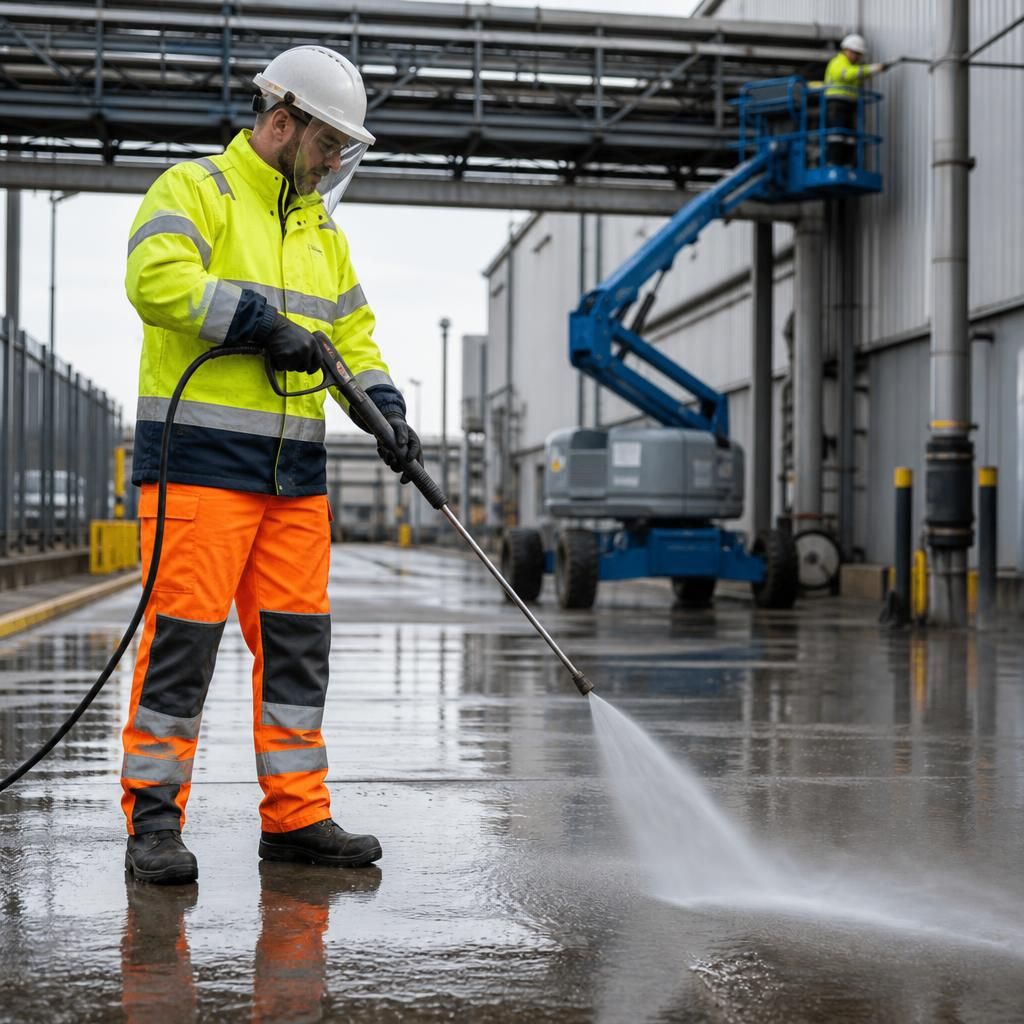
A site-specific risk assessment and method statement (RAMS) is the foundation of safe industrial cleaning. It identifies hazards such as moving vehicles, electrical systems, chemicals, contaminated surfaces and work at height, then sets out the controls, equipment and safe sequence required for the task.
The RAMS should be explained to everyone involved before work starts and reviewed if site conditions change. Effective controls may include:
- Segregating the cleaning area with barriers, signs and controlled access.
- Isolating machinery, electrical supplies or other energy sources where necessary.
- Specifying suitable pressure, temperature, chemicals and personal protective equipment.
- Protecting drains and controlling wastewater, spills and contaminated residues.
- Confirming emergency arrangements, supervision and incident-reporting procedures.
This approach ensures that cleaning methods reflect the actual premises rather than relying on a generic checklist.