
How does eco-friendly industrial cleaning contribute to operational sustainability?
Eco-friendly industrial cleaning supports operational sustainability by reducing water, chemical use, energy consumption and waste while maintaining safe, compliant premises. Using methods such as low-water pressure washing, steam cleaning, targeted detergents and responsible wastewater management can lower environmental impact, protect surfaces and improve the efficiency of ongoing maintenance.
Eco-friendly industrial cleaning contributes to operational sustainability by reducing the environmental resources and waste associated with maintaining a facility, while protecting the safety, condition and performance of the site. It combines appropriate cleaning methods, controlled chemical use, efficient water and energy management, responsible wastewater handling and planned maintenance. The objective is not simply to use a product labelled “green”, but to select the least resource-intensive method that can achieve the required hygiene, safety, appearance and compliance standard.
For industrial sites, sustainability is closely linked to day-to-day operational control. A poorly planned cleaning activity can use excessive water, create contaminated runoff, damage coatings or surfaces, and require repeat work. A properly assessed programme reduces those risks by matching the equipment, pressure, temperature, detergent and access method to the type of soiling and the surface being cleaned.
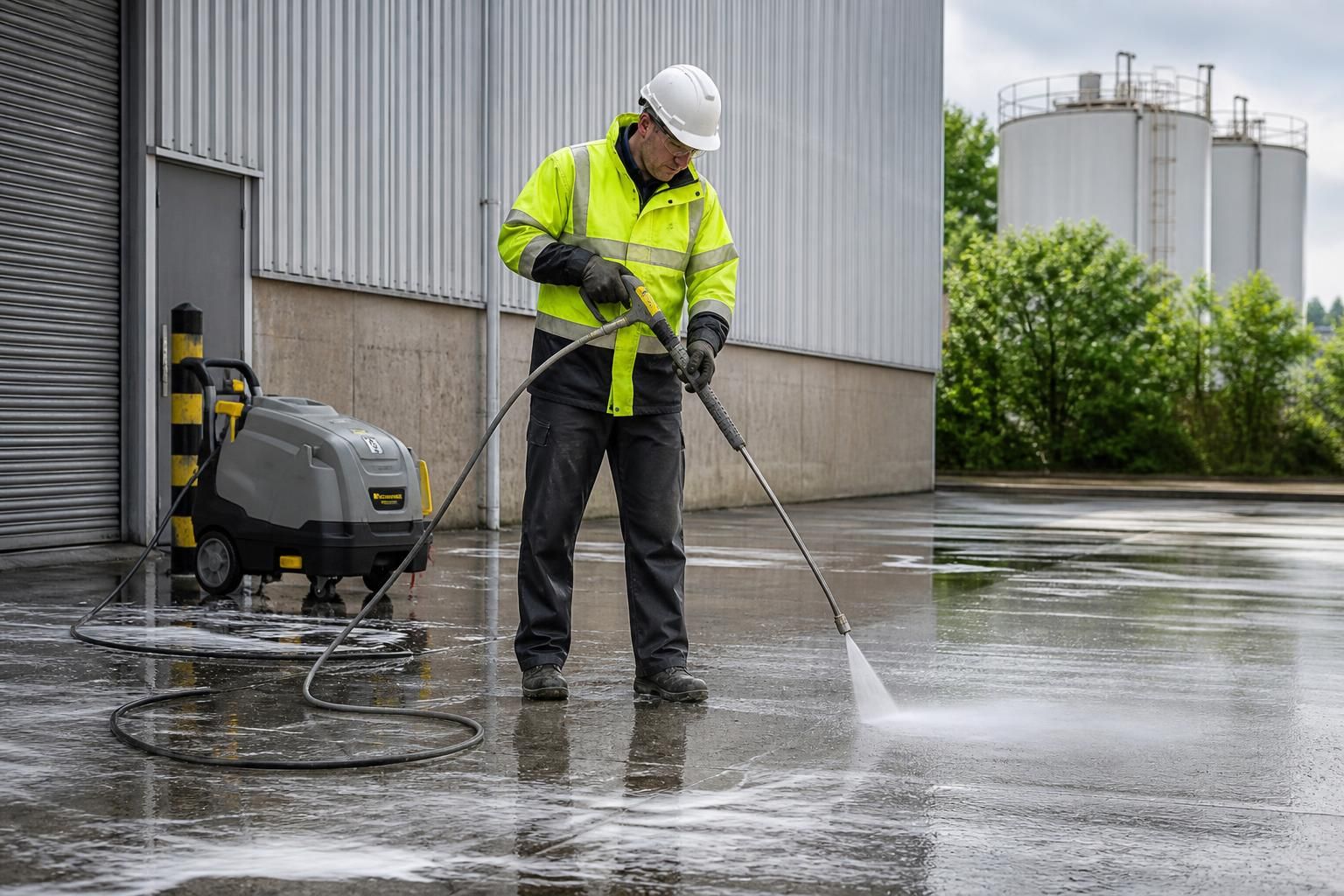
Reduced water consumption is one of the clearest environmental benefits. Conventional washing can generate substantial volumes of water, particularly when large façades, yards, roofs, loading areas or process-related deposits are cleaned. Low-water pressure washing, controlled rinsing, surface cleaning attachments and steam cleaning can reduce unnecessary water use without compromising the result. Dry removal methods, such as brushing, vacuuming or scraping where suitable, may remove loose material before wet cleaning begins.
Water efficiency also depends on preparation and control. Isolating drains where appropriate, using targeted application rather than unrestricted spraying, and cleaning in manageable sections helps prevent water being used beyond the area requiring treatment. The correct approach must take account of the substance being removed. Contaminated water should never be allowed to enter surface-water drains simply because a method uses less water.
Lower chemical use can reduce the environmental burden of cleaning and improve conditions for workers, building users and surrounding areas. Targeted detergents, accurate dilution, controlled application and sufficient dwell time can often achieve better results than applying a stronger chemical indiscriminately. Steam cleaning may remove certain oils, grease, biological growth and ingrained dirt with limited or no chemical assistance, depending on the material and the required finish.
Chemical selection should consider biodegradability, toxicity, corrosiveness, aquatic impact, surface compatibility and disposal requirements. “Biodegradable” does not automatically mean that a product can be discharged without controls. Product safety data, site procedures and the nature of the waste stream must all be considered. Cleaning products should be stored securely, labelled correctly and handled in accordance with COSHH assessments and the manufacturer’s instructions.
More efficient use of energy is achieved by selecting equipment that is appropriate for the task rather than relying on maximum pressure or temperature. Steam cleaning uses heat to soften and lift some deposits, which can reduce the need for aggressive chemicals and repeated passes. Efficient pressure-washing equipment, well-maintained pumps and properly selected nozzles can reduce wasted energy and improve productivity. Equipment should be switched off when not in use, and plant should be maintained so that leaks, blockages or poor performance do not extend the cleaning operation.
Access planning is another sustainability consideration. A suitable combination of mobile access equipment, pole systems or other approved methods can reduce unnecessary repositioning, idle time and repeat visits. Access decisions must remain governed by risk assessment, ground conditions, working-at-height controls and the requirements of the site. A method is not sustainable if it saves resources but creates an unacceptable safety risk.
Responsible wastewater and waste management prevents cleaning activity from transferring pollution from one part of the site to another. Before work begins, the drainage layout, nearby watercourses, impermeable surfaces, oil interceptors and discharge arrangements should be understood. Runoff may contain silt, oils, detergents, paint residues, heavy metals, biological material or other contaminants. Depending on the substance and location, it may need to be contained, filtered, collected and removed by an authorised waste contractor, or discharged only under an appropriate trade effluent arrangement.
Solid waste should be segregated where practical, securely contained and managed under the applicable waste requirements. This can include removed graffiti materials, contaminated absorbents, silt, damaged coating residues and empty chemical containers. Waste transfer documentation and records provide evidence of responsible handling and help a business demonstrate control of its environmental obligations.
Preventive cleaning supports sustainability by extending the service life of assets. Regular removal of corrosive deposits, oil, algae, bird fouling, atmospheric grime and other contaminants can help protect façades, cladding, roofs, paving and industrial floors. Keeping drainage channels, gullies and access routes clear can also reduce blockages, standing water and avoidable deterioration. Extending the useful life of a surface reduces the environmental impact associated with premature repair, replacement, manufacturing and transport.
Cleaning can also support operational efficiency. A clean industrial floor is easier to inspect and may provide more reliable conditions for vehicles, pedestrians and material handling. Clear façades, roofs and external structures make defects easier to identify. Removing residue from loading areas, plant surrounds and access routes can support housekeeping and reduce the likelihood that contamination will spread into production or occupied areas. These benefits should be assessed alongside the environmental impact of the work rather than treated as separate objectives.
An effective eco-friendly cleaning programme normally includes:
- A site survey identifying surfaces, contaminants, drainage, access restrictions and sensitive areas.
- A method statement that explains the selected process, equipment, chemicals, controls and wastewater arrangements.
- Product selection based on performance, surface compatibility, worker safety and environmental considerations.
- Accurate chemical dilution and controlled application to prevent overuse.
- Water and energy controls, including targeted cleaning and well-maintained equipment.
- Containment and recovery measures for contaminated runoff and solid residues.
- Planned maintenance intervals based on the site’s use, exposure and risk rather than an arbitrary schedule.
- Records covering products, waste, inspections, incidents, completed work and any corrective action.
Sustainability should be measured by the whole cleaning process. A low-water method may be unsuitable if it requires repeated treatment, causes surface damage or produces uncontrolled contamination. Conversely, a carefully selected detergent may have a lower overall impact than a chemical-free method that uses excessive water, energy and labour. The most responsible decision is therefore based on life-cycle considerations: the resources used, the quality and durability of the result, the waste created and the risks controlled.
For UK businesses, environmental controls should be integrated with health and safety, operational and compliance systems. Cleaning contractors and site managers should confirm who is responsible for drain protection, wastewater approval, waste documentation, chemical storage, emergency response and reinstatement of the work area. This shared understanding reduces the risk of an environmentally damaging discharge or an interruption to normal operations.
In practice, eco-friendly industrial cleaning is a controlled maintenance strategy rather than a single cleaning technique. By using the right process for each surface, limiting water and chemical consumption, managing waste correctly and maintaining assets before deterioration becomes extensive, businesses can reduce environmental impact while preserving safe, compliant and productive premises.
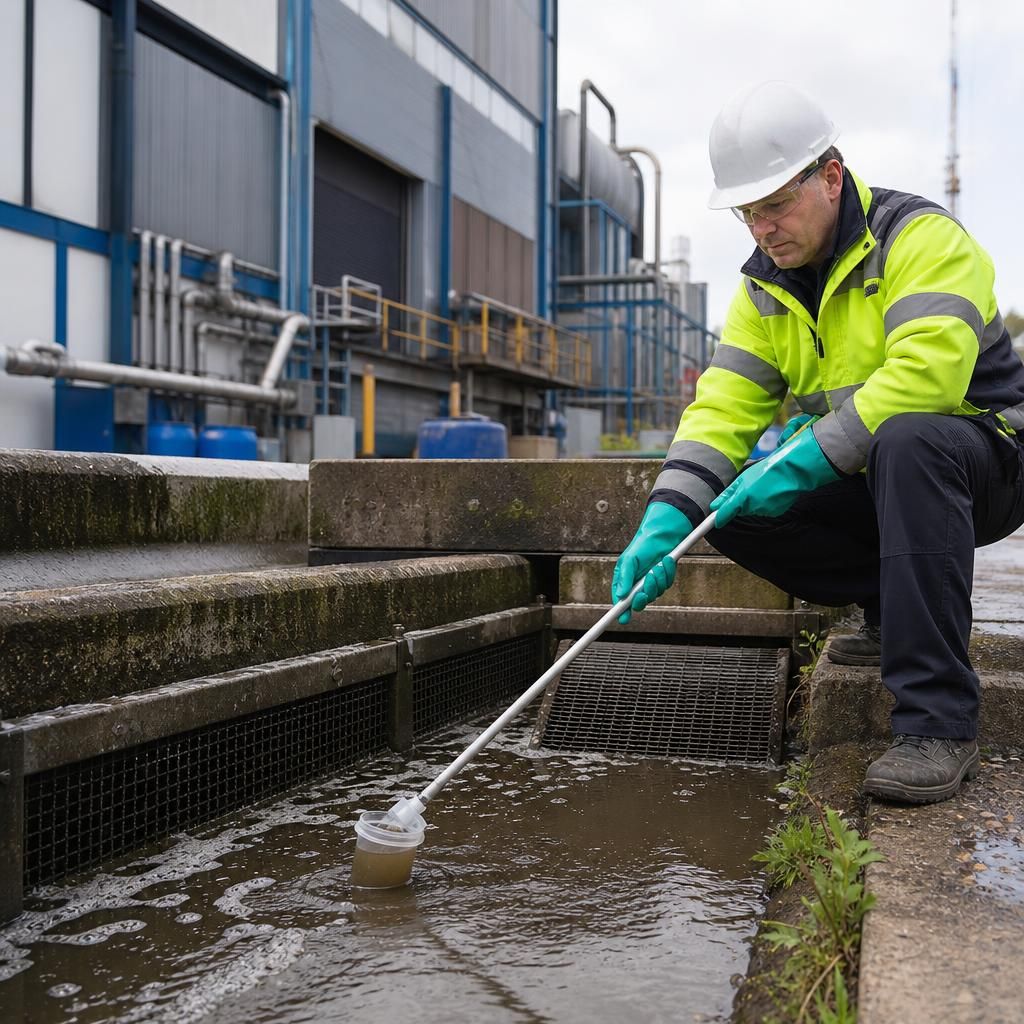
Responsible wastewater management is a key part of eco-friendly industrial cleaning because it prevents contaminated runoff from creating a new environmental risk. Water used to remove oil, silt, detergents, paint residues or biological growth should be contained and assessed rather than allowed to enter surface-water drains or nearby watercourses.
Before work starts, the drainage layout, discharge arrangements and nature of the contamination should be reviewed. Depending on the site and waste stream, runoff may need to be filtered, collected for removal by an authorised contractor or discharged only under an appropriate trade effluent arrangement. This approach supports environmental compliance while protecting drainage infrastructure and reducing the risk of pollution incidents.
Clear records of the cleaning method, wastewater controls and waste transfer arrangements also help site managers demonstrate that environmental responsibilities have been actively managed.
Plan Your Eco-Friendly Industrial Cleaning Programme
Speak to our team about planning an eco-friendly industrial cleaning programme tailored to your site, surfaces, drainage arrangements and operational requirements. We can help identify practical ways to reduce water, chemical use and waste while maintaining safe, compliant premises.