
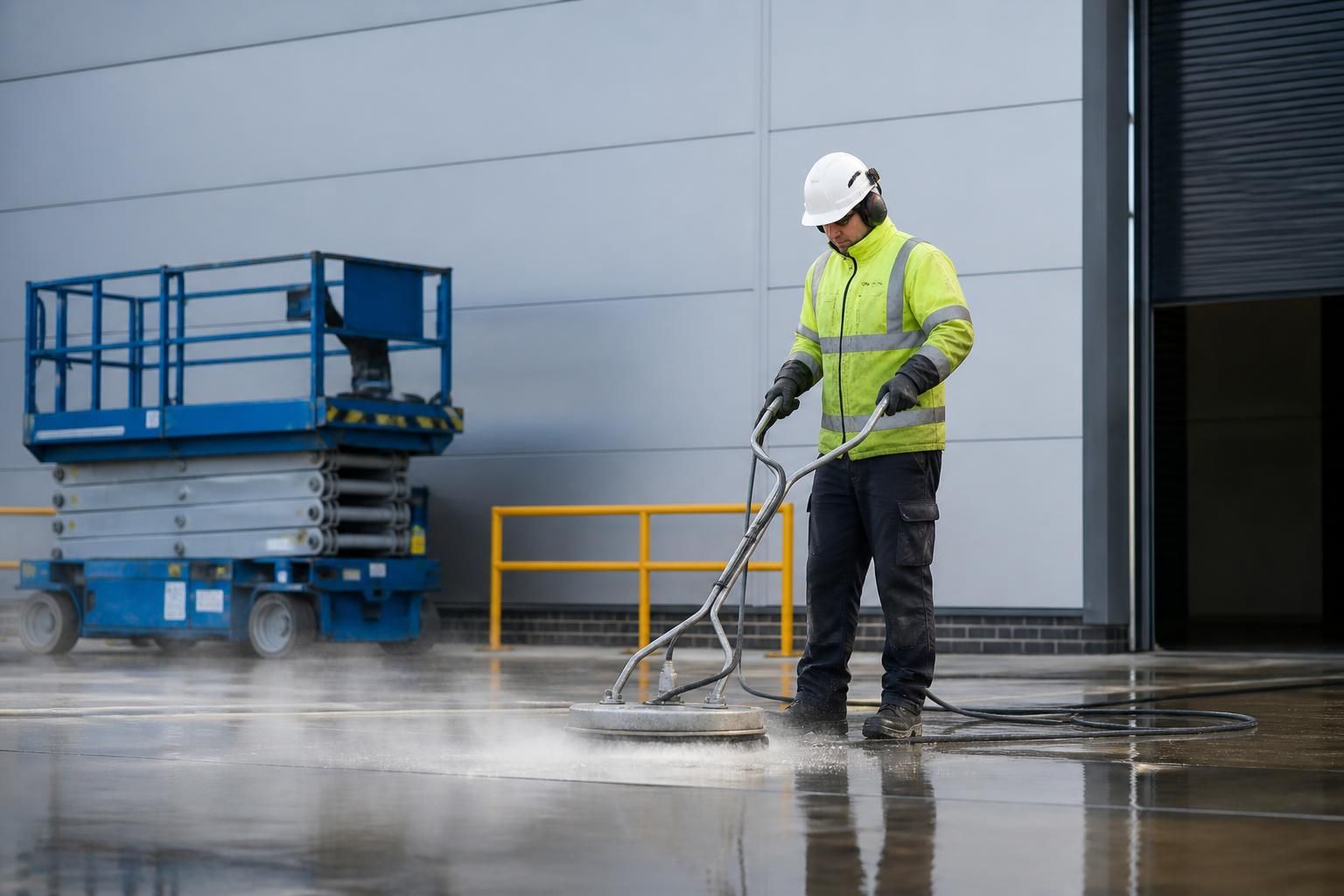
How do industrial cleaning services ensure compliance with health and safety regulations?
Industrial cleaning services support health and safety compliance by carrying out site-specific risk assessments, method statements and COSHH assessments before work begins, then applying appropriate controls, training, PPE and safe equipment procedures. They also manage access, chemicals, waste and documentation carefully, providing records that help keep the site safe, demonstrate due diligence and remain audit-ready.
Industrial cleaning services support compliance with UK health and safety regulations by identifying hazards before work starts, controlling the risks through suitable methods and equipment, and maintaining clear records. A compliant approach normally combines site-specific risk assessments, method statements, COSHH assessments, competent operatives, appropriate personal protective equipment (PPE), controlled access and documented checks throughout the work.
Planning and risk assessment
Before cleaning begins, the contractor should assess the site, the surfaces to be cleaned, the substances present and the proposed equipment. This assessment considers hazards such as chemical residues, dust, biological contamination, slippery surfaces, vehicle movements, electrical installations, fragile roofs, confined areas, work at height and pressure from cleaning equipment.
The findings should be recorded in a risk assessment, with controls that reflect the actual location and task rather than relying on a generic template. A method statement then explains how the work will be carried out safely, including preparation, access, equipment set-up, cleaning, rinsing, waste handling, emergency arrangements and handover. These documents should be reviewed if site conditions, chemicals, equipment or the scope of work changes.
COSHH and chemical controls
Where detergents, disinfectants, degreasers, biocides or other hazardous substances are used, the service provider should complete a Control of Substances Hazardous to Health (COSHH) assessment. This identifies the substance, exposure routes, possible harm and the measures needed to prevent or control exposure.
Good chemical control includes:
- Checking the supplier’s safety data and using products only for suitable applications.
- Storing, labelling and transporting chemicals securely.
- Following the correct dilution and application instructions.
- Providing suitable gloves, eye protection, respiratory protection or other PPE where required.
- Preventing incompatible chemicals from being mixed.
- Controlling overspray, vapour, run-off and contact with people, stock or sensitive equipment.
- Keeping spill response materials available and disposing of contaminated materials appropriately.
Steam cleaning or hot-water methods may reduce the need for chemicals in some applications, but they still require a task-specific assessment. Heat, pressure, aerosols and contaminated water can create their own hazards.
Competence, training and supervision
Cleaning operatives should be trained and competent for the work they undertake. This includes understanding the relevant risk assessment and method statement, safe chemical use, equipment operation, PPE, manual handling, emergency procedures and reporting requirements. Additional competence is needed for specialist activities such as pressure washing, steam cleaning, abrasive cleaning, confined-space work, traffic management, powered access or roof cleaning.
Supervision should be proportionate to the risk and the experience of the team. Operatives need a clear process for stopping work if they find unexpected contamination, damaged surfaces, unsafe access, live services or changing weather conditions. Site inductions and toolbox talks help connect the contractor’s controls with the client’s local rules.
Safe equipment and access arrangements
Equipment must be appropriate for the task, maintained and checked before use. The Provision and Use of Work Equipment Regulations (PUWER) are relevant to many cleaning machines, pumps and powered tools. Checks should identify damaged hoses, faulty electrical leads, worn connections, defective guards and other conditions that could cause injury or equipment failure.
Where lifting equipment or accessories are used, relevant requirements under the Lifting Operations and Lifting Equipment Regulations (LOLER) may apply. Work at height must be planned and carried out in line with the Work at Height Regulations, using suitable access equipment and collective protection wherever reasonably practicable. Ladders should not be treated as a default solution for prolonged or high-risk work. Powered access platforms, scaffold towers, edge protection or other systems must be selected, inspected and operated by suitably trained people.
Access routes, exclusion zones and equipment positions should be planned to protect pedestrians, vehicles, building users and the cleaning team. Hoses and cables should be routed to prevent trips, and barriers or warning signs should be used where wet floors, falling debris, spray or vehicle movements present a risk. For work near roads, loading areas or active car parks, the traffic management arrangements should be agreed with the site operator before work starts.
Controlling water, contamination and environmental risks
Industrial cleaning can create contaminated water, sludge, dust and waste. The method should therefore explain how run-off will be contained, collected, filtered or disposed of. Discharges must not enter surface-water drains or the ground where they could cause pollution, and trade effluent arrangements may need to be agreed with the relevant site owner or water authority.
Where dust, mould, bird fouling, oils or other contaminants are present, the assessment should address exposure, containment and decontamination. Appropriate respiratory protection, hygiene facilities, controlled waste handling and cleaning of equipment may be necessary. Waste should be segregated, stored safely and transferred through suitable disposal arrangements, with documentation retained where required.
Personal protective equipment and welfare
PPE is selected from the risk assessment and should complement, rather than replace, measures that remove or reduce the hazard. Depending on the task, this may include protective footwear, waterproof or chemical-resistant clothing, gloves, eye or face protection, hearing protection, head protection and respiratory protective equipment.
PPE must fit the wearer, be compatible when several items are used together, and be inspected, cleaned, stored and replaced when damaged. Operatives should also have access to suitable welfare facilities, drinking water, washing arrangements and a means of dealing with contaminated clothing. These provisions are particularly important where cleaning involves chemicals, biological material or prolonged wet work.
Communication with the client and site users
Health and safety compliance depends on cooperation between the cleaning contractor and the duty holder responsible for the premises. The client should provide relevant information about known hazards, restricted areas, asbestos or other hazardous materials, fire arrangements, emergency contacts, vulnerable occupants and operational constraints.
The contractor should communicate the planned controls to affected people and coordinate with other contractors. This may involve scheduling work outside busy operating periods, isolating equipment, protecting stock, securing work areas or arranging permits. Permit-to-work systems may be required for activities involving hot work, confined spaces, electrical isolation, roof access or other significant hazards.
Monitoring, incidents and records
Supervisors should monitor the work to confirm that the agreed method is being followed and that controls remain effective. Records may include risk assessments, method statements, COSHH assessments, training and competency evidence, equipment inspection records, waste transfer documentation, permits, site briefings and incident reports.
Near misses, injuries, spills, equipment defects and changes in conditions should be reported promptly and investigated appropriately. Certain incidents may be reportable under the Reporting of Injuries, Diseases and Dangerous Occurrences Regulations (RIDDOR). Keeping accurate records helps the contractor and client identify corrective actions and demonstrate that health and safety duties have been actively managed.
What a compliant service should provide
For an industrial cleaning project, the service documentation should normally make clear:
- What areas, surfaces and contaminants are included in the scope.
- Which hazards have been identified and how each will be controlled.
- Who is responsible for isolations, access, permits, supervision and emergency communication.
- Which chemicals, machines and access systems will be used.
- How people, vehicles, equipment, drainage systems and surrounding property will be protected.
- How waste, contaminated water and spillages will be managed.
- What checks and records will be completed before, during and after the work.
These measures do not transfer all legal responsibility to the cleaning contractor: the client and other duty holders retain responsibilities under the Health and Safety at Work etc. Act and other applicable legislation. However, a competent industrial cleaning provider should make those responsibilities easier to manage by supplying suitable planning documents, trained personnel, controlled working methods and an auditable record of the work.
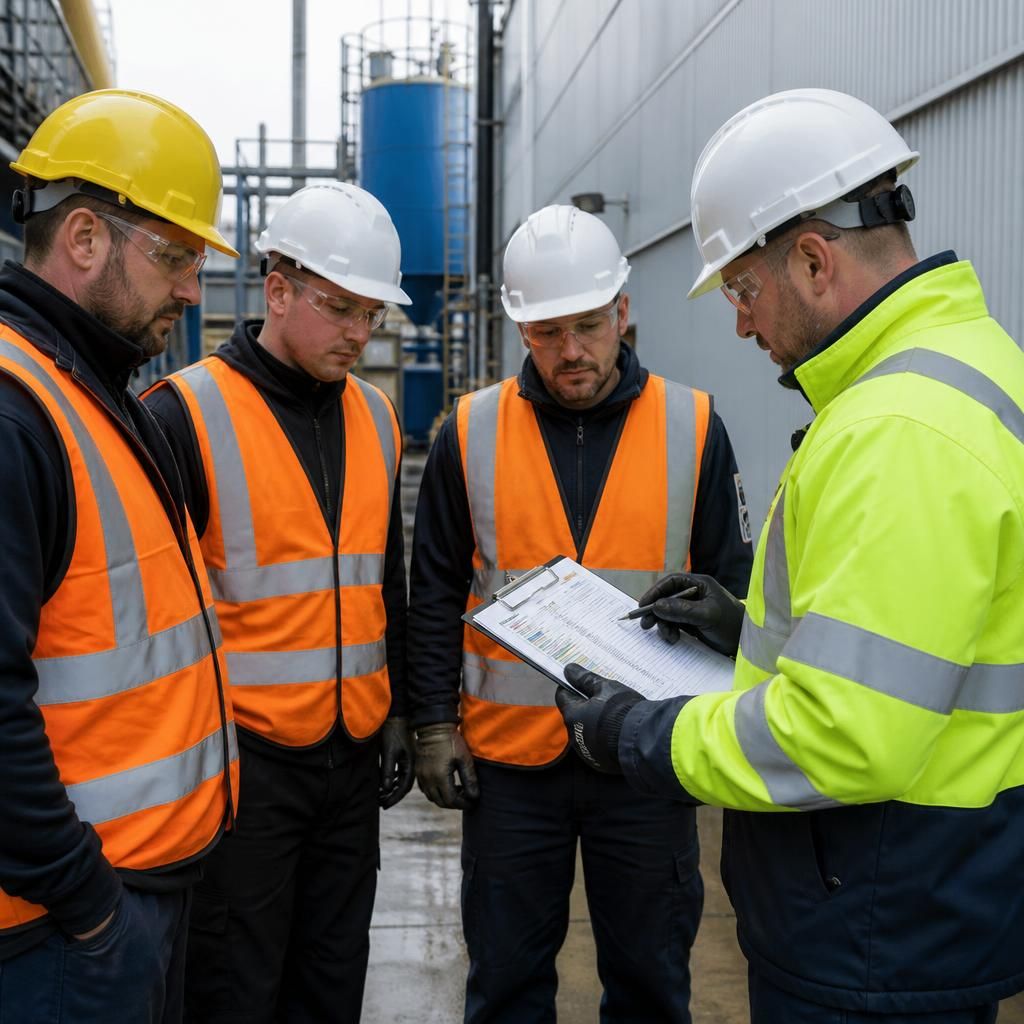
Site-specific risk assessments and method statements are central to compliant industrial cleaning because they identify the hazards of the premises and set out the controls required before work begins. The assessment should consider chemical residues, contaminated surfaces, pressure or steam equipment, electrical installations, vehicle movements, drainage, fragile areas and work at height.
The method statement then explains how the cleaning will be prepared, carried out and completed safely, including access arrangements, exclusion zones, PPE, waste and run-off controls, emergency procedures and handover requirements. These documents should be briefed to the cleaning team and reviewed if site conditions, equipment or the scope of work changes, giving the client a clear record of how risks have been managed.