
How can industrial cleaning services be tailored to meet the specific needs of different industries?
Industrial cleaning services are tailored by assessing each industry’s contaminants, surfaces, access requirements, operating schedule, compliance obligations and safety risks. This enables the cleaning method, equipment, products and maintenance frequency to be adapted for environments such as factories, warehouses, construction sites, commercial premises and public-sector facilities.
Industrial cleaning services are tailored by matching the cleaning process to the site’s contaminants, surfaces, equipment, access constraints, operating schedule, safety risks and compliance obligations. A factory handling oils requires a different approach from a food-production site, warehouse, construction project or public-sector facility. The work should therefore begin with a site assessment rather than a standard cleaning package.
Site assessment and cleaning specification
A suitable specification identifies what must be cleaned, how often it needs attention and what condition must be achieved. The assessment normally considers:
- The type and quantity of dirt, including dust, grease, oil, mud, chemical residue, algae, bird fouling, paint and graffiti.
- The materials and finishes involved, such as concrete, brick, render, cladding, metal, glass, roofing systems, painted surfaces and specialist flooring.
- Whether the cleaning is internal, external or a combination of both.
- Available access, including ground-level areas, restricted spaces, height, roof access, loading bays and vehicle routes.
- The effect of cleaning on employees, visitors, machinery, stock, drainage systems and neighbouring premises.
- Operational constraints, including production hours, deliveries, shift patterns, public access and noise restrictions.
- Applicable risk assessments, method statements, environmental controls and industry-specific requirements.
This information allows the contractor to define the correct equipment, cleaning agents, water management arrangements, access method and inspection process. It also prevents unsuitable pressure, heat or chemicals from damaging surfaces.
Adapting methods to different contaminants
Contaminants respond differently to cleaning. Oil and grease may require a suitable degreasing treatment followed by controlled rinsing or steam cleaning. Loose dust and dry debris may be removed using vacuuming or mechanical sweeping before any wet process is introduced. Organic growth on façades, paving and roofs may need a treatment that removes the growth while limiting damage to the underlying material. Graffiti removal requires a method selected according to the paint, substrate and surrounding finish.
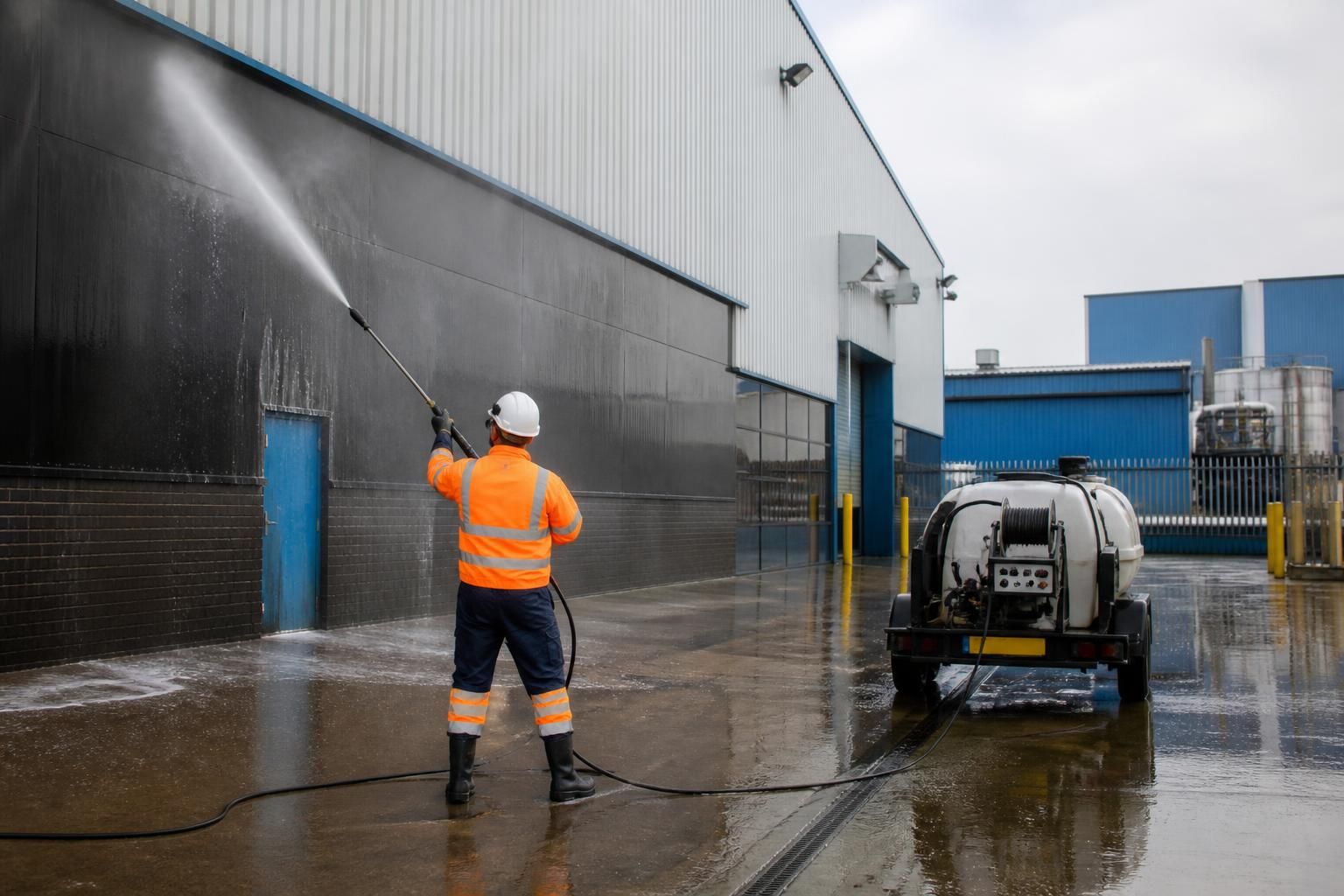
Pressure washing is effective for many robust external surfaces, but pressure is only one part of the process. Water temperature, flow, nozzle selection, distance from the surface and dwell time of any cleaning product all affect the result. Steam cleaning can be more suitable where lower water use, controlled heat or reduced chemical use is important. Soft washing or low-pressure cleaning may be preferable for delicate cladding, painted surfaces, render and some roof materials.
Tailoring services to specific industries
- Manufacturing and engineering facilities: Cleaning may focus on oil, swarf, dust, process residue, loading areas, façades, roofs and hard-working floors. The plan should protect machinery, prevent contaminated wash water from entering unsuitable drains and coordinate work around production.
- Warehouses and distribution centres: Priorities often include loading bays, yard surfaces, dock areas, floors, racking surrounds, cladding and high-level dust. Cleaning schedules need to account for forklift movements, deliveries, stock protection and pedestrian segregation.
- Food and beverage premises: Cleaning must be compatible with hygiene procedures and the materials used on floors, walls, drainage points and external service areas. Product selection, water control, residue removal and clear separation between operational and non-operational areas are particularly important.
- Construction and development sites: Services may involve removing cement residue, construction dust, mud, paint splashes and general site debris from buildings, access roads, paving, façades and welfare areas. The approach must reflect the changing condition of the site and the programme for handover or occupation.
- Commercial property and managed estates: Work may combine façade washing, cladding cleaning, roof maintenance, car park cleaning, chewing gum removal, graffiti removal and entrance cleaning. The specification can be arranged around tenant access, public safety and the visual standards expected across the estate.
- Public-sector and local-authority premises: Schools, civic buildings, transport-related sites and other public facilities require careful control of pedestrian movement, signage, access and working hours. The method should also address environmental discharge and the need to maintain safe routes during the work.
- Industrial yards and infrastructure sites: Heavy soiling, traffic film, mud and weathering may require mechanical sweeping, pressure washing or specialist access equipment. Drainage, water recovery and the protection of nearby land or watercourses should form part of the plan.
Scheduling around operations
A tailored service is organised around the way the site operates. High-traffic areas may need frequent lighter cleaning, while roofs, façades and less accessible surfaces may be suitable for planned periodic maintenance. Work can be scheduled outside production, delivery or public-opening periods where this reduces disruption. In other situations, phased cleaning allows the site to remain operational while clearly defined zones are isolated.
Weather is also relevant to external work. Rain, frost, wind and surface temperature can affect access, chemical performance, drying and the control of run-off. A responsible plan includes suitable working conditions and a process for postponing or adapting tasks when conditions create unacceptable risks.
Safety and compliance controls
The cleaning method must be supported by a task-specific risk assessment and method statement. These documents should address slips, trips, work at height, pressure equipment, hot water or steam, chemicals, electrical equipment, vehicle movements, falling objects, confined or restricted areas and exposure to contaminated materials.
Access equipment is selected according to the height, reach, surface and duration of the task. Where work takes place near roads, loading areas or members of the public, barriers, exclusion zones and clear signage help separate the work area from normal activity. Staff should use appropriate personal protective equipment and follow the site’s own induction, permit and emergency procedures.
Where cleaning produces contaminated water or residue, the contractor should agree how it will be contained, collected, treated or disposed of. This is particularly important where oils, chemicals, paint or other pollutants could enter surface-water drainage. Documentation, inspection records and completion reports provide evidence that the agreed process has been followed.
Creating a practical maintenance programme
The most effective programme separates routine tasks from specialist and responsive work. Routine cleaning maintains safe access and acceptable presentation. Periodic deep cleaning deals with accumulated contamination on floors, façades, roofs, cladding and yards. Reactive support may be required after spills, construction activity, vandalism, severe weather or accidental contamination.
Specifications should state the areas covered, cleaning standards, exclusions, access arrangements, preferred products, water and waste controls, reporting requirements and review points. Site conditions can change as production, tenancy, traffic or building use changes, so the programme should be reviewed when new equipment is installed, surfaces deteriorate or compliance requirements are updated.
For Encanto Exterior Cleaning’s commercial and industrial customers, this tailored approach supports safer premises, controlled disruption and more consistent maintenance across Birmingham, the West Midlands and wider UK sites. The appropriate solution is not simply the most powerful cleaning method; it is the method that removes the relevant contamination effectively while protecting people, property, operations and the environment.
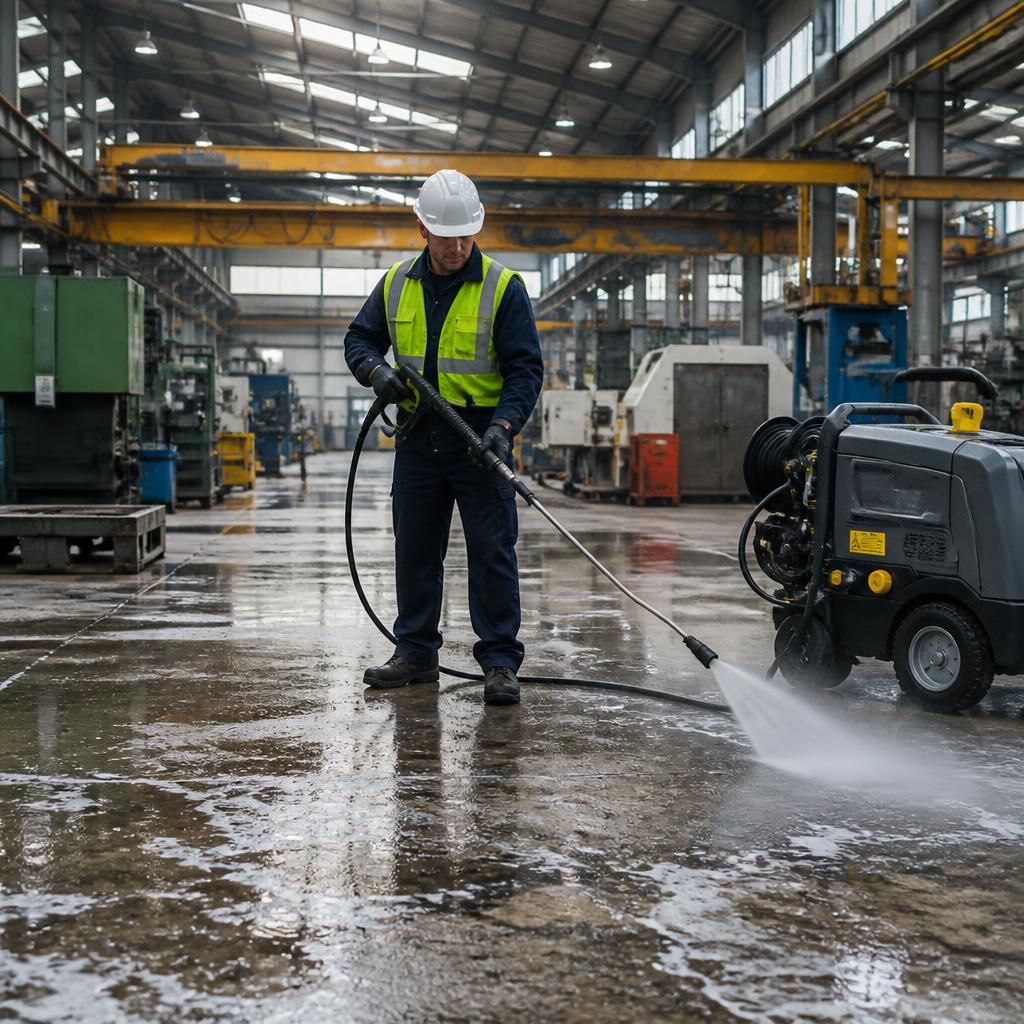
Industrial cleaning is tailored by matching the method to the site’s contaminants, surfaces, access limitations and operating requirements. Oil on engineering floors may need controlled degreasing and steam cleaning, while delicate cladding, painted render or roofing materials may require low-pressure or soft washing to prevent damage.
A site assessment also determines when work can take place, how machinery and stock will be protected, and how wastewater or residue will be controlled. This allows factories, warehouses, construction sites and managed premises to receive a cleaning specification that supports safe operation without applying unnecessary pressure, heat or chemicals.
Discuss Your Tailored Industrial Cleaning Requirements
Discuss your site’s cleaning requirements with Encanto Exterior Cleaning to develop a tailored specification for your surfaces, operating schedule and compliance needs. Contact us to arrange a site assessment for commercial or industrial cleaning across Birmingham, the West Midlands or the wider UK.