
What types of industrial cleaning equipment are essential for maintaining building exteriors?
Essential industrial cleaning equipment for building exteriors includes commercial pressure washers, steam cleaning systems, surface cleaners, wet vacuums and water-recovery equipment, supported by suitable detergents and accessories. Safe access equipment such as mobile elevated work platforms, scaffolding or water-fed pole systems is also required where façades, roofs and high-level cladding cannot be cleaned from ground level.
Essential industrial cleaning equipment for building exteriors includes commercial pressure washers, steam cleaning systems, surface cleaners, wet vacuums, water-recovery equipment and suitable access systems. The correct combination depends on the surface, level of soiling, available water and drainage, working height, environmental controls and the need to protect pedestrians, vehicles and the building itself.
Commercial pressure washers
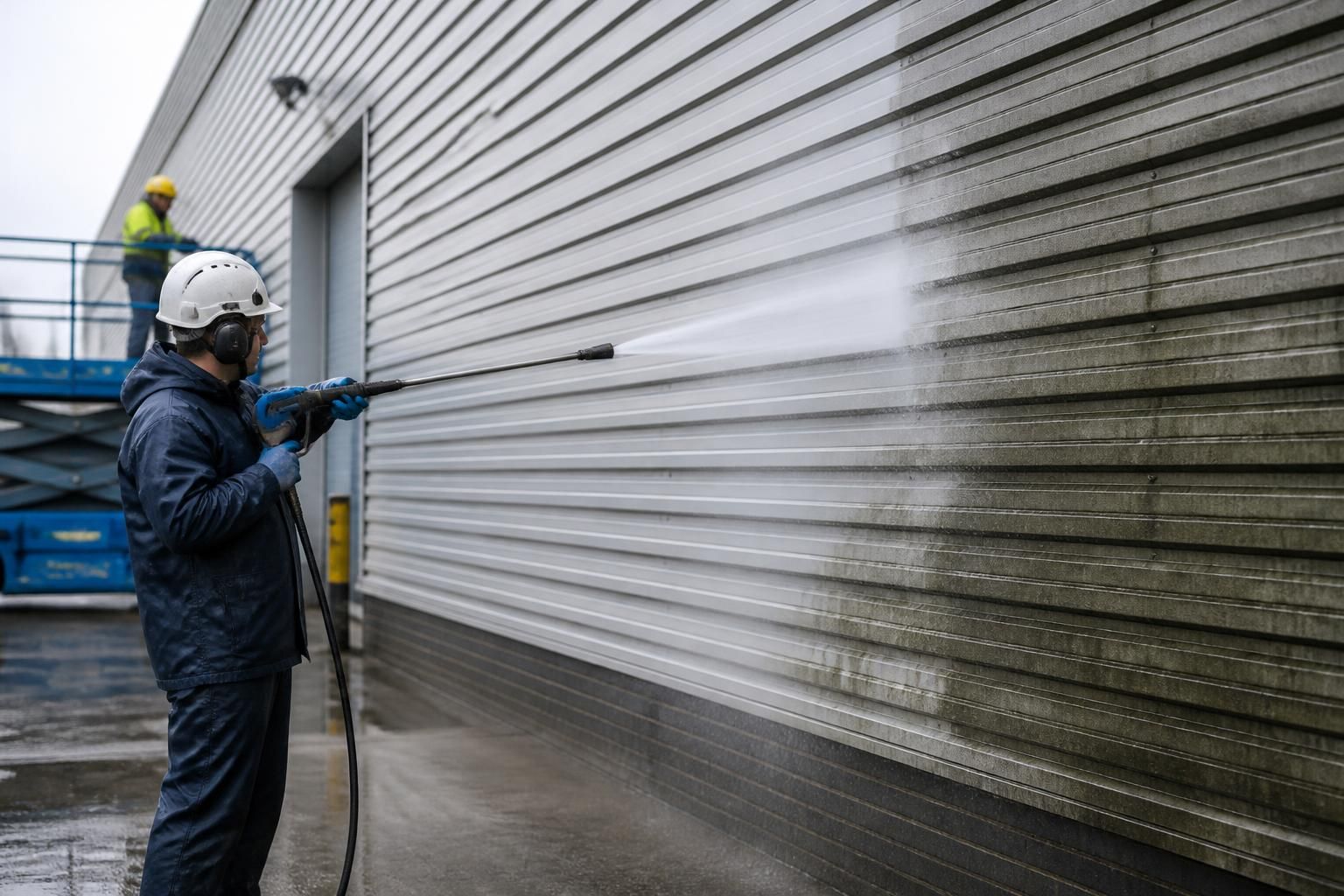
Commercial pressure washers provide the water flow and pressure required to remove ingrained dirt, algae, moss, traffic film, oil residues and loose coatings from robust external surfaces. Hot-water machines are particularly useful where grease, oil or heavy organic contamination is present, as heat helps soften deposits and can reduce reliance on detergents. Cold-water machines are often suitable for general dirt removal, rinsing and large areas where heat is unnecessary.
Industrial machines should allow the operator to control pressure and flow rather than simply delivering the highest possible output. Excessive pressure can damage mortar joints, coatings, render, sealants, timber, soft stone and weathered concrete. A professional setup therefore includes interchangeable nozzles, variable pressure control and enough hose length to work efficiently without repeatedly moving the machine.
Steam cleaning equipment
Steam cleaning systems use heated water at comparatively low pressure to loosen dirt, biological growth, grease and some residues from sensitive or detailed surfaces. They are useful for façades, masonry, architectural features, signage and areas where minimising water use or surface impact is important. Steam can also support cleaning in locations where aggressive mechanical action would risk damaging the substrate.
Steam equipment is not a universal substitute for pressure washing. It may be less efficient for rapidly rinsing very large, heavily soiled areas, so the method should be selected according to the surface and contamination. Operators must also manage heat exposure, runoff and the risk of affecting coatings, jointing materials or delicate components.
Surface cleaners and specialist attachments
Rotary surface cleaners enclose spinning spray bars within a skirt or housing. They help produce a more even finish on concrete, paving, loading areas, car parks and other broad horizontal surfaces while reducing splashback. Their design can improve productivity and make it easier to maintain consistent cleaning passes than using a lance alone.
Other useful attachments include adjustable lances, turbo or rotary nozzles, extension wands, under-vehicle cleaners, gutter-cleaning tools and soft-washing or detergent applicators. The attachment must be compatible with the machine and appropriate for the substrate. A rotary nozzle or aggressive jet, for example, may be unsuitable for fragile masonry or painted cladding.
Wet vacuums and water-recovery systems
Wet vacuums remove standing water, slurry, cleaning solution and loose debris after washing. Water-recovery systems may include vacuum heads, collection tanks, pumps, filters and hoses that capture contaminated runoff before it reaches drains, soil or neighbouring property. This equipment is especially important for car parks, service yards, petrol-contaminated areas, industrial premises and sites with strict drainage controls.
Recovery equipment should have sufficient capacity for the work and be accessible for emptying at an approved disposal point. Filters and collection components need regular inspection because silt, grit and chemical residues can reduce suction or damage pumps. Wastewater must be handled in accordance with site requirements and applicable environmental and trade-effluent controls; it should not be discharged to surface-water drains without confirmation that this is permitted.
Water supply and treatment equipment
Large exterior cleaning projects may require water tanks, transfer pumps, hose reels, filtration units and backflow protection where the site supply is limited or cannot provide a consistent flow. Tanks can support remote work, while pumps help deliver water to equipment positioned away from the supply point. Filtration is useful when the water contains sediment that could block nozzles or affect pumps.
Water-fed pole systems can provide a controlled method for cleaning windows, cladding and other high-level areas from ground level, where the building and site conditions allow it. Pure-water systems may improve the finish on glazing by reducing spotting, but they still require correct pole selection, stable footing and a suitable method for managing hoses and pedestrian movement.
Detergent and chemical application equipment
Foamers, downstream injectors, dosing pumps and low-pressure applicators distribute detergents, biocides and other approved treatments across façades, roofs and hard surfaces. Applying a product evenly and allowing the correct dwell time can improve cleaning performance without relying on excessive pressure. The product must be compatible with the substrate, nearby landscaping, drainage arrangements and any protective coating.
Operators should follow the product’s safety data sheet and site method statement. Chemical-resistant containers, measuring equipment, labels, spill kits and suitable personal protective equipment are part of a safe application system. Detergent should never be mixed with another chemical unless the manufacturer specifically confirms that it is safe to do so.
Access equipment
High-level façades, roofs, cladding and atria require safe access equipment as well as cleaning machinery. Depending on the building and ground conditions, this may include mobile elevated work platforms, scaffold towers, fixed scaffolding, roof-access systems, ladders used only for suitable short-duration tasks, or water-fed poles that permit work from ground level.
The equipment must be selected through a competent assessment of height, reach, ground stability, overhead obstructions, fragile roof areas, wind exposure, public access and rescue arrangements. Access equipment should not be improvised to extend the reach of a pressure-washing lance. Where a powered platform is required, operators must be trained and authorised, and the equipment must be inspected and used in accordance with the relevant site controls.
Hoses, reels, electrical supplies and site protection
Heavy-duty hoses, couplings, hose reels, trigger assemblies and spare seals are essential working components rather than minor accessories. Correct hose diameter helps preserve flow, while secure couplings reduce leaks and unplanned interruptions. Electrical machines require suitable power supplies, residual-current protection and weather-appropriate leads and connections. Fuel-powered equipment requires safe fuel storage, ventilation and controls for exhaust emissions.
Practical site-protection equipment includes drain covers, bunding, spray screens, warning signs, barriers, cones and protective sheeting. These items help separate the work area from pedestrians and vehicles, prevent overspray and protect doors, vents, electrical fittings, glazing and planted areas. Lighting may also be needed where work takes place in enclosed service yards or poorly illuminated areas.
Personal protective and monitoring equipment
Operators commonly need waterproof protective clothing, safety footwear with suitable grip, gloves, eye and face protection, hearing protection and respiratory protection where the risk assessment identifies exposure to aerosols, dust or chemical vapours. Harnesses and fall-arrest equipment may be required for specific access arrangements, but only when suitable for the work and used by trained personnel with a rescue plan.
Pressure, temperature, flow, chemical concentration and wastewater levels should be monitored during the work. These checks help maintain consistent results and identify problems before they cause surface damage, equipment failure or uncontrolled runoff. A pre-clean inspection should record fragile areas, existing defects, drainage points and items that need masking or isolation.
Choosing the right equipment combination
Equipment should be specified as a complete system rather than as isolated machines. A typical robust-surface project may require a commercial pressure washer, rotary surface cleaner, detergent applicator, hoses, water supply and recovery equipment. A sensitive façade may instead need a steam system, soft brushes, controlled chemical application and low-impact access. A high-level cladding project may combine a water-fed pole system with a low-pressure washer, a mobile elevated work platform and runoff controls.
Before work starts, assess the substrate, contamination, working height, water and power availability, drainage, weather conditions, public interface and waste requirements. This determines whether pressure washing, steam cleaning, chemical treatment or a combination is appropriate. Testing a small inconspicuous area is good practice, particularly on painted, coated, rendered, historic or previously repaired surfaces.
Regular maintenance is also essential. Pumps, burners, nozzles, hoses, filters, seals, vacuum units and access equipment should be checked according to the manufacturer’s instructions and the site’s inspection regime. Removing debris, flushing chemical lines, protecting equipment from frost and recording defects helps preserve performance and reduces the likelihood of breakdowns during a large-scale project.
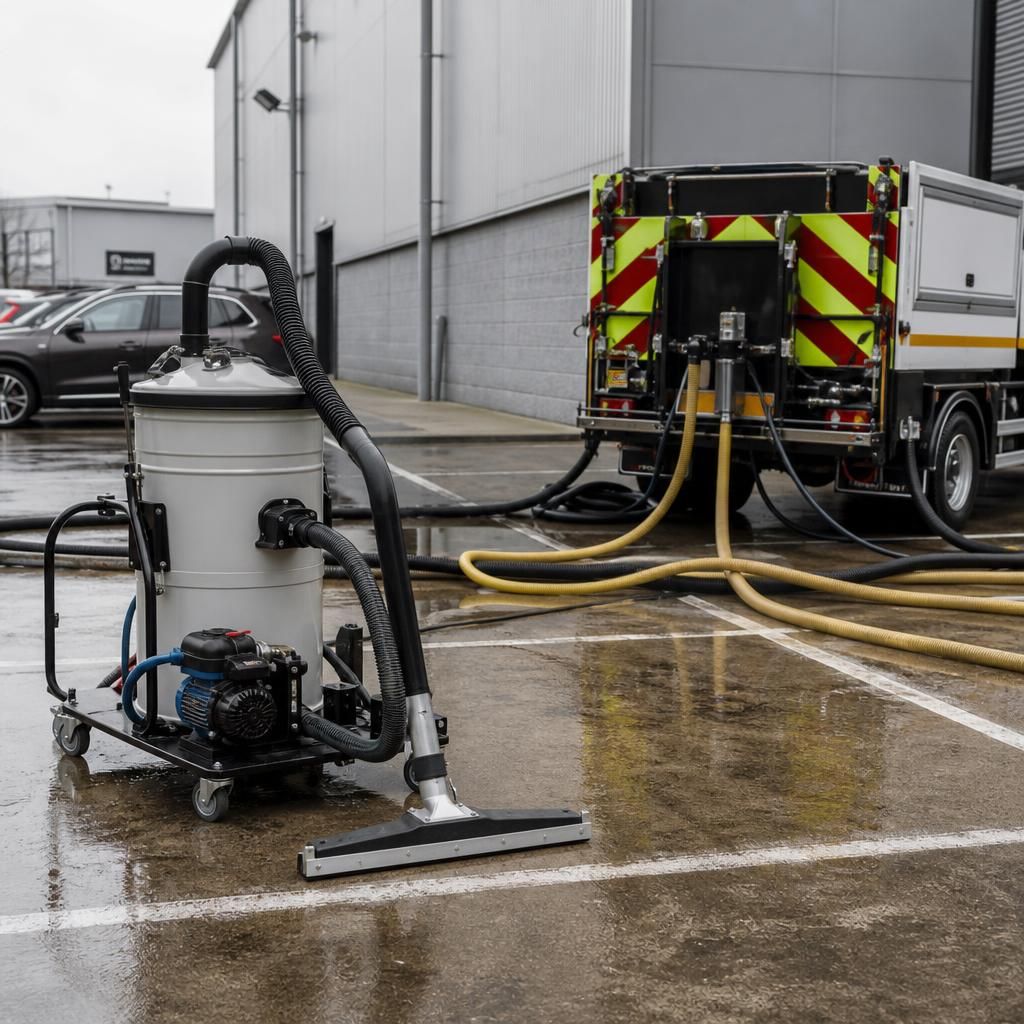
Water-recovery equipment is essential when exterior cleaning produces contaminated runoff that must not enter surface-water drains, soil or neighbouring property. A typical system combines a vacuum head, collection tank, pump, filters and suitable hoses to capture slurry, detergents, oil residues and wash water during or after cleaning.
This equipment is particularly important on car parks, service yards, industrial premises and sites with restricted drainage arrangements. Capacity should match the size of the work, and collected wastewater must be taken to an approved disposal point in line with site requirements and applicable trade-effluent controls. Filters, tanks, hoses and pumps should be checked regularly because silt and grit can reduce suction and cause equipment failure.
Discuss the right equipment for your exterior cleaning project
Discuss your exterior cleaning project with Encanto Exterior Cleaning to identify the right pressure washing, steam cleaning, access and water-recovery equipment for the site. We can help assess the surfaces, access requirements, contamination and drainage controls before work begins.