
What maintenance is required for the longevity of industrial cleaning equipment?
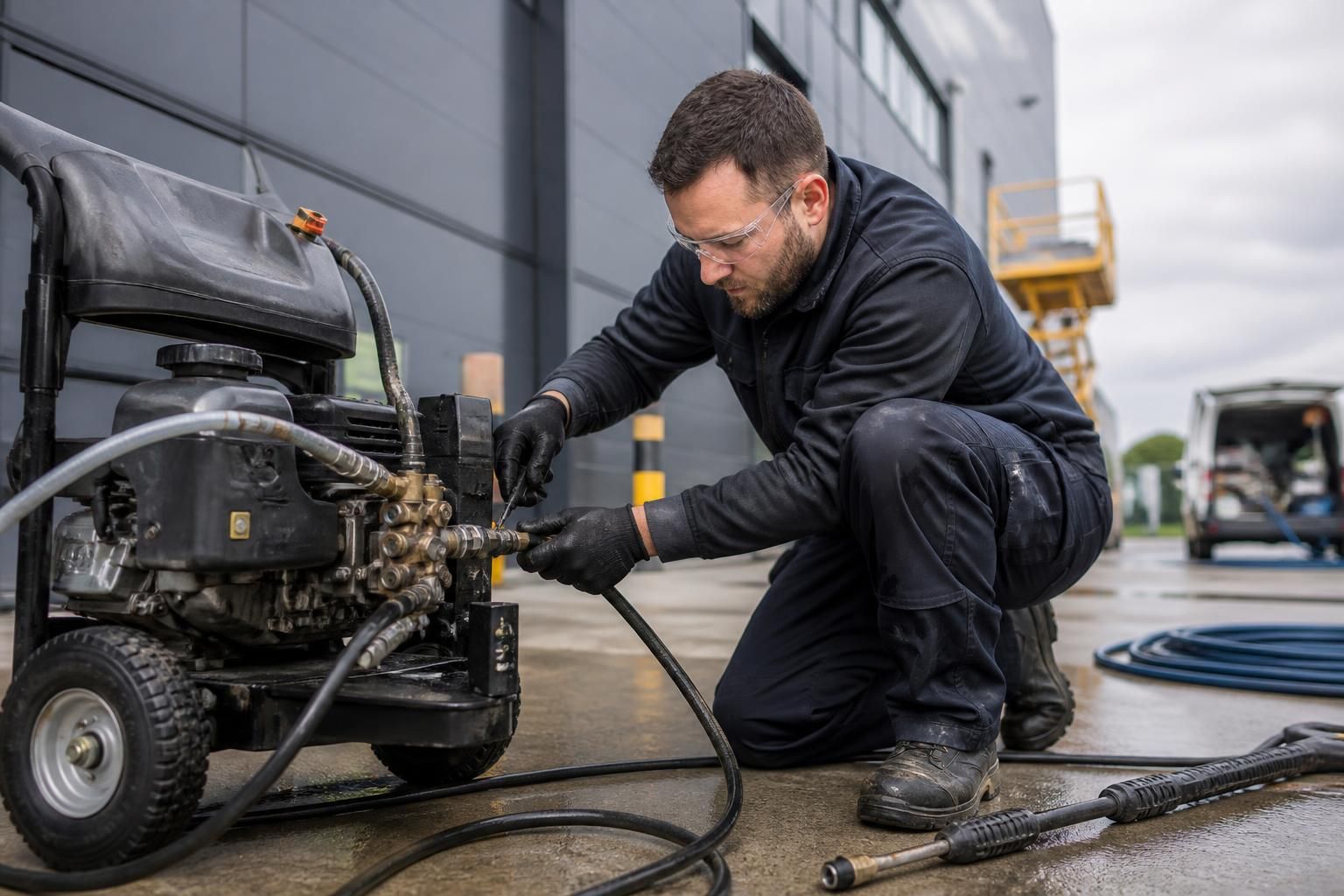
Regular maintenance keeps industrial cleaning equipment reliable, safe and efficient, while helping prevent avoidable breakdowns and premature wear. Follow the manufacturer’s servicing schedule, inspect hoses, pumps, nozzles, filters, cables and safety controls routinely, and clean, drain and store each machine correctly after use.
Industrial cleaning equipment needs planned inspection, cleaning, servicing and correct storage to remain safe, efficient and dependable. The maintenance routine should follow the manufacturer’s instructions and be adapted to the machine, operating environment, water quality and intensity of use. Regular care helps protect pumps, motors, heating systems, hoses, seals, filters, nozzles, cables and safety controls from premature wear, while reducing unplanned downtime during commercial cleaning work.
Follow the manufacturer’s servicing schedule
Keep the operating manual and maintenance instructions with the equipment, and use them to establish a documented service schedule. The manufacturer’s guidance should take priority because service requirements vary between cold-water pressure washers, hot-water units, steam cleaners, vacuum systems, scrubber dryers, pumps and access equipment.
Record servicing, repairs, parts replaced, faults identified and any safety checks completed. This provides a useful maintenance history, helps identify recurring problems and makes it easier to plan servicing before equipment is required for a large-scale project. Only competent, suitably trained personnel should carry out electrical, mechanical, fuel-system or pressure-system repairs.
Complete checks before each use
A pre-use inspection should identify obvious damage and faults before the machine is connected or started. Check the following as appropriate to the equipment:
- Hoses, couplings, lance assemblies and trigger controls for cuts, bulges, leaks or damaged seals.
- Nozzles, spray bars and surface-cleaning attachments for blockage, wear or distortion.
- Power cables, plugs, switches and extension leads for cuts, exposed conductors, heat damage or loose connections.
- Fuel lines, tanks, water connections and chemical-dosing systems for leaks.
- Guards, covers, wheels, handles and mounting points for damage or looseness.
- Filters, water inlets and ventilation openings for dirt or obstruction.
- Pressure gauges, temperature controls, emergency stops and other safety devices for correct operation.
- Signs of unusual corrosion, vibration, noise, overheating or fluid loss.
Do not continue using equipment with a damaged high-pressure hose, exposed electrical wiring, a failed safety control or any other defect that could create a risk. Isolate the machine, label it clearly and arrange an appropriate inspection or repair.
Clean the equipment after every operation
Cleaning equipment should be cleaned after use rather than left with dirt, detergent or chemical residue on its components. Rinse water-fed systems with clean water where the operating instructions permit this, particularly after using detergents, degreasers or other chemicals. Residue can damage seals, block injectors, restrict flow and accelerate corrosion.
Remove mud, grit, concrete dust, algae, paint fragments and other debris from frames, wheels, guards, tanks and attachments. Wipe external surfaces without directing water into motors, control panels, electrical connections, bearings or ventilation openings. Clean recovery tanks, suction paths, brushes and squeegee systems on floor-cleaning equipment so that contamination does not harden or create odours.
When steam equipment has been used, allow hot components to cool safely before cleaning or inspection. Follow the manufacturer’s procedure for draining the boiler or vessel, removing scale and checking water-level controls. Never remove a cap, fitting or access panel while the system is pressurised or hot.
Protect pumps, hoses and water systems
Pressure-washing equipment depends on an uninterrupted supply of clean water at the correct flow and pressure. Inspect inlet filters regularly and clean them when contaminated. A restricted inlet can cause poor performance, cavitation and pump damage. Check hose connections and seals for leaks, but never attempt to locate a high-pressure leak with your hands while the equipment is operating.
Inspect high-pressure hoses for abrasion, kinks, crushed sections and damaged couplings. Avoid dragging hoses over sharp edges or vehicle routes, and coil them without tight bends when storing them. Nozzles gradually wear and may produce an incorrect spray pattern or operating pressure; replace them when cleaning performance changes or the component no longer matches the manufacturer’s specification.
Where local water is hard or contains a high mineral load, scale can build up in heating coils, boilers, injectors and steam systems. Use the approved water-treatment or descaling process and do not introduce unapproved chemicals. Scale removal and internal servicing should be completed by trained personnel when the work involves pressurised or heated components.
Maintain filters, detergents and fuel systems
Air, water, oil and chemical filters should be inspected and replaced or cleaned according to the service instructions. A blocked filter can increase load on the pump or motor, reduce suction, restrict airflow and affect the chemical dosing rate. Use replacement filters and seals that are suitable for the specific machine and cleaning chemicals being used.
For equipment with a fuel-fired burner or engine, check fuel quality, fuel lines, caps and connections. Keep fuel and chemical containers sealed, correctly labelled and stored in line with the relevant safety requirements. Do not mix chemicals in a tank unless the equipment and product instructions expressly allow it. Flush dosing lines when required to prevent crystallisation or chemical build-up.
Inspect electrical and battery-powered equipment
Electrical equipment should be checked for cable, plug, switch and casing damage before use. Keep connections dry and use the correct power supply, protective devices and extension equipment. Where required, arrange inspection and testing by a competent person in accordance with the equipment type and workplace risk assessment.
For battery-powered machines, inspect battery cases, terminals, chargers and connectors. Charge batteries using the approved charger in a suitable ventilated area, and follow the manufacturer’s instructions for storage, cleaning and end-of-life replacement. Do not use a battery that is swollen, leaking, cracked or overheating.
Service moving parts and wear components
Bearings, wheels, belts, brushes, squeegees, seals and other wear parts should be checked for excessive movement, damage or uneven wear. Lubricate only the points specified by the manufacturer and use the correct lubricant; excess or unsuitable lubricant can attract abrasive dirt or damage seals. Replace worn brushes, blades, hoses and nozzles promptly because continuing to use them can place additional load on the motor, pump or drive system.
Check that handles, castors, wheels, covers and attachment locks remain secure. On ride-on or powered floor-cleaning equipment, inspect steering, braking, drive controls and recovery systems as part of the routine safety check. Repairs should not be improvised with unsuitable fasteners, tape or non-approved components.
Drain and store equipment correctly
Drain water tanks, hoses, pumps and boilers as required after use. In cold conditions, trapped water can freeze and damage pumps, valves, coils and fittings. Follow the approved winterisation procedure, which may include draining, using a suitable protective fluid or moving equipment to a frost-protected area. Never use an unapproved antifreeze or chemical in a water system.
Store machines in a clean, dry and secure location away from frost, excessive heat, direct sunlight and corrosive chemicals. Keep hoses, cables and lances supported rather than crushed beneath heavy equipment. Protect nozzles and small fittings from loss or contamination, and leave tanks, filters and recovery compartments in the condition specified by the manufacturer.
Use maintenance records and planned servicing
A written checklist should show the machine identification, date of inspection, operating hours where applicable, condition, defects found, action taken and the person completing the check. Review these records for repeated leaks, pressure loss, overheating, blocked filters or unusual component wear. Recurring faults may indicate incorrect operation, unsuitable water supply, chemical incompatibility or a need for a deeper service.
Arrange professional servicing at the manufacturer’s recommended intervals and whenever performance changes significantly. A competent service provider can test pressure, temperature, electrical protection, burner operation, pump condition and safety controls that cannot be reliably assessed through routine visual checks. Equipment should be taken out of service until faults affecting safety or performance have been resolved.
Correct operation is part of maintenance. Use the right nozzle, pressure, temperature, detergent and attachment for the task; avoid running pumps dry; do not exceed rated pressure or temperature; and follow start-up and shutdown procedures. Combining operator checks with scheduled servicing gives industrial cleaning equipment the best chance of delivering consistent performance throughout its working life.
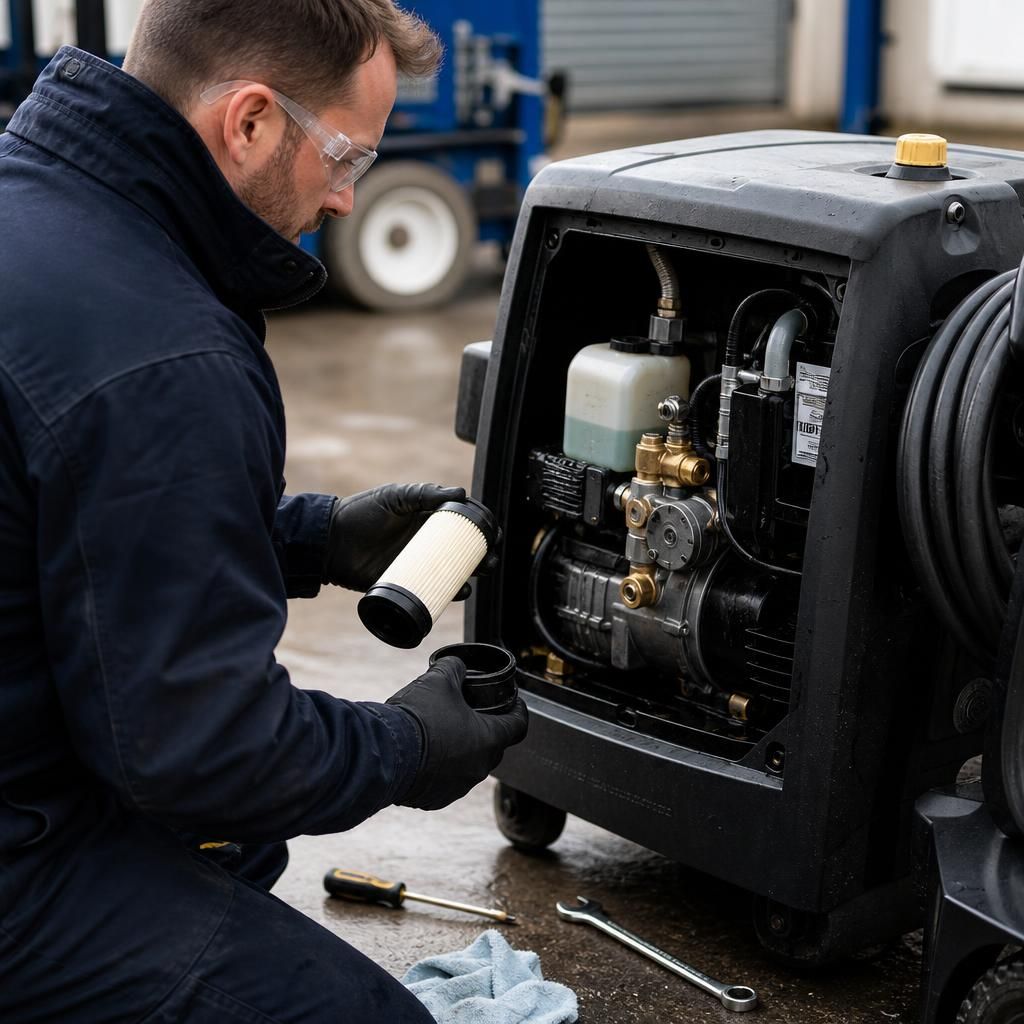
Routine inspection and planned servicing are essential to maintaining industrial cleaning equipment safely and extending its service life. Before each operation, check hoses, couplings, nozzles, cables, filters, connections and safety controls for damage, leaks or blockage. Remove defective equipment from use until it has been assessed and repaired by a competent person.
After cleaning, rinse away detergent and debris where the manufacturer permits, drain water systems and store the machine in a dry, frost-protected area. Follow the servicing schedule for deeper checks of pumps, heating systems, electrical protection, fuel systems and moving parts. Keep records of inspections, faults and replaced components so recurring problems can be identified before they cause downtime or affect cleaning performance.
Arrange Professional Industrial Equipment Maintenance
If your industrial cleaning equipment is due for servicing or showing signs of reduced performance, contact Encanto Exterior Cleaning to arrange a professional inspection and maintenance visit. We can help identify faults, service key components and prepare equipment for reliable use on your next project.