
What maintenance is required for industrial cleaning equipment to ensure optimal performance?
Industrial cleaning equipment requires scheduled inspection, cleaning, lubrication and servicing to maintain pressure, temperature, flow and safe operation. After each use, operators should flush systems, clean filters and nozzles, check hoses and connections for damage, and report faults promptly so worn components can be repaired before they cause downtime.
Industrial cleaning equipment requires routine inspection, cleaning, lubrication, servicing and safe storage to maintain the correct pressure, temperature, flow and electrical performance. The maintenance programme should combine operator checks after every use, planned inspections at intervals set by the manufacturer and prompt repair of defects. This prevents blocked systems, premature component wear, unexpected downtime and unsafe operation on commercial or industrial sites.
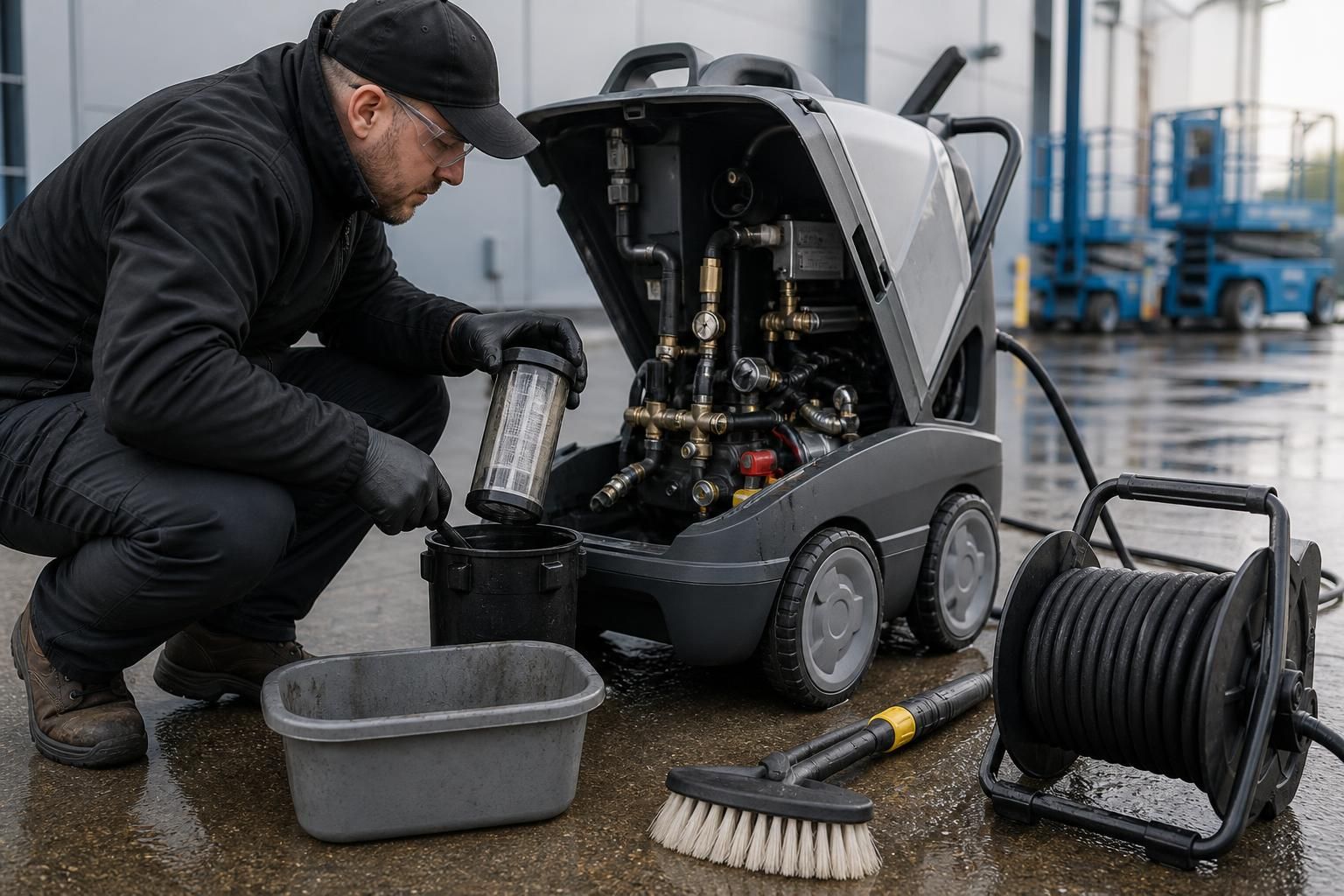
Clean and flush the equipment after each use. Residual detergent, grit, scale and dirty water can damage pumps, valves, heating elements and internal pipework. After pressure washing, flush the system with clean water, release the pressure safely and drain it where the equipment instructions require this. Steam cleaning equipment should be allowed to cool before it is drained or cleaned. Remove dirt from the casing, wheels, vents and access points without directing water at electrical controls or unsealed components.
- Clean inlet filters, detergent filters and water tanks to prevent restricted flow.
- Inspect spray nozzles and lances for blockages, wear or changes in the spray pattern.
- Remove debris from cooling vents so motors and engines do not overheat.
- Empty and clean recovery tanks on equipment designed to collect wastewater.
- Use only the cleaning chemicals and concentrations approved for the machine.
Inspect hoses, cables and connections. Hoses should be checked for cuts, abrasions, bulges, kinks, exposed reinforcement and damaged couplings. A hose that shows structural damage must be taken out of service rather than repaired with tape or an improvised fitting. Check trigger guns, lances, quick-release couplings, seals and connections for leaks or looseness before pressurising the system.
For electrically powered equipment, inspect plugs, cables, extension leads and residual-current protection before use. Do not operate equipment with cracked insulation, exposed conductors, damaged plugs or signs of water ingress. Fuel-powered machines also require checks of fuel lines, engine oil, air filters, exhausts and battery connections in accordance with the manufacturer’s instructions. Any unusual smell, noise, vibration, smoke or loss of performance should be reported and investigated.
Maintain filters, nozzles and water supplies. Blocked filters reduce water flow and can make a pump work harder. Worn nozzles may alter the pressure and spray pattern, increasing water use and reducing cleaning consistency. Filters should be removed, cleaned and replaced when damaged. Nozzles should be checked against the correct specification for the machine and application; fitting an unsuitable nozzle can affect performance and operating pressure.
Where the local water supply contains significant scale-producing minerals, limescale can build up in boilers, heating coils, valves and injectors. Follow the equipment manufacturer’s instructions for descaling and water treatment. Do not introduce unapproved chemicals into a boiler, pump or detergent system, as they may damage seals and internal components or create a safety risk.
Lubricate and service moving parts. Pumps, bearings, hinges, wheels, engine components and other moving parts may require lubrication, but the correct lubricant and application point must be confirmed from the service documentation. Over-lubrication can attract abrasive dirt, while the wrong product can damage seals. Oil levels, belts and drive components should be checked on fuel-powered or mechanically driven equipment, with replacement parts fitted before wear affects operation.
Planned servicing should cover the pump, pressure regulation system, unloader valve, heating system, thermostat, gauges, electrical controls and safety cut-outs. For steam equipment, this includes checking pressure controls, boiler components and any relief devices. Service work involving pressurised systems, combustion, electrical controls or access equipment should be completed by a suitably competent technician. Pressure relief devices and other safety mechanisms must never be bypassed or adjusted without authorisation.
Store equipment correctly. Once cleaning and inspection are complete, store machines in a clean, dry and ventilated area protected from frost, excessive heat, impact and unauthorised use. Coil hoses loosely to avoid permanent kinks, keep cables away from sharp edges and store lances and accessories so that they cannot be damaged. Drain water from pumps, hoses and boilers when freezing conditions could occur. Secure fuel, chemicals and batteries in line with their relevant storage requirements.
Access equipment needs additional attention. Check platforms, steps, guardrails, wheels, stabilisers, harness points and emergency lowering systems before use, and arrange the required inspections under the applicable site and equipment procedures. Cleaning attachments should not be used from an unsafe position or modified to reach areas beyond the machine’s intended operating range.
Keep maintenance records. A service log should record the equipment identification, date of inspection, checks completed, faults found, parts replaced, servicing carried out and the person who completed the work. Records help identify recurring problems, demonstrate that maintenance has been managed and support planning for replacement parts and downtime. Operators should have a clear process for tagging defective equipment, removing it from service and notifying the responsible manager.
Before returning a machine to work, confirm that guards and covers are fitted, connections are secure, leaks have been resolved, controls operate correctly and the equipment delivers the intended pressure, temperature and flow. If performance remains inconsistent after basic cleaning and inspection, stop using the machine and arrange a competent assessment rather than compensating by increasing pressure or using unsuitable chemicals. This approach protects the equipment, the operator and the surface being cleaned.
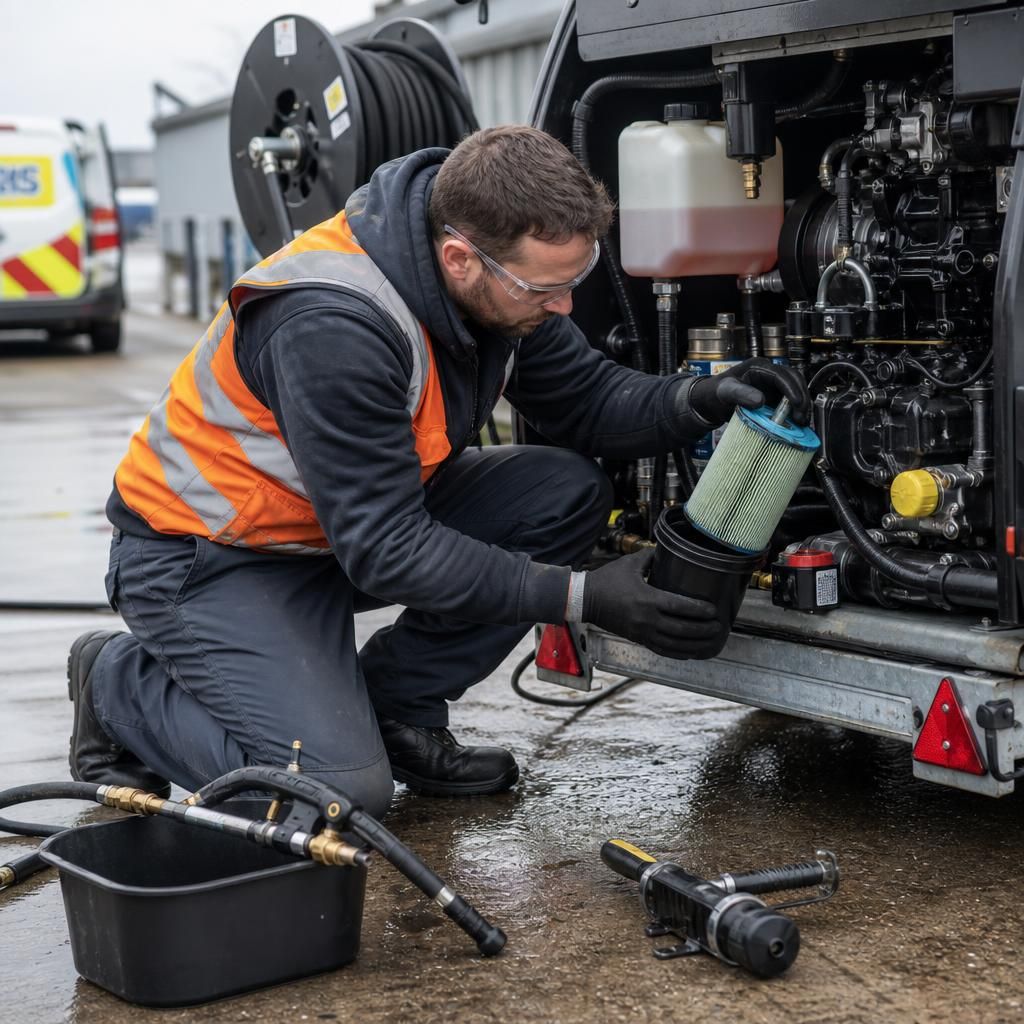
Cleaning and flushing industrial cleaning equipment after every use is essential for maintaining reliable pressure, flow and temperature. Residual detergent, grit, scale and dirty water can restrict filters, damage pumps and valves, block nozzles and accelerate corrosion.
- Flush pressure washing systems with clean water, release pressure safely and drain them as instructed.
- Allow steam equipment to cool before draining or cleaning it.
- Clean inlet filters, detergent filters, tanks, nozzles, vents and recovery systems.
- Inspect hoses, couplings, lances and seals for leaks, wear or damage before the next operation.
Use only approved chemicals and cleaning methods, and keep water away from electrical controls and unsealed components. If flushing and cleaning do not restore consistent performance, remove the machine from service and arrange a competent inspection rather than increasing pressure or using stronger chemicals.