
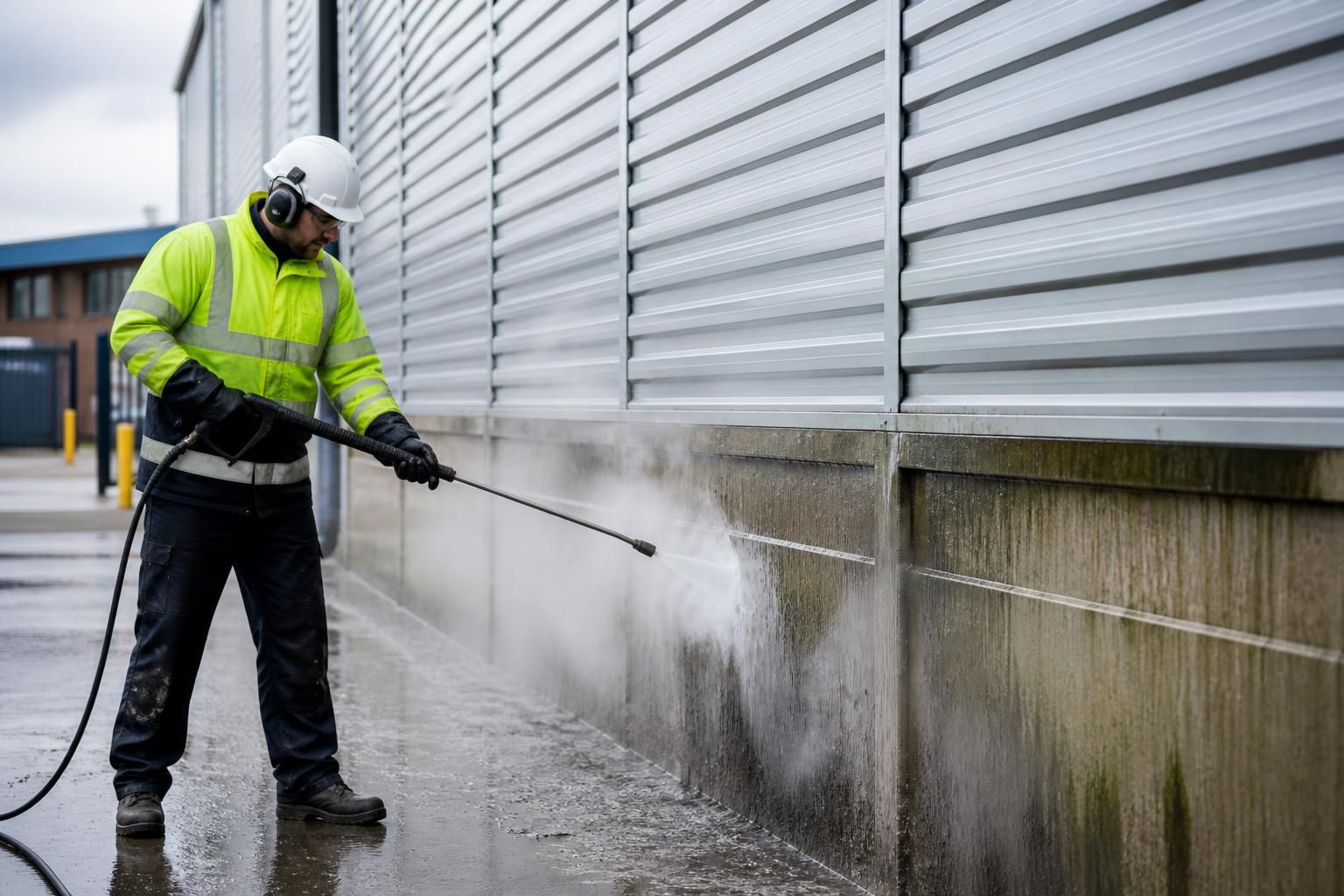
What are the benefits of using steam cleaning equipment for exterior surfaces?
Steam cleaning equipment removes dirt, algae, grease, oil and some biological contaminants from exterior surfaces using high-temperature steam, often with less water and fewer chemicals than conventional pressure washing. It is particularly useful for sensitive surfaces, detailed areas and commercial sites where controlled cleaning, reduced runoff and a professional finish are important.
Steam cleaning equipment uses heated water vapour to loosen and remove contamination from exterior surfaces, usually with considerably less water than conventional pressure washing. The combination of heat, controlled application and relatively low water volume makes steam particularly useful for removing grease, oil, organic growth, ingrained dirt and some biological contaminants from commercial and industrial buildings.
Effective removal of difficult contamination
Heat softens and breaks down substances that can be resistant to cold water or require aggressive pressure. Steam can help lift chewing gum, oil deposits, grease, traffic film, algae, moss residue, bird fouling and certain residues from pollution. It is also effective in detailed areas such as ledges, trims, textured façades, around entrances and on equipment where dirt collects in joints and recesses.
Because the cleaning action comes from temperature as well as mechanical force, steam may achieve a satisfactory result without using the very high pressure that some conventional methods require. This can reduce the risk of driving dirt further into porous materials or damaging vulnerable finishes, although the correct temperature, pressure and working distance must still be selected for each surface.
Reduced water use and controlled runoff
Steam cleaning generally uses less water than high-volume pressure washing. This can be useful on sites where water access is restricted, drainage capacity is limited or runoff must be carefully controlled. Lower water volumes can also make it easier to collect and manage wastewater, particularly when removing oily, chemical or heavily contaminated residues from yards, loading areas and car parks.
Reduced water use does not remove the need for proper environmental controls. Contaminated runoff must not be allowed to enter surface-water drains or watercourses. A suitable cleaning plan should identify drainage points, specify containment or recovery measures where required and ensure that wastewater is handled in accordance with the site’s procedures and applicable regulations.
Fewer chemicals in suitable applications
The heat of steam can reduce reliance on detergents, degreasers and biocidal products for some cleaning tasks. This may be beneficial where a client wants to limit chemical use, protect landscaping or avoid residues on areas used by staff and the public. It can also simplify cleaning of surfaces where chemical compatibility is uncertain.
Steam is not a universal substitute for chemicals. Some oils, coatings, biological growth and industrial residues may require a specifically selected cleaning agent or a follow-up treatment. The product, dilution, dwell time and rinsing method must be compatible with the surface and the site’s environmental requirements. Removing visible growth does not necessarily prevent it from returning, so ongoing maintenance or a suitable treatment may be needed.
Lower risk of surface damage when correctly controlled
Some façades, masonry, painted surfaces, signage, cladding and architectural details can be damaged by excessive pressure or an unsuitable nozzle. Steam allows the operative to rely more on heat and controlled agitation, which can be advantageous on delicate or highly detailed surfaces. It may help remove contamination while preserving the underlying finish, mortar joints or decorative features.
However, steam is not automatically safe for every material. High temperatures can affect certain paints, sealants, plastics, membranes, coatings, adhesives and composite materials. Rapid heating or cooling can also create problems on some substrates. Before full-scale cleaning, the method should be assessed and tested in an inconspicuous area, with particular attention to surface condition, previous repairs and manufacturer guidance.
Useful for hygienic cleaning requirements
High-temperature steam can reduce some microorganisms and biological contamination on contact. This can support hygiene-focused cleaning around refuse areas, service yards, entrances, food-related premises and other high-use locations. Steam should be described as a cleaning method with sanitising potential in appropriate conditions, rather than assumed to sterilise a surface. Results depend on temperature, contact time, surface type and the nature of the contamination.
Where a site has specific hygiene controls, steam cleaning should form part of an agreed procedure rather than replace required disinfection, inspection or verification processes. Porous surfaces and heavily contaminated areas may need additional treatment.
More controlled cleaning around buildings
Steam equipment can be useful where overspray, splashback or excessive runoff would create problems. Controlled application can support work near entrances, glazing, electrical installations, vehicles, landscaping and pedestrian routes, provided the equipment is operated by trained personnel and the surrounding area is protected. It may also reduce disruption where a large volume of water would be difficult to manage.
Steam still produces heat, moisture and some spray, so work areas may need barriers, warning signs, temporary access restrictions and protection for nearby people and property. Operatives should assess the risk of burns, slips, inhalation of loosened contaminants, electrical contact and falling debris before starting work.
Potential benefits for commercial maintenance
For commercial and industrial premises, steam cleaning can be incorporated into planned façade, cladding, roof-detail, car park, loading-bay and service-yard maintenance. It is particularly practical where contamination is localised, where the surface requires a gentle but effective approach or where water recovery is an important consideration. Cleaning at appropriate intervals can help maintain the appearance and usability of external areas, while also making defects, damaged coatings and failed sealants easier to identify during inspection.
Steam should be selected because it suits the contamination and substrate, not simply because it uses less water. Large areas with loose dirt may be completed more efficiently using another method, while thick moss, heavy deposits or deeply embedded staining may require preparation, mechanical treatment, detergent, pressure rinsing or a combination of techniques.
Points to confirm before choosing steam equipment
- Identify the surface material, coating, age, condition and any previous repairs.
- Determine whether the contamination is organic, oily, mineral, traffic-related or a mixture of deposits.
- Check the required temperature, pressure, flow and working distance for the substrate.
- Carry out a controlled test clean and inspect the result after drying.
- Plan for wastewater collection, drainage protection and disposal where contamination requires it.
- Protect glazing, seals, electrical equipment, plants, vehicles and other adjacent assets.
- Provide suitable personal protective equipment, ventilation, signage and exclusion zones.
- Allow the surface to dry and check for remaining staining, coating damage or defects before completing the work.
Overall, steam cleaning equipment offers effective contaminant removal, reduced water consumption, potentially lower chemical use and greater control on many exterior cleaning tasks. Its suitability depends on the substrate, contamination, access conditions, runoff requirements and the equipment settings used. A site-specific assessment and test area are the most reliable way to decide whether steam is the appropriate method or whether it should be combined with pressure washing, detergents or other cleaning techniques.
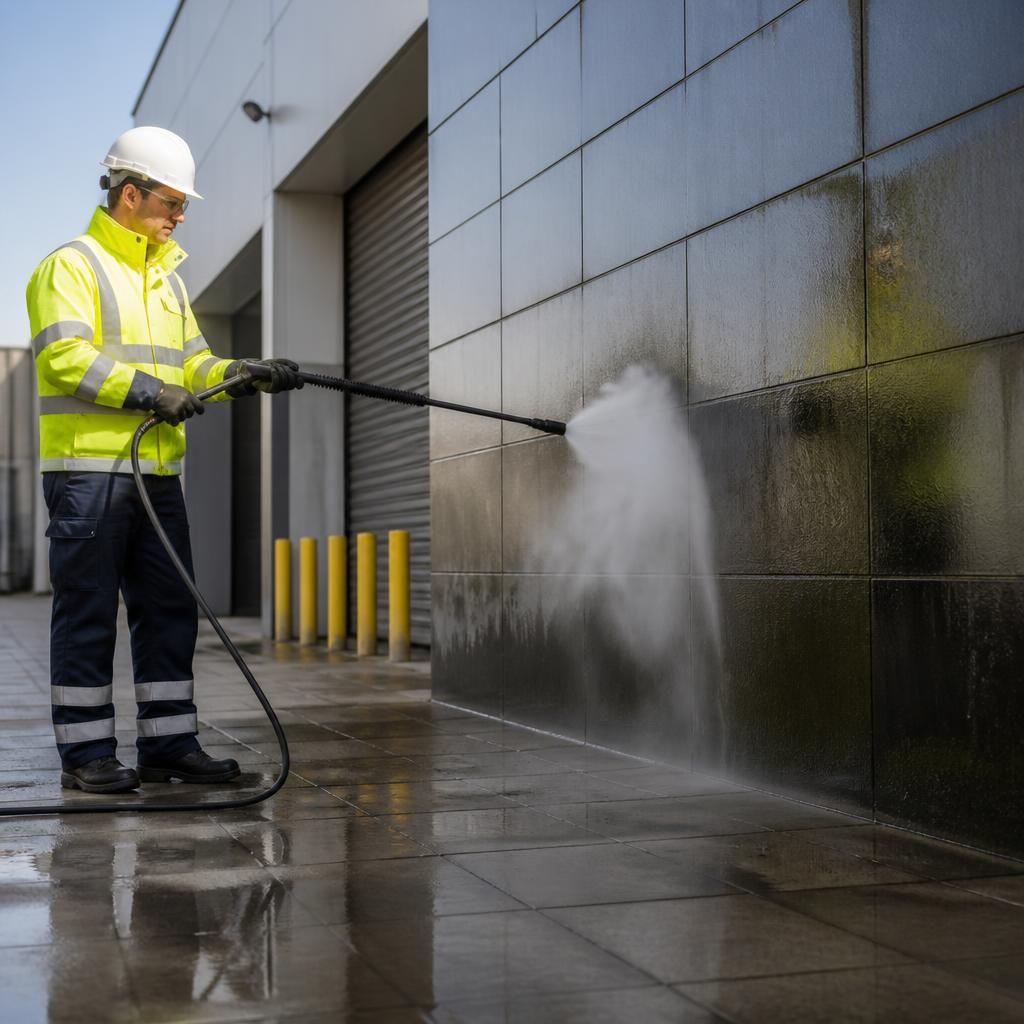
Steam cleaning equipment uses high-temperature water vapour to loosen and remove dirt, grease, oil, algae and other deposits from exterior surfaces, often with less water than conventional pressure washing. This makes it useful where controlled cleaning and reduced runoff are important, such as around entrances, loading areas, façades and service yards.
Lower water use can make wastewater easier to contain and recover, particularly when contamination could affect drainage systems or surrounding landscaping. Steam can also reduce the need for detergents in suitable applications, helping limit chemical residues. It does not remove the need for drainage protection: contaminated runoff must still be collected or controlled and handled in accordance with the site’s procedures and environmental requirements.