
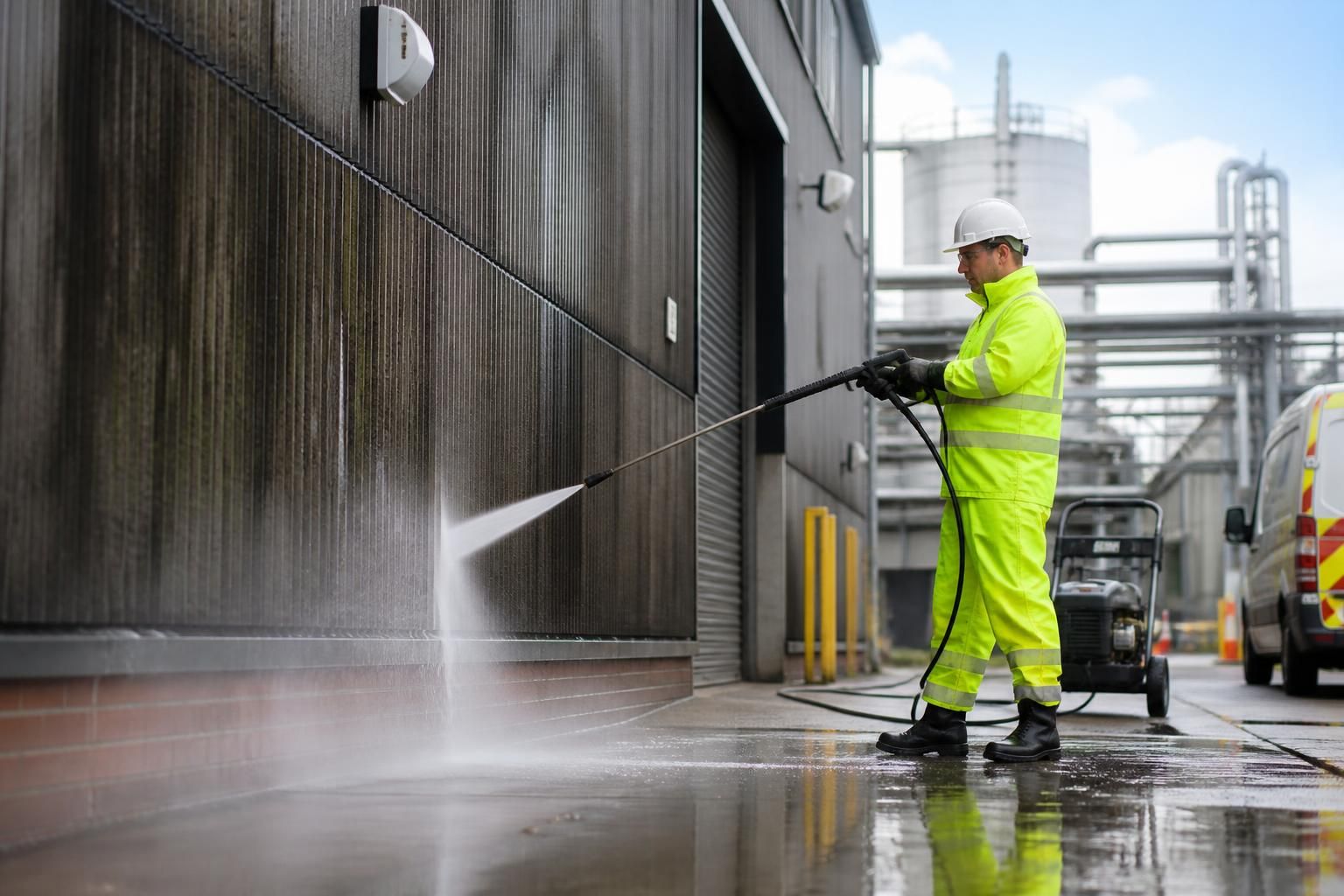
What are the benefits of using high-pressure water streams for exterior cleaning?
High-pressure water streams remove embedded dirt, algae, oil, loose coatings and other contaminants from exterior surfaces more quickly and thoroughly than low-pressure cleaning alone. When the pressure, flow rate and nozzle are matched to the surface, they can improve appearance and safety, reduce manual effort and help prepare façades, paving, roofs and cladding for maintenance or refurbishment.
High-pressure water streams clean exterior surfaces by concentrating water energy onto dirt, biological growth, oil, loose coatings and other contaminants. This force breaks the bond between the contaminant and the surface, allowing it to be rinsed away more efficiently than with low-pressure water alone. When the pressure, flow rate, nozzle and cleaning method are matched to the material, high-pressure washing can improve appearance, safety and maintenance readiness while reducing manual effort.
More effective removal of embedded contamination
Exterior dirt is often held in surface texture, joints, pores and drainage channels rather than sitting loosely on top. High-pressure water can reach these areas and dislodge contamination that sweeping or conventional washing may leave behind. It is particularly useful for removing accumulated dust, mud, algae, moss, lichen, bird fouling, traffic film, loose paint and residues from construction work.
On hard surfaces such as concrete, block paving, brickwork and some types of cladding, the water stream can separate contaminants without relying solely on chemical action or abrasive mechanical scrubbing. This can produce a more consistent clean across large areas, provided the operator works methodically and does not use excessive force.
Faster cleaning across large areas
Commercial and industrial sites often include extensive façades, yards, access roads, loading areas, car parks and roof surfaces. High-pressure equipment can cover these areas more quickly than hand cleaning, particularly when used with suitable surface cleaners, rotary attachments or long-reach tools. The flow of water carries loosened material away from the working area, reducing the need for repeated manual wiping.
Speed is affected by the type and thickness of contamination, the surface profile, water supply, equipment flow rate and access arrangements. A professional assessment helps determine whether high-pressure washing, steam cleaning, detergent application or a combination of methods will provide the most efficient result.
Improved safety and site presentation
Algae, moss, oil, grease and compacted dirt can make walkways, ramps, steps, service yards and car parks slippery. Removing these deposits can improve traction and reduce avoidable slip risks, although cleaning alone cannot correct defective drainage, damaged surfacing or other underlying hazards. Areas should be assessed after cleaning and kept controlled until they are safe and dry.
A clean exterior also makes defects, obstructions and surface changes easier to identify. For property managers, facilities teams and local authorities, this can support routine inspections and help distinguish staining from damage that requires repair. Removing dirt from entrances, façades and public-facing areas also helps maintain a professional appearance between planned maintenance visits.
Useful preparation for repairs, coating and refurbishment
Paint, render, sealants and protective coatings adhere more reliably when loose material, grease and surface contamination have been removed. High-pressure water is therefore often used before repainting, re-coating, joint repairs, façade maintenance and other refurbishment work. It can expose failing coatings and weak material that should be removed or repaired before a new finish is applied.
Cleaning is not a substitute for surface preparation in every situation. After washing, the surface may need time to dry, further treatment or additional preparation, depending on the proposed coating and the material being treated. Any damaged areas, open joints or failed pointing should be considered before water is introduced.
Reduced dependence on aggressive chemicals
Water pressure can remove many forms of soiling through mechanical action, which may reduce the amount of detergent or specialist chemical required. This can be helpful where chemical use needs to be limited because of nearby landscaping, drainage systems, sensitive occupants or environmental controls. Where chemicals are necessary, the correct product, dilution, dwell time and rinsing procedure remain important.
Reducing chemical use does not remove the need to manage wastewater. Run-off may contain oil, heavy dirt, paint particles, biological material or cleaning agents and must be controlled in accordance with the site and relevant environmental requirements. Drain protection, recovery, filtration or approved disposal may be required for commercial and industrial work.
Versatility across exterior materials
With the correct settings and technique, high-pressure water can be used on many common exterior surfaces, including concrete, paving, brick, stone, metal cladding, some plastics, roofs and hardstanding areas. Operators can alter the pressure, flow, nozzle angle, working distance and cleaning speed to suit the material and the type of contamination.
The equipment is not automatically suitable for every surface. A concentrated jet can damage soft brick, weathered stone, friable mortar, timber, render, fragile roofing materials, seals, joints and deteriorated coatings. Water can also enter cracks, cavities or poorly sealed interfaces. A test clean in an inconspicuous area is an important part of responsible preparation, particularly where the surface is aged, coated, listed, repaired or otherwise vulnerable.
Better access to difficult areas
High-pressure cleaning tools can be combined with extension lances, telescopic equipment, elevated access platforms and other access systems to reach upper façades, roof edges, soffits and awkward industrial structures. This can limit the need for direct contact with the surface and help clean areas that would be difficult to scrub manually.
Access equipment must be selected and operated according to the height, ground conditions, overhead risks, exclusion zones and surrounding activity. Water pressure does not remove the need for proper work-at-height planning, pedestrian management or protection of nearby electrical and mechanical equipment.
Lower physical effort for cleaning teams
High-pressure water performs much of the loosening work that would otherwise require prolonged brushing, scraping or hand washing. This can make large or heavily soiled projects more manageable and allow operatives to maintain a more consistent cleaning method across the site. It can also reduce unnecessary contact with contaminated surfaces.
However, the equipment must be handled correctly. Jet reaction can affect balance and control, especially when using high-flow equipment or working from an elevated position. Operatives need suitable training, personal protective equipment and a clear understanding of the equipment’s operating limits.
How pressure, flow and nozzle choice affect the result
Pressure is only one part of cleaning performance. Flow rate determines how much water is available to carry loosened material away, while the nozzle controls the shape and concentration of the stream. A narrow jet delivers concentrated force; a wider fan distributes the impact over a larger area. Rotary and surface-cleaning attachments can improve consistency on suitable flat surfaces.
Using the highest available pressure is not automatically the best approach. Excessive force can etch concrete, strip sound coatings, drive water behind cladding, damage pointing or spread contamination. A controlled method normally starts with the least aggressive setting likely to achieve the required result, followed by adjustment based on a test area and the observed condition of the surface.
Important safety and environmental controls
- Inspect the surface and identify fragile materials, loose coatings, cracks, open joints, glazing, vents and electrical equipment before work starts.
- Establish an exclusion zone to protect pedestrians, vehicles, staff and nearby property from spray, debris and displaced contamination.
- Use suitable eye, face, hearing, hand and foot protection, together with any additional protective equipment required by the risk assessment.
- Control hoses and water run-off to prevent trip hazards, flooding and uncontrolled discharge into drainage systems.
- Protect doors, windows, air intakes, lighting, signage and sensitive machinery from water penetration or impact.
- Use appropriate access equipment and never direct a jet towards people, animals, live electrical systems or pressurised components.
- Check the finished area for remaining slip hazards, displaced debris, coating failure and water ingress before the site is returned to normal use.
High-pressure water streams provide a fast, adaptable and effective way to remove exterior contamination and prepare commercial and industrial surfaces for ongoing maintenance. Their benefits depend on correct assessment rather than maximum pressure: the operator must match the equipment and technique to the material, contamination, access conditions, drainage arrangements and required finish. For delicate façades, sensitive coatings or biological and oil contamination, combining pressure washing with steam cleaning, detergents or controlled recovery may provide a safer and more complete solution.
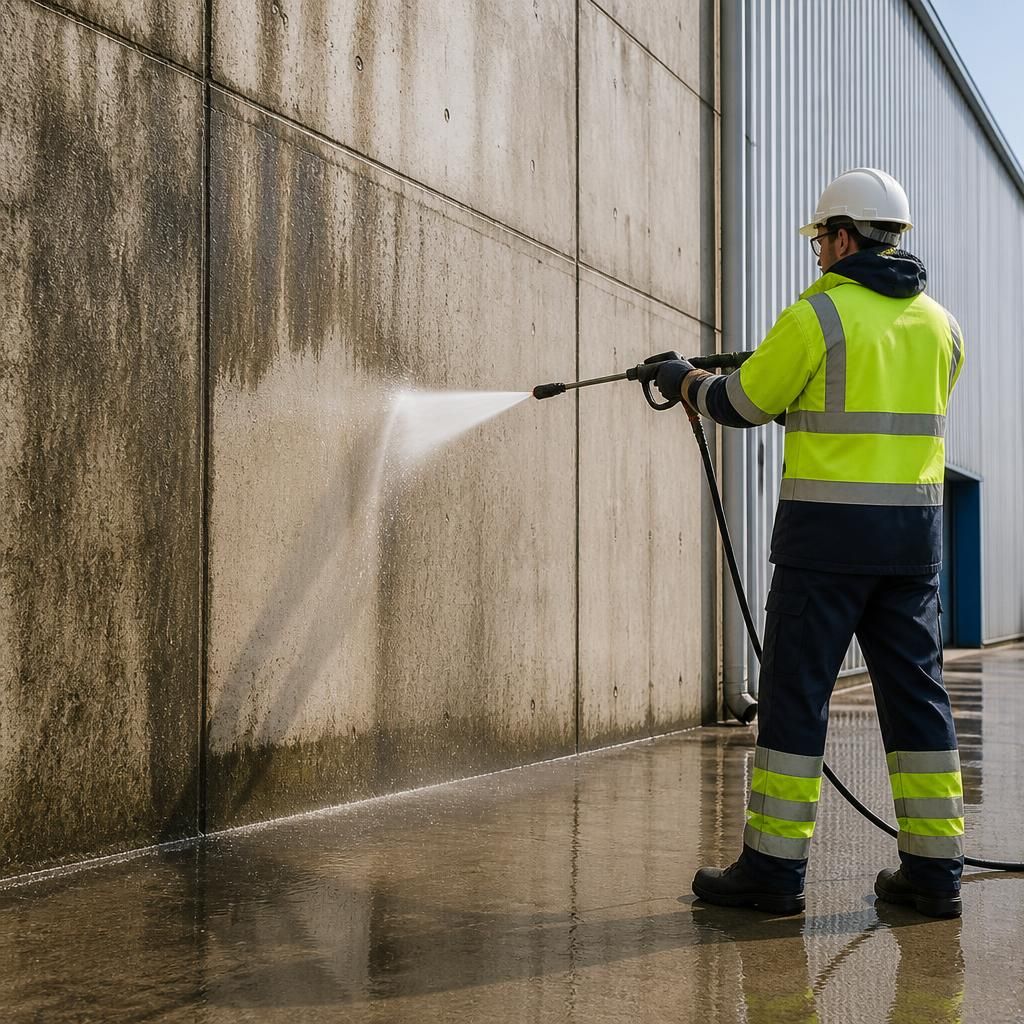
High-pressure water streams are most effective when the pressure, flow rate, nozzle and working distance are matched to the surface and contamination. Using the highest available pressure is not always best: excessive force can damage pointing, weathered brick, coatings, seals or cladding joints.
A controlled test clean allows the operator to confirm the safest setting before work begins. This approach removes embedded dirt, algae, oil and loose material efficiently while limiting water penetration, surface damage and unnecessary chemical use.