
How does the type of surface impact the choice of industrial cleaning equipment?
The surface material, condition and sensitivity determine the most suitable industrial cleaning equipment, including water pressure, temperature, flow rate and cleaning method. Durable concrete and masonry may tolerate high-pressure washing, while render, cladding, glass, painted finishes and delicate façades often require lower pressure, steam cleaning, controlled chemicals or specialist access equipment.
The type of surface determines the safest and most effective industrial cleaning equipment because different materials vary in hardness, porosity, coating, joint strength and tolerance to heat, pressure and chemicals. Durable surfaces such as sound concrete and some masonry can usually withstand higher-pressure washing, whereas render, painted finishes, glazing, cladding and aged roofing materials often require lower pressure, controlled flow, steam cleaning or specialist access equipment. The correct choice must also account for the surface condition, the type of contamination and the risk of water entering the building or damaging adjacent materials.
Pressure is only one part of the selection. Industrial cleaning equipment is chosen by balancing pressure, water flow, temperature, nozzle type, cleaning distance and dwell time. Increasing pressure is not always the best way to remove stubborn dirt. A lower-pressure system using heated water, steam or a suitable cleaning solution may achieve a better result while reducing the risk of etching, surface loss, coating failure or water penetration.
Concrete and hard paving
Sound concrete, concrete paving and many robust hardstanding areas generally tolerate higher-pressure washing. This makes industrial pressure washers suitable for removing traffic film, oil residues, algae, moss, mud, chewing gum and accumulated dirt from car parks, service yards, loading areas and walkways. Rotary surface cleaners can help produce a more even finish across large areas and reduce streaking compared with using a lance alone.
Even concrete needs assessment before cleaning. New, cracked, friable or previously damaged concrete can suffer from surface erosion, often seen as loose aggregate or a roughened finish. Joints, expansion gaps and damaged edges may also allow water to enter the substrate. Where oil or other contaminants have penetrated the surface, hot water and controlled detergents may be more effective than simply increasing pressure. Run-off collection and appropriate disposal may be required where cleaning water contains oils, chemicals or other pollutants.
Brickwork, stone and masonry
Brick and stone vary considerably in hardness and porosity. Dense, well-maintained masonry may accept controlled pressure washing, but older brickwork, soft stone, weathered mortar and historic façades can be damaged by aggressive cleaning. Excessive pressure may remove the face of the brick, widen defective joints or drive water into the wall.
For sensitive masonry, steam cleaning or low-pressure washing can loosen atmospheric soiling, algae and biological growth with less mechanical force. A soft-bristle agitation method, a carefully selected detergent or a combination of low pressure and heat may be preferable. Cleaning trials should be carried out in an inconspicuous area to confirm that the method removes soiling without changing the colour or texture of the material. Efflorescence, staining within the substrate and damaged mortar may not be resolved by pressure washing alone.
Render and painted façades
Render can be porous, brittle or poorly bonded, while painted façades may have coatings that are already chalking, peeling or cracked. High-pressure washing can enlarge defects, remove paint or force water behind the finish. These surfaces usually require lower pressure, a wider spray pattern and greater working distance. The operator may use steam or a low-pressure detergent application where this is suitable for the coating.
Before cleaning, loose material and failed coatings should be identified. Areas around windows, vents, sealants and façade penetrations need particular care because water can enter through small defects. Cleaning should not be used to conceal underlying render failure, failed sealant or structural deterioration; those issues may require repair before the façade is washed.
Metal cladding and coated panels
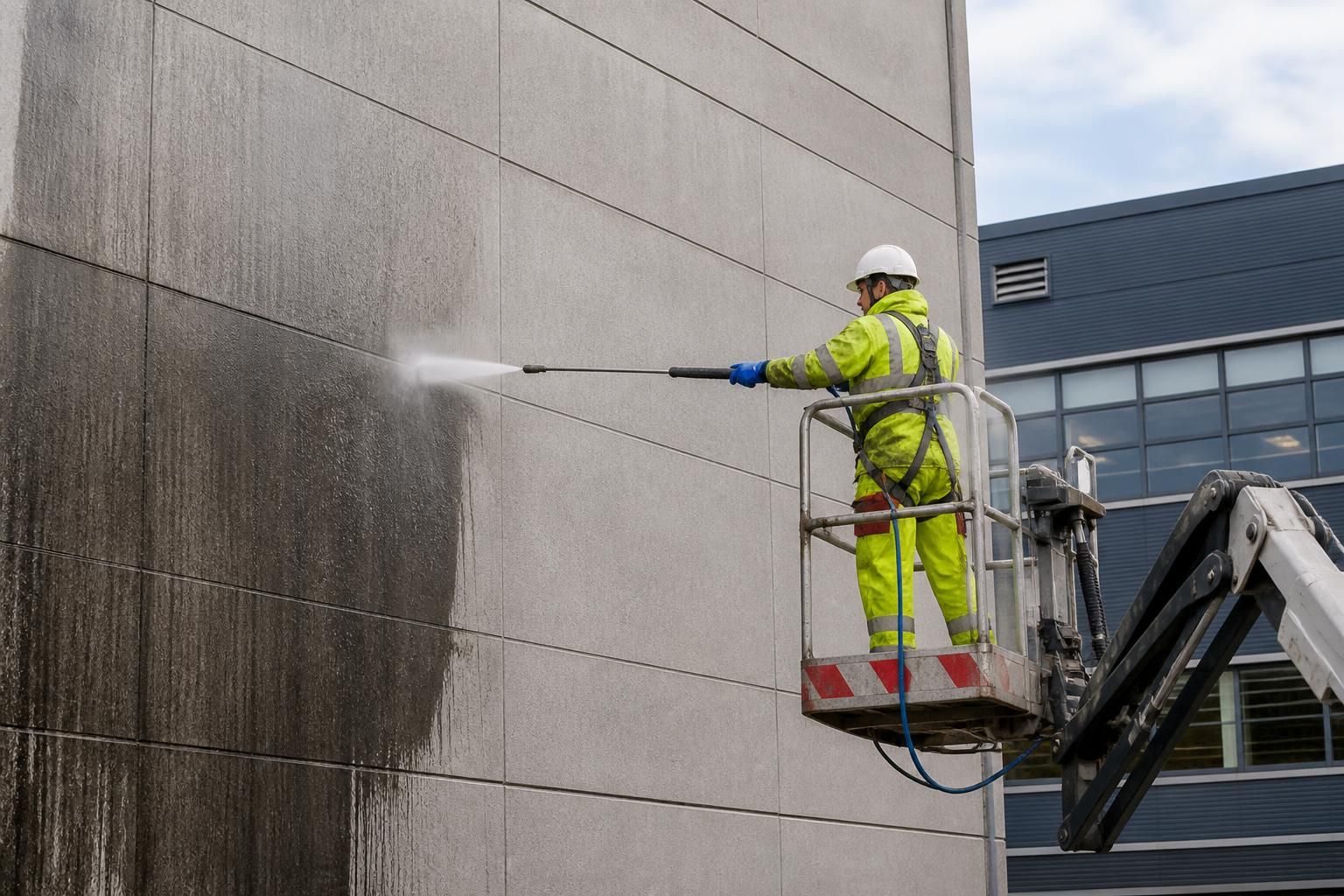
Metal cladding, composite panels and coated sheets can normally be cleaned with controlled low- or medium-pressure equipment, but the coating system and panel joints must be considered. Excessive pressure can damage the finish, lift deteriorated coatings or drive water behind laps and seals. Some cleaning chemicals can also affect painted, anodised or powder-coated surfaces.
For cladding, the cleaning method should be compatible with the coating and the manufacturer’s care requirements where available. A controlled detergent application followed by a low-pressure rinse is often more appropriate than a highly aggressive water stream. Particular attention should be given to joints, flashings, vents and drainage paths, as trapped dirt and water can contribute to staining or corrosion.
Glass, glazing and window frames
Glass is hard but can still be scratched or marked by abrasive particles, trapped grit and unsuitable cleaning tools. High-pressure water directed at seals, gaskets, vents or opening windows can cause water ingress. The equipment must therefore be set up to control spray force and prevent debris from being driven across the glass.
Pure-water systems, soft brushes and controlled rinsing may be appropriate for glazing, particularly where access is difficult. Hard-water deposits, cement residue, paint and construction contamination may need separate treatment rather than increased pressure. Frames require a compatible method because aluminium, powder-coated finishes, uPVC and older sealants do not all respond in the same way to heat or chemicals.
Roofs and roof coverings
Roof cleaning equipment must be selected according to the covering, its age, pitch and condition. Concrete roof tiles may tolerate controlled washing when they are sound, but high pressure can strip protective finishes, dislodge tiles or force water beneath overlaps. Clay tiles, slate, membrane systems and coated metal roofing generally require more cautious methods.
Soft washing, steam cleaning or low-pressure treatment may be more suitable for moss, algae and lichen on vulnerable roofs. The method should prevent damage to the covering and control where loosened biological material and chemical residues go. Roof work also requires suitable access, edge protection and measures to prevent operators, equipment and debris from falling.
Asphalt, tarmac and resin-bound surfaces
Asphalt and tarmac can be marked, loosened or stripped when exposed to excessive pressure, heat or concentrated spray. Resin-bound surfaces may also be affected if the binder or aggregate is already deteriorated. A broad fan nozzle, controlled pressure and an appropriate cleaning distance are generally safer than a narrow, concentrated jet.
Oil, fuel and gum deposits may require targeted pre-treatment and mechanical or heated cleaning rather than a uniform increase in pressure across the whole area. Any test cleaning should check for aggregate loss, colour change and damage to repaired sections. Drainage and run-off controls are important on car parks, forecourts and service yards.
Timber, decking and other sensitive materials
Timber is porous and can be damaged by high pressure, which raises the grain, creates furrows and removes protective coatings. Cleaning should use low pressure, suitable detergents and soft agitation where necessary. The wood must be allowed to dry appropriately before any sealing, staining or further treatment.
Rubber, plastic, fabric canopies and painted equipment also need a controlled approach. Heat and chemicals that are effective on concrete may soften, discolour or degrade these materials. The equipment operator should verify compatibility before applying a detergent, solvent or heated water.
How surface condition changes the equipment choice
The material alone does not determine the method. The same façade may need different equipment in different areas because of age, previous repairs, coating condition or contamination. Important checks include:
- Whether the surface is sound, cracked, loose, friable, corroded or delaminated.
- Whether paint, render, sealant, waterproofing or another coating is present.
- How porous the material is and whether water could enter the building.
- Whether the contamination is loose dust, ingrained atmospheric dirt, oil, biological growth, graffiti, efflorescence or construction residue.
- Whether nearby materials are more sensitive than the main surface, such as windows, seals, signage, landscaping or electrical equipment.
- Whether the area can safely accept run-off or requires water recovery and controlled disposal.
Access equipment is part of the surface solution
Façades, roofs and high-level cladding often require mobile elevating work platforms, access towers, specialist poles or other suitable systems. The access method affects the angle and distance from which the surface can be cleaned. Working too close with a concentrated jet increases the risk of damage, while working too far away can make the operator compensate with excessive pressure. Access planning must also consider ground conditions, overhead services, pedestrian routes, traffic and the weight of equipment.
Testing and method selection
A professional cleaning specification should begin with a site inspection and a small test area. The test should assess pressure, flow, temperature, nozzle pattern, chemical compatibility, dwell time and rinsing requirements. It should also confirm whether the cleaned area dries evenly and whether the process changes the appearance of the surface.
In practical terms, hard and sound surfaces usually allow more flexibility, while porous, coated, aged or delicate materials require greater control. The most suitable industrial cleaning equipment is therefore the equipment that removes the contamination while preserving the substrate, its finish, surrounding materials and building function. Where several materials are present on one project, the cleaning plan should use separate settings or methods rather than applying one pressure-washing approach to every surface.
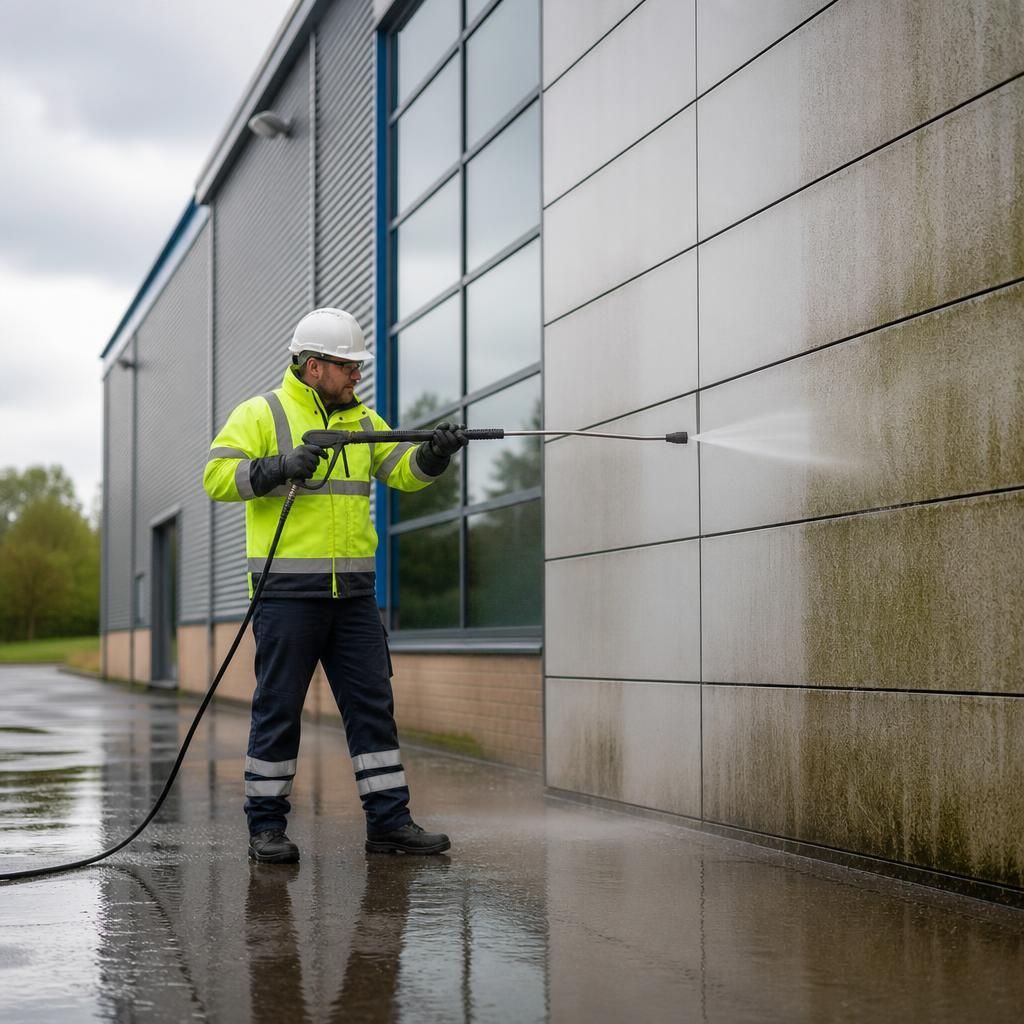
Surface type determines the safe combination of pressure, temperature, flow rate and cleaning method. Sound concrete may accept higher-pressure washing, while painted façades, cladding, glazing and aged masonry usually need lower pressure, controlled rinsing or steam cleaning to avoid damage.
Where a building has several materials, each area should be assessed separately rather than cleaned with one universal setting. A small test area helps confirm that the chosen equipment removes the contamination without lifting coatings, eroding joints, scratching glass or forcing water behind seals. The final method should also account for access, nearby sensitive materials and the control of contaminated run-off.