
How do industrial electric power washers differ from traditional pressure washers?
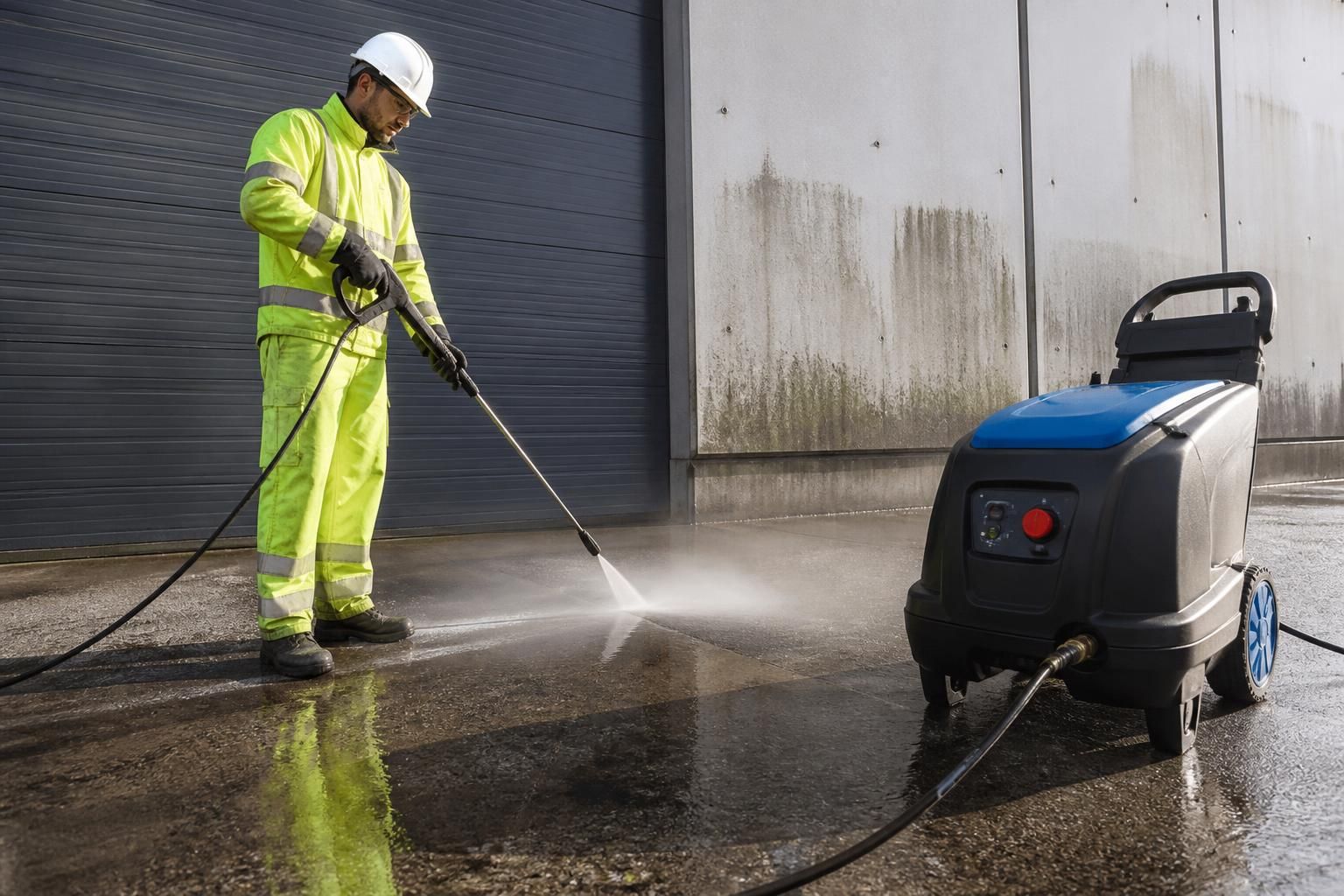
Industrial electric power washers use an electric motor to deliver consistent high-pressure water, whereas traditional pressure washers often rely on petrol or diesel engines. They generally produce less noise and no on-site exhaust emissions, making them well suited to enclosed areas and sites with stricter environmental requirements, although fuel-powered units may offer greater independence where electrical supply is limited.
Industrial electric power washers differ from traditional pressure washers mainly in how they are powered and how they perform on site. An electric unit uses an electric motor to drive the pump, while a traditional commercial pressure washer commonly uses a petrol or diesel engine. Both can deliver high-pressure water, but the choice affects noise, emissions, operating duration, mobility, maintenance and the type of work they can carry out effectively.
The terms power washer and pressure washer are often used interchangeably. In practice, the important comparison is between an electrically powered industrial machine and an engine-powered machine. Pressure, water flow, nozzle selection and accessories usually have a greater influence on cleaning results than the name used to describe the equipment.
- Industrial electric power washers: powered from a suitable mains supply, typically producing consistent pump performance without on-site exhaust emissions.
- Traditional engine-powered pressure washers: powered by petrol or diesel, allowing greater independence from the electrical supply but producing engine noise, exhaust gases and vibration.
Power and cleaning performance
An industrial electric washer can provide substantial pressure and water flow for commercial cleaning, including façades, cladding, paving, loading areas, car parks and plant equipment. The electric motor supplies a steady drive to the pump, so performance does not depend on fuel quality or an engine running at the correct speed. This makes electric equipment suitable for repeatable cleaning tasks where a reliable output is important.
Engine-powered machines may be selected where higher-duty operation, greater mobility or operation away from a dependable mains supply is required. The most appropriate machine is not necessarily the one with the highest stated pressure. Water flow, the correct nozzle, surface condition, cleaning method and the distance from the lance to the surface all affect productivity and the risk of damage. Excessive pressure can dislodge pointing, mark softer masonry, force water into vulnerable areas or damage coatings.
Electrical supply and operating limitations
The main limitation of an electric industrial washer is its dependence on a suitable electrical supply. The available voltage, current capacity, cable length, protection and site distribution must all be checked before use. A machine should not be connected to an unsuitable socket or overloaded circuit, and long cable runs may require appropriate site planning to prevent voltage drop and trip-outs.
Engine-powered washers do not require a mains connection, which can be valuable on construction sites, remote areas, open land or locations where the electrical infrastructure cannot support the equipment. They still require safe fuel storage, refuelling arrangements and suitable ventilation. Fuel availability and operating conditions should be considered when planning a large-scale cleaning project.
Noise, fumes and working environment
Electric machines are generally quieter than petrol or diesel alternatives and produce no exhaust emissions at the point of use. This is particularly useful for work near occupied offices, hospitals, schools, retail premises, residential areas or enclosed service areas. Lower noise can also make communication between operatives easier and reduce disruption to people using the site.
Engine-powered equipment produces combustion fumes and should be used only where there is adequate ventilation and an appropriate separation from occupants, air intakes and enclosed spaces. Exhaust emissions can make these machines unsuitable for internal areas, underground car parks and other poorly ventilated locations. Even when an electric machine is used, the cleaning process itself can create spray, mist and contaminated run-off, so ventilation and containment may still be necessary.
Heat and specialist cleaning
Some industrial electric washers are cold-water machines, while others incorporate an electric heating system. Engine-powered equipment may also be available with hot-water capability. Heated water can improve the removal of grease, oil, traffic film and certain biological residues, but it increases energy demand and requires additional controls and maintenance.
Where temperature is important, the equipment should be selected according to the surface, contamination and drainage arrangements. Heat, detergents and pressure must be controlled carefully on painted finishes, plastics, sealants, membranes and coated cladding. Steam cleaning is a separate low-water process and may be more appropriate where delicate surfaces, reduced run-off or sanitising requirements are involved.
Portability and working duration
Electric washers are often practical for structured sites with accessible power and defined work zones. They can be positioned close to the work area without the need to transport or store fuel, although hoses and electrical leads must be routed safely. Their operating duration is effectively limited by the electrical supply and the machine’s duty cycle rather than by a fuel tank.
Engine-powered washers provide greater freedom of movement and can continue working in locations without mains power. However, fuel tanks add weight, engines require refuelling and the equipment may be less suitable for areas where noise or fumes are restricted. Neither type should be judged by portability alone; access routes, hose runs, water availability, drainage, lifting requirements and the need for mobile access equipment all affect the practical setup.
Maintenance and running costs
Electric machines generally have fewer engine-related service requirements. They do not need oil changes, spark plug replacement or fuel-system maintenance, although the pump, hoses, trigger assembly, unloader valve, filters, electrical connections and safety devices still require inspection. Water quality and contamination can affect pump life, so inlet filtration and correct storage remain important.
Petrol and diesel washers require additional engine maintenance, including checks of lubricants, filters, fuel systems, cooling arrangements and exhaust components. Stale fuel, blocked filters and poor servicing can reduce starting reliability and cleaning performance. Fuel-powered equipment may nevertheless be the more efficient operational choice where moving between unpowered areas would otherwise require generators or extensive temporary electrical distribution.
Purchase price alone does not establish which option is more economical. A proper assessment should include electricity or fuel use, servicing, transport, operator time, noise controls, ventilation, generator requirements and the consequences of interruptions. For regular work at sites with a suitable supply, an electric unit may offer predictable operation and simpler routine servicing. For remote or highly mobile work, an engine-powered washer may avoid the cost and inconvenience of providing electrical infrastructure.
Safety considerations
Both types generate high-pressure water capable of causing serious injury, damaging surfaces and moving debris. Operatives should use appropriate personal protective equipment, maintain a stable stance, keep the lance directed away from people and electrical equipment, and isolate the machine before changing nozzles or accessories. Hoses, couplings and trigger controls should be inspected before use.
Electric washers introduce additional risks where water and electricity are used together. The supply must have suitable protection, connections must be kept away from standing water and damaged cables must be removed from service. Engine-powered machines require controls for fuel handling, hot surfaces, exhaust gases, fire risk and ventilation. Risk assessments should also address overspray, contaminated run-off, work at height and public access.
Which type is appropriate?
An industrial electric power washer is usually well suited to commercial premises with reliable electrical capacity, noise-sensitive surroundings, enclosed or semi-enclosed work areas and regular maintenance programmes. It is often a practical choice for cleaning building exteriors, paved areas, loading bays, façades and other locations where zero on-site exhaust emissions are beneficial.
A traditional engine-powered pressure washer may be more suitable for remote construction areas, large open sites, emergency response work or projects where the operator must move freely without depending on mains power. If the work involves enclosed spaces, occupied buildings or strict emissions controls, an electric or alternative low-emission system is generally more appropriate.
The final selection should be based on the required pressure and flow, water temperature, electrical capacity, access, working environment, surface sensitivity, drainage and planned operating duration. Choosing the machine as part of the overall cleaning method helps ensure that the equipment is powerful enough to remove contamination without creating avoidable noise, emissions, surface damage or safety risks.
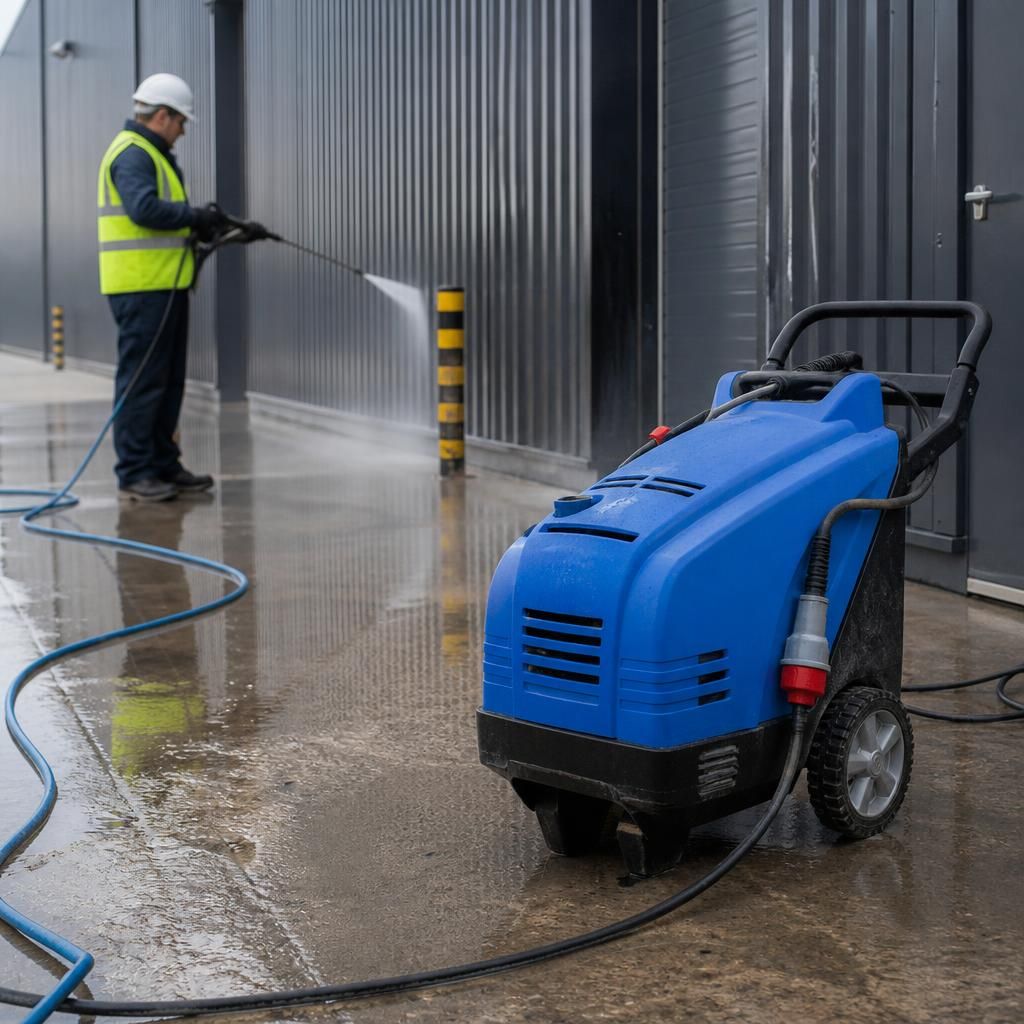
Industrial electric power washers use an electric motor rather than a petrol or diesel engine to drive the pump. This means they produce no exhaust emissions at the point of use and are generally quieter, making them particularly suitable for occupied premises, enclosed service areas and noise-sensitive sites.
They still require careful planning: the available electrical supply must support the machine, cables and connections must be protected from water, and spray and contaminated run-off must be controlled. Where reliable mains power is available, an electric washer can provide consistent performance without refuelling or engine fumes.