
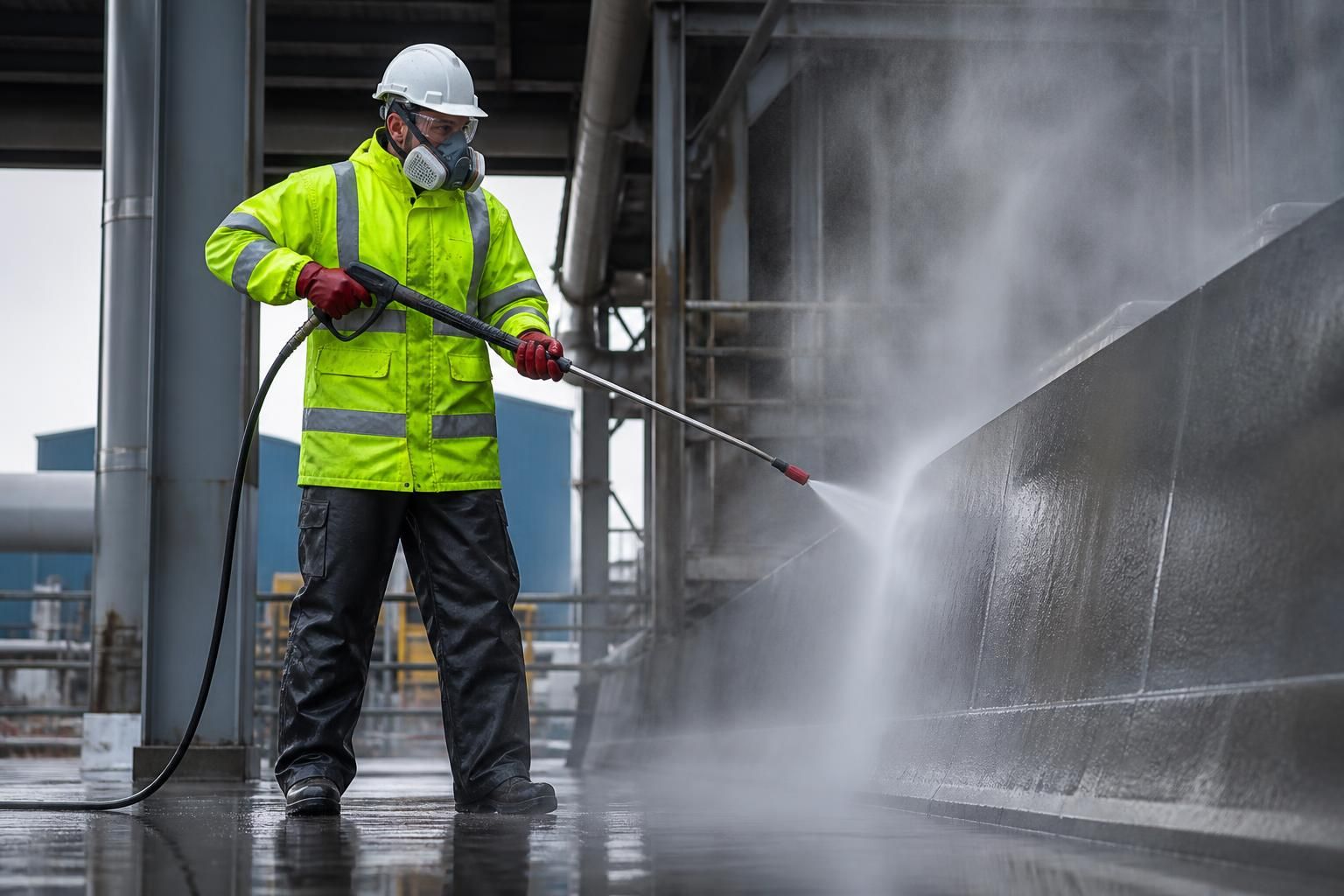
How does the industrial cleaning service provider ensure the safety and training of their staff when working in high-risk industrial environments?
An industrial cleaning service provider protects staff in high-risk environments through site-specific risk assessments, documented safe systems of work, appropriate PPE and equipment checks. Employees receive role-specific training, supervision and ongoing refresher instruction covering hazards such as chemicals, high-pressure water, working at height, confined spaces and industrial machinery.
An industrial cleaning service provider ensures staff safety in high-risk environments through a planned system of risk assessment, competent training, suitable equipment, supervision and ongoing monitoring. Before work begins, the provider identifies the hazards at the site, agrees safe methods with the client and assigns only personnel who are trained and competent for the required tasks. This approach is essential when work involves chemicals, high-pressure water, industrial machinery, traffic routes, contaminated residues, confined spaces or work at height.
Site-specific risk assessment and method statements
Safety planning begins with a site visit or a detailed review of the working environment. The assessment considers the building layout, access arrangements, surface condition, drainage, nearby operations, vehicle movements, electrical installations, machinery and any substances present. It also identifies who could be affected, including cleaning operatives, employees, contractors, visitors and members of the public.
The findings are recorded in a risk assessment and method statement. These documents explain the hazards, control measures, required equipment, exclusion zones, cleaning sequence and emergency arrangements. They are specific to the site and the work being undertaken rather than relying solely on a generic procedure. Where conditions change, the team reassesses the risks and updates the controls before continuing.
Training matched to the work
Staff receive training appropriate to their role, experience and the risks involved. This can include safe chemical handling, use of pressure-washing and steam-cleaning equipment, manual handling, selection of personal protective equipment, safe access, spill response and recognising unsafe conditions. Personnel working from elevated platforms or using other access equipment require additional instruction and must understand the limitations of the equipment they are operating.
Where a project involves confined spaces, hazardous substances, specialist access systems or complex industrial plant, the provider must ensure that the people involved have the relevant competence and authorisation. Training is supported by practical instruction, not just written information, so operatives understand how to set up equipment, control the work area and respond to foreseeable problems.
Induction, briefings and supervision
Before entering a customer’s premises, operatives are briefed on the site rules, local hazards, emergency procedures, welfare arrangements and reporting requirements. A task briefing explains the planned cleaning method and confirms that everyone understands their responsibilities. Toolbox talks or similar briefings may be used to reinforce particular risks, such as avoiding contact with pressurised water, controlling chemical exposure or maintaining separation from moving vehicles.
Supervision is proportionate to the complexity and risk of the task. A supervisor checks that the agreed method is being followed, that equipment is correctly positioned and that barriers, warning signs and exclusion zones remain effective. New or less experienced workers should not be left to carry out unfamiliar high-risk activities without appropriate oversight.
Control of chemicals and industrial residues
Industrial cleaning can involve oils, process residues, corrosive substances, biological contamination or products that create harmful vapours. The provider assesses the substance before work starts and uses the relevant safety information to determine how it should be stored, diluted, applied and removed. COSHH controls may include substitution with a less hazardous product, ventilation, restricted access, suitable gloves and protective clothing, eye and face protection, and procedures for dealing with spills or accidental contact.
Operatives are trained not to mix chemicals unless the method specifically permits it. They must understand labelling, safe decanting, exposure controls and the correct disposal route for contaminated materials and wash water. Where the substance or residue is unknown, work should pause until it has been identified and suitable controls have been established.
Safe use of pressure, steam and mechanical equipment
High-pressure water and steam can cause serious injury, damage surfaces and spread contamination if used incorrectly. Staff are trained to inspect hoses, couplings, lances, triggers, guards and electrical connections before use. They maintain a safe stance, avoid directing jets towards people or vulnerable equipment, and keep unauthorised personnel outside the operating area.
Equipment is selected for the surface, residue and working environment. Pressure, temperature and chemical application are controlled so that the cleaning method does not create unnecessary risk or damage. Machinery is used in accordance with the manufacturer’s instructions, with maintenance, inspection and defect-reporting arrangements in place. Equipment that is damaged or unsafe is removed from service until it has been properly assessed and repaired.
Working at height, access and confined spaces
Work at height is planned to avoid the need for it wherever practicable. If elevated access is necessary, the provider selects suitable equipment and ensures that it is inspected, positioned on a stable surface and used by trained personnel. Edge protection, harnesses, barriers and other fall-prevention measures are applied where required. Operatives do not improvise access arrangements or use unsuitable surfaces, ladders or platforms.
Confined-space work requires a separate assessment because of risks such as restricted access, oxygen deficiency, toxic gases, flooding, engulfment and difficulty in rescuing an injured person. Controls may include atmospheric testing, ventilation, communication, an entry permit, a standby person and a documented rescue plan. A worker must never enter a confined space simply because the cleaning task appears straightforward.
Personal protective equipment and welfare
Personal protective equipment is selected after other controls have been considered and is suitable for the particular hazard. Depending on the task, this may include safety footwear, gloves, eye or face protection, hearing protection, respiratory protective equipment, waterproof clothing, chemical-resistant garments and fall-arrest equipment. PPE must fit the wearer, be maintained in good condition and be replaced when damaged or contaminated.
Staff also need access to suitable welfare arrangements, including facilities for washing after handling chemicals or contaminated materials. Where cleaning creates spray, vapour, noise or wet surfaces, the working method should control exposure rather than relying on PPE alone.
Coordination with the customer and other contractors
Industrial cleaning often takes place while a facility is operating. The provider therefore coordinates with the customer’s responsible person before starting work. This includes agreeing isolation arrangements, access times, traffic controls, shutdowns, drainage protection and communication procedures. Machinery must not be cleaned while it is running or capable of starting unexpectedly unless a formal, controlled procedure specifically permits the activity.
Barriers, signs and controlled access help separate the cleaning operation from employees, visitors and other contractors. The site contact should know when work is starting, what areas are affected and when the area has been made safe for normal use again.
Emergency response and incident reporting
Before work starts, the team establishes what to do in the event of injury, chemical contact, equipment failure, fire, loss of containment, flooding or an unexpected change in conditions. Emergency contacts, first-aid arrangements, access for emergency services and the location of spill kits or wash facilities should be understood by the people involved.
Near misses, defects and incidents are reported and investigated rather than ignored. The provider uses the findings to improve the risk assessment, method statement, training or equipment controls. A clear stop-work procedure is also important: any operative should be able to stop the task and seek advice if the conditions are no longer safe.
Ongoing competence and compliance checks
Safety is maintained through refresher training, observations, equipment inspections and periodic reviews of working practices. Training records should show what instruction has been completed and when further assessment is required. The provider’s arrangements should reflect relevant UK health and safety requirements, including controls for hazardous substances, work equipment, work at height and, where applicable, confined spaces and lifting equipment.
For customers, the most useful evidence is a clear risk assessment and method statement, proof of relevant competence, equipment inspection records, suitable insurance and a named person responsible for site safety. These checks help confirm that the cleaning team can manage the specific hazards of the premises rather than applying a one-size-fits-all procedure.
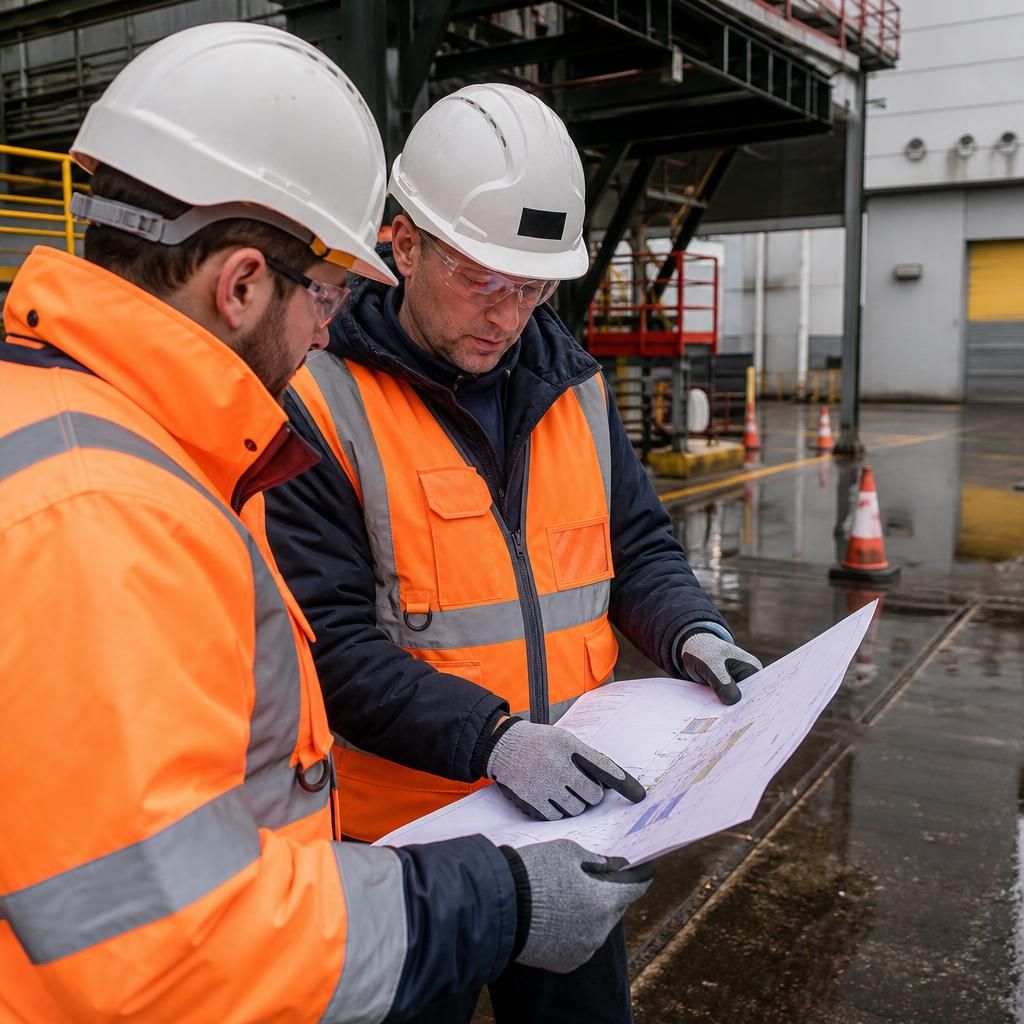
Safety starts with a site-specific risk assessment and method statement rather than a generic cleaning procedure. Before work begins, the team reviews hazards such as chemicals, pressurised water, moving vehicles, electrical equipment, work at height and restricted access. The method statement then sets out the controls, equipment, exclusion zones, cleaning sequence and emergency arrangements. Operatives are briefed on these requirements and only carry out tasks for which they have the appropriate training and competence. If site conditions change, work is paused and the controls are reviewed before cleaning resumes.