
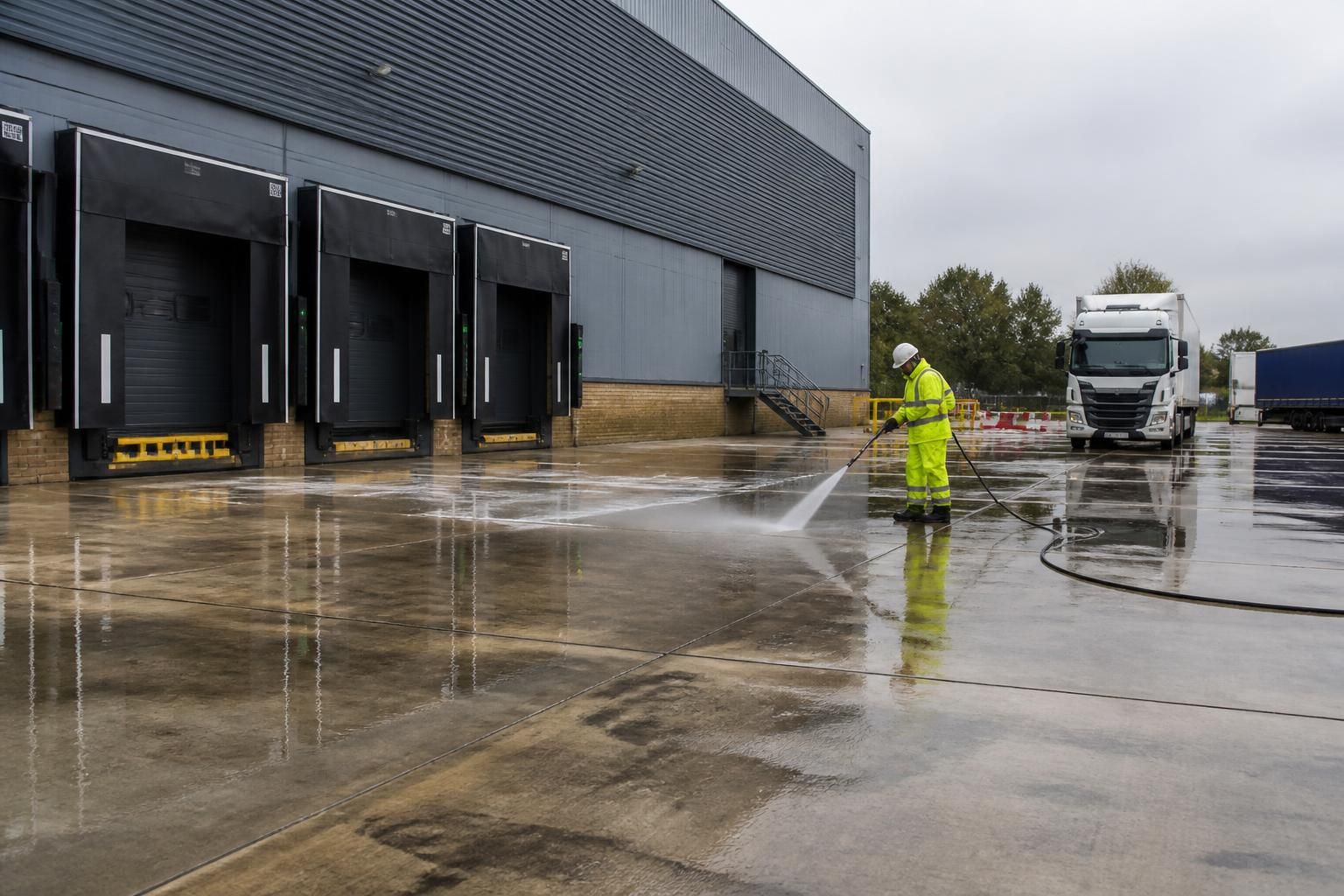
What types of surfaces benefit most from factory and warehouse cleaning?
Factory and warehouse cleaning benefits floors, loading bays, cladding, roofs, façades, windows, hardstandings and other high-traffic surfaces exposed to dirt, oil, dust, weathering or contamination. Cleaning these areas helps maintain safer working conditions, protect building materials, support hygiene requirements and present a well-maintained site.
The surfaces that benefit most from factory and warehouse cleaning are those exposed to heavy traffic, oil, dust, moisture, weathering or product residue. This typically includes floors, loading bays, yards, car parks, cladding, roofs, façades, windows and other external hard surfaces. Regular, suitably controlled cleaning removes contamination before it becomes difficult to manage, helping to protect materials, reduce slip and trip risks, support hygiene controls and maintain a professional site appearance.
Warehouse and factory floors are usually the highest-priority surfaces because they receive continual foot, vehicle and equipment traffic. Concrete, power-floated concrete, resin-coated floors, tiles and other hard-wearing finishes can accumulate dust, tracked-in soil, tyre marks, oil, grease, packaging debris and spill residues. Cleaning helps maintain floor condition and can make defects, cracks, damaged coatings or spillages easier to identify during routine inspections. The method should match the finish: pressure washing may suit robust areas where water can be safely controlled, while scrubber-drying, steam cleaning or lower-moisture methods may be more appropriate around machinery, electrical equipment or sensitive coatings.
Loading bays, service yards and dock areas benefit from frequent cleaning because they combine vehicle movements, deliveries, pallet handling and exposure to the weather. Concrete aprons, dock levellers, ramps and painted markings can become contaminated with mud, diesel residue, hydraulic fluid, rubber deposits and general waste. Removing this build-up improves the condition and visibility of working areas, although oil and chemical contamination may require a targeted degreasing process and controlled recovery of wastewater rather than simple high-pressure rinsing.
External yards, hardstandings and car parks are particularly vulnerable to silt, moss, algae, weeds, traffic film and organic staining. These surfaces may include concrete, tarmac, block paving or resin-bound finishes, each of which responds differently to pressure and cleaning products. Correct pressure, nozzle selection and surface treatment are important to avoid stripping jointing material, disturbing loose aggregate or damaging painted lines. Cleaning can also expose drainage problems, damaged surfacing and areas where standing water is developing.
Cladding and façade panels benefit from cleaning where dirt, traffic film, bird fouling, algae and atmospheric deposits have built up. Metal cladding, composite panels, coated surfaces, brickwork, concrete and render all require different approaches. A controlled soft-wash or steam-cleaning process may be preferable to aggressive pressure, particularly on painted or coated panels, aged pointing and delicate finishes. Cleaning should include consideration of joints, seals, vents and drainage details so that water and debris are not forced behind the façade system.
Roofs and roofline surfaces can accumulate moss, lichen, leaves, bird fouling and airborne pollution. This is relevant to pitched roofs, industrial roof sheets, rooflights, gutters, fascias and associated drainage channels. Removing organic growth and debris helps keep gutters and outlets clear and makes it easier to inspect roof coverings for corrosion, damaged sheets, failed sealants or blocked drainage. Roof cleaning must be planned around safe access, fragile rooflights, fall protection and the risk of dislodged debris. It should not be treated as a standard pressure-washing task where the roof covering could be damaged.
Windows, frames and glazed screens often show dust, salt-like deposits, bird fouling and construction residue more quickly than other areas. Clean glazing improves visibility and the presentation of offices, production areas, reception spaces and loading facilities. Frames, sills and seals should be cleaned carefully so that dirt is not driven into drainage channels or opening mechanisms. Post-construction residues, cement staining and paint spots may need specialist treatment rather than routine window cleaning.
Steps, ramps, walkways and pedestrian entrances are important from a safety and presentation perspective. Algae, moss, grease and compacted dirt can make hard surfaces more slippery, particularly where water collects or shaded areas remain damp. Cleaning should be combined with an assessment of drainage, surface condition, handrails, markings and lighting. A clean surface cannot correct poor falls, damaged paving or inadequate maintenance, so these issues should be reported and addressed separately.
Food, pharmaceutical and other hygiene-sensitive production areas may require cleaning of floors, walls, wall protection, drains, equipment surrounds and other washable surfaces. The correct process depends on the site’s hygiene plan, material compatibility and contamination controls. Cleaning should be scheduled to avoid contact with exposed products and should use approved chemicals, suitable rinsing procedures and documented checks where required. Porous, damaged or difficult-to-clean surfaces may need repair or replacement rather than repeated intensive cleaning.
Plant rooms, waste storage areas and equipment surrounds can also benefit from targeted cleaning. These locations may collect dust, grease, residue and spillages that are not suitable for general wash-down. Electrical systems, motors, control panels and moving parts must be protected, isolated or cleaned using a method appropriate to the manufacturer’s requirements. In some cases, vacuuming, wiping or steam cleaning is safer than high-pressure water.
The most suitable cleaning method depends on the surface material, contamination, drainage arrangements, access restrictions and the activities taking place nearby. Before work starts, the area should be assessed for fragile coatings, electrical hazards, open drains, pedestrian routes, stored goods and contaminated wastewater. A small test area can help confirm that the chosen pressure, temperature and cleaning product will remove the deposit without marking or damaging the substrate.
For most sites, the greatest benefit comes from prioritising surfaces according to risk and use rather than cleaning every area in the same way. High-traffic floors, loading zones, entrances, drainage points and visibly contaminated external surfaces normally require the most regular attention. Cladding, roofs, façades and less frequently used hardstandings can then be included within planned periodic maintenance. This approach helps maintain the condition, safety and presentation of the factory or warehouse while reducing avoidable disruption to operations.
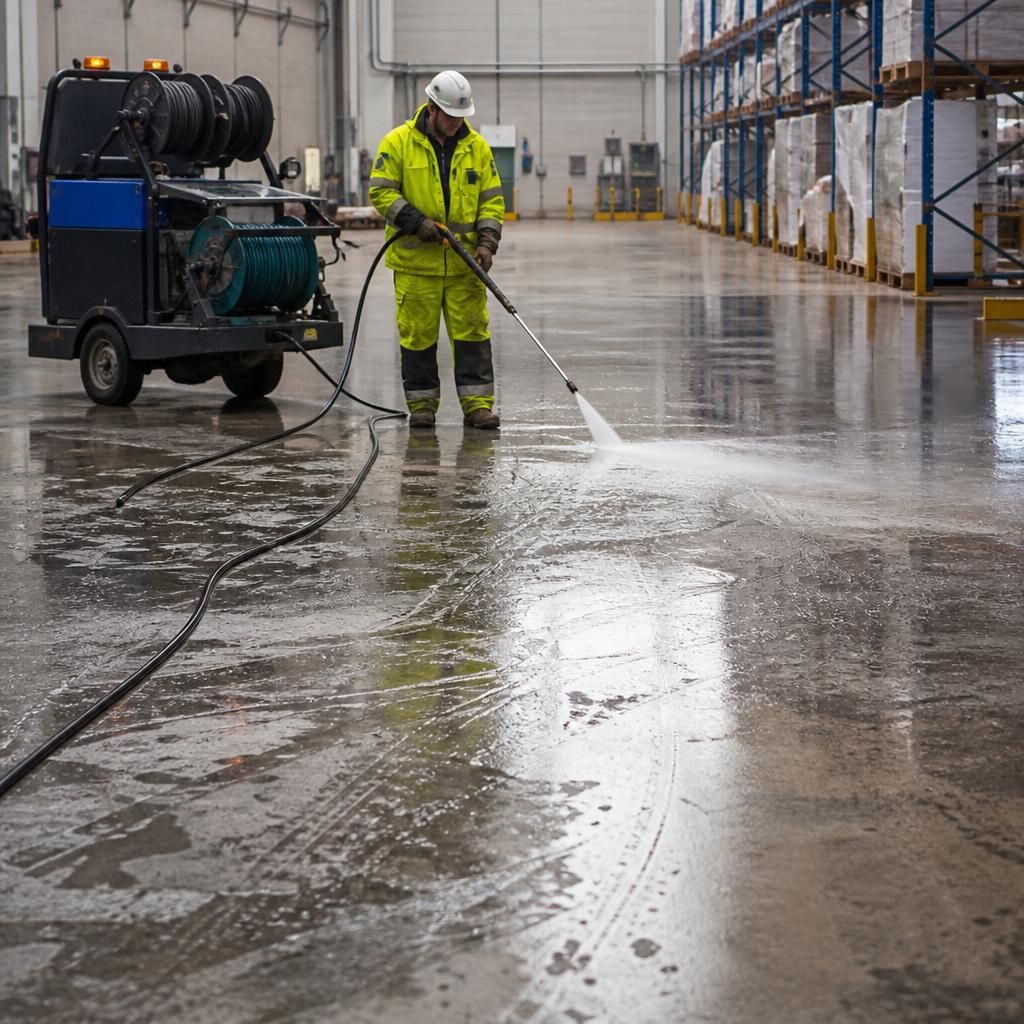
High-traffic floors and loading areas usually benefit most from regular factory and warehouse cleaning. Concrete, resin, tarmac and other hard surfaces collect dust, oil, tyre marks, packaging debris and spill residues from daily operations. Removing this contamination helps reduce slip risks, keeps walkways and vehicle routes clearer, and makes cracks, damaged coatings or new spillages easier to identify during inspections.
Loading bays, ramps and service yards need a method suited to the contamination and surface. Degreasing may be required for diesel or hydraulic-fluid residues, while controlled pressure washing, scrubber-drying or steam cleaning can be selected for more general soiling. Drainage, nearby stock, electrical equipment and wastewater controls should be assessed before cleaning begins to prevent disruption or secondary contamination.
Arrange Your Factory and Warehouse Cleaning Assessment
Arrange your factory and warehouse cleaning assessment to identify priority surfaces, suitable cleaning methods and any access or drainage requirements. Contact Encanto Exterior Cleaning to plan a practical cleaning programme around your operations.