
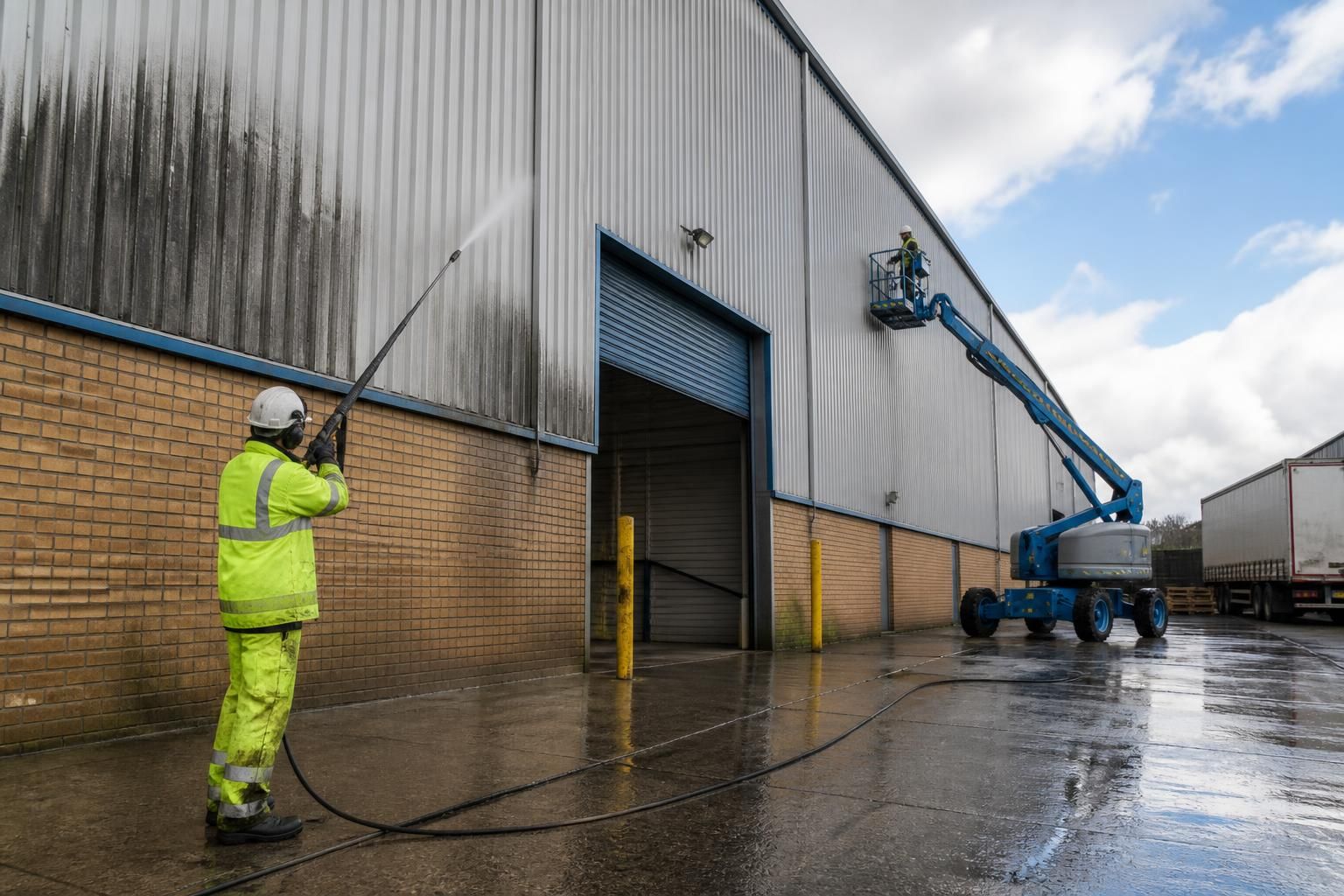
What factors should I consider when selecting a cleaning service for my factory or warehouse?
When selecting a cleaning service for your factory or warehouse, assess the contractor’s relevant industrial experience, health and safety procedures, equipment, insurance, reliability and ability to work around your operations. Confirm that they can provide a detailed site assessment, method statement, risk assessment and clear quotation tailored to your surfaces, access requirements and cleaning schedule.
The right factory or warehouse cleaning service should be assessed against its industrial experience, safety controls, cleaning methods, equipment, workforce competence, reliability and ability to work around your operations. A suitable contractor will inspect the site, understand the risks and production requirements, then provide a written scope, method statement, risk assessment and quotation tailored to the building rather than offering a generic cleaning package.
Relevant industrial experience
Start by checking whether the contractor regularly works in environments comparable with yours. Factory and warehouse cleaning can involve high-level structures, loading bays, production areas, racking, cladding, roofs, concrete floors, car parks and contaminated or heavily soiled surfaces. The contractor should understand how dust, oil, grease, traffic film, chemical residues, mould and accumulated debris affect different materials.
Ask for examples of work involving similar building types, access constraints and operating conditions. Experience in a warehouse does not automatically mean experience in a live manufacturing environment, particularly where hygiene controls, sensitive equipment, clean-down requirements or restricted production windows apply.
Understanding of your site and operating requirements
A competent provider should carry out a site survey before finalising the work. This allows them to assess surface types, water and drainage arrangements, electrical supplies, access routes, working heights, traffic movements, vulnerable equipment and areas requiring protection.
Discuss practical points such as:
- Whether cleaning must take place outside production or dispatch hours.
- Which areas can be isolated and for how long.
- How forklifts, delivery vehicles, staff and contractors will move through the site.
- Whether water, noise, spray or cleaning chemicals could affect stock, machinery or processes.
- How waste water, sludge, packaging debris and removed graffiti will be contained and disposed of.
- Which areas require photographic records, sign-off or a repeat maintenance visit.
The site assessment should result in a clear plan for sequencing the work and maintaining safe access while cleaning is under way.
Health and safety arrangements
Safety documentation is an essential selection criterion, not an administrative extra. Before work starts, request a suitable risk assessment and method statement covering the specific tasks and conditions at your premises. These should address pressure washing, steam cleaning, chemical use, work at height, access equipment, slips and trips, electrical hazards, vehicle movements, falling debris and interaction with employees or members of the public.
Where substances are used, the contractor should provide relevant COSHH assessments and explain how products will be stored, diluted, applied and removed. Confirm what personal protective equipment is required and how exclusion zones, warning signs, barriers and temporary closures will be managed.
If elevated areas are involved, check that the company has suitable access equipment and that operators are trained and authorised to use it. The method should prioritise safe access and avoid relying on improvised ladders or unsafe reach. You should also establish the arrangements for emergencies, reporting incidents and stopping work if conditions become unsafe.
Cleaning methods and equipment
The contractor should select a method according to the surface, soiling and operational risk. Pressure washing can be effective on robust external surfaces, yards and concrete, but excessive pressure or unsuitable water temperatures can damage coatings, joints, seals and fragile cladding. Steam cleaning may be more appropriate where controlled heat and reduced chemical use are beneficial. Soft washing, brushing, vacuum recovery or manual methods may be preferable for delicate finishes, enclosed areas or locations where run-off must be tightly controlled.
Ask what equipment will be used and why. Relevant considerations include pressure and temperature control, low-moisture options, surface-cleaning attachments, high-reach systems, access platforms, water recovery and filtration. Equipment should be maintained, inspected and suitable for the scale of the work. A professional assessment should also identify whether the proposed machinery can operate without damaging stock, interrupting sensitive processes or exceeding site noise restrictions.
Workforce competence and supervision
Find out who will carry out the work, how they are trained and who will supervise the project. Operatives should understand the equipment, chemicals and access systems they use, as well as the site rules that apply to your premises. Ask how new staff are briefed and how the contractor ensures consistent standards across larger or recurring projects.
For complex work, identify a named contact with responsibility for planning, communication and quality checks. This makes it easier to resolve access changes, report defects or adjust the schedule without relying on informal instructions between different teams.
Insurance and contractor documentation
Check that the contractor holds appropriate public liability and employers’ liability insurance, with cover suitable for the nature and scale of the work. You may also need evidence of additional cover where specialist access equipment, work at height or damage to client property presents particular risks.
Depending on your procurement process, you may request company policies, training records, equipment inspection records, environmental procedures and previous risk assessments. Confirm that the documentation relates to the proposed work and is current. Memberships, accreditations or certificates can support a review, but they should not replace a site-specific assessment of competence and safe working arrangements.
Reliability and communication
Factory and warehouse cleaning often has to fit around deliveries, shifts, production, stock movements and planned maintenance. Choose a contractor that can agree realistic attendance times, provide adequate notice of changes and communicate clearly before, during and after the work.
Ask how they manage delays caused by weather, equipment failure, restricted access or operational changes. For ongoing cleaning, confirm the response process for missed visits, urgent requirements and areas that need additional attention. A written schedule and named point of contact help prevent misunderstandings.
Scope of work and quotation
A useful quotation should describe the areas and surfaces included, the proposed method, preparation requirements, access arrangements, expected attendance pattern and how completion will be checked. It should also identify exclusions, such as internal machinery cleaning, hazardous material removal, repairs, traffic management, water supply or disposal charges where these are not included.
Compare quotations on the basis of the complete service rather than the headline price. A low-cost proposal may omit access equipment, water recovery, preparation, protection of assets, waste disposal or follow-up work. Ask whether the price is fixed or subject to conditions discovered on site, and ensure any variation process is explained before work begins.
Environmental controls
For external and industrial cleaning, ask how water consumption, chemical use and run-off will be controlled. The contractor should prevent dirty water, oils, detergents and removed material from entering drains or surrounding ground where this is not permitted. Suitable recovery, containment and disposal arrangements are particularly important around loading areas, workshops and drainage channels.
You can also ask whether the proposed method allows reduced chemical use, controlled water flow or steam cleaning without compromising the result. Environmental measures should be practical and supported by a clear plan for handling waste and contaminated residues.
Quality checks and ongoing value
Agree how the completed work will be inspected. This may involve a walk-through, photographs, cleaning records, area sign-off or a report identifying defects that cleaning has exposed. For recurring work, review the schedule when site use changes, new equipment is installed or particular areas begin to accumulate soiling more quickly.
The best choice is therefore the contractor that can demonstrate relevant industrial capability, plan safely around your activities, use an appropriate method for each surface and provide transparent documentation and pricing. A detailed site assessment and written scope will give you a more reliable basis for comparison than a standard per-visit rate.

A site survey is essential when selecting a factory or warehouse cleaning service because it allows the contractor to assess surfaces, access, drainage, operational hazards and areas requiring protection before providing a quotation. The findings should inform a written scope of work, risk assessment and method statement tailored to your premises.
Use the survey to confirm how cleaning will be coordinated with production, deliveries, forklifts, staff and stock movements. It should also clarify the proposed equipment, working hours, run-off controls, waste disposal arrangements, completion checks and any exclusions from the price. This gives you a reliable basis for comparing contractors and reduces the risk of unexpected disruption or additional charges.