
What eco-friendly cleaning solutions are available for factories and warehouses?
Eco-friendly cleaning solutions for factories and warehouses include low-impact steam cleaning, water-efficient pressure washing, biodegradable detergents and responsible wastewater collection. The most suitable approach depends on the surface, level of contamination and site requirements, allowing effective cleaning while reducing water use, chemical impact and disruption to operations.
Eco-friendly cleaning solutions for factories and warehouses combine effective soil removal with lower water consumption, reduced chemical impact, controlled wastewater and safer working practices. The right method depends on the surface, contamination, drainage arrangements, production activities and the required hygiene standard. In practice, this may include low-impact steam cleaning, water-efficient pressure washing, biodegradable detergents, dry or low-moisture methods, targeted spot cleaning and responsible collection of runoff.
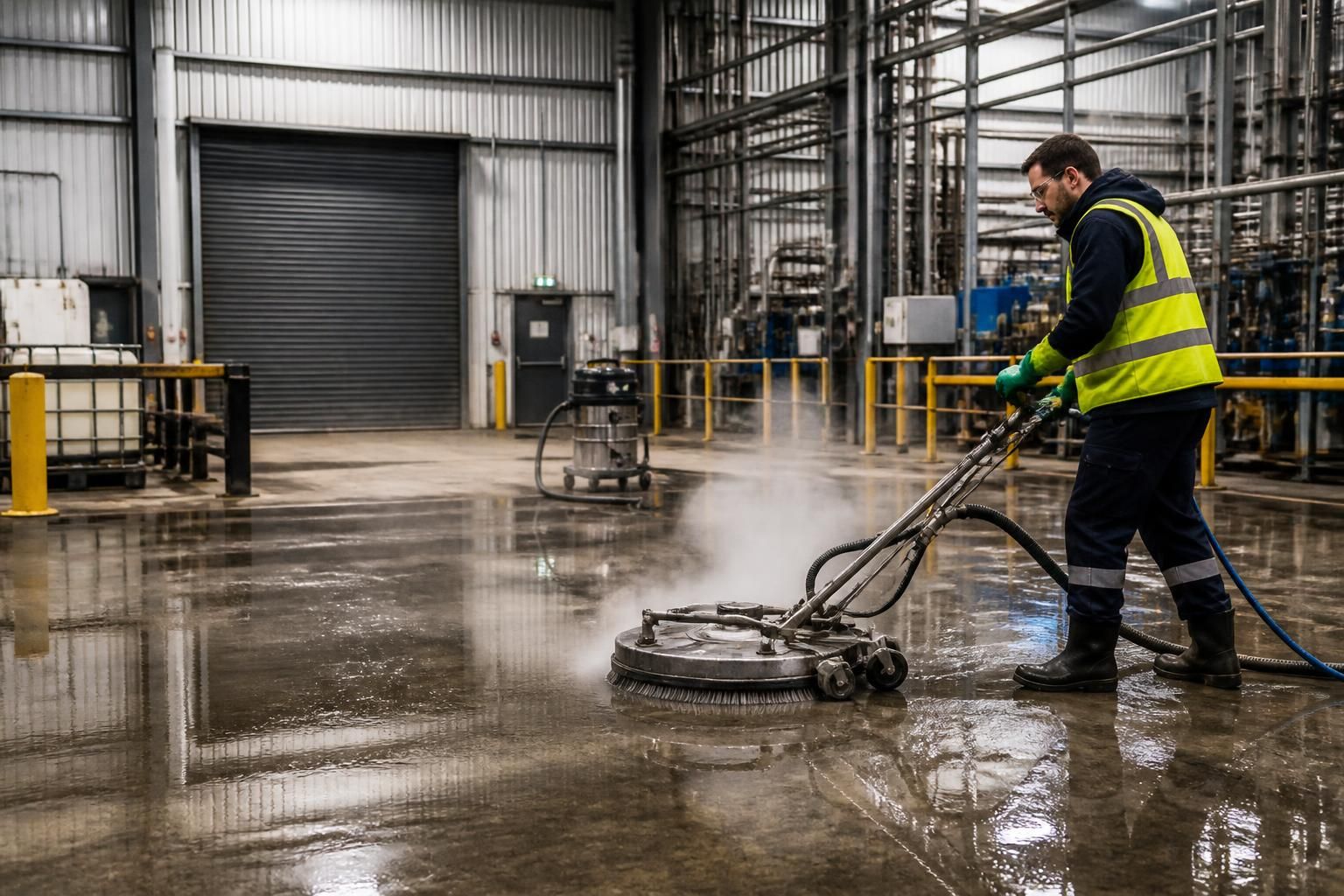
Low-impact steam cleaning uses heated water vapour to loosen grease, oil, dirt and biological contamination with comparatively little water. It is useful for hard surfaces, loading bays, plant areas, warehouse floors, shutters, cladding and detailed cleaning around fixtures. Because the process can reduce the need for aggressive chemicals and limits the volume of runoff, it is often suitable where drainage is restricted or water use needs to be carefully controlled. The operator must still assess the surface and nearby electrical equipment before work begins, as heat and moisture are not suitable for every material or component.
Water-efficient pressure washing can provide a practical alternative to unrestricted high-volume washing. Pressure, flow rate, nozzle selection and working distance are adjusted to remove the contamination effectively without using more water than necessary. Applying water only to the area being cleaned, pre-treating heavy deposits and avoiding unnecessary repeat passes all help to reduce consumption. Pressure washing remains suitable for many concrete yards, hardstanding areas, façades, external walls, loading zones and roof surfaces, provided the pressure is matched to the substrate.
Biodegradable and lower-impact detergents may be used where water alone or steam cannot remove oils, grease, traffic film or embedded residues. A professional assessment should consider the detergent’s ingredients, dilution requirements, contact time and compatibility with the surface. Biodegradable does not mean that a product can be discharged without controls: detergent solution, oil and contaminated sediment may still require collection and appropriate disposal. Products should therefore be selected for the specific soil and used at the lowest effective concentration.
Dry and low-moisture cleaning methods can reduce water use further in suitable areas. Mechanical sweeping, industrial vacuuming and controlled removal of loose dust are useful for warehouse aisles, production floors, ledges and external hardstanding before wet cleaning takes place. Removing dry debris first prevents it being turned into slurry and can reduce the water, detergent and time needed for the final clean. Dust should be controlled so that cleaning does not redistribute contaminants into occupied or sensitive areas.
Targeted cleaning and spot treatment is generally more sustainable than washing an entire surface when contamination is localised. Oil marks, tyre deposits, graffiti, bird fouling and isolated staining can often be treated individually, reducing the area exposed to water and chemicals. This approach is particularly useful around entrances, service yards, warehouse doors, plant access points and high-traffic routes.
Wastewater management is an essential part of an environmentally responsible clean. Runoff should not be allowed to enter surface-water drains, soil or watercourses where it could carry detergents, oil, paint, silt or other pollutants. Depending on the site, controls may include drain covers, temporary bunding, wet vacuum recovery, silt containment, filtration and transfer to an approved foul-water connection or suitable disposal route. The correct arrangement depends on the type of contamination and the site’s drainage permissions, so this should be agreed before work starts rather than treated as an afterthought.
Equipment selection also affects environmental performance. Well-maintained machines operate more efficiently and provide better control over pressure, temperature, flow and chemical dosing. Surface cleaners can help contain spray and produce a more consistent result on large areas, while recovery equipment limits uncontrolled runoff. Where access equipment is required, planning the work carefully can reduce repositioning, idling and unnecessary disruption. Cleaning teams should also use the appropriate personal protective equipment and controls when dealing with contaminated water, chemicals or dust.
Eco-friendly cleaning does not mean using the mildest method in every situation. An unsuitable low-impact process may require repeated treatment, increasing resource use and extending disruption. For example, heavily oil-contaminated concrete may need a carefully controlled degreasing stage followed by recovery, whereas loose warehouse dust may be better handled by vacuuming before any damp cleaning. The most sustainable solution is usually the least intensive method that achieves the required standard safely and in a single planned operation.
Before work begins, the cleaning plan should record the areas to be treated, surface types, contaminants, nearby drains, water and power availability, production constraints and any environmental or site-specific requirements. It should also identify where wastewater will go, how chemicals will be stored and what controls are needed around machinery, goods, vehicles and pedestrian routes. For factories handling food, pharmaceuticals, chemicals or other sensitive materials, the method must also align with internal hygiene procedures and contamination-control requirements.
For ongoing maintenance, combining dry debris removal with periodic targeted wet cleaning is often more resource-efficient than allowing contamination to build up until intensive restoration is required. A site-specific schedule can prioritise spill response, loading areas, entrances, drainage channels, façades and other high-use zones while avoiding unnecessary treatment of low-risk areas. Regular inspections help identify leaks, recurring deposits and damaged surfaces that may be contributing to the cleaning demand.
When selecting an eco-friendly approach for a factory or warehouse, ask the contractor to explain the proposed water-use controls, chemical selection, wastewater recovery arrangements, equipment settings and disposal process. A responsible method should protect the surface and the working environment while meeting the required cleaning standard. Encanto Exterior Cleaning can assess the site, contamination and access conditions before recommending a practical combination of steam cleaning, pressure washing, detergent treatment, dry cleaning and runoff control.
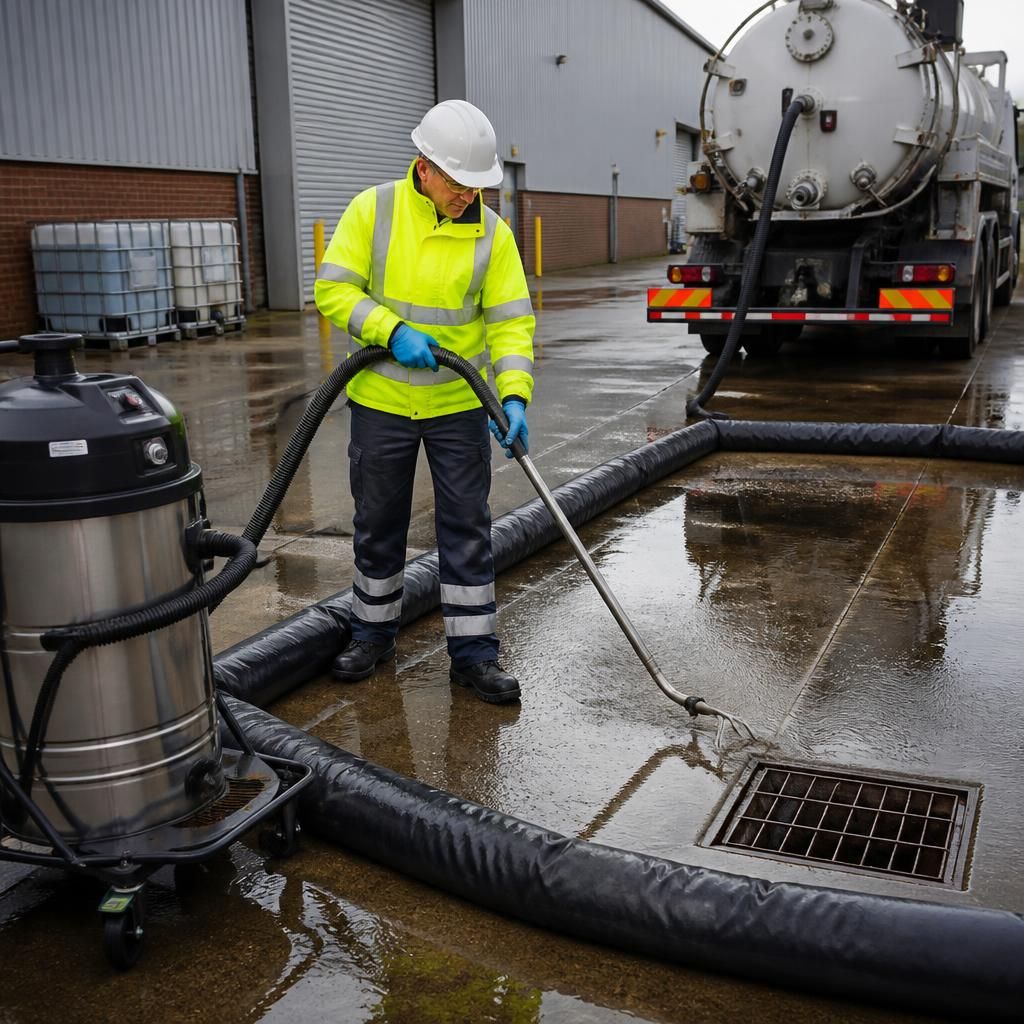
Responsible wastewater management is a key part of eco-friendly factory and warehouse cleaning. Wash water can contain oil, detergents, silt, paint residues and other pollutants, so it must be controlled rather than allowed to enter surface-water drains, soil or nearby watercourses.
Before cleaning starts, the work area should be assessed to identify drainage points and determine the appropriate recovery method. Depending on the site and contamination, this may include drain covers, temporary bunding, wet vacuum recovery, silt containment and filtration. Recovered water should then be directed to an approved foul-water connection or suitable disposal route in line with site requirements.
Using biodegradable detergent does not remove the need for wastewater controls. The cleaning plan should specify the products used, dilution levels, containment measures and disposal arrangements, helping to reduce environmental impact without compromising the required cleaning standard.
Request an Eco-Friendly Factory or Warehouse Cleaning Assessment
Request an eco-friendly factory or warehouse cleaning assessment to review your surfaces, contamination, water-use controls and wastewater requirements. Encanto Exterior Cleaning will recommend a practical cleaning method tailored to your site.