
What are the most effective cleaning techniques for warehouses and factories?
The most effective warehouse and factory cleaning techniques combine industrial pressure washing, steam cleaning, mechanical sweeping, vacuuming and targeted chemical treatments. The right method depends on the surface, contamination, access requirements and operational risks, with planned cleaning helping maintain safer, more efficient premises.
The most effective cleaning techniques for warehouses and factories are a combination of industrial pressure washing, steam cleaning, mechanical sweeping, industrial vacuuming and controlled chemical treatment. The appropriate method depends on the surface, type of contamination, production activity, access constraints and the need to protect machinery, stock and drainage systems. A planned combination is usually more effective than relying on one cleaning process throughout the site.
Before work starts, the area should be assessed to identify the materials present, contamination levels, drainage points, vulnerable equipment and any requirements for working at height. This allows the cleaning method, pressure, temperature, cleaning agents and access equipment to be selected safely. It also helps prevent dirt or wash water being moved from one part of the premises to another.
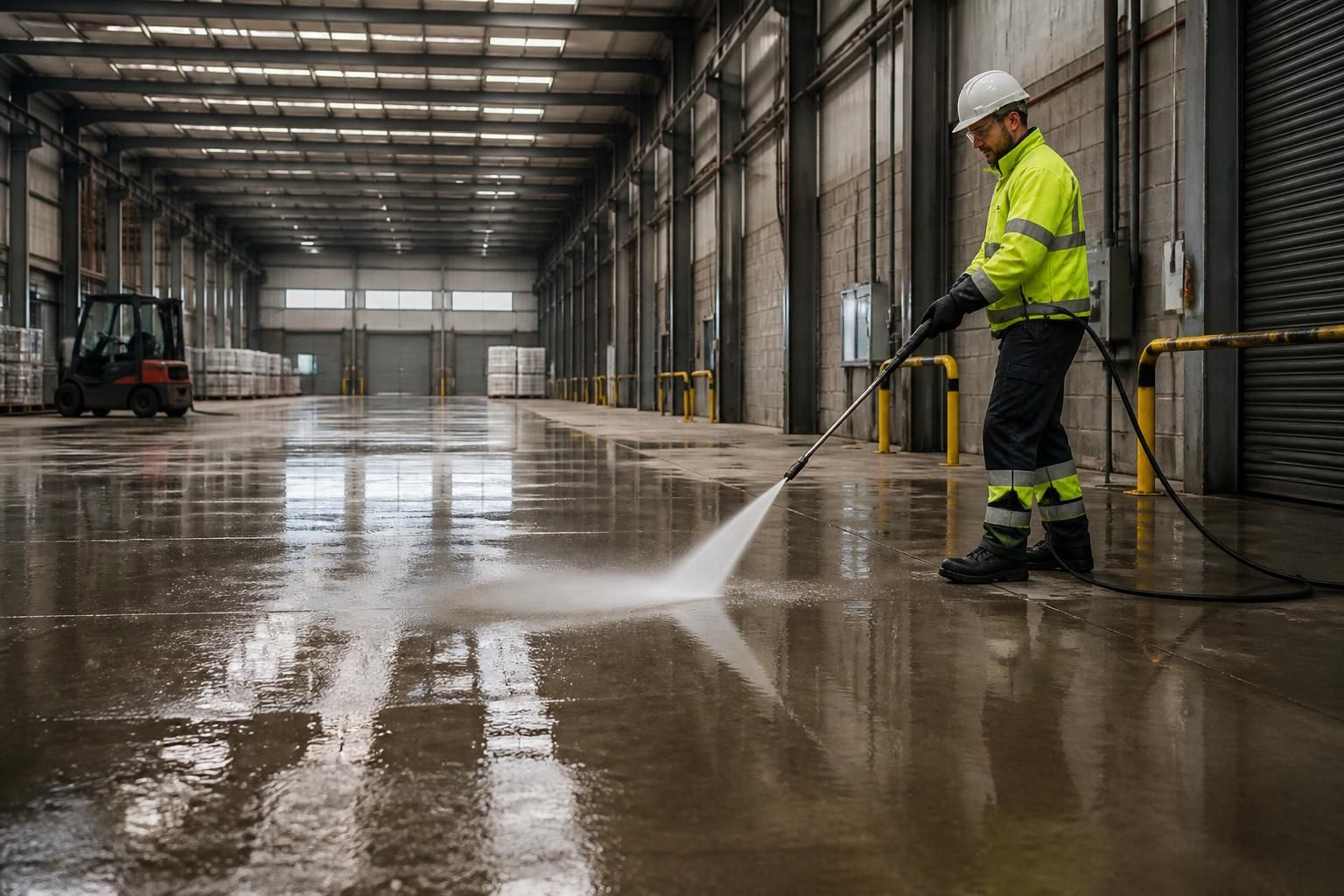
Industrial pressure washing is effective for removing ingrained dirt, mud, oil residues, tyre marks, algae and other contamination from robust external and internal surfaces. It is commonly used on concrete yards, loading bays, car parks, ramps, pathways, brickwork, blockwork and some types of cladding. Water pressure should be matched to the substrate. Excessive pressure can damage mortar joints, coatings, paint finishes, insulation panels and deteriorated concrete, so surface condition is as important as cleaning power.
Hot-water pressure washing can improve the removal of grease, oils and traffic film because heat softens oily deposits and reduces the need for aggressive chemical products. Cold-water pressure washing may be suitable for loose soil, dust and general surface dirt where heat is unnecessary. Rotary surface cleaners can produce a more even result on large hard floors and external slabs while helping to control splash compared with a standard lance.
Steam cleaning is useful where high-temperature cleaning is required with limited water use. It can remove grease, oil films, chewing gum, biological growth and stubborn residues from floors, walls, machinery exteriors and hard surfaces. Steam is particularly valuable around areas where excessive water could affect electrical components, stored materials or drainage capacity, although equipment must still be isolated or protected before cleaning. It is not automatically suitable for every coating or sealant, as heat can affect some finishes.
Mechanical sweeping and scrubbing are effective for large floor areas, yards, car parks and warehouse aisles. Ride-on or walk-behind sweepers collect loose dust, packaging fragments, grit and general debris efficiently, while scrubber-dryers apply cleaning solution, agitate the surface and recover dirty water. This combination is often preferable for internal warehouse floors because it provides controlled moisture and leaves the surface ready for use more quickly than unrestricted water washing.
Mechanical scrubbing is especially suitable for sealed concrete, resin floors and other hard-wearing surfaces affected by forklift traffic, rubber marks or tracked-in dirt. The brush or pad must be selected for the floor finish. A pad that is too abrasive can dull coatings or expose the substrate, while insufficient agitation may leave oil films and embedded dirt behind.
Industrial vacuuming should be used where dust, powders, production residues or loose debris need to be removed without spreading them through the building. High-efficiency vacuum systems can support the cleaning of warehouse floors, racking areas, ledges, beams, plant rooms and difficult-to-reach surfaces. Vacuuming is also useful before wet cleaning because removing loose material first prevents it becoming a slurry and reduces the amount of wash water required.
For fine or potentially hazardous dust, the vacuum system must be appropriate to the substance and risk assessment. Some manufacturing residues require specialist filtration, controlled handling or additional precautions. Dust should not be blown into the air with compressed air where it could affect workers, contaminate products or create an explosion risk.
Targeted detergents and degreasers help break down oil, grease, food residues, traffic film and other deposits that water alone may not remove. The product should be selected for the contamination and compatible with the surface. It should be applied at the correct dilution and dwell time, then rinsed or recovered as required. Using more chemical than necessary can leave residue, damage a coating and create additional wastewater management requirements.
Oil-affected areas may require absorbent treatment, degreasing and mechanical agitation before pressure washing. Heavy deposits should not simply be driven towards drains. Where wash water may contain oils, chemicals or production residues, it must be contained, collected and disposed of in accordance with site procedures and applicable environmental requirements.
Façade and cladding cleaning requires a lower-impact approach than cleaning a concrete yard. Soft washing, low-pressure rinsing, steam or a carefully selected detergent may be more suitable for painted metal, composite panels, render, brick and coated surfaces. A test patch can confirm whether the proposed process removes the contamination without causing colour change, streaking, coating failure or water ingress.
Algae, moss and other biological growth should be removed using a method that addresses both the visible growth and the conditions allowing it to return. On roofs, canopies and wall systems, access equipment, fall protection and controlled water use are essential. Cleaning should not compromise roof membranes, seals, flashings, cladding joints or drainage outlets.
Graffiti removal is most effective when the paint type, age and underlying surface are considered before treatment. Suitable techniques may include steam, low-pressure washing, specialist graffiti remover or gentle mechanical action. The aim is to remove the marking without creating a larger visible patch or damaging the surrounding finish. A protective coating may be considered on suitable surfaces where repeated graffiti is an ongoing issue.
Cleaning methods should be sequenced to improve the result and reduce disruption. A typical process may involve removing stock or protecting fixed equipment, dry sweeping or vacuuming, applying a suitable detergent, agitating contaminated areas, pressure washing or scrubbing, recovering wastewater and inspecting the finished surface. Internal areas should be allowed to dry adequately before normal production or storage resumes.
Operational safety is part of the technique, not an additional stage. Cleaning teams should control vehicle and pedestrian movement, isolate machinery where required, protect electrical equipment, use suitable access systems and display wet-floor warnings. Cleaning around production lines, conveyors, racking and loading areas may need to be coordinated with shutdowns, deliveries and shift patterns.
The most suitable approach is therefore surface-specific and risk-based. Pressure washing is generally effective for robust external hard surfaces; steam and hot-water cleaning suit grease and stubborn residues; mechanical sweepers and scrubber-dryers provide efficient control over large floors; vacuum systems limit dust and debris spread; and targeted detergents deal with contamination that mechanical methods cannot remove alone. Combining these techniques within a planned maintenance schedule helps keep warehouses and factories safer, cleaner and more serviceable without applying unnecessary pressure, water or chemicals to sensitive areas.
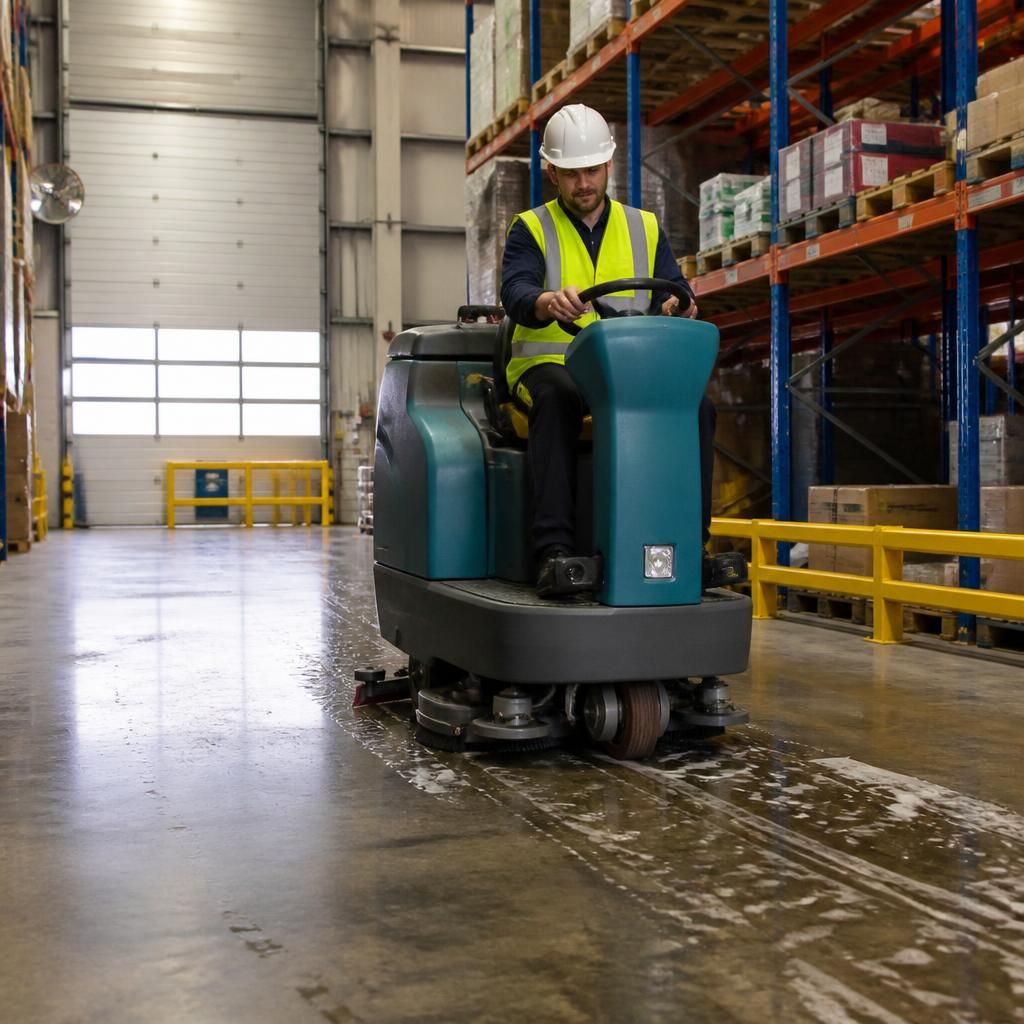
Surface-specific cleaning is the most effective approach for warehouses and factories because each area presents different contamination, materials and operational risks. Robust concrete yards may require hot-water pressure washing, while internal floors often benefit from mechanical scrubbing, vacuuming and controlled moisture.
A practical sequence is to remove loose dust and debris first, apply a compatible detergent where needed, agitate ingrained contamination, then recover wastewater and inspect the surface. This prevents dry material becoming slurry and helps keep oils, chemicals and production residues away from drainage systems. Sensitive cladding, coated floors and areas near electrical equipment should be tested and cleaned using lower-pressure, steam or other controlled methods where appropriate.