
What are the benefits of hiring a professional cleaning service for my warehouse or factory?
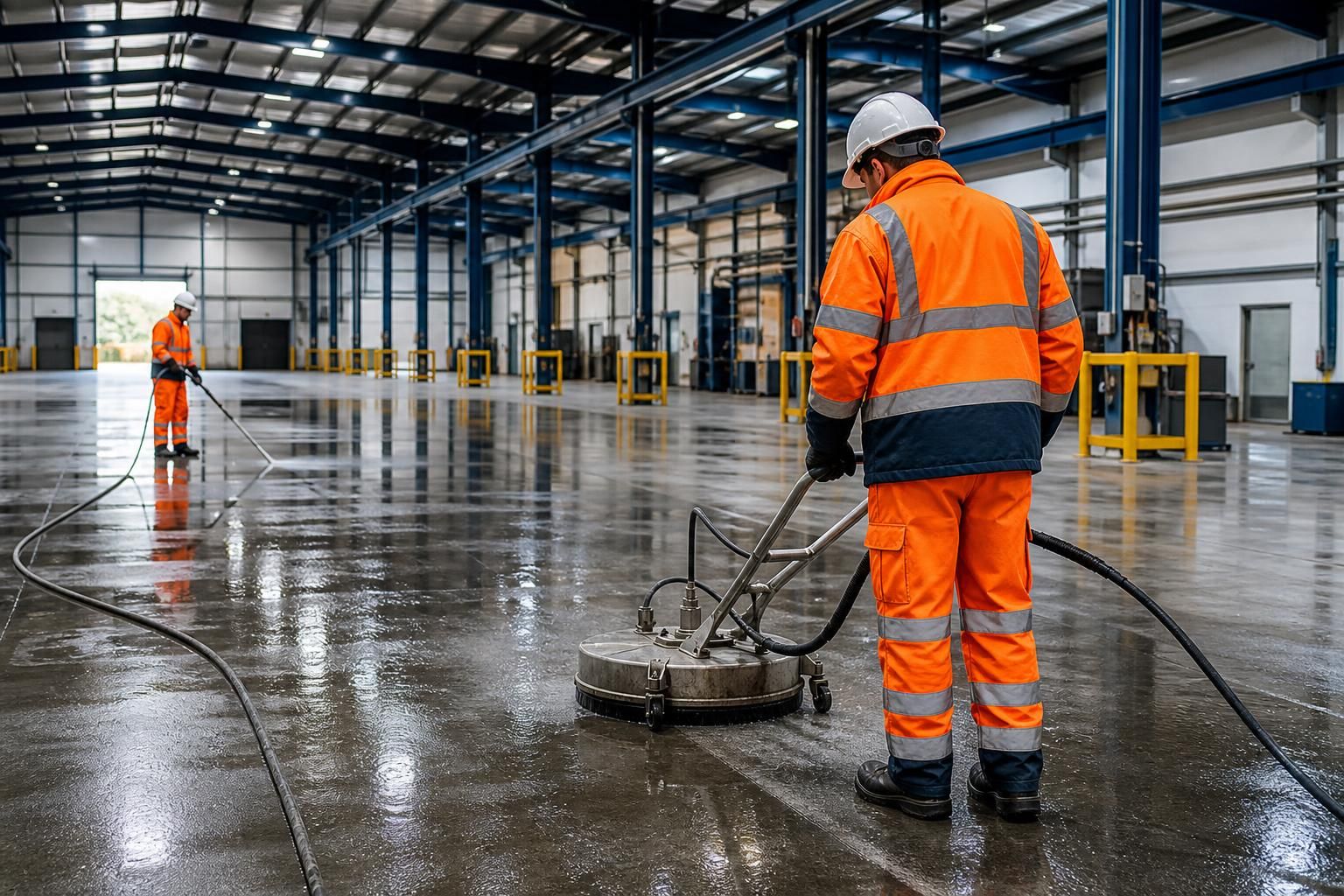
Hiring a professional cleaning service for your warehouse or factory helps maintain safer working conditions, protect surfaces and equipment, and keep operations running efficiently. Specialist contractors have the equipment, access solutions and experience to clean large industrial areas thoroughly while reducing disruption to your staff and production processes.
Hiring a professional cleaning service for a warehouse or factory provides a structured way to improve workplace safety, operational efficiency, asset protection and site presentation. Specialist industrial cleaners can manage large areas, difficult contamination and high-level surfaces using suitable pressure washing, steam cleaning, vacuuming and access equipment, while planning the work around production, storage and site access requirements.
Improved health and safety
Industrial premises can accumulate dust, oil, grease, product residue, mud, packaging debris and other contaminants. If these materials are not controlled, they may create slip and trip hazards, affect air quality or obstruct walkways, fire exits and equipment access. A professional cleaning programme targets these risks systematically, helping your site maintain clearer circulation routes, cleaner working areas and more controlled conditions.
Professional cleaners also understand the importance of working around machinery, electrical installations, loading areas, racking and vehicle routes. Cleaning methods can be selected to avoid creating additional hazards, such as excessive water, airborne dust or slippery residues. This work supports your existing risk assessments and housekeeping procedures, although it does not replace the responsibilities of the site operator or appointed health and safety team.
More efficient use of staff and production time
Using warehouse, factory or maintenance staff for extensive cleaning can divert them from their primary duties. A specialist contractor brings trained operatives and dedicated equipment, allowing your employees to concentrate on production, stock handling, maintenance and site management.
Cleaning can be scheduled during quieter periods, planned shutdowns, weekends or other agreed access windows. This helps reduce interference with manufacturing processes, deliveries, vehicle movements and warehouse operations. A suitable method statement and site plan can also identify sensitive areas, restricted zones and processes that must remain operational.
Protection of buildings, machinery and surfaces
Dirt and contamination can gradually damage concrete, brickwork, cladding, façades, flooring, doors and external areas. Oil and chemical residues may stain or degrade certain surfaces, while accumulated dust can affect vents, plant areas and mechanical components. Removing contamination at appropriate intervals helps prevent avoidable deterioration and makes defects easier to identify during routine inspections.
Professional cleaning is particularly useful where surfaces require different treatments. For example, pressure washing may be suitable for robust external concrete, while steam cleaning or lower-pressure methods may be more appropriate around sensitive finishes, equipment or areas where water use must be controlled. The cleaning approach should be based on the material, contamination, drainage arrangements and operational risks rather than applying one method across the whole site.
Better access to specialist equipment and expertise
Large industrial sites often contain high-level ledges, roofs, cladding, canopies, loading bays and difficult-to-reach elevations. Professional contractors can provide suitable access equipment and cleaning systems for these areas, subject to a site-specific assessment and safe working plan. This reduces the need for untrained staff to use ladders, elevated platforms or high-pressure equipment.
Experienced operatives can also identify when pressure washing, soft washing, steam cleaning, rotary cleaning, industrial vacuuming or manual treatment is more suitable. They can take account of surface condition, drainage, contamination type and the potential effect of cleaning on nearby stock or equipment.
More consistent cleaning standards
A documented cleaning schedule creates a repeatable standard for warehouses and factories. It can define the areas to be cleaned, the required frequency, the methods to be used and any exclusions or access restrictions. This is more reliable than carrying out reactive cleaning only when contamination becomes noticeable.
Regular inspections and service records can help facilities managers monitor recurring problems, such as oil deposits near machinery, mud entering through loading bays or dirt collecting around external drainage. These findings may support wider improvements to housekeeping, maintenance and site layout.
Professional presentation for staff, visitors and contractors
Clean façades, entrances, yards, loading areas, car parks and welfare surroundings contribute to a well-managed commercial premises. Presentation matters when customers, auditors, suppliers, contractors or local authority representatives visit the site. It can also support staff confidence in the standard of workplace management without relying on appearance alone as evidence of good housekeeping.
External cleaning can remove staining, algae, traffic film, graffiti and general dirt from appropriate surfaces. Internal industrial cleaning can address floors, walls, high-level areas and production surroundings where normal daily cleaning does not provide sufficient coverage.
Support for compliance and site management
Professional cleaning can support your workplace housekeeping, maintenance and environmental management procedures. Cleaned access routes, drainage areas, fire equipment surroundings and working zones are easier to inspect and maintain. Records of completed work may also assist with internal audits, contractor management and planned maintenance documentation.
Cleaning is not a substitute for statutory inspections, specialist decontamination or legally required controls. Where a site contains hazardous substances, asbestos, biological contamination or other regulated materials, the work must be assessed separately and carried out using the appropriate specialist arrangements.
Controlled water, chemical and waste management
An experienced contractor can select cleaning products and processes according to the contamination and surface involved, avoiding unnecessarily aggressive chemicals or excessive water use. Where pressure washing is required, wastewater and contaminated run-off need to be managed responsibly and in accordance with site procedures and applicable environmental requirements.
Professional planning can also help separate routine dirt from materials that require specialist collection or disposal. This is important in factories and warehouses where cleaning residues may contain oil, process materials or other contaminants.
Reduced reactive maintenance and disruption
Planned cleaning helps identify blocked drainage, damaged surfaces, leaking equipment, deteriorating coatings and areas where contamination is returning unusually quickly. Early identification does not prevent every repair, but it gives the responsible team an opportunity to investigate problems before they cause greater disruption.
For the best result, the cleaning specification should be based on how the site operates. It should set out the areas included, contamination types, access requirements, preferred methods, safety controls, wastewater arrangements and the timing of each visit. A professional service is most effective when it works alongside your production, facilities and health and safety procedures rather than operating as an isolated task.
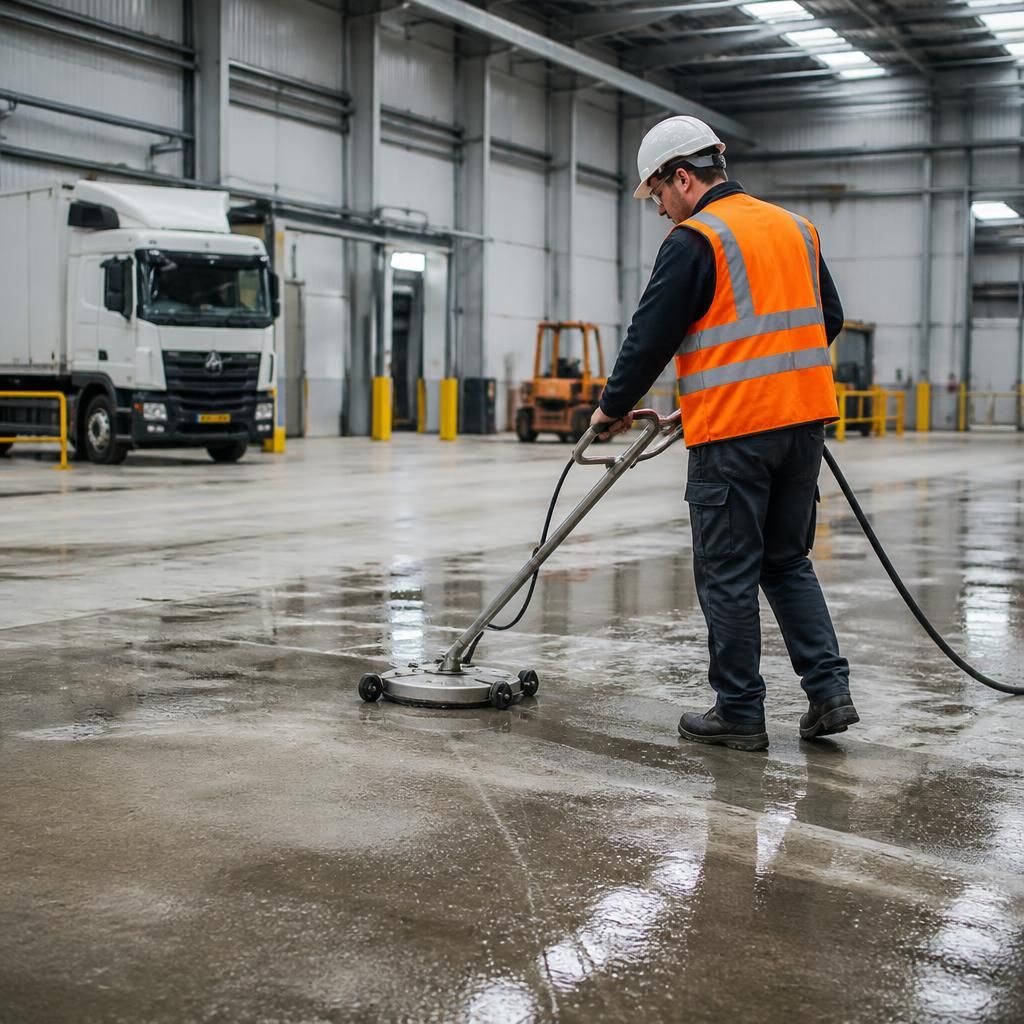
Professional warehouse and factory cleaning improves safety by removing contaminants and debris that can create slip, trip, access and air-quality hazards. Trained operatives can clean floors, loading bays, walkways, machinery surroundings and high-level surfaces using methods suited to the material and working environment.
Specialist access equipment and controlled cleaning techniques also reduce the need for untrained employees to work at height or use industrial pressure-washing equipment. Cleaning can be planned around production, vehicle movements and restricted areas, helping maintain safer conditions without creating unnecessary disruption.
Discuss professional cleaning for your warehouse or factory
Discuss your warehouse or factory cleaning requirements with Encanto Exterior Cleaning to agree suitable methods, access arrangements and scheduling around your operations. We can help develop a practical cleaning specification for your site.