
How often should factory and warehouse cleaning be scheduled?
Factory and warehouse cleaning should be scheduled according to site risk, footfall, production activity and contamination levels: routine housekeeping is typically carried out daily, with targeted cleaning weekly and deeper cleans planned periodically. Spillages, dust accumulation, waste and hygiene-sensitive areas should be addressed immediately, while the schedule should be reviewed after operational or regulatory changes.
Factory and warehouse cleaning should be scheduled according to the site’s risks, production activity, footfall, dust and waste levels, rather than to a fixed timetable alone. In most facilities, basic housekeeping is required every day or during each shift, targeted cleaning is completed weekly, and deeper or specialist cleaning is planned periodically. Spillages, hazardous contamination, excessive dust, waste and hygiene issues should always be dealt with immediately.
A practical cleaning schedule normally includes the following frequencies:
- During each shift or daily: remove waste, clear walkways, clean welfare areas, deal with spillages, sweep or vacuum accessible floors and clean frequently touched surfaces where necessary.
- Weekly: carry out more detailed floor cleaning, clean racking and lower-level ledges, remove accumulated dust from accessible plant areas, and inspect loading bays, doors and service areas.
- Periodically: clean high-level structures, rooflights, beams, ducting, façades, cladding, roofs, external yards and other areas that are not practical to maintain during routine operations.
- After a specific event: arrange additional cleaning following construction work, equipment failure, flooding, a chemical spill, a pest issue, an unusual production run or a period of exceptionally high traffic.
The exact frequency should be set through a documented site assessment. This should consider the type of materials handled, the processes taking place, the volume of goods moving through the premises, the number of employees and visitors, the layout of the building, ventilation, moisture levels and the consequences of contamination. A warehouse storing sealed, clean products may need a different schedule from a manufacturing facility producing dust, oils, food residue or other deposits.
Daily and shift-based cleaning should focus on conditions that can affect safety or operations if left unattended. Floors, pedestrian routes, forklift routes, steps, entrances and loading areas should be kept free from debris and obstructions. Waste should be removed before it accumulates, and spillages should be isolated and cleaned using a method suitable for the substance involved. Welfare facilities, canteens and other hygiene-sensitive areas generally require cleaning at a frequency that reflects their use, with additional attention during busy periods.
Production areas may need cleaning at the end of each shift, during planned changeovers or whenever a process creates visible residue. Dust, powder, fibres, grease and oil should not be allowed to build up on floors, ledges, machinery surrounds or electrical enclosures. Dry sweeping can redistribute fine dust, so industrial vacuuming or another controlled method may be more appropriate where airborne contamination is a concern. The cleaning method should be compatible with the equipment, surface and material being removed.
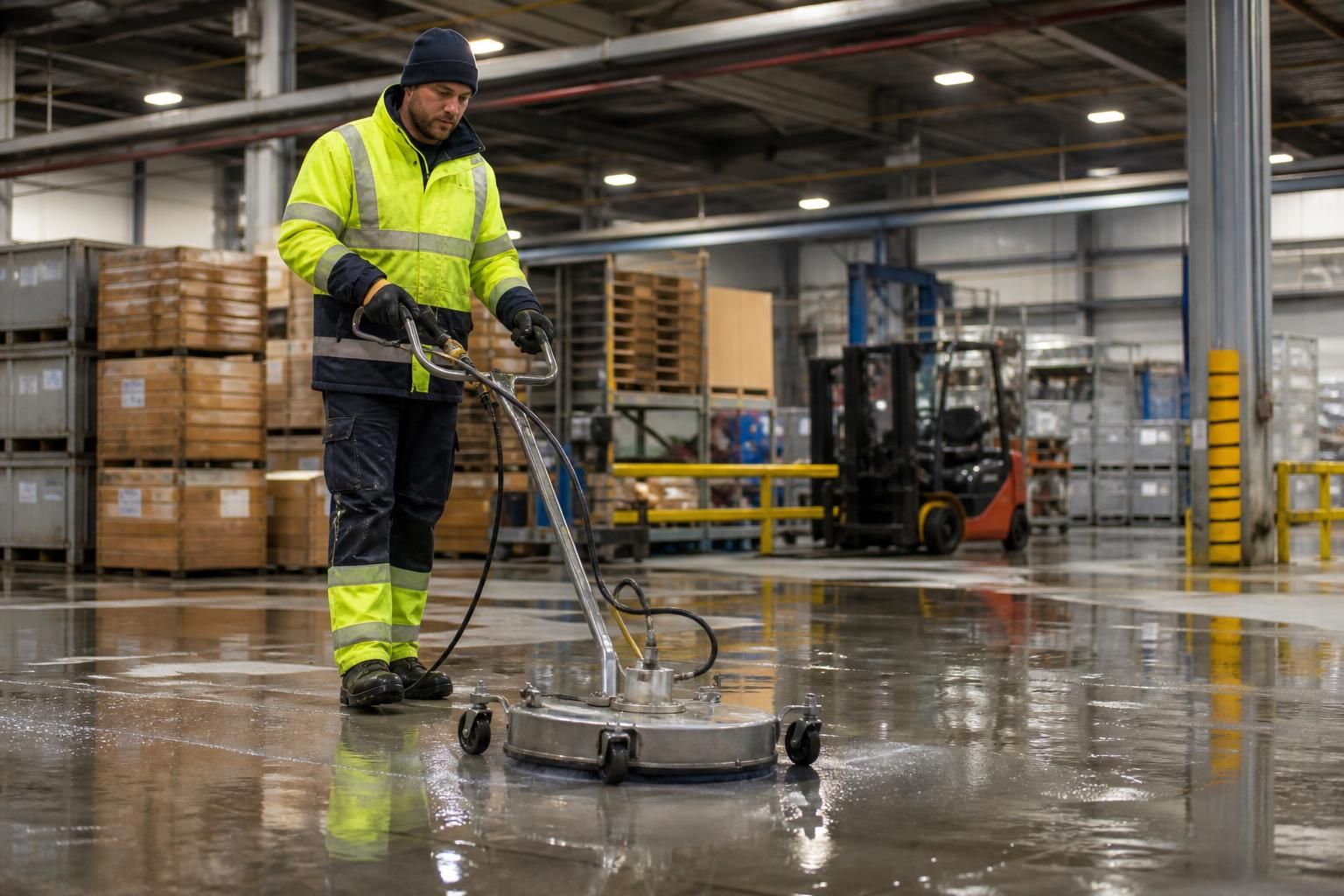
Weekly cleaning is useful for areas that do not become hazardous immediately but gradually affect cleanliness and presentation. This may include machine bases, racking faces, dock levellers, warehouse corners, internal doors, lower walls and less frequently used routes. Mechanical floor scrubbing can remove deposits that routine sweeping does not address. In offices and welfare areas connected to the facility, weekly tasks may include detailed cleaning of hard floors, sanitary fittings and other surfaces not covered by daily housekeeping.
Periodic deep cleaning should be planned around operational conditions. High-level dust removal, pressure washing, steam cleaning, façade cleaning, cladding cleaning and roof maintenance may require access equipment, isolation arrangements or a production shutdown. These tasks are often best completed during planned maintenance periods, weekends or other agreed windows when people, vehicles and stock can be kept clear of the work area. External areas such as yards, car parks, loading bays and building entrances may need more frequent attention during wet weather, winter conditions or periods of heavy vehicle movement.
Some facilities require a more controlled or frequent regime. Food, pharmaceutical, chemical and other hygiene-sensitive operations may have defined cleaning standards, segregation requirements and documented verification procedures. Sites handling combustible dust, hazardous substances or materials that can react with water need cleaning methods based on the relevant risk assessment and safety data. Cleaning should not begin until the substance, equipment and required controls have been identified.
The schedule should also distinguish between cleaning types:
- Housekeeping: routine removal of waste, debris and minor deposits by trained site personnel.
- Planned maintenance cleaning: more detailed cleaning of floors, equipment surrounds, walls, doors, loading areas and storage zones.
- Specialist cleaning: high-level, industrial, pressure washing, steam cleaning, graffiti removal, façade, cladding, roof or contaminated-area cleaning requiring specialist equipment and controls.
Responsibility should be clear for every task. A schedule can identify the area, cleaning method, frequency, responsible person, required equipment, access arrangements and inspection requirements. Records of completed work and reported defects help demonstrate that cleaning is being managed consistently and make it easier to identify recurring problems.
Cleaning should be reviewed when production changes, new machinery is installed, storage arrangements alter, a near miss occurs, an audit identifies a weakness or contamination is repeatedly found between scheduled visits. If an area becomes dirty before its planned cleaning date, the frequency or method is not adequate for the current conditions. Conversely, low-risk areas may not require the same intensity as high-traffic or production-critical zones.
For larger or more complex premises, a combined programme is usually most effective: site staff handle immediate housekeeping and spill response, while planned contractors complete specialist tasks that require industrial pressure washing, steam cleaning, high-level access or out-of-hours working. This approach keeps everyday risks under control while ensuring that difficult-to-reach surfaces and external areas are not overlooked.
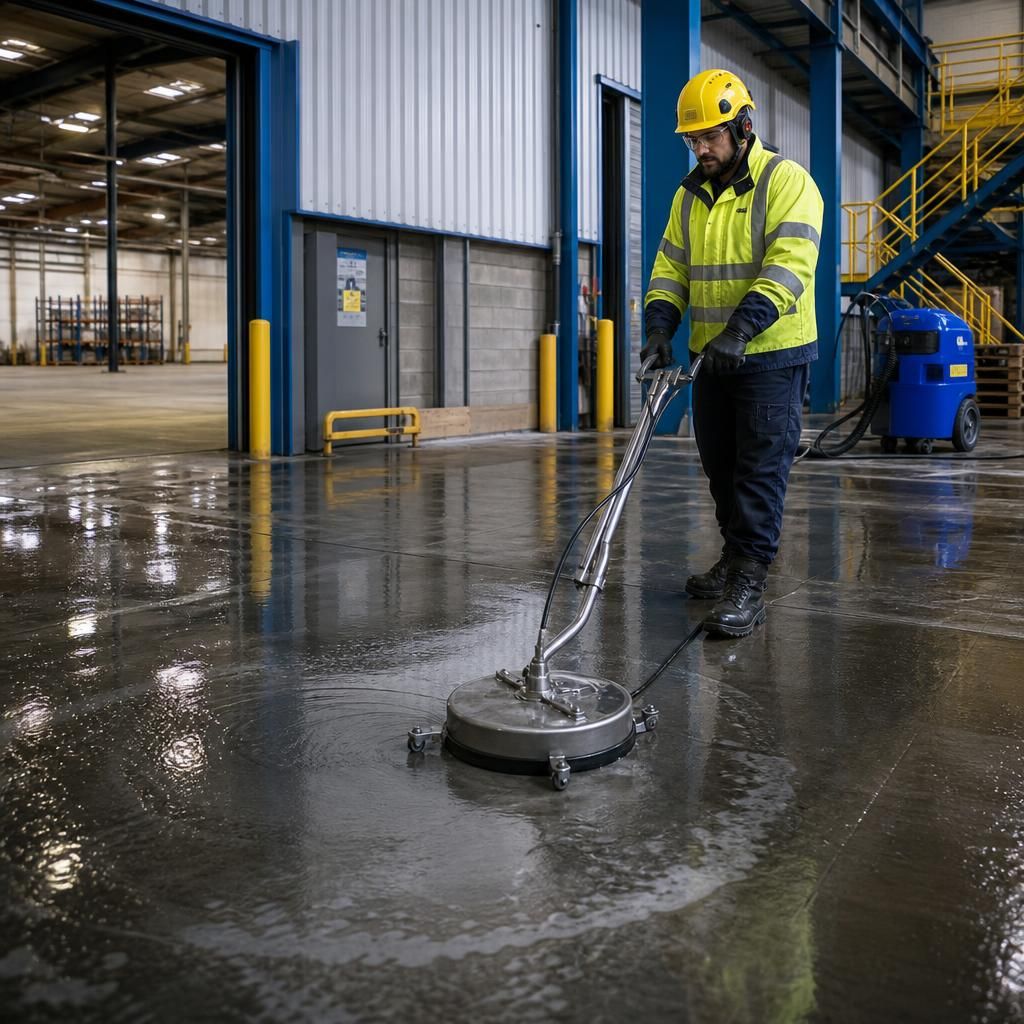
Factory and warehouse cleaning should be scheduled according to the level of risk and contamination in each area, not simply by applying the same frequency across the whole site. Production zones, loading bays and pedestrian routes may need attention during every shift, while low-traffic storage areas may be suitable for less frequent planned cleaning.
The schedule should be reviewed whenever production processes, materials, equipment or storage arrangements change. It should also be adjusted if dust, oil, waste or spillages are appearing before the next planned visit. This approach keeps high-risk areas under control while ensuring periodic tasks such as high-level dust removal, roof cleaning and external pressure washing are completed during suitable maintenance windows.