
How does factory and warehouse cleaning contribute to environmental sustainability?
Factory and warehouse cleaning supports environmental sustainability by removing pollutants responsibly, reducing waste, conserving water and cleaning products, and helping floors, roofs, cladding and equipment last longer. Planned professional cleaning can also improve spill control, waste segregation and energy efficiency by keeping operational areas and building surfaces in good condition.
Factory and warehouse cleaning contributes to environmental sustainability by controlling pollutants, reducing avoidable waste, using water and cleaning chemicals responsibly, and extending the service life of buildings, surfaces and equipment. When cleaning is planned around the site’s operations, it can also support better spill management, waste segregation, energy performance and compliance with environmental requirements.
Reducing pollution at source
Industrial premises can accumulate oil, grease, dust, metal particles, chemical residues, soot, tyre deposits and other contaminants. If these materials are left in place, they may be spread by vehicles, wind or rainwater and could enter drains, soil or nearby watercourses. Professional cleaning removes contaminants in a controlled way and helps prevent them being transferred from operational areas to the wider environment.
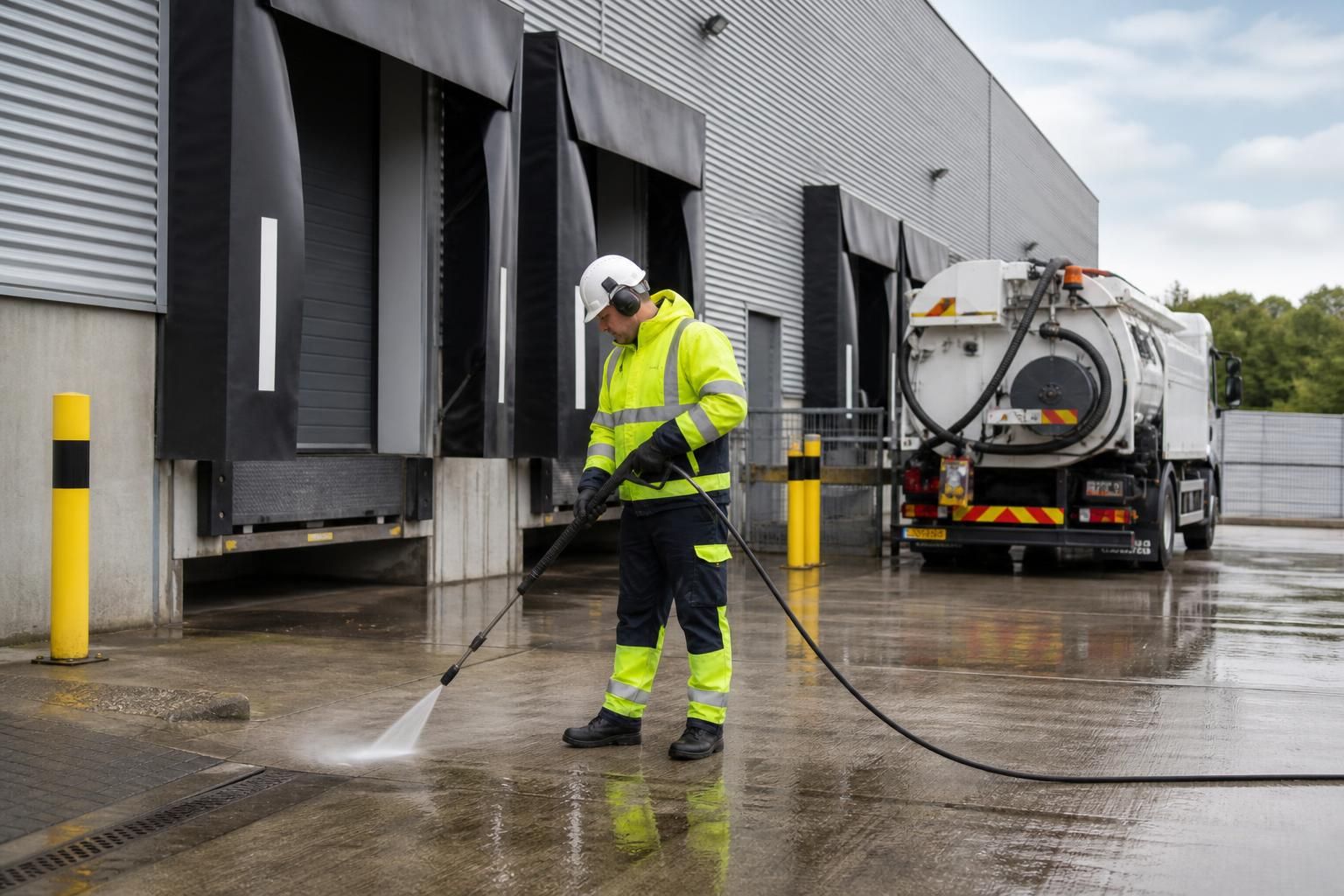
Cleaning methods should be selected according to the contaminant and the surface. For example, steam cleaning can remove certain oils and residues with limited chemical use, while pressure washing may be appropriate for robust external surfaces when runoff can be contained and managed. Dry removal or industrial vacuuming is often preferable for loose dust and fine material because it avoids turning pollutants into contaminated wastewater.
Using water and chemicals more efficiently
Sustainability is not simply a matter of using less water. It also involves using the right quantity for the task, preventing unnecessary repeat cleaning and managing the resulting wastewater properly. Pre-sweeping, targeted application and suitable pressure or steam settings can reduce water consumption compared with indiscriminate washing. Operatives can also avoid applying more detergent than the surface requires.
Cleaning products should be chosen for their suitability, concentration, biodegradability and potential impact on people, surfaces and drainage systems. Safety data and site procedures must be followed, particularly where substances are hazardous or where wash water could reach surface-water drains. Where appropriate, wastewater should be collected, filtered, separated or disposed of through an approved route rather than discharged without control.
Reducing waste and improving spill control
Regular cleaning makes it easier to identify leaks, damaged containers, overflowing bins and spillages before they become larger environmental incidents. Prompt removal of oil, chemicals or other materials also reduces the risk of contamination spreading through a warehouse, yard or loading area. Cleaning teams should follow the site’s spill-response arrangements and keep recovered materials separate from general waste where the material requires specialist handling.
A clean, clearly organised facility can support better waste segregation. When floors, storage areas and waste compounds are maintained, staff can more easily distinguish recyclable materials, general waste and controlled or hazardous waste. Cleaning does not replace a formal waste-management system, but it helps keep waste points accessible, identifiable and less likely to contaminate one another.
Extending the life of buildings and equipment
Dirt, salts, grease and corrosive deposits can gradually damage cladding, concrete, roofs, flooring, loading bays and plant. Removing these deposits as part of planned maintenance can slow deterioration and help preserve protective coatings and finishes. This may reduce the need for premature repairs, replacement materials and disposal of otherwise serviceable components.
The same principle applies to equipment. Dust and residue can obstruct ventilation, affect moving parts or interfere with sensors and controls. Cleaning must be carried out in accordance with the manufacturer’s instructions and the equipment’s isolation requirements, but appropriate maintenance cleaning can help prevent avoidable wear and prolong usable life. It should never be assumed that high-pressure water is suitable for electrical, sensitive or enclosed components.
Supporting energy efficiency
Cleaning can support energy performance where dirt is affecting the operation of a building or its equipment. Clearing dust from suitable ventilation components, maintaining external heat-transfer surfaces and removing obstructions from light fittings can help systems operate as intended. Clean windows, rooflights and translucent panels may also allow more available daylight into working areas, although any cleaning method must reflect access, material and safety requirements.
These benefits depend on the condition and design of the site; cleaning alone does not guarantee lower energy consumption. Energy savings should be assessed alongside building controls, insulation, ventilation, lighting and equipment maintenance.
Choosing a lower-impact cleaning approach
A sustainable cleaning plan should consider the complete process rather than focusing on one product or technique. Important factors include:
- the type and quantity of contamination;
- the surface, coating and surrounding environment;
- the minimum practical amount of water, chemical and energy required;
- how wastewater, sludge, used absorbents and other residues will be contained and disposed of;
- whether access equipment, hoses and machinery can be used efficiently on the site;
- the need to protect drains, soil, vegetation, watercourses and neighbouring premises; and
- how the work can be combined with planned maintenance to avoid unnecessary return visits.
For large factories and warehouses, an environmental method statement can set out the proposed equipment, cleaning agents, runoff controls, waste arrangements and emergency procedures. It should be reviewed when the site, process, substances or drainage arrangements change.
Why planned cleaning is more sustainable than reactive cleaning
Planned cleaning allows contamination to be dealt with before it becomes embedded or spreads across a larger area. This can reduce the intensity of the work, the quantity of cleaning products required and the risk of emergency disposal. Scheduling work around production, deliveries and weather conditions can also reduce disruption and make better use of equipment and access arrangements.
Routine inspections are useful alongside scheduled cleaning. They help identify recurring sources of dirt, such as leaking vehicles, defective seals, poor waste storage or inadequate drainage. Addressing the cause is more sustainable than repeatedly cleaning the same contamination without correcting the underlying problem.
How to assess environmental performance
Environmental performance can be reviewed through practical records rather than unsupported claims. Useful information may include the cleaning method used, products applied, wastewater controls, waste-transfer arrangements, areas treated and any pollution incidents or corrective actions. Site managers can then compare recurring issues, identify opportunities to reduce resource use and confirm that contractors are working to agreed procedures.
For a factory or warehouse, the most effective approach is to include cleaning within the wider environmental management system. Coordinate it with maintenance, spill response, drainage protection, waste management and occupational safety. This ensures that cleaning improves the condition of the premises without transferring pollution into wastewater, general waste or the surrounding environment.
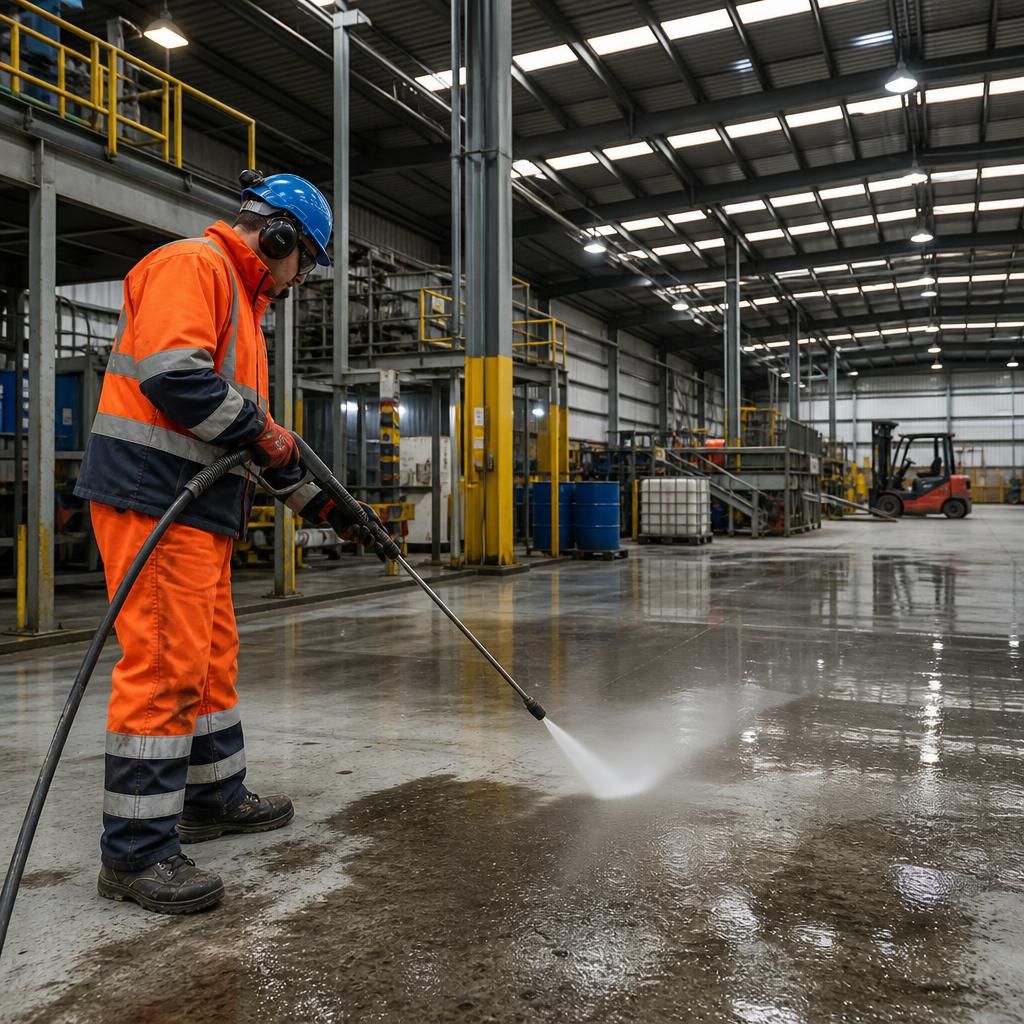
Factory and warehouse cleaning supports sustainability by controlling contamination before it spreads into drains, soil or general waste. Removing oil, dust, chemical residues and other deposits in a planned way helps reduce pollution risks while protecting floors, cladding, roofs and equipment from avoidable deterioration.
The cleaning method should match the material and contaminant. Dry removal or industrial vacuuming can be suitable for loose dust, while targeted steam cleaning may reduce chemical and water use for some residues. Where pressure washing is required, runoff should be contained and managed through an approved disposal route. Regular cleaning also helps identify leaks, damaged containers and overflowing waste areas early, allowing the underlying problem to be corrected rather than repeatedly treating the same contamination.