
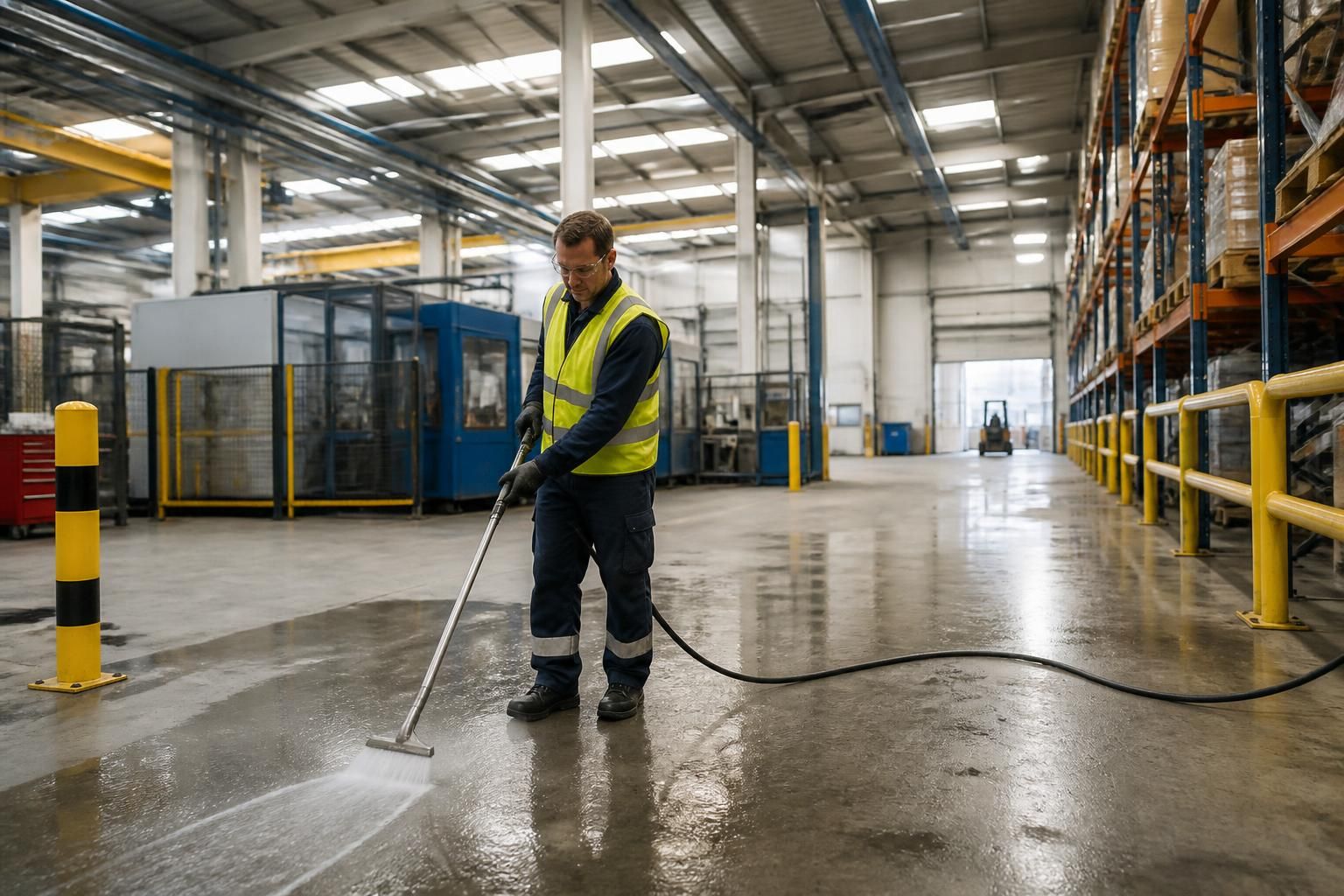
How can regular cleaning schedules impact the operational efficiency of my factory or warehouse?
Regular factory and warehouse cleaning schedules improve operational efficiency by reducing dust, debris, spillages and other hazards that can obstruct workflows, damage equipment or cause avoidable downtime. Planned cleaning also supports safer movement, more reliable machinery performance and consistent working conditions, allowing maintenance issues to be identified before they disrupt operations.
Regular factory and warehouse cleaning schedules improve operational efficiency by keeping work areas, access routes, equipment and building surfaces in a condition that supports safe, uninterrupted production and storage activity. Planned cleaning reduces the build-up of dust, debris, spillages, grease and waste that can obstruct movement, affect machinery, create handling risks or lead to avoidable downtime. It also makes cleaning more predictable, allowing work to be coordinated around shifts, deliveries, maintenance and production requirements.
Reducing avoidable downtime
Unplanned cleaning is often carried out only after a problem has affected operations. A blocked access route, contaminated loading area, slippery floor or build-up around machinery may require an immediate response, taking employees, equipment or production space out of use. A regular schedule addresses these conditions before they become operational interruptions.
Planned cleaning can also be coordinated with quieter periods, scheduled maintenance or planned shutdowns. This reduces disruption to production and allows more intensive work, such as pressure washing, steam cleaning or high-level cleaning, to be completed without interfering with normal warehouse traffic or manufacturing processes.
Supporting reliable machinery performance
Dust, fibres, powder, oil and other residues can accumulate around machinery, ventilation points, electrical housings, conveyors and moving components. Depending on the environment, this contamination may restrict airflow, affect sensors, increase wear or make faults harder to identify. It can also complicate maintenance by concealing leaks, damaged surfaces or loose components.
Routine cleaning does not replace servicing or engineering inspections, but it supports them. Clean equipment and surrounding areas make it easier for maintenance teams to spot changes in condition and complete their work efficiently. The appropriate method must be selected for each surface and process, particularly where water, steam or cleaning chemicals could affect sensitive equipment.
Improving the movement of people, goods and vehicles
Warehouse and factory efficiency depends on clear, usable routes. Debris in pedestrian walkways, residue on loading areas, waste around racking or contamination on vehicle routes can slow handling activity and increase the likelihood of trips, slips, collisions or product damage. Regular cleaning keeps these areas available for their intended purpose.
Particular attention should be given to entrances, loading bays, goods-in and goods-out areas, forklift routes, stairways, welfare areas and emergency access routes. Cleaning schedules should reflect how each area is used rather than applying the same frequency across the whole site. High-traffic or exposed areas may require more frequent attention than low-use storage zones.
Reducing workplace hazards
A consistent cleaning programme helps control common workplace hazards, including spillages, loose debris, excessive dust, slippery surfaces and obstructed access. This supports the site’s wider health and safety arrangements and helps maintain a more controlled working environment.
Cleaning should be integrated with spill response procedures, waste management, risk assessments and site inspections. Staff should know how to report contamination and which areas require immediate isolation while cleaning takes place. Professional contractors should also use suitable signage, barriers, personal protective equipment and access controls where the work presents a temporary risk.
Protecting stock, packaging and finished products
Dust and airborne particles can affect packaging, stored goods and production areas, particularly where products must be kept clean or protected from contamination. Moisture, dirt and residues can also damage pallets, storage surfaces and lower-level stock if they are allowed to accumulate.
Regular cleaning helps maintain suitable storage conditions and reduces the need to move or rework stock because of preventable contamination. Cleaning methods should be adapted to the products and processes on site. For example, dry removal may be more appropriate near moisture-sensitive materials, while controlled wet cleaning may be suitable for robust floors, external yards or heavily soiled areas.
Making routine maintenance more effective
Cleaning and maintenance are closely connected. A planned cleaning visit provides an opportunity to identify blocked drainage, damaged cladding, worn floor markings, deteriorating concrete, loose coverings, staining or signs of water ingress. Reporting these issues early gives the site team the opportunity to arrange repairs before they affect production, storage capacity or access.
Cleaning records can support this process by showing which areas were inspected, what work was completed and whether any defects were reported. Clear communication between the cleaning contractor, facilities team and operational managers is important, particularly where conditions change because of new equipment, altered production methods or increased site traffic.
Controlling cleaning-related disruption and cost
Reactive cleaning can require urgent labour, rapid changes to site operations or temporary restrictions on access. It may also result in heavier soiling that takes longer to remove. Regular maintenance cleaning generally keeps contamination at a more manageable level and allows resources to be planned in advance.
The most efficient schedule is not necessarily the one with the greatest cleaning frequency. It is the one that allocates the right method and level of attention to each area. A site may need frequent spot cleaning in production or loading zones, periodic machine-area cleaning, and less frequent deep cleaning for façades, roofs, high-level structures or external hardstanding. Reviewing the schedule after operational changes helps prevent both under-cleaning and unnecessary work.
How to structure an effective schedule
- Identify areas where contamination can directly affect safety, machinery, stock, product quality or vehicle movement.
- Separate routine tasks from periodic deep-cleaning requirements.
- Set cleaning windows around shifts, production runs, deliveries and maintenance activities.
- Specify the required method, equipment, access arrangements and precautions for each surface.
- Define who reports spillages, defects and changes in site conditions.
- Keep suitable records so completed work and outstanding issues can be reviewed.
- Review the programme when traffic levels, processes, equipment or storage arrangements change.
Assessing whether the schedule is working
Operational teams can review practical indicators rather than relying only on whether an area looks clean. Useful checks include recurring spillages, blocked routes, dust around machinery, complaints about working conditions, cleaning-related access restrictions, repeated contamination and defects identified during inspections. If the same problem appears repeatedly, the schedule, cleaning method or underlying process may need to be revised.
For factories and warehouses, regular cleaning is therefore an operational control rather than a purely cosmetic service. When it is planned around the site’s activities, it helps maintain safer routes, cleaner equipment surroundings, more reliable inspections and fewer avoidable interruptions. A site-specific programme should be adjusted as conditions change, with intensive cleaning arranged for areas where accumulated contamination has the greatest effect on efficiency.
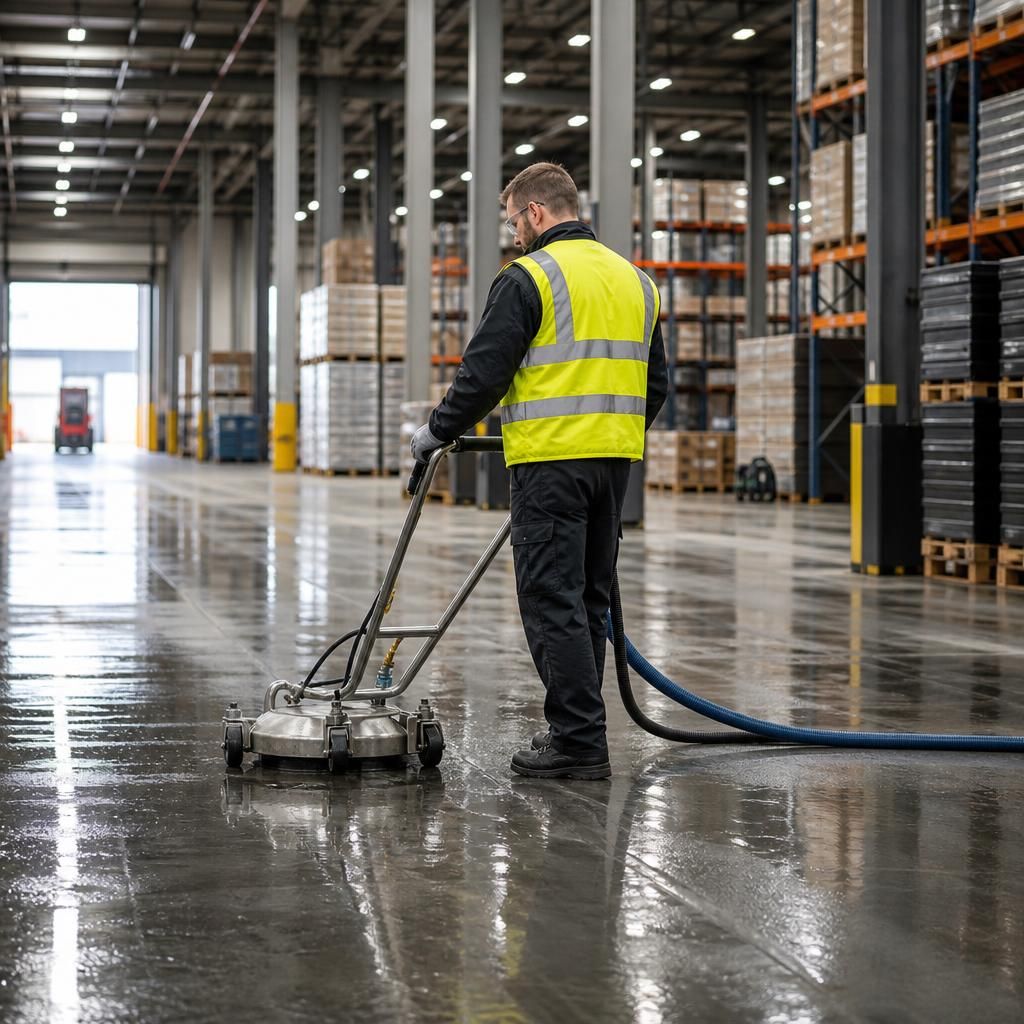
A planned cleaning schedule improves operational efficiency by fitting cleaning work around production, storage, deliveries and maintenance rather than reacting to problems during busy periods. Cleaning high-traffic areas, loading bays and machinery surroundings during suitable windows helps keep routes available and reduces avoidable interruptions.
The schedule should assign different frequencies and methods to different areas. Spill-prone production zones may need regular checks and prompt spot cleaning, while warehouse floors, external yards and high-level surfaces can be cleaned during planned maintenance periods. This approach prevents heavy contamination from building up without taking unnecessarily large areas out of use.
Cleaning records also help managers identify recurring issues, such as repeated spillages, blocked routes or dust accumulating around equipment. Where the same problem continues, the cleaning method, frequency or underlying site process can be reviewed before it affects safety, stock handling or machinery performance.