
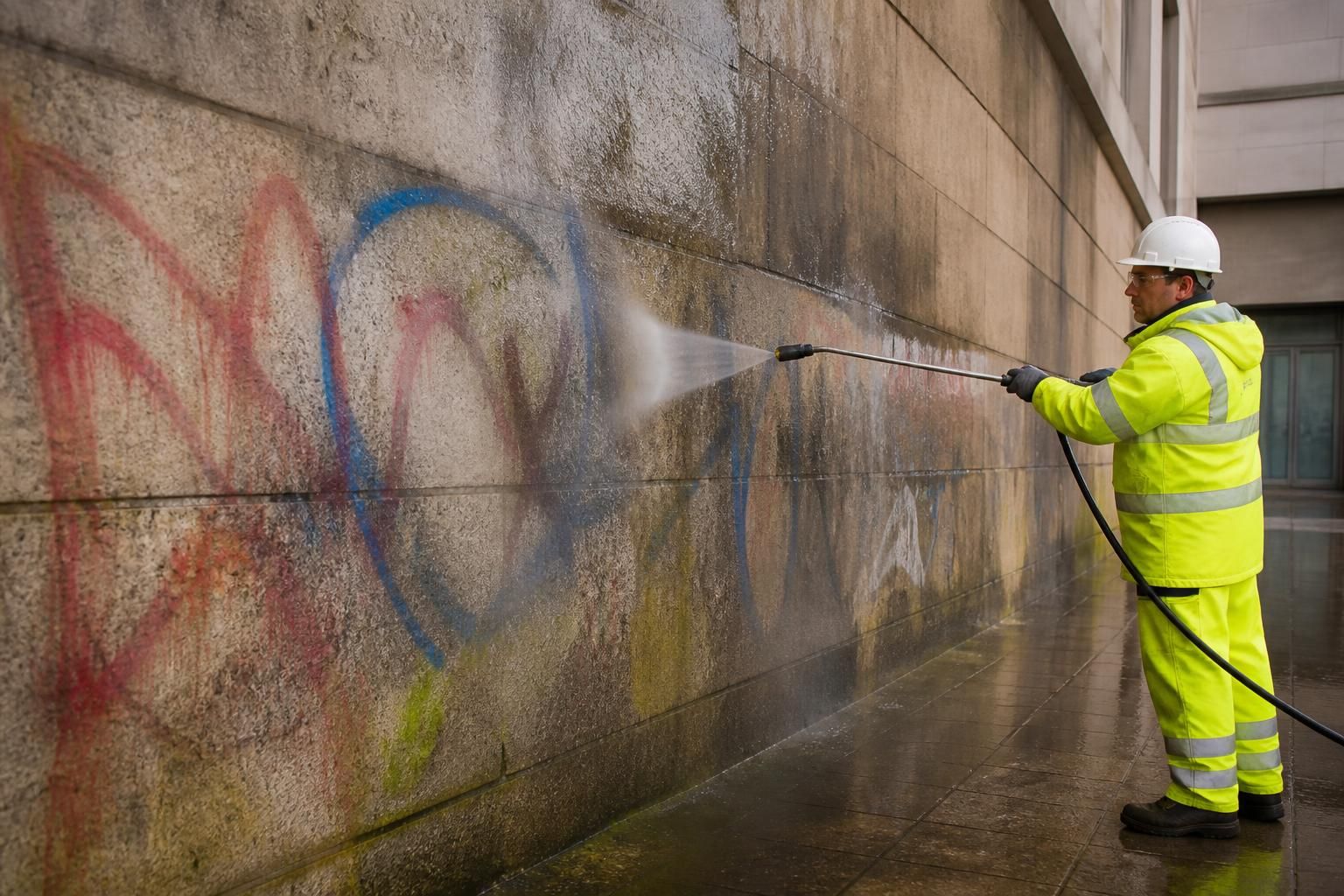
What types of surfaces can your graffiti removal methods safely treat?
Our graffiti removal methods can safely treat many common commercial surfaces, including brick, concrete, stone, render, paving, tarmac, glass, metal and external cladding. We assess the surface, coating and graffiti materials first, then select the safest combination of pressure washing, steam cleaning or specialist chemical treatment.
Professional graffiti removal can safely treat most common external building and infrastructure surfaces, including brick, concrete, natural stone, render, paving, tarmac, glass, metal and external cladding. The correct method depends on the surface’s porosity, condition, coating and age, as well as the type of paint, marker or adhesive involved. We assess these factors before selecting pressure washing, steam cleaning, specialist chemical treatment or a combination of methods.
Graffiti should not be treated as a simple paint-removal task. The same solvent, pressure level or temperature that works well on a robust concrete wall could mark a painted panel, open the surface of soft brick or damage a historic finish. Our approach is therefore based on controlled cleaning rather than applying the most aggressive treatment available.
Brickwork
Brick is commonly treated, but the safest method varies considerably between hard engineering brick, softer handmade brick, glazed brick and older weathered masonry. Porous brick can absorb paint, allowing pigments and solvents to penetrate below the surface. Excessive pressure may cause surface erosion, known as spalling, or remove the brick’s weathered face.
We may use low-pressure washing, steam cleaning or a suitable graffiti-removal product, depending on the brick and coating. Mortar joints require particular care because they can be softer than the surrounding brick. Cleaning is normally tested in an inconspicuous area first to confirm that the graffiti can be removed without creating a visible patch or damaging the jointing.
Concrete and exposed aggregate
Concrete is generally durable and suitable for controlled pressure washing, steam cleaning and chemical treatment. However, painted or sealed concrete, polished finishes and exposed aggregate need a more measured approach. High pressure can dislodge aggregate, leave lines or strip a protective coating. Oil-based paint and marker ink may also require different treatments from water-based paint.
Where graffiti has penetrated a porous concrete surface, complete removal may not always be possible without affecting the surface itself. In these cases, the objective is to remove the visible marking as far as safely practicable and, where appropriate, discuss a compatible coating or restoration finish.
Natural and manufactured stone
Granite, some types of sandstone, limestone, slate and manufactured stone can all be cleaned, but they do not respond in the same way. Harder stone may tolerate controlled pressure, whereas softer or weathered stone can scratch, etch or lose its surface texture. Acid-sensitive materials such as limestone and some other calcareous stones require particular caution with chemical products.
We identify the stone and inspect for cracks, open joints, previous repairs and existing sealants before treatment. Steam cleaning or a carefully selected product may be preferable to high-pressure cleaning on delicate stone. Historic masonry and carved details should be approached conservatively, with testing and, where necessary, specialist advice.
Render, painted walls and masonry coatings
Rendered and painted surfaces can often be treated, but the graffiti may have bonded to, or partly mixed with, the underlying coating. Pressure that is suitable for bare concrete may remove the paint beneath the graffiti, leaving a contrasting area. Chemical products can also soften decorative or protective coatings.
We check whether the render is sound, cracked, friable or already flaking. Loose material must not be forced back onto the wall during cleaning. If the original finish cannot be preserved without causing wider damage, repainting or localised restoration may provide a more consistent result than repeated aggressive cleaning.
Paving, slabs and tarmac
Block paving, concrete slabs and many other hard-landscaped surfaces are suitable for graffiti removal, subject to their condition and any existing sealant. Jointing sand, polymeric jointing and loose paving can be disturbed by high pressure, so the cleaning pattern and pressure are adjusted accordingly.
Tarmac and asphalt can usually be treated with controlled pressure, steam or a compatible graffiti remover. Strong solvents or excessive heat may soften the binder or affect the surface appearance. We also consider nearby kerbs, drainage channels and planted areas when treating graffiti on pavements, forecourts and car parks.
Glass, windows and glazed surfaces
Glass is non-porous, but it still requires careful treatment. Paint, marker and adhesive residue can often be removed using suitable chemical products and non-abrasive techniques. Abrasive pads, unsuitable blades or contaminated equipment may scratch the glass, while aggressive pressure can damage seals, adjacent frames or protective films.
Coated, tinted, patterned or laminated glass is assessed separately. The surrounding frame, silicone joints and signage are protected so that the removal process does not transfer paint or chemicals to adjoining materials.
Metal, shutters, signs and external cladding
Steel, aluminium and galvanised metal surfaces can generally be cleaned, but the condition of the metal and its coating is important. Powder-coated, painted, anodised and bare metal finishes each have different tolerances. Graffiti removers that are safe for one coating may dull, soften or discolour another.
External cladding, including coated metal panels and some composite systems, is treated with low-impact methods wherever possible. We inspect joints, edges, vents and fixings before cleaning, as water or chemical ingress can cause problems behind the panel. On signs and shutters, preserving lettering, printed graphics and protective finishes is also part of the assessment.
How we select a safe treatment
- We identify the substrate, surface finish and condition, including previous repairs, coatings, sealants and areas of deterioration.
- We assess the graffiti, such as spray paint, marker, bitumen, adhesive residue or layered paint, because each may need a different treatment.
- We consider the location and nearby features, including drainage, planting, vehicles, pedestrian routes and sensitive architectural details.
- We carry out a controlled test where practicable, checking cleaning performance, colour change, surface texture and any reaction with the coating.
- We use the lowest effective pressure, temperature and chemical strength rather than relying on force.
- We manage wash water, residues and surrounding areas in line with the site requirements and the nature of the treatment.
Some surfaces may be too fragile, unstable or heavily weathered for conventional graffiti removal without a risk of visible or structural damage. Where full removal would compromise the substrate, we explain the limitation and recommend the least damaging option, which may include partial removal, sympathetic overpainting, coating renewal or specialist restoration. This assessment-led process helps protect the original surface while achieving a clean, consistent result wherever the material allows.
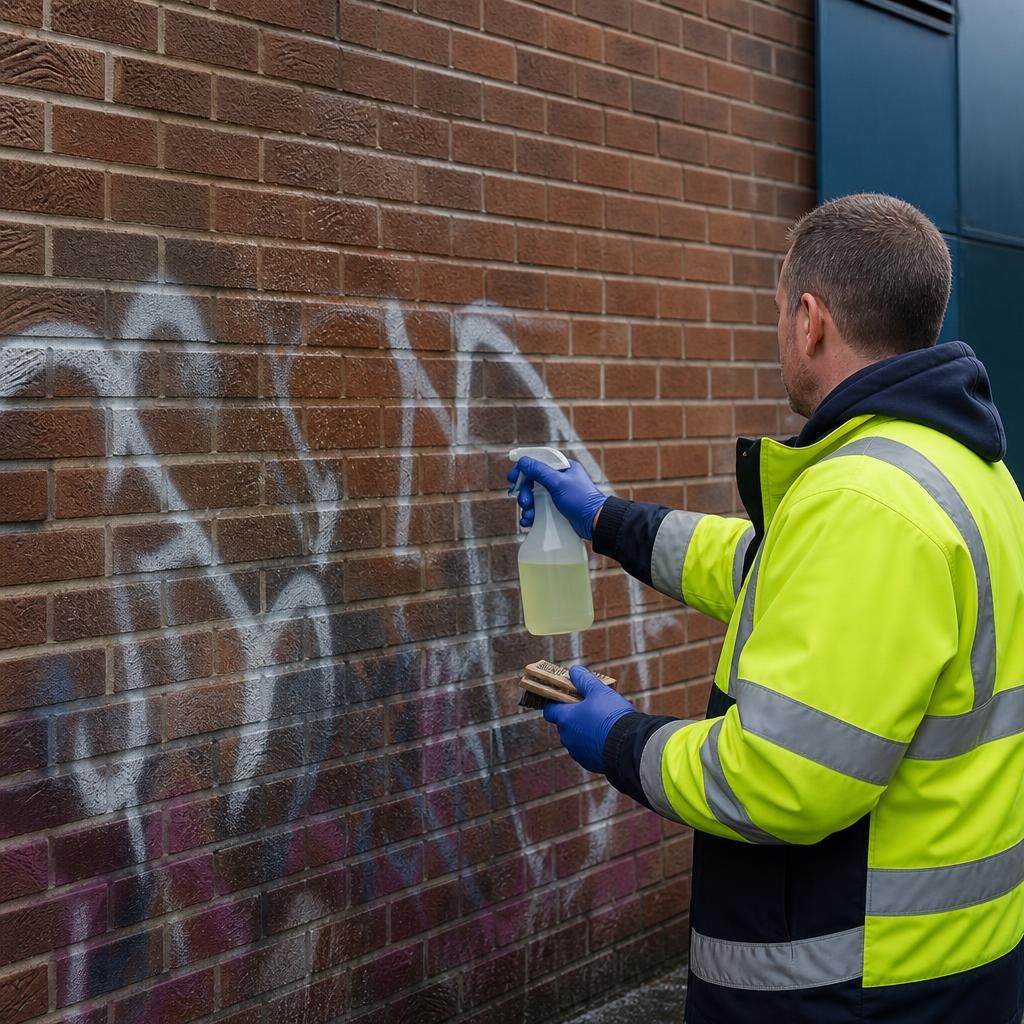
Safe graffiti removal depends on matching the cleaning method to the surface, its coating and its condition. Before treatment, we inspect the area and carry out a controlled test where practicable, checking whether the chosen pressure, steam or chemical product removes the marking without changing the surface texture, colour or finish.
This is particularly important on porous brick, soft stone, painted render, powder-coated cladding and older masonry. The test helps identify whether the graffiti has penetrated the substrate and confirms the lowest effective treatment. We also protect nearby glazing, joints, planting, drainage points and other materials that could be affected by water, residue or cleaning products.