
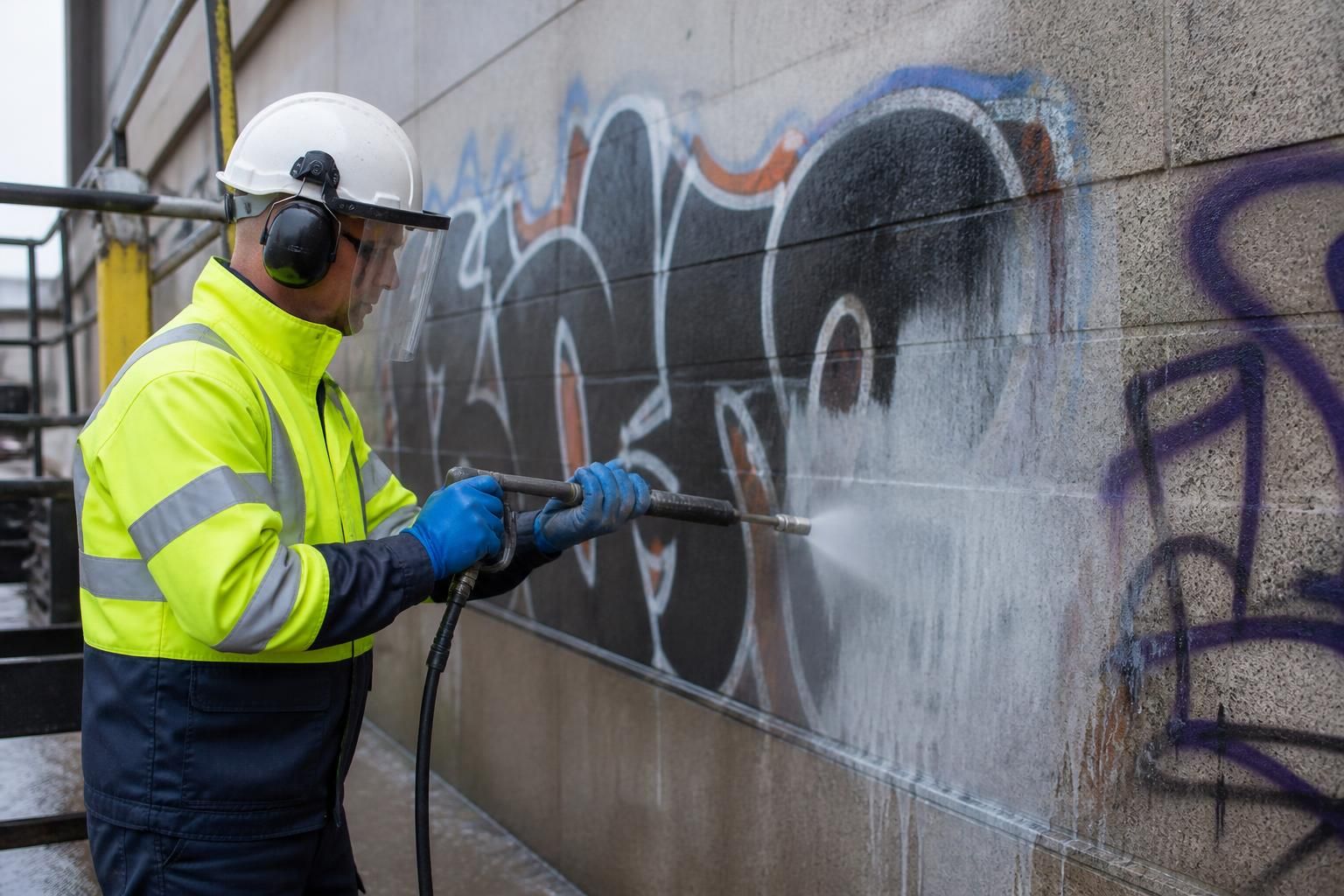
What safety measures do you implement during the graffiti removal process?
During graffiti removal, Encanto Exterior Cleaning protects people, property and surfaces through site risk assessments, controlled work zones, suitable PPE, safe access equipment and carefully selected cleaning methods. We also manage wastewater, protect nearby features and monitor the surface throughout the work to prevent avoidable damage.
Encanto Exterior Cleaning manages graffiti removal through a documented site risk assessment, controlled work areas, suitable personal protective equipment, safe access equipment and carefully selected cleaning methods. Before work begins, we identify hazards to people, surrounding property and the treated surface, then apply controls to prevent injury, contamination and avoidable damage.
Site assessment and method planning
We inspect the graffiti, substrate and surrounding area before selecting a removal technique. The assessment considers the type of paint or marker, the age and condition of the graffiti, the porosity and stability of the surface, nearby electrical equipment, traffic, pedestrians, drainage and sensitive environmental features. Where appropriate, we carry out a small test clean in an inconspicuous area to confirm that the chosen chemical, steam or pressure-washing method is suitable.
Our working method is planned around the specific site rather than applying the same treatment everywhere. Pressure, temperature, dwell time and cleaning products are controlled to reduce the risk of stripping coatings, opening porous masonry, damaging joints or forcing water into the building fabric. Fragile, historic or previously repaired surfaces receive additional consideration and may require a gentler process or specialist advice.
Risk assessments and safe systems of work
Before starting, we establish the work sequence, access requirements, exclusion arrangements, equipment controls and emergency procedures. Relevant product information and COSHH requirements are considered when detergents, graffiti removers or other substances are used. Operatives follow the agreed safe system of work and review conditions if the site, weather or scope changes.
We also check for hazards such as unstable masonry, overhead services, restricted access, vehicle movements, slips, trips and exposure to wash water or cleaning products. Work is paused if conditions become unsafe or if the surface reacts differently from the test area.
Controlled work zones
The work area is segregated where there is a risk to pedestrians, staff, residents or passing traffic. Barriers, cones, warning signs and, where necessary, a banksman or additional site controls help keep unauthorised people away from spray, falling debris, equipment and wet surfaces. We coordinate with the client where cleaning takes place near entrances, public areas, loading bays, roads or operational premises.
Where overspray or run-off could affect vehicles, windows, signage, plants or neighbouring surfaces, these features are protected before cleaning starts. Doors, vents and other vulnerable openings may be covered or isolated, while nearby equipment is shielded from water and cleaning products.
Personal protective equipment
Operatives use PPE appropriate to the task and the products involved. This can include eye or face protection, gloves, protective clothing, suitable footwear and hearing protection when equipment creates elevated noise. Respiratory protection is considered where the risk assessment identifies exposure to vapour, mist, dust or chemical products.
PPE is not used as a substitute for other controls. We combine it with low-risk application methods, ventilation, careful product handling and controlled spray techniques. Equipment is checked before use and replaced if it is damaged or no longer provides suitable protection.
Safe use of pressure, steam and chemicals
Pressure-washing equipment is operated at a setting appropriate to the substrate and kept under control to limit splashback, overspray and surface erosion. Operatives maintain a safe stance and avoid directing water towards people, unprotected electrical components, joints, vents or openings. Hoses and power cables are routed to reduce trip hazards.
Steam cleaning is controlled by adjusting the application to the surface and the type of marking. When chemical products are required, we select a product suitable for the substrate, follow the manufacturer’s instructions and prevent unnecessary contact with surrounding materials. Products are not mixed unless the instructions specifically permit it. Containers remain labelled, securely closed when not in use and handled in accordance with the relevant safety information.
Access equipment and working at height
We select access equipment according to the height, reach, ground conditions and layout of the site. Access equipment is checked before use and positioned on suitable ground with the necessary exclusion zone below. Operatives use the required fall-prevention or fall-protection measures and do not improvise with unstable platforms, ladders or temporary supports.
Weather conditions are monitored during external work. High winds, rain, ice, poor visibility or other conditions that could affect stability, chemical performance or public safety may require the work to be adjusted or postponed.
Protection of the building and surrounding features
Surface protection is part of the safety process. We monitor the substrate throughout cleaning for changes in colour, texture, coating, pointing or moisture behaviour. Pressure and chemical exposure are reduced or stopped if there is evidence of a reaction that could compromise the finish or underlying material.
Windows, doors, vents, roof coverings, landscaping, public artwork, signs and sensitive architectural details are protected where needed. Particular care is taken around historic masonry, soft brick, friable stone, painted finishes and repaired areas, as these may not tolerate the same treatment as sound modern surfaces.
Wastewater, residues and environmental controls
Run-off is controlled so that paint residues, cleaning products and contaminated water do not enter surface-water drains, soil or planted areas. We use suitable collection, containment or filtration measures where site conditions require them, and dispose of collected residues through the appropriate waste route. Cleaning methods are selected with consideration for nearby watercourses, vegetation, wildlife and drainage infrastructure.
We also prevent chemical containers, absorbent materials and contaminated debris from being left on site. Any accidental spill is contained promptly using the appropriate procedure, with the client informed where the incident could affect the property or surrounding environment.
Completion checks
After removal, we inspect the cleaned area and surrounding work zone for remaining residues, damage, trip hazards, standing water and displaced protective coverings. Surfaces are rinsed or neutralised where the selected product requires it, and the area is left in a condition suitable for safe use. Access controls remain in place until the surface is safe and sufficiently dry.
If the graffiti cannot be removed without an unacceptable risk to the substrate, we explain the limitation and recommend the safest practical option, which may include a gentler treatment, a specialist repair or a finish compatible with the existing surface. This approach ensures that removal work protects people first while preserving the condition and appearance of the property.
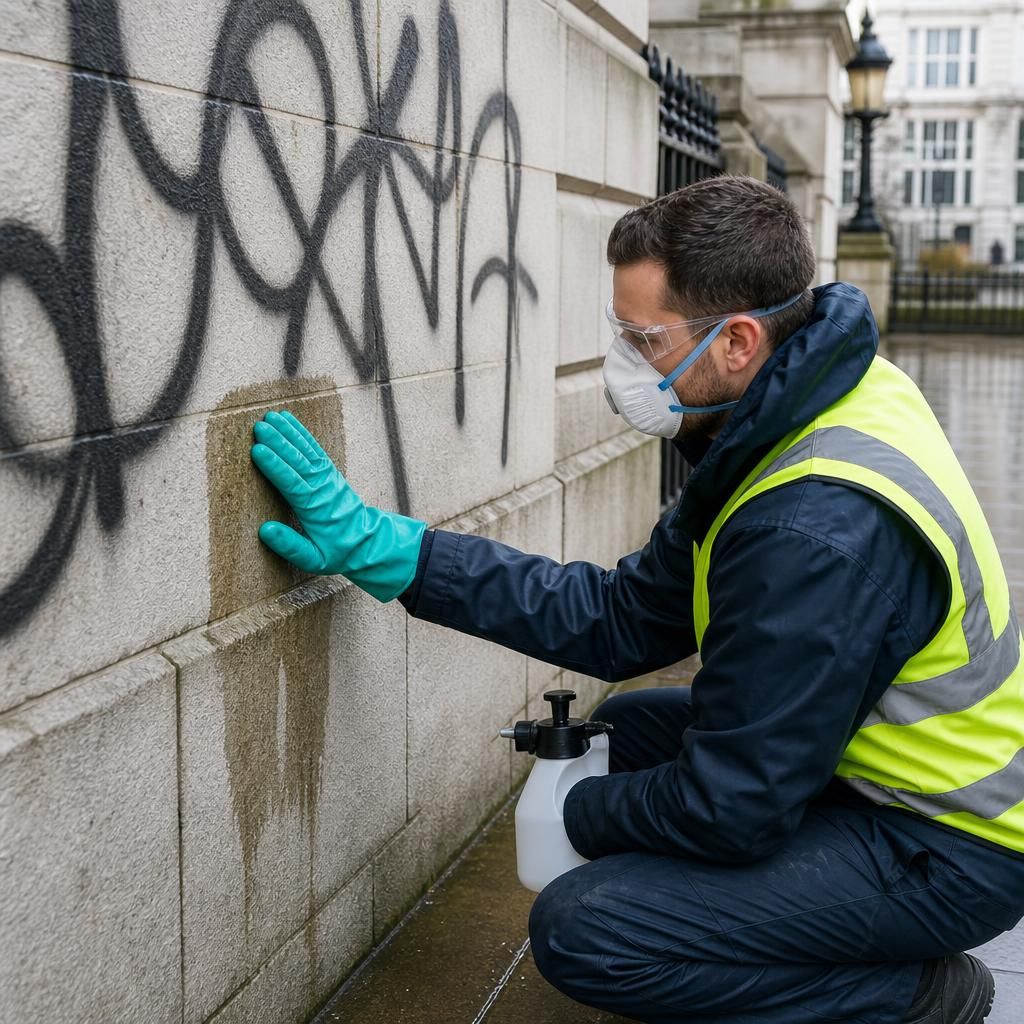
A key graffiti removal safety measure is testing the chosen cleaning method on an inconspicuous section before treating the full area. This confirms whether the pressure, steam temperature or cleaning product is suitable for the surface and helps identify risks such as colour change, coating loss, surface erosion or damage to pointing.
We assess the test area after cleaning and adjust the method where necessary. Fragile brick, stone, painted finishes, historic masonry and repaired surfaces may require lower pressure, shorter chemical dwell times or a gentler alternative. If graffiti cannot be removed without an unacceptable risk to the substrate, we explain the limitation and recommend the safest practical treatment.
Arrange a site assessment for safe graffiti removal
Arrange a site assessment with Encanto Exterior Cleaning to identify hazards, confirm the safest removal method and protect the surrounding property. Contact our team to discuss your graffiti removal requirements across Birmingham, the West Midlands or the wider UK.