
What measures are taken to prevent damage to environmental features during graffiti removal?
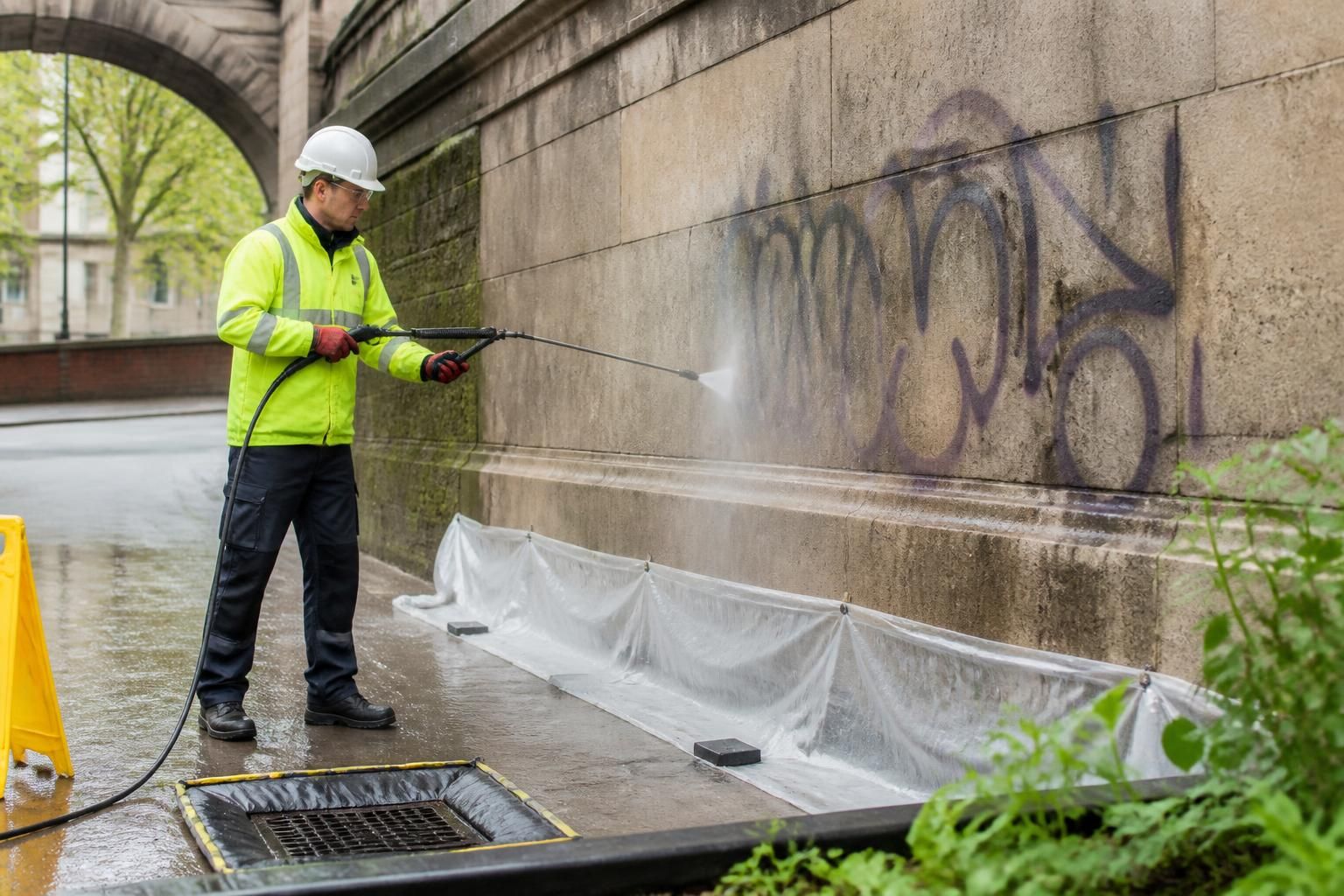
We prevent damage to environmental features during graffiti removal by assessing nearby trees, plants, soil, drains and watercourses before work begins, then selecting the least aggressive effective cleaning method. We use controlled application, protective sheeting and drain protection, contain wash water and residues, and monitor the area throughout the removal process to prevent contamination or physical damage.
We prevent damage to environmental features during graffiti removal by surveying the area first, selecting the least aggressive effective treatment, and controlling water, chemicals and access equipment throughout the work. This protects nearby trees, planting, soil, drains, watercourses, wildlife habitats and adjacent surfaces while allowing the graffiti to be removed safely.
Site assessment before cleaning
Before work begins, we inspect the graffiti, the surface beneath it and the surrounding environment. This includes identifying trees, shrubs, planted beds, exposed soil, drainage points, ponds, streams and other water-sensitive features. We also consider the condition of paving, walls, coatings and street furniture that could be affected by pressure, heat, water or cleaning products.
The findings are used to prepare the work method and determine whether additional controls are needed. If a site contains particularly sensitive planting, open water or vulnerable building materials, the cleaning approach is adapted before any product or equipment is used.
Using the least aggressive effective method
Graffiti removal is not approached with the same treatment on every surface. We select the lowest pressure, temperature and chemical strength that can remove the specific paint, ink or marker without unnecessarily affecting the substrate or surrounding features. Where suitable, controlled steam cleaning or a carefully selected graffiti remover may reduce the need for high-pressure washing.
Cleaning products are applied only where required, rather than being sprayed across a broad area. We control the dwell time, prevent products from running into planting or drainage channels, and remove residues in accordance with the product instructions and site requirements. Small test areas are used where the surface or nearby environment is sensitive, so the treatment can be assessed before wider cleaning takes place.
Protecting trees, plants and soil
Plants and trees are protected from direct contact with cleaning chemicals, hot water and pressurised spray. Depending on the site, this can involve temporary sheeting, splash guards, absorbent materials or physical barriers around planting beds and exposed roots. Coverings are used carefully so that foliage is not crushed and plants are not left enclosed for longer than necessary.
We avoid placing hoses, ladders or access equipment on planted areas and take care around tree roots, low branches and fragile landscaping. If wind could carry spray or vapour towards vegetation, work is adjusted or paused. Any accidental contact is dealt with promptly using the appropriate response for the product involved.
Preventing contamination of drains and watercourses
Drain covers, drain mats, bunding or other suitable barriers are used where there is a risk of wash water entering surface-water drainage. Wash water is contained, collected or redirected to an approved disposal point rather than being allowed to flow into a river, stream, pond or unprotected drain. This is particularly important where the removed graffiti contains solvent-based paint, heavy pigments or other contaminants.
We identify the drainage arrangements before cleaning and do not assume that every nearby drain leads to a foul-water system. Where discharge is permitted, it must follow the relevant site arrangements and environmental requirements. Otherwise, contaminated water and collected residues are retained for appropriate disposal. Solids such as paint flakes, wipes and used absorbent materials are also gathered rather than left in the environment.
Controlling spray, runoff and equipment
Operators keep the nozzle directed at the graffiti and use controlled passes to minimise overspray and runoff. Pressure, temperature, nozzle selection and working distance are adjusted to suit the surface and conditions. This reduces the risk of dislodging coatings, damaging masonry or carrying paint residues beyond the treatment area.
Hoses and equipment are positioned to avoid damaging borders, irrigation systems and landscaped areas. Access equipment is selected and set up on stable ground, away from sensitive planting and drainage routes wherever practicable. Barriers and warning signs help keep other people, vehicles and animals clear of the work zone.
Considering wildlife and sensitive site conditions
We take account of wildlife, nesting activity and other environmental sensitivities identified during the site assessment. If cleaning could disturb an active nest, habitat or protected feature, the work is reviewed with the responsible site contact and may need to be rescheduled or controlled differently. Weather conditions are also monitored because heavy rain, strong wind or freezing temperatures can increase runoff, spray drift or surface damage.
Inspection and final checks
The work area is monitored during cleaning, not just inspected afterwards. We check for unexpected runoff, spray drift, chemical movement, surface deterioration and contact with planting or other environmental features. Controls are strengthened immediately if conditions change.
Once the graffiti has been removed, we inspect surrounding surfaces, drains, vegetation and ground conditions. Protective materials are removed, collected residues are secured and the area is left free of avoidable contamination. Where a site has specific environmental procedures, permits or reporting requirements, these are followed as part of the agreed cleaning method.
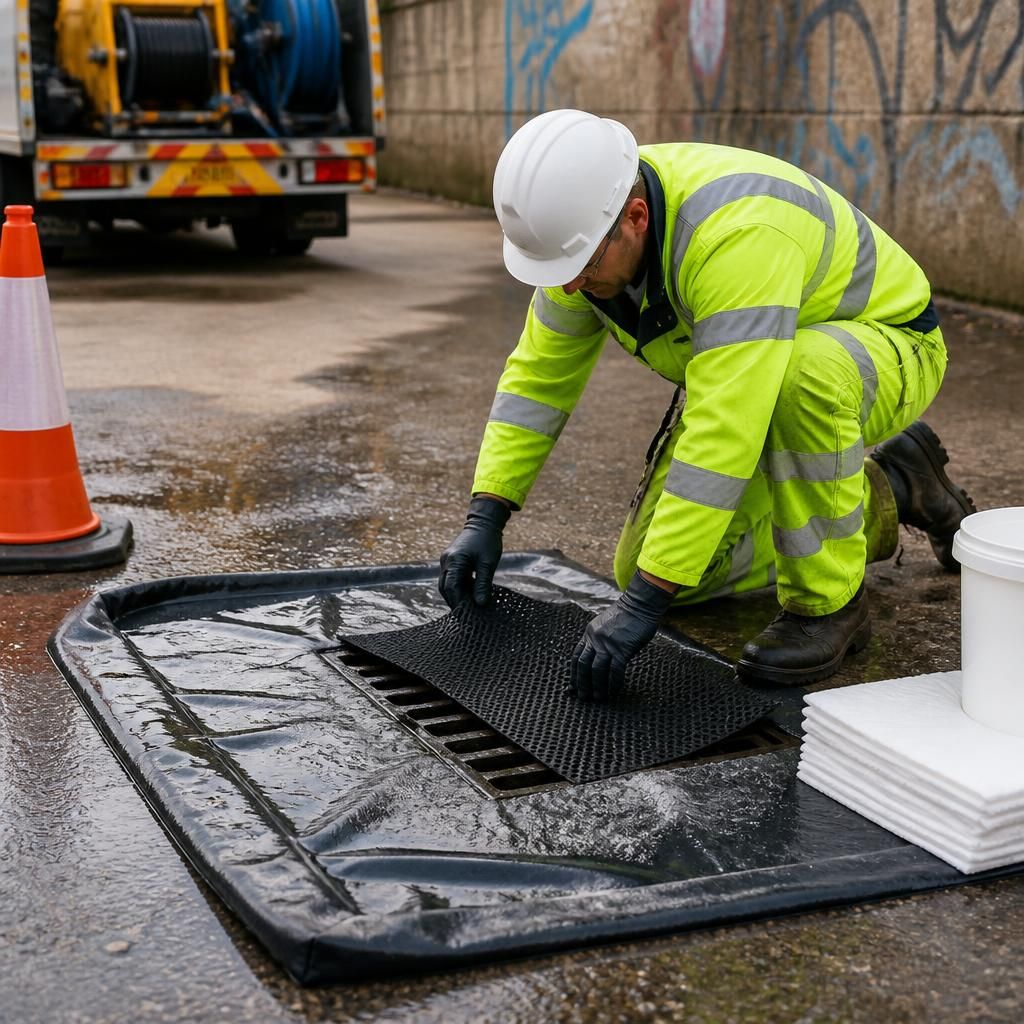
Protecting drains and watercourses is a key part of environmentally responsible graffiti removal. Before cleaning starts, we identify nearby surface-water drains, channels, ponds and streams, then use drain mats, covers, absorbent materials or temporary bunding where needed to prevent contaminated wash water and paint residues from entering them.
Runoff is contained, collected or redirected in line with the site’s drainage arrangements and environmental requirements. Paint flakes, used wipes and contaminated absorbents are also collected rather than left on the ground. This control is especially important when removing solvent-based paint, heavy pigments or other residues that could harm aquatic environments.
Arrange an environmentally responsible graffiti removal assessment
Contact us to arrange an environmentally responsible graffiti removal assessment. We will review the affected surface, nearby environmental features and drainage arrangements before recommending suitable controls and cleaning methods.