
What challenges might arise during the graffiti removal process on historic or delicate surfaces?
Graffiti removal from historic or delicate surfaces can risk removing original finishes, eroding soft materials, driving paint deeper into porous substrates or causing staining if the cleaning method is too aggressive. Specialist assessment, small-scale testing and carefully controlled pressure, steam or chemical treatment are therefore needed to protect the surface while removing the graffiti.
Graffiti removal from historic or delicate surfaces is challenging because the cleaning process must remove the paint without removing original fabric, weathered finishes or protective patina. A method that is suitable for modern concrete or robust brick may erode soft stone, disturb lime mortar, drive pigment further into a porous substrate or leave a visible cleaning patch on a historic façade.
The main challenges include:
- Fragile or weathered materials: Sandstone, limestone, soft brick, terracotta, render and aged mortar can have weakened surfaces. Excessive pressure, heat or abrasion may cause pitting, surface loss, spalling or loss of carved detail.
- Porosity and paint penetration: Graffiti can soak into unsealed stone, brick and render. Removing the surface film may not remove pigment held below the surface, while aggressive treatment can spread or drive the staining deeper.
- Unknown coatings and previous repairs: Historic surfaces may have limewash, protective coatings, old paint layers or localised repairs. These materials can react differently to cleaning products, making it difficult to treat the graffiti without affecting the surrounding finish.
- Incompatible graffiti materials: Aerosol paint, marker ink, adhesive residue and bitumen-based products each respond differently to cleaning. Solvents or alkaline products that work on one marking may soften an underlying coating, cause bleeding or create a halo on another surface.
- Delicate architectural features: Mouldings, lettering, joints, sculptures, carved stone and decorative details can trap cleaning residues and are more vulnerable to physical damage. Narrow recesses may also require controlled, low-impact techniques rather than broad pressure washing.
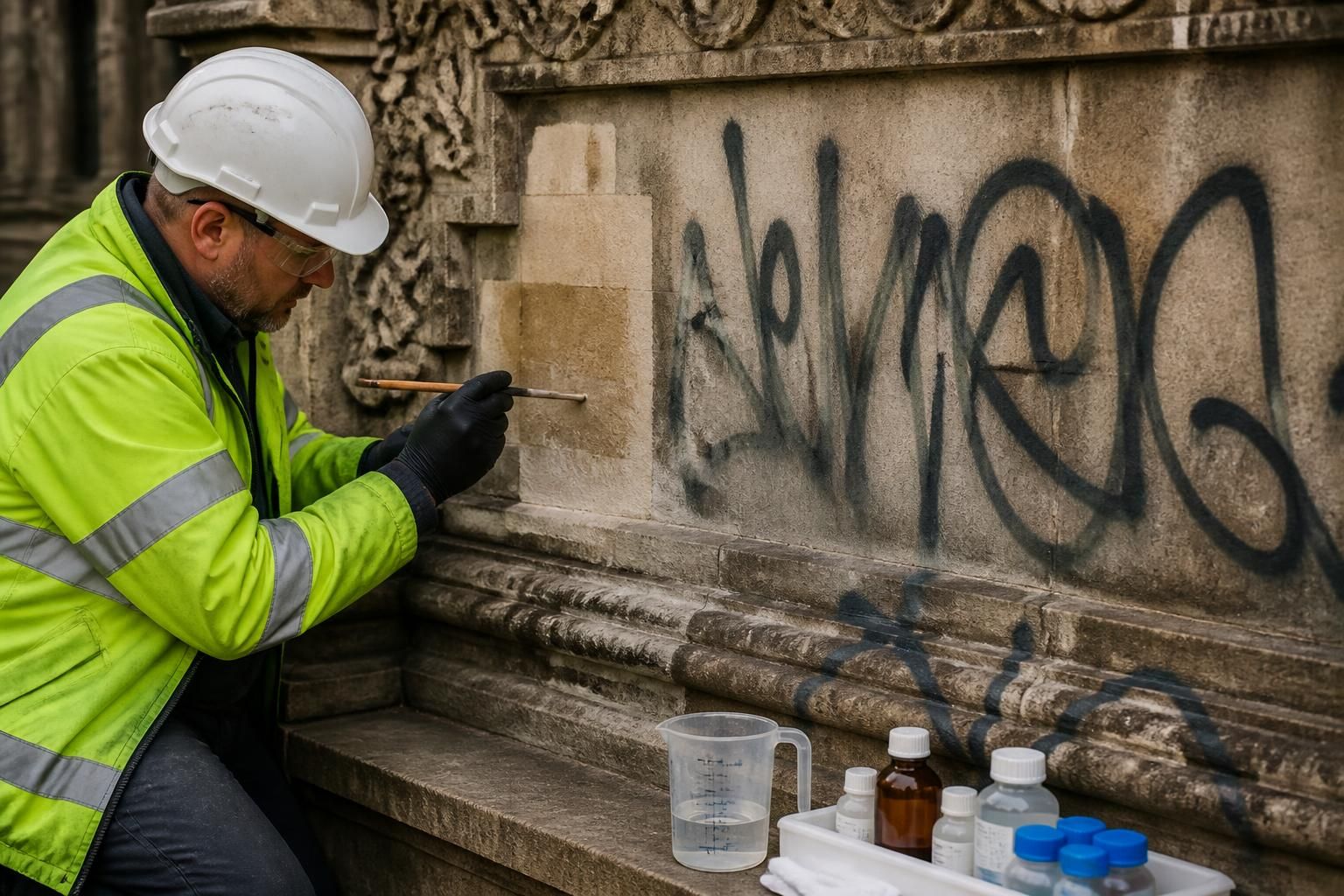
- Uneven weathering: Historic façades rarely weather uniformly. Cleaning only the affected area can reveal a difference between the treated section and the surrounding surface, particularly where the façade has darkened naturally or developed an established patina.
- Water and residue management: Water, dissolved paint and cleaning products can migrate into joints, adjacent materials or drainage systems. Run-off must be controlled so that contaminants do not spread across the building or enter surface-water drainage.
- Access and public safety: Historic structures are often located in busy streets, courtyards or restricted areas. Working around pedestrians, traffic, overhead services and fragile access points requires suitable access equipment, exclusion zones and careful control of hoses, cables and residue.
Before treatment, the surface should be assessed rather than treated solely by appearance. This involves identifying the substrate, checking its condition, considering whether the building or feature has conservation requirements, and examining the type of graffiti and any existing coatings. Previous cleaning damage, loose material, open joints and signs of damp are important because they can affect the safest method.
A small test area is then used to compare controlled approaches. Testing may involve low-pressure water, steam, a compatible specialist cleaning product or another carefully selected technique. The purpose is not simply to find the fastest removal method; it is to establish whether the graffiti can be removed without altering the texture, colour, profile or protective finish of the underlying surface. The test area should be reviewed after cleaning and drying, as staining and colour differences are not always apparent while the material is wet.
Pressure, temperature, dwell time, nozzle selection and the distance from the surface all need to be controlled. On vulnerable substrates, the least aggressive effective method is normally preferred. Chemical treatments must be selected for the particular graffiti and substrate, applied only where appropriate, and removed thoroughly so that residues do not continue reacting with the material. Abrasive blasting is unsuitable for many historic or delicate surfaces because it can remove original material along with the graffiti.
Complete removal is not always the safest objective. If paint has penetrated deeply, attempting to eliminate every trace may cause more damage than carefully reducing its visibility. In such cases, the practical decision is based on the condition and significance of the surface, the extent of the remaining mark and the risk associated with further treatment. Where a structure is listed or has conservation significance, advice from the relevant conservation professional or authority may also be required before work begins.
During the work, surrounding areas should be protected and run-off collected or directed to an approved disposal route where necessary. Operators should work in manageable sections, regularly inspect the cleaned surface and stop if unexpected colour change, softness, delamination or other deterioration appears. Photographic records and notes from testing help establish what was applied and provide a useful reference for future maintenance.
Historic and delicate surfaces therefore require a conservation-led approach rather than standard graffiti removal. Careful assessment, localised testing, controlled application and appropriate residue management reduce the risk of permanent damage while achieving the best practicable finish. Regular inspections and prompt treatment of new graffiti can also reduce the time contaminants remain on the surface and limit the need for more intensive cleaning later.
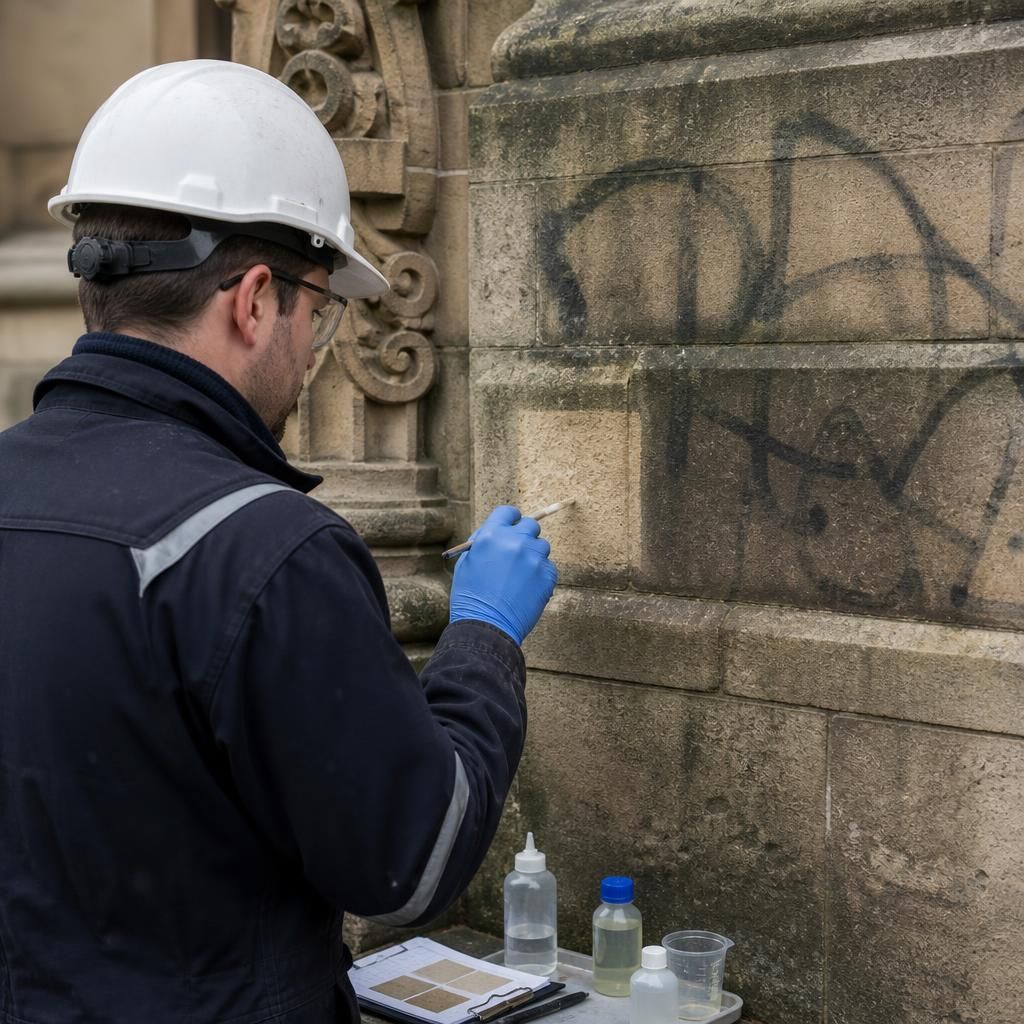
Small-scale testing is essential when removing graffiti from historic or delicate surfaces because it shows whether a cleaning method will affect the substrate, original finish or surrounding patina. A controlled test can compare low-pressure water, steam or a compatible cleaning product before treatment begins across the wider area.
The test area should be inspected after the surface has dried, as changes in colour, staining or texture may not be visible while it is wet. If the graffiti cannot be removed without risking permanent damage, reducing its visibility may be safer than pursuing complete removal. Listed buildings and significant architectural features may also require conservation advice before work proceeds.
Arrange a specialist assessment for historic surface graffiti removal
Arrange a specialist assessment before graffiti removal begins on any historic, listed or delicate surface. Encanto Exterior Cleaning can evaluate the substrate, identify suitable treatment options and carry out controlled testing to reduce the risk of permanent damage.