
What are the most effective methods for removing graffiti from brick surfaces?
The most effective methods for removing graffiti from brick surfaces are low-pressure washing, steam cleaning and carefully selected graffiti-removal treatments, chosen according to the brick’s porosity, age and the paint or marker used. A professional should test a small area first, then remove the residue without forcing paint deeper into the brick or damaging the mortar.
The most effective methods for removing graffiti from brick surfaces are controlled low-pressure washing, steam cleaning and carefully selected graffiti-removal products. The correct choice depends on the brick’s porosity, age and condition, the type of paint or marker, the condition of the mortar, and how long the graffiti has been present. Professional removal starts with a small test area so the method can be confirmed without spreading the coating, opening the brick face or damaging the joints.
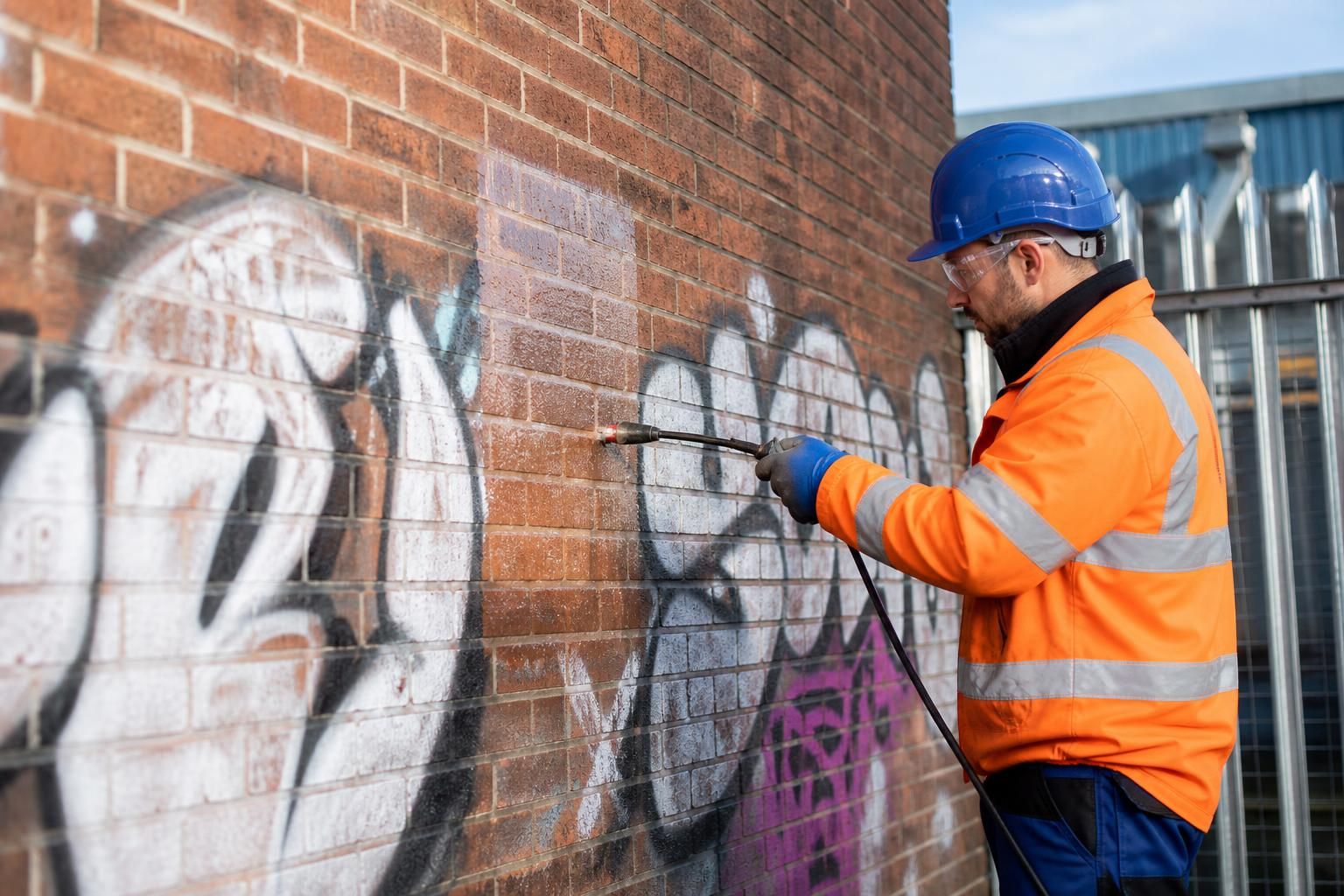
Low-pressure washing is suitable for many sound brick façades, boundary walls and other robust masonry surfaces. Water pressure is kept as low as practical, with the operator using the correct nozzle, distance and angle rather than relying on force alone. This helps lift softened paint and cleaning residues from the brick while reducing the risk of surface erosion, mortar loss and water being driven into the wall.
Pressure washing is often combined with a biodegradable or masonry-compatible cleaning treatment. The product is applied for the required dwell time, allowing it to break down the paint before the surface is rinsed carefully. It must be selected for the coating being removed: aerosol paint, gloss paint, emulsion, permanent marker and bitumen-based materials do not all respond to the same treatment. Using a stronger product than necessary can leave staining, affect the brick’s colour or weaken the mortar.
Steam cleaning is particularly useful where the brick is older, highly porous, detailed or vulnerable to aggressive pressure. Heated water and controlled steam can soften paint and marker residues so they can be removed with limited mechanical action. This approach is often preferable for listed, historic or visually sensitive masonry, although the temperature and exposure time still need to be controlled. Excessive heat or repeated treatment may affect friable brick, aged pointing or previous coatings.
Steam cleaning can also be effective where paint has penetrated shallow pores or where chemical use needs to be limited. It is not automatically suitable for every wall: the condition of the brick, mortar and any adjacent materials must be assessed before work begins. Electrical fittings, timber, glazing and other sensitive features should be protected from heat and moisture.
Specialist graffiti-removal treatments are used when water and steam alone cannot remove the coating. These may include water-based, solvent-based or gel products formulated for particular paint types. A gel can be helpful on vertical brickwork because it stays in contact with the graffiti instead of running immediately onto surrounding areas. The treated residue is then removed using a controlled rinse or other appropriate technique.
Product selection is important on porous brick. Some solvents can carry pigment deeper into the masonry, while unsuitable alkaline or acidic products may alter the brick or mortar. The operator should follow the product’s safety and dwell-time instructions, prevent the treatment from drying on the surface, and use suitable containment for the resulting wash water and dissolved paint.
Light mechanical methods may be considered for isolated deposits or stubborn remnants, but they should not be the first choice on exposed brick. Abrasive blasting, aggressive wire brushing and hard scraping can remove the fired face of the brick, leave visible scarring and expose a more absorbent surface. Where an abrasive method is unavoidable, the abrasive type, pressure and working distance must be tightly controlled and tested in an inconspicuous area first. On historic or soft brick, a gentler chemical or steam-led process is generally safer.
A typical professional process includes:
- Inspecting the brick, mortar, pointing, coatings and nearby materials for weaknesses or previous repairs.
- Identifying the likely graffiti medium and considering whether the paint has already weathered or penetrated the surface.
- Checking for environmental risks, drainage routes, public access and features that need protection.
- Testing the proposed method on a small, discreet section and allowing the result to be assessed after drying.
- Applying the least aggressive effective treatment, usually working from the edges of the graffiti towards the centre to reduce spread.
- Rinsing or removing residues in a controlled manner and preventing contaminated water from entering surface drains or sensitive ground.
- Inspecting the brick after cleaning and addressing any remaining shadowing or staining with a revised, more targeted treatment.
It is important to distinguish between removing the raised paint and removing the remaining “ghost” image. Pigments can migrate into porous brick, particularly when graffiti has weathered, been repeatedly painted over or been removed using an unsuitable product. Further treatment may reduce this shadowing, but forcing the brick to look uniformly new can cause more damage than leaving a faint, stable residue. The finish should therefore be judged against the condition and character of the surrounding masonry.
Mortar joints require particular care. They are often softer and more absorbent than the brick itself, so a setting that appears safe on the brick face may still erode pointing. Damaged or loose mortar should be recorded before cleaning, and the method adjusted to avoid widening joints or removing sound material. If pointing is already failing, cleaning and repair may need to be planned as separate stages.
After removal, the wall should be allowed to dry before any protective treatment is considered. A breathable anti-graffiti coating may help future cleaning on suitable commercial brickwork, but it is not appropriate for every building. The coating must be compatible with the masonry, visually acceptable and applied only to a clean, sound and sufficiently dry surface. On historic or traditionally constructed walls, breathability and reversibility are especially important.
For recurring incidents, prompt removal is usually easier than allowing paint to weather and bond more firmly with the brick. A planned maintenance arrangement can include routine inspections, priority response and a record of the products and techniques used on each elevation. This helps maintain a consistent appearance and avoids repeatedly applying incompatible treatments to the same masonry.
Brick graffiti removal should therefore be treated as a surface-conservation task rather than simply a pressure-washing exercise. At Encanto Exterior Cleaning, the method can be matched to the brick and coating through inspection and test cleaning, using pressure washing, steam cleaning or specialist treatments only where they are suitable. This approach removes graffiti effectively while protecting the brick face, mortar joints, surrounding property and drainage environment.
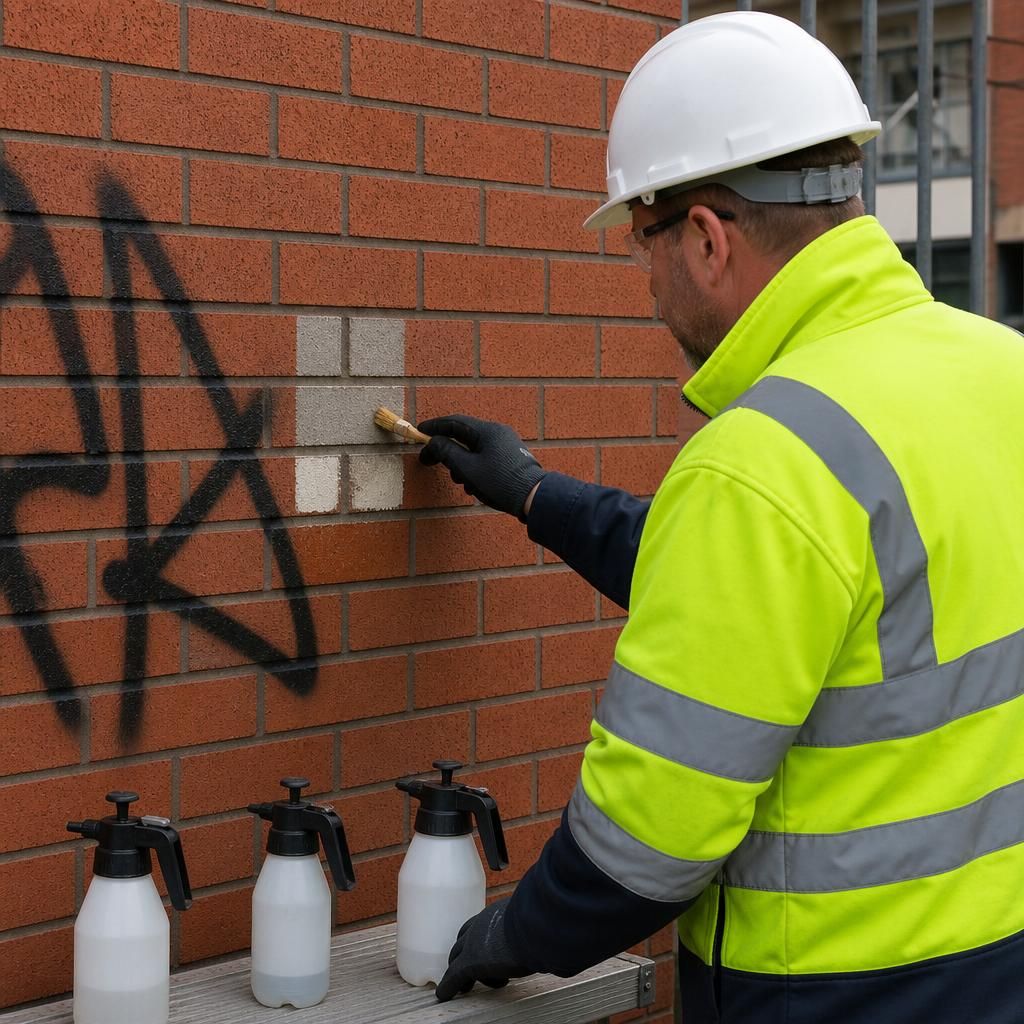
Testing a small, inconspicuous area is one of the most important steps when removing graffiti from brick. It shows how the masonry, mortar and graffiti coating respond before the chosen treatment is used across the full wall.
A professional may compare low-pressure washing, steam cleaning or a compatible graffiti-removal product during the test. The method that removes the coating with the least effect on the brick face and pointing should then be applied carefully, with contaminated rinse water controlled and sensitive nearby features protected.