
What are the environmental impacts of the graffiti removal methods used?
Graffiti removal can affect the environment through chemical residues, contaminated runoff, water consumption, energy use and waste from removed paint. The impact is reduced by selecting the least aggressive effective method, containing and treating wastewater, limiting chemical use, and collecting paint debris for responsible disposal.
The environmental impact of graffiti removal depends on the method used, the coating being removed, the surface beneath it and how wastewater and waste materials are controlled. Chemical residues, contaminated runoff, water consumption, energy use, airborne particles and removed paint can all create environmental risks. These risks are reduced by assessing the site first, choosing the least aggressive effective method, containing the work area and disposing of residues through appropriate waste channels.
Graffiti removal is not a single process. A solvent-based paint marker on smooth metal may require a different treatment from aerosol paint on porous brick, and a delicate historic façade may need a gentler approach than a modern concrete wall. Selecting the wrong method can increase cleaning time, water use and chemical consumption, while also causing unnecessary damage to the surface.
Chemical graffiti removers
Chemical removers can be effective against spray paint, marker ink and other coatings, but their environmental impact depends on their formulation, quantity and application. Some products contain solvents, alkaline compounds or other substances that can irritate people, harm aquatic life or contaminate soil if they enter surface water or drainage systems. Even products described as biodegradable should not be allowed to run uncontrolled into drains, as biodegradability does not mean that a substance is harmless at the point of discharge.
Chemicals can also create secondary waste. Used absorbent materials, contaminated sludge and containers may need to be handled as controlled or hazardous waste, depending on their composition. Applying excessive product increases the volume of residue without necessarily improving the result. A more responsible approach is to identify the paint and substrate, test a small area, apply only the required amount and use mechanical or low-chemical methods where they can achieve the same outcome.
Pressure washing and water consumption
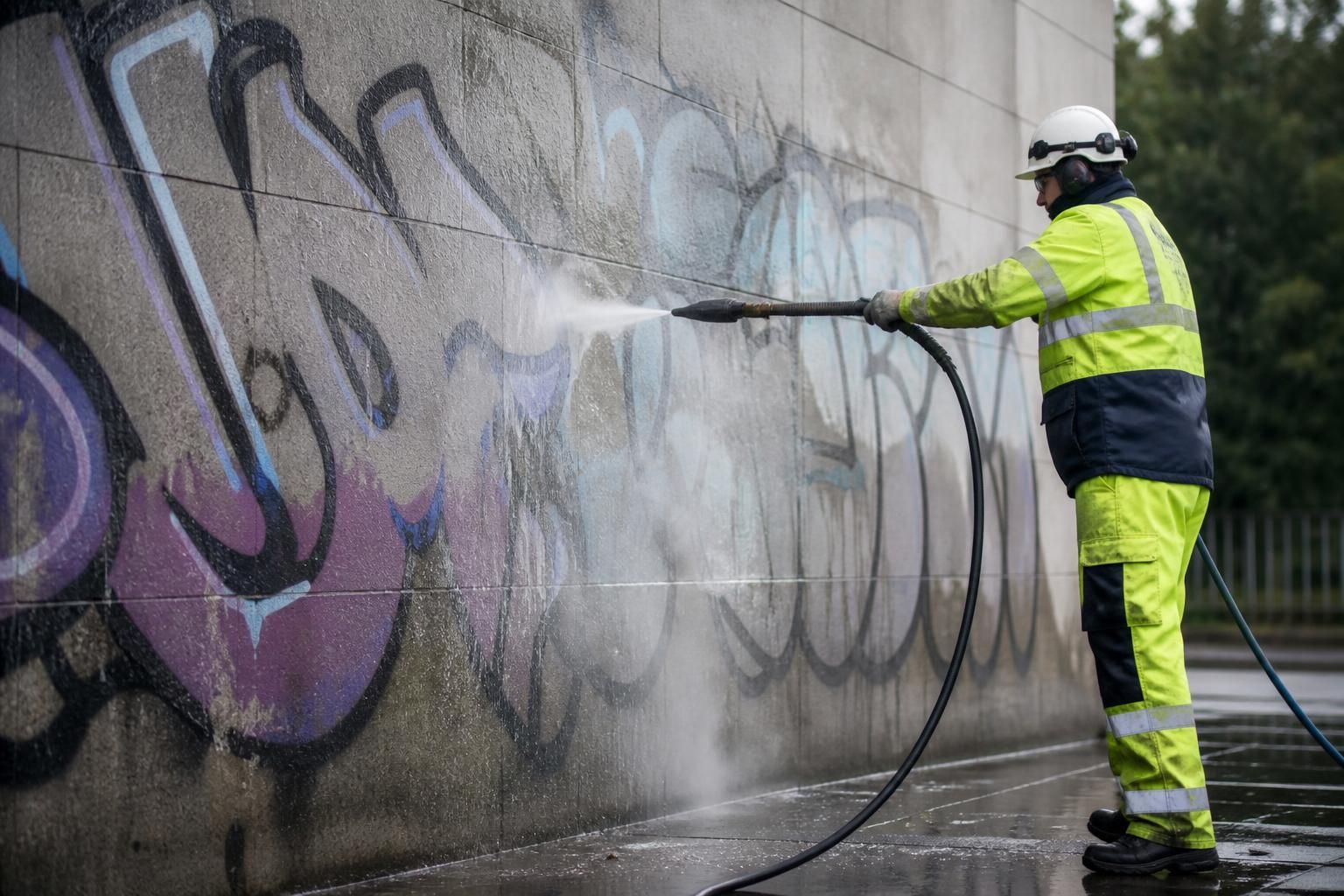
Pressure washing can remove graffiti efficiently from suitable surfaces, but it may use substantial amounts of water and can spread paint particles, detergent and dissolved contaminants beyond the treatment area. High pressure may also drive residues into porous brick, mortar or paving, making later cleaning more difficult. On damaged or friable surfaces, it can remove parts of the substrate rather than just the graffiti.
Water use and runoff are managed by matching the pressure and flow to the surface, pre-treating only where necessary and avoiding unnecessary repeated passes. Drain covers, bunding, temporary barriers, wet vacuums and other recovery equipment can help prevent contaminated water from entering surface-water drains. Recovered water should be assessed and managed appropriately rather than released without consideration of its contents. Where local requirements or the site risk assessment call for it, wastewater may need collection and disposal by an authorised waste contractor.
Steam and low-pressure cleaning
Steam cleaning generally uses heat to soften or break down the graffiti, which can reduce reliance on strong chemicals. It may also use less water than conventional high-flow pressure washing, although the overall environmental benefit depends on the equipment, the duration of the work and the energy source. Steam equipment still produces wastewater and loosened paint residues, so containment and recovery remain necessary.
Low-pressure cleaning can be appropriate for fragile masonry, painted surfaces and other areas where aggressive water jets would cause damage. Reducing substrate damage is an environmental benefit because it avoids unnecessary repair materials, replacement work and repeat cleaning. However, low pressure does not automatically make a method environmentally harmless; detergents, solvents and residues still need to be controlled.
Abrasive cleaning and paint removal
Abrasive techniques can remove graffiti from robust materials, but they generate dust and spent abrasive media. Airborne particles may affect workers, nearby occupants and vegetation, while the waste may contain paint pigments, binders, metals or contaminants from the surface. Abrasion can also remove the face of brick, alter the texture of stone or expose the substrate to weathering.
Where abrasive cleaning is considered, the method should be tested carefully and selected for the substrate. Dust suppression, suitable containment and appropriate respiratory and protective equipment help control exposure. Spent media and paint debris should be collected rather than swept into drains, soil or adjacent planting beds. On sensitive surfaces, a less abrasive process is normally preferable if it can remove the graffiti without damaging the underlying material.
Runoff, drainage and nearby environmental features
The most immediate environmental risk on many graffiti removal projects is uncontrolled runoff. Contaminated water can reach surface-water drains, streams, ponds, planted areas or neighbouring property. This is particularly important near waterways, conservation areas, soft landscaping and sites where drainage systems are separate from foul-water systems.
Before work starts, the team should identify drains, watercourses, slopes, gullies, planted areas and vulnerable surfaces. The work area can then be isolated, and suitable protection and recovery measures put in place. Cleaning should be paused if conditions make containment unreliable, such as heavy rain or strong wind. Any accidental release should be reported and dealt with promptly in accordance with the site procedure and applicable requirements.
Air quality, noise and energy use
Some removal processes create airborne vapours, mist or dust. Solvent vapours can affect air quality, while high-pressure equipment and abrasive systems may create spray or particles that travel beyond the immediate work area. Noise from pumps, generators and pressure equipment can also affect building users, neighbours and wildlife.
These impacts can be limited by selecting a lower-emission method where suitable, improving ventilation, restricting access, using dust or mist suppression and scheduling noisy work responsibly. Equipment that is well maintained and correctly adjusted is less likely to waste water or energy. The energy impact of a method includes heating water, operating pumps and transporting equipment and waste, so the most sustainable option is the one that achieves the required result with the least overall resource use, rather than simply the method that uses the least water.
Paint fragments and other waste
Removed graffiti becomes waste whether it is collected as dry flakes, wet sludge, contaminated cloths, spent abrasive or used chemical containers. The waste may contain pigments, binders and residues from the original surface. It should not be left on pavements, placed in general litter bins or washed into drainage systems.
Waste should be kept contained, separated where practical and stored securely during the work. Its classification depends on what it contains and the relevant waste requirements. Disposal should be arranged through an appropriate authorised route, with documentation retained where required. Empty containers and packaging should also be managed responsibly rather than treated as harmless simply because the product has been used.
How environmental responsibility is applied during a project
- Inspect the graffiti, substrate, surrounding drainage and nearby environmental features before choosing a method.
- Carry out a controlled test patch to confirm that the selected process removes the coating without excessive chemical use, water use or surface loss.
- Use the least aggressive effective combination of heat, pressure, agitation and chemical treatment.
- Apply chemicals precisely and avoid overspray, over-application and unnecessary dwell time.
- Protect drains, soil, planting, watercourses and adjacent property from spray, dust and runoff.
- Recover contaminated water and solid residues wherever practicable, and arrange disposal through suitable waste channels.
- Control vapours, dust and noise through site segregation, ventilation, suppression and appropriate working arrangements.
- Record the products and methods used so that future maintenance can be planned with fewer repeat treatments and less waste.
Preventive maintenance can further reduce environmental impact. Prompt removal often means the paint has had less time to penetrate the surface, allowing a gentler treatment and reducing the need for repeated passes or stronger products. Protective coatings may also make future graffiti easier to remove, but they must be suitable for the substrate and applied without trapping moisture or changing the appearance of the façade.
No graffiti removal method is entirely without environmental impact. The appropriate objective is to control the risks proportionately: avoid unnecessary chemicals and aggressive equipment, prevent contaminated water and debris from escaping, protect the underlying surface and use responsible waste arrangements. A site-specific assessment allows the cleaning method to be chosen on the basis of both removal performance and its wider environmental consequences.
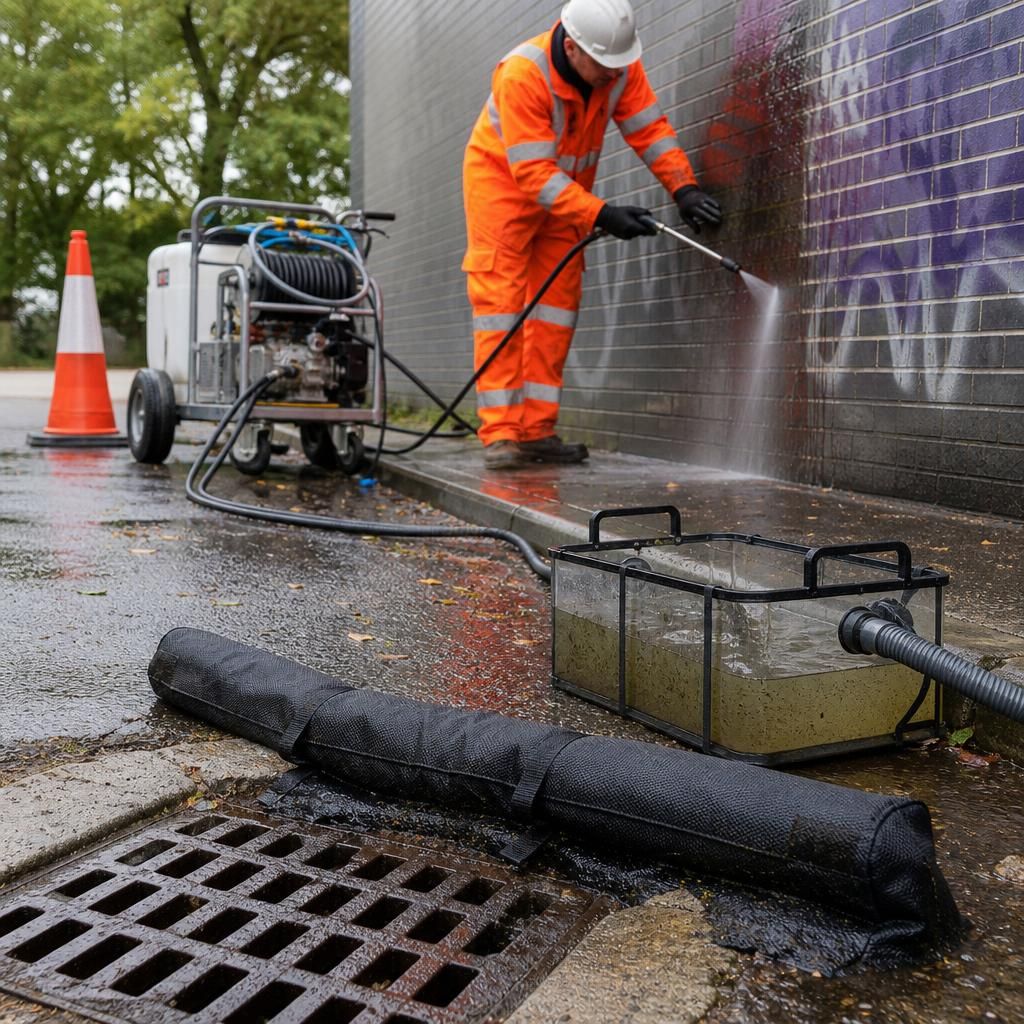
The main environmental risk during graffiti removal is uncontrolled runoff carrying paint particles, chemical residues and dissolved contaminants into drains, soil or nearby watercourses. Containing this wastewater is therefore as important as selecting the cleaning method.
Before work begins, drains and vulnerable areas should be identified and protected with suitable covers, barriers or bunding. Wastewater and loosened paint can then be recovered using appropriate collection equipment, while solid residues, cloths and used absorbents are kept contained for responsible disposal. Cleaning should be paused if rain or site conditions make containment unreliable.
Discuss environmentally responsible graffiti removal
Discuss your next graffiti removal project with our team so we can assess the surface, drainage risks and most environmentally responsible cleaning method. We can also advise on containment, wastewater recovery and ongoing maintenance requirements.