
What safety measures should be implemented during industrial graffiti removal?
Industrial graffiti removal should be controlled through a site-specific risk assessment, suitable PPE, safe access equipment, controlled work areas and methods that protect nearby people, surfaces and drainage systems. Operatives should also manage chemical handling, dust and runoff, use appropriate waste-disposal procedures, and inspect the area before reopening it to workers or the public.
Industrial graffiti removal should be carried out under a site-specific risk assessment and method statement, with controls for people, access equipment, chemicals, pressure, waste and surface protection. Before work starts, the removal team should inspect the location, identify hazards, agree the working method with the client and prevent unauthorised access to the area.
Complete a site-specific risk assessment
The assessment should consider the substrate, graffiti medium, height and location of the markings, nearby activities, weather, drainage, electrical equipment, traffic routes and the presence of workers, visitors or members of the public. It should identify hazards associated with pressure washing, steam cleaning, chemical products, dust, falling materials and work at height.
A written method statement should then set out the equipment, cleaning products, sequence of work, exclusion arrangements, environmental controls, emergency procedures and inspection requirements. Where conditions change, such as increased wind, rain, poor visibility or unexpected surface damage, the work should be paused and the controls reviewed.
Use trained operatives and appropriate supervision
Industrial graffiti removal should be undertaken by operatives who are competent to use the selected pressure-washing, steam-cleaning, chemical-handling and access equipment. They should understand the risks of the particular substrate and know how to respond to chemical splashes, equipment failure, damaged surfaces and accidental exposure.
Equipment should be checked before use, maintained in accordance with the manufacturer’s instructions and removed from service if hoses, couplings, electrical leads, guards or safety controls are damaged. Operators should not bypass protective devices or use a product or machine outside its intended application.
Control access and protect the public
The work area should be clearly identified and physically segregated where there is a risk of contact with people, spray, debris, cleaning products or moving equipment. Barriers, cones, warning signs and a banksman may be needed, particularly around entrances, car parks, footways, loading bays and vehicle routes.
Pedestrians and site traffic should be diverted safely rather than expected to pass through the work zone. Doors, windows, air intakes and ventilation openings close to the cleaning area may need to be protected or temporarily closed. The team should coordinate the work with the site manager so that deliveries, contractors and normal operations do not conflict with the cleaning activity.
Provide safe access for work at height
Graffiti on façades, gantries, tanks, bridges and other elevated structures should be accessed using suitable equipment selected for the location and task. This may include towers, mobile elevating work platforms, scaffold systems or other approved access arrangements. Ladders should not be used as a substitute for a proper working platform where the task requires prolonged work, force, both hands or heavy equipment.
Access equipment should be positioned on suitable ground, inspected and operated by trained personnel. Where a harness is required, it must be correctly fitted, attached to an appropriate anchor point and supported by a rescue plan. Tools, hoses and components should be secured to prevent them falling onto people or property below. Work at height should be postponed when wind or other weather conditions make the equipment or cleaning method unsafe.
Wear task-specific personal protective equipment
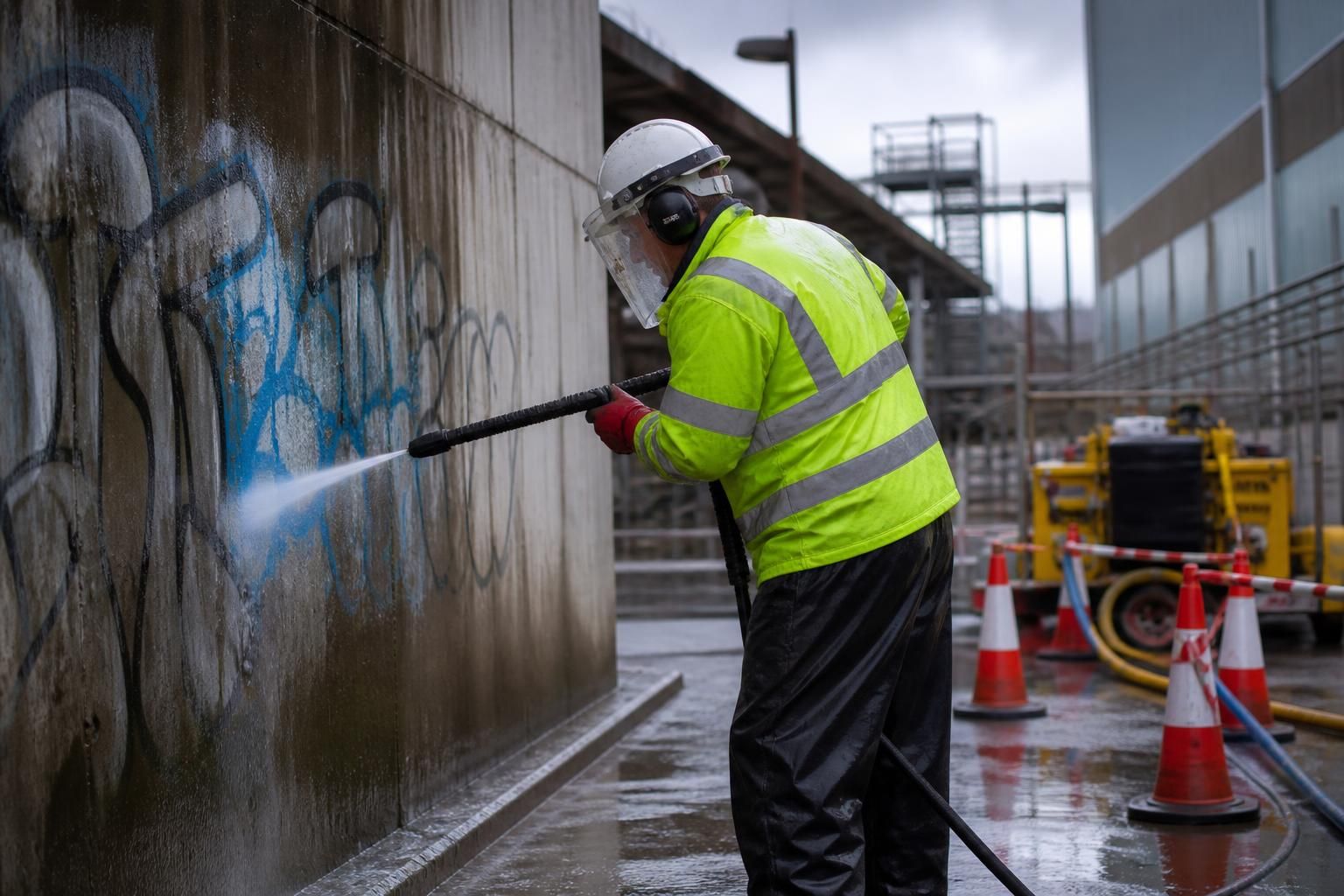
PPE should be selected after other controls have been considered and should match the hazards identified in the assessment. Depending on the method, this may include protective gloves, safety footwear, eye or face protection, suitable coveralls, hearing protection, head protection and respiratory protective equipment.
Eye and face protection is particularly important when using pressurised water, steam or chemical products, as splashes and particles can cause serious injury. Respiratory protection may be required where the process creates hazardous vapour, mist or dust, but it must be suitable for the contaminant and properly managed. PPE should be inspected, cleaned, stored and replaced when damaged or contaminated.
Manage chemicals in line with COSHH requirements
Before a chemical graffiti remover is used, the team should check its safety data sheet and complete a Control of Substances Hazardous to Health assessment. The assessment should cover storage, dilution, application, contact time, ventilation, PPE, incompatibilities, spill response and disposal.
Products should remain in correctly labelled containers and should never be mixed unless the manufacturer specifically permits it. Operatives should use the lowest effective concentration and apply the product in a way that limits mist, splashing and unnecessary contact. Suitable eyewash and clean water should be readily available, and contaminated clothing should be removed promptly if exposure occurs.
Control pressure, steam, dust and falling debris
Pressure-washing equipment should be set to a pressure and flow suitable for both the graffiti and the substrate. The operator should maintain a stable stance, control hose movement and keep the lance directed away from people, electrical installations, glazing and vulnerable finishes. Hoses should be routed to prevent trip hazards, crushing and damage from vehicles.
Steam cleaning can cause burns even after the equipment has been switched off, so hot surfaces, hoses and discharge points should be treated as hazardous. Dry brushing, abrasive methods and some coatings can generate dust or fragments; where appropriate, the method should be changed or local suppression, extraction and respiratory controls should be introduced. Loose masonry, coating flakes and other debris should be removed or secured before cleaning begins.
Protect the substrate and nearby assets
A test area should be cleaned in an inconspicuous location to confirm that the method will not etch masonry, strip protective coatings, damage cladding, mark glazing or alter the colour and texture of the surface. The test should assess pressure, temperature, chemical strength, dwell time and rinsing requirements.
Nearby signs, sealants, electrical components, door hardware, vehicles, landscaping and drainage fittings should be covered or isolated where necessary. Operatives should stop if the substrate becomes friable, delaminates or shows unexpected staining. Removing graffiti safely may require a gentler method, additional specialist advice or a separate repair programme rather than more aggressive cleaning.
Prevent contaminated water and waste entering the environment
Runoff should be contained, collected or directed to an approved disposal route in accordance with the site’s drainage arrangements and applicable environmental requirements. Before cleaning, drains should be identified and protected where contaminated water could enter surface-water systems or watercourses. Bunds, drain covers, wet vacuums, collection tanks or other controls may be appropriate, depending on the location and volume of runoff.
Wastewater, used absorbents, contaminated wipes, chemical containers and removed coating residue should be handled as controlled waste where applicable. They should not be left on site, discharged without authorisation or mixed with incompatible materials. Spill kits should be available, and any spill should be contained, reported and disposed of using the agreed procedure.
Plan for emergencies
The team should know how to respond to a chemical splash, burn, eye injury, fall, electric shock, hose failure, spill or sudden equipment malfunction. Emergency contact details, first-aid arrangements, access for emergency services and the location of eyewash, fire equipment and spill materials should be confirmed before starting.
Any incident, near miss or unexpected exposure should be reported to the responsible site contact and recorded. Work should not resume until the cause has been addressed and the risk assessment or method statement has been reviewed where necessary.
Inspect and safely reopen the area
At the end of the job, the supervisor should confirm that graffiti residue, chemical traces, standing water, debris, barriers and temporary protections have been dealt with. The cleaned surface should be inspected for damage or remaining contamination, while walkways should be checked for slip hazards and access equipment should be removed safely.
The area should remain restricted until surfaces are safe to touch and use, runoff has been controlled, equipment and waste have been removed, and any required ventilation or drying period has been completed. The client should receive details of the work completed, products used where relevant, defects identified and any recommendations for protective coatings, repairs or future maintenance.
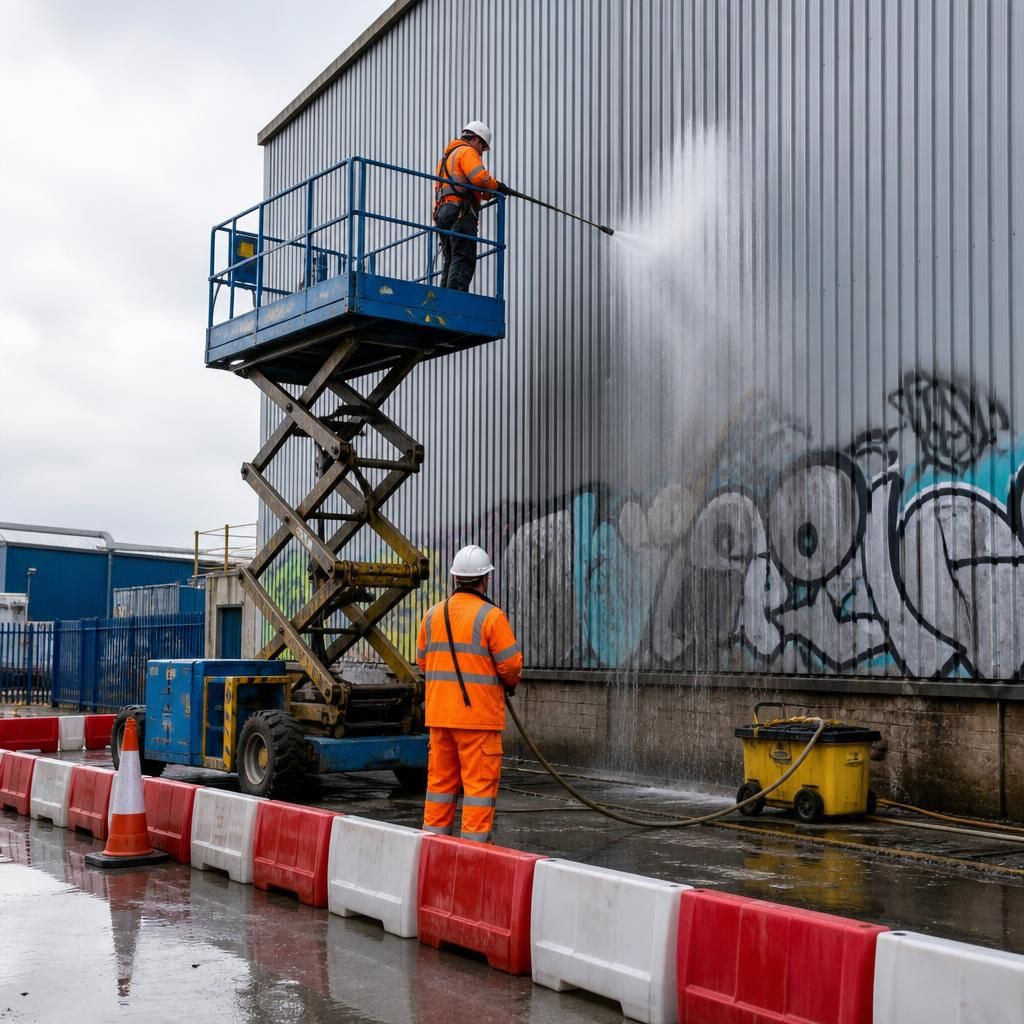
Safe industrial graffiti removal depends on controlling the work area before cleaning begins. Barriers, warning signs and controlled access should prevent pedestrians, vehicles and unauthorised workers from coming into contact with pressurised water, steam, chemicals, debris or falling tools.
Where graffiti is above ground level, the access method must suit the structure and cleaning task. Towers, scaffold systems or powered access equipment should be positioned on stable ground and used by trained operatives. Tools and hoses should be secured, and a suitable rescue plan should be in place whenever harnesses or other fall-protection equipment are required.