
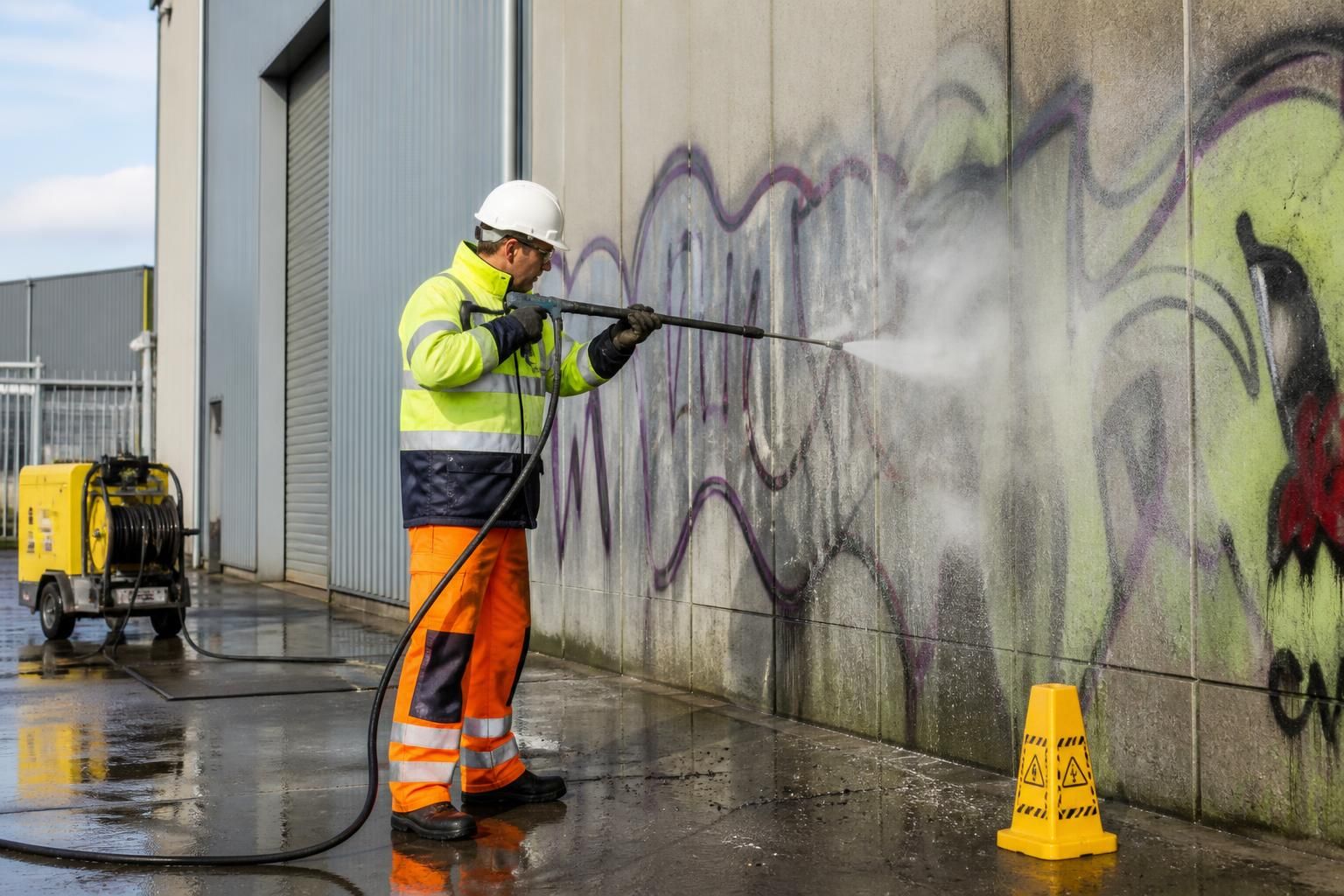
What safety measures are implemented during industrial graffiti removal to protect workers and the environment?
Industrial graffiti removal is carried out with risk assessments, trained operatives, suitable PPE, controlled work areas and safe access equipment to protect workers and the public. Environmental safeguards include selecting appropriate low-impact cleaning methods, containing wash water and paint residues, preventing run-off into drains or soil, and disposing of waste in line with relevant regulations.
Industrial graffiti removal is managed through a planned system of risk assessment, trained operatives, suitable personal protective equipment (PPE), controlled work areas, safe access arrangements and environmental containment. The exact controls depend on the substrate, graffiti medium, cleaning method, site layout, height, nearby public areas and the condition of the surface.
Pre-work risk assessment
Before work starts, the team assesses the site and identifies hazards associated with the graffiti, the building and the proposed removal method. This assessment considers:
- The type of surface, including masonry, concrete, cladding, painted finishes, glazing and sensitive coatings.
- The graffiti medium and any risks from solvents, aerosols, pigments or unknown substances.
- Working at height, fragile surfaces, roof edges, openings and restricted access.
- Vehicle movements, pedestrians, members of the public and other contractors.
- Overhead and nearby electrical services, lighting, plant and machinery.
- Water, chemical or paint residue entering drains, watercourses, soil or neighbouring property.
- Weather conditions, wind, temperature and visibility where outdoor work or access equipment is involved.
The findings determine the method statement, required equipment, exclusion zones, PPE, emergency arrangements and waste controls. If conditions change during the work, the assessment is reviewed rather than continuing with an unsuitable method.
Competent and trained operatives
Graffiti removal is carried out by operatives who understand the cleaning equipment, products and surfaces involved. They are briefed on the site-specific method statement and relevant safety data sheets before using chemical products. Training covers safe handling, dilution and application, pressure-washing technique, steam cleaning, spill response, PPE and the identification of unsafe conditions.
Where the work involves powered access, scaffold, ladders, traffic management or other specialist arrangements, the equipment and activity must be planned and used by suitably competent people. Operatives should not improvise access solutions or combine chemicals unless the product instructions and risk assessment specifically permit it.
Personal protective equipment
PPE is selected according to the hazards identified rather than used as a substitute for safer planning. Depending on the task, this may include protective gloves, safety footwear, eye or face protection, protective clothing, hearing protection and respiratory protective equipment. Respiratory protection may be relevant when spraying products or when the process could create airborne mist, dust or vapour, but it must be suitable for the substance and correctly managed.
Protective clothing also helps prevent contaminated wash water, paint particles and cleaning products being transferred beyond the work area. PPE is checked before use, kept clean and replaced when damaged or no longer provides adequate protection.
Safe access and work at height
Access is selected according to the height, reach, duration and surface conditions of the job. Depending on the site, this may involve mobile elevating work platforms, scaffolding, towers or other approved access systems. Equipment is checked before use, positioned on suitable ground and operated within its specified limits.
Work areas at height are controlled to prevent people or equipment falling. This can include edge protection, harness systems where appropriate, tool tethering, secure platforms and ground-level exclusion zones. Ladders are not treated as a general-purpose working platform where a safer, more stable access method is required. Access equipment is also withdrawn or repositioned if wind, rain or other conditions make it unsafe.
Controlled work areas
Barriers, cones, warning signs and, where necessary, a banksman or traffic marshal are used to separate the cleaning operation from pedestrians, vehicles and other site activities. The exclusion zone is sized to account for spray, falling debris, equipment movement and the risk of material being dislodged from the surface.
Doors, windows, air intakes, vents and nearby equipment may be protected or temporarily isolated to prevent overspray and contamination. The client or site manager is informed about access restrictions, noisy operations, water use and any temporary changes to normal routes. Where industrial premises remain operational, the sequence of work is coordinated with the site’s own traffic and emergency procedures.
Safe use of pressure, steam and chemical products
The cleaning method is chosen to remove the graffiti without unnecessarily damaging the substrate or increasing exposure risks. Pressure is adjusted to the surface and kept under control to reduce splashback, flying debris and damage to joints, coatings or cladding. Operatives maintain a stable stance, use equipment correctly and do not direct jets towards people, live electrical equipment or unprotected openings.
Steam cleaning can reduce the need for some chemicals, but hot water and steam still present burn and pressure hazards. Hoses and cables are routed to prevent trips, and equipment is isolated before maintenance or clearing blockages. Chemical removers are selected for the graffiti and substrate, used at the correct dilution and never mixed without clear manufacturer instructions. Containers remain labelled, closed when not in use and stored securely.
Product safety data sheets are used to confirm handling, first-aid, storage and spill-response requirements. Where a substance creates a risk of exposure, the relevant COSHH assessment is completed and appropriate ventilation, PPE and hygiene controls are put in place. Operatives avoid eating, drinking or smoking in the work area and wash their hands after handling products or contaminated materials.
Protection of drainage, soil and water
Environmental protection begins with preventing contaminated water and removed paint from leaving the controlled area. Before washing starts, drains and other vulnerable routes are identified. Drain covers, drain mats, temporary bunds, booms, wet vacuums, collection points or other suitable measures may be used to contain the slurry and rinse water.
Wash water is not allowed to run into surface-water drains, soil or watercourses unless its discharge has been assessed and is permitted. The team monitors the work area throughout the clean, especially on sloping ground or near drainage channels. Low-water or dry methods may be considered where they reduce the volume of contaminated waste, provided they are suitable for the surface and graffiti.
Nearby vegetation, landscaping, vehicles and building entrances are protected from spray and chemical contact. If a spill or uncontrolled discharge occurs, work is stopped, the source is contained and the incident is dealt with using the site’s spill-response arrangements. Significant incidents are escalated to the appropriate site contact and relevant authorities where required.
Collection and disposal of waste
Removed paint, used absorbents, filters, contaminated PPE and collected slurry are treated as controlled waste where their composition requires it. Waste is kept in suitable, labelled containers and separated where necessary. It is then transferred through an authorised waste route in accordance with applicable UK environmental and waste-management requirements.
Disposal arrangements are considered before the work begins, not after waste has accumulated on site. Records such as transfer documentation may be retained by the contractor or site representative to demonstrate how waste was managed. Waste is never swept into drains, placed in general bins without assessment or left where rain can disperse residues.
Protection of the completed surface and surrounding assets
A small test area is normally used to confirm that the proposed product, temperature, pressure and dwell time are appropriate. This helps prevent unnecessary removal of sound coatings, etching of masonry, colour loss or damage to sealants. Cleaning is stopped if the substrate reacts unexpectedly, and the method is reassessed before proceeding.
After removal, the surface and nearby area are inspected for residue, overspray, loose material and trip hazards. Protective coverings and containment equipment are removed only when they are no longer needed and are checked for contamination before leaving the site. Any defects or pre-existing damage identified during the work are reported to the responsible site contact.
Emergency and site communication procedures
Safe work includes clear arrangements for incidents such as chemical splashes, falls, equipment failure, damaged services, spills or public access into the exclusion zone. Operatives know how to stop the equipment, summon assistance, access first-aid facilities and report the incident. Emergency routes, fire points and muster arrangements are kept clear.
These controls allow industrial graffiti removal to be completed while limiting exposure to chemicals, pressure, heat, traffic, falling objects and contaminated residues. For each project, the final precautions should be confirmed through the site-specific risk assessment, method statement and consultation with the client’s responsible person.
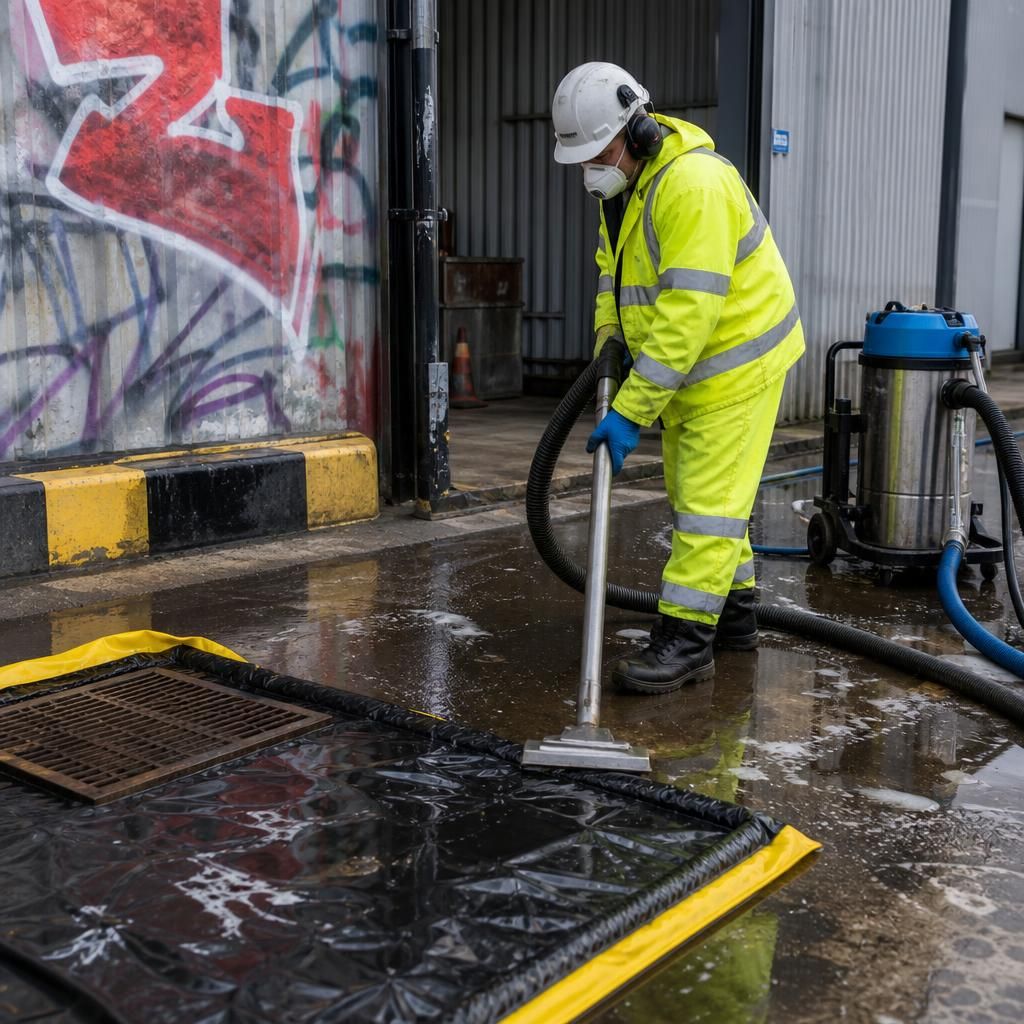
Environmental protection during industrial graffiti removal depends on containing contaminated wash water, paint residues and chemical products before they can reach drains, soil or watercourses. The cleaning team identifies drainage routes in advance and uses suitable controls such as drain mats, temporary bunds, collection points and wet vacuums where required.
Run-off is monitored throughout the work, particularly on sloping ground or near surface-water drains. Collected slurry, used absorbents and contaminated materials are stored in suitable labelled containers and managed through an appropriate waste route. If a spill or uncontrolled discharge occurs, cleaning stops while the source is contained and the site’s spill-response procedure is followed.
Discuss Safe Industrial Graffiti Removal for Your Site
Discuss your site’s graffiti removal requirements with our team so we can review access, surface, environmental and operational risks before work begins. Contact Encanto Exterior Cleaning to arrange a site assessment and agree a suitable method statement.