
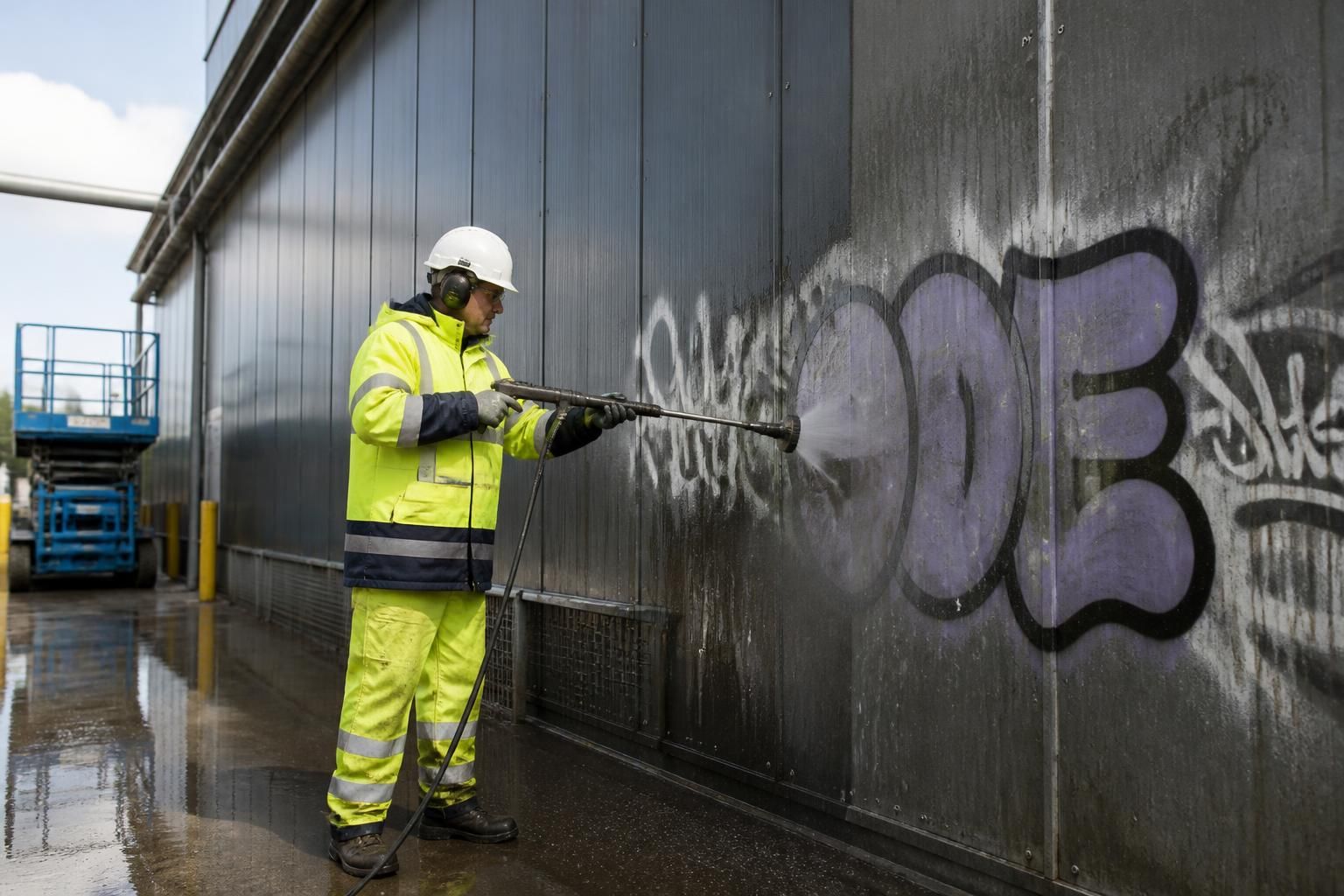
What post-cleaning measures are taken to prevent graffiti recurrence on industrial surfaces?
After graffiti removal, industrial surfaces can be protected with a suitable sacrificial or permanent anti-graffiti coating, selected for the substrate and cleaning requirements. Planned inspections, prompt removal of new marks and repairs to damaged coatings help prevent recurrence and reduce future cleaning effort.
Post-cleaning graffiti prevention on industrial surfaces normally combines a suitable anti-graffiti coating with planned inspections, prompt treatment of new marks and repairs to any damaged protection. The correct approach depends on the substrate, the type of graffiti likely to occur, the surrounding environment and how frequently the surface can be taken out of service.
Applying an appropriate protective coating
Once graffiti has been removed, the surface should be assessed before any coating is specified. It must be clean, dry, sound and free from residues that could affect adhesion. Porous masonry, painted metal, powder-coated cladding, concrete, brick and previously coated surfaces can each require a different preparation method and product.
Anti-graffiti protection generally falls into two categories:
- Sacrificial coatings: These form a removable film that can be stripped away, taking the graffiti with it. The coating is then reapplied after cleaning. They can be appropriate for absorbent masonry and locations where graffiti is removed repeatedly, but they require planned reapplication.
- Permanent or semi-permanent coatings: These create a more durable barrier that allows subsequent graffiti to be removed without replacing the coating after every incident. They are often considered for high-risk areas or surfaces where repeated recoating would be impractical.
The selected system should be compatible with the existing finish and capable of withstanding the cleaning methods needed for future removal. A coating that resists paint but changes the appearance of the façade, traps moisture or reacts with the substrate is not suitable. A small test area is therefore useful before full application, particularly on aged, painted or previously treated surfaces.
Allowing the coating to cure correctly
Protection is only effective when the coating has reached the manufacturer’s specified cure. The surface should be kept free from rain, condensation, dust, traffic and contact during this period. Applying a coating in unsuitable temperatures or damp conditions can result in poor adhesion, clouding, uneven coverage or premature failure. Access restrictions and any temporary protection should remain in place until the treated area is ready for normal use.
Recording the completed work
After cleaning and coating, the treatment should be documented. Useful records include the areas treated, substrate condition, preparation completed, coating system used, visible defects, curing requirements and any limitations on future cleaning. Photographs and marked-up site plans can help maintenance teams identify protected elevations, vulnerable access points and locations needing closer observation.
These records also reduce the risk of using an incompatible chemical or aggressive cleaning method later. If the surface is repaired, repainted or altered, the anti-graffiti protection may need to be reinstated rather than assumed to remain effective.
Introducing planned inspections
Regular inspections help identify fresh graffiti, coating damage and conditions that may encourage repeat incidents. The inspection frequency should reflect the site’s history, visibility, public accessibility and security arrangements. Checks may be incorporated into routine estate, facilities or security inspections and should cover:
- graffiti on the protected surface and nearby unprotected areas;
- scratches, peeling, blistering, staining or areas of coating loss;
- graffiti on doors, shutters, signage, service boxes and other secondary surfaces;
- new damage around secluded entrances, boundaries, loading areas and access routes; and
- lighting, fencing, gates or other site conditions that may affect unauthorised access.
Inspection findings should be logged with photographs, location details and the date identified. This creates a practical maintenance history and helps determine whether protection remains suitable or whether additional security and design measures are required.
Removing new graffiti promptly
Fresh graffiti should be reported and removed as soon as practicable. Delays can allow pigments, binders and solvents to weather into the coating or surrounding substrate, making removal more difficult and increasing the likelihood of staining. Prompt treatment also limits the visual impact and can reduce the time that a site appears neglected.
Cleaning should follow the agreed method for the coating and substrate. Unapproved solvents, abrasive pads, excessive pressure or unsuitable heat can damage the protective layer and create a larger area requiring repair. Where the coating is sacrificial, the affected section may need to be removed and reapplied. Where it is permanent, the surface should still be checked after cleaning for thinning, marking or loss of adhesion.
Repairing damaged protection
Anti-graffiti coatings do not remove the need for surface maintenance. Impact damage, corrosion, building repairs, weathering and repeated cleaning can expose the underlying material. Localised defects should be prepared and recoated in accordance with the system requirements. Larger failures may require removal of unsound material and a more extensive reapplication.
Repairs should blend with the existing finish as far as practicable, but a difference in gloss, colour or texture may be visible. For this reason, the affected area and the repair method should be agreed before work starts, especially on prominent façades or branded premises.
Reducing opportunities for recurrence
Coating is one part of a prevention plan. Practical site measures can reduce access and make repeat incidents easier to detect, including improved lighting, controlled gates, secure service compounds, maintained boundary fencing and removal of objects that provide climbing access. CCTV, monitored alarms or patrols may also be appropriate where the risk justifies them.
Surface and landscape choices can support the same objective. Smooth, well-maintained finishes are generally easier to clean than heavily textured or porous surfaces, while dense planting, physical barriers and suitable protective screens can reduce exposure to vulnerable walls. These measures should not obstruct emergency routes, ventilation, drainage or required access for maintenance.
Reviewing the prevention plan
Repeated incidents should trigger a review rather than simply another cleaning visit. The review should consider the location and timing of incidents, the type of paint or marker used, whether the coating is still performing, the speed of the response and any weaknesses in access control. If the existing system is failing, the answer may be better preparation, a different coating, more frequent inspections or changes to the surrounding site layout.
For industrial premises, the most reliable long-term result comes from treating graffiti protection as planned asset maintenance. A documented coating system, controlled cleaning procedure, regular inspection and prompt repair protect the surface while limiting disruption to operations.
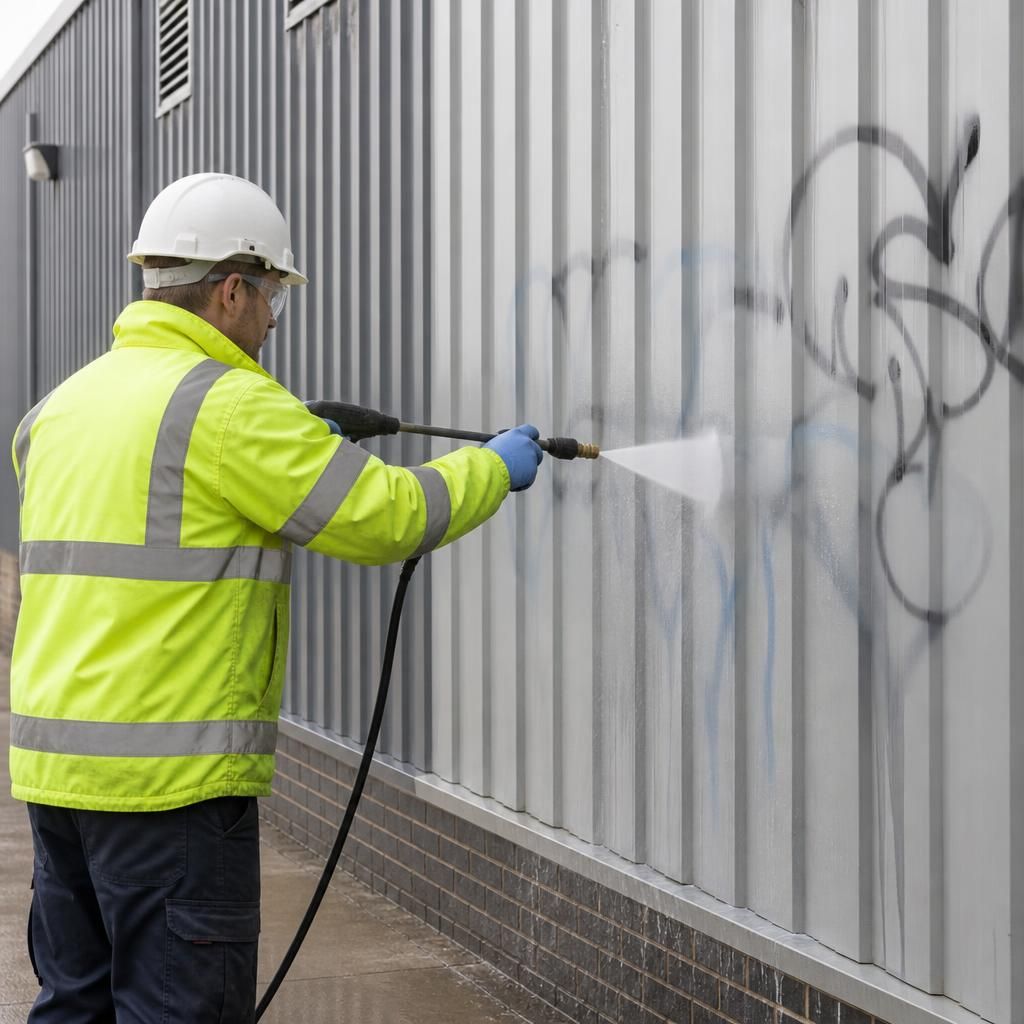
Prompt removal of new graffiti is a key post-cleaning measure because paint and marker residues can become harder to remove as they weather into the coating or underlying surface. A documented response process helps keep industrial premises presentable and limits the area affected by repeat incidents.
Fresh markings should be reported, photographed and treated using the approved method for the substrate and anti-graffiti system. Abrasive pads, excessive pressure or unsuitable solvents can damage the protective coating. After cleaning, the area should be checked for coating loss, staining or adhesion problems, with localised repairs completed where necessary.