
What factors should be considered when selecting a graffiti removal company for industrial sites?
When selecting a graffiti removal company for an industrial site, assess its experience with comparable surfaces and access challenges, cleaning methods, health and safety controls, environmental compliance, insurance and response times. The contractor should also provide a clear scope of work, realistic method statement, suitable equipment and a finish that removes the graffiti without damaging cladding, masonry, coatings or surrounding areas.
The right graffiti removal company for an industrial site should be assessed on its relevant experience, proposed cleaning method, safety and environmental controls, access capability, response times and the clarity of its quotation. The contractor must be able to remove the graffiti effectively while protecting the substrate, nearby assets, site users and drainage systems, with suitable documentation and insurance in place.
Relevant industrial experience
Choose a contractor that has worked on comparable industrial environments rather than relying solely on general domestic or small commercial cleaning experience. Industrial sites may contain large façades, warehouses, boundary walls, loading areas, plant, storage compounds, transport routes and restricted-access elevations. Experience with similar locations helps the contractor identify practical risks, select appropriate equipment and plan work without disrupting operations.
Ask for evidence of experience with the surfaces present on the site, such as:
- Brickwork, concrete and blockwork
- Painted or powder-coated cladding
- Metal shutters, fencing and gates
- Rendered façades and coated surfaces
- Signage, street furniture and hard landscaping
- Previously treated or vulnerable surfaces
Graffiti can include aerosol paint, marker ink, adhesive materials and other coatings, and the best treatment varies according to the product used and the condition of the surface. A competent contractor should not assume that one chemical, pressure setting or abrasive method is suitable for every area.
Quality of the initial survey
A proper assessment should take place before work begins, either through a site visit or a sufficiently detailed remote review where appropriate. The contractor should record the location and extent of the graffiti, identify the substrate and existing coatings, consider nearby hazards and determine how the work can be completed safely.
The survey should also consider whether the graffiti has penetrated porous masonry, whether it overlaps a joint or sealant, and whether previous removal attempts have altered the surface. Test cleaning in an inconspicuous area is particularly important where cladding, painted finishes, delicate coatings or historic masonry are involved. The proposed finish should be agreed before the full treatment starts, as some porous surfaces may retain staining even after the graffiti material has been removed.
Suitability of the cleaning method
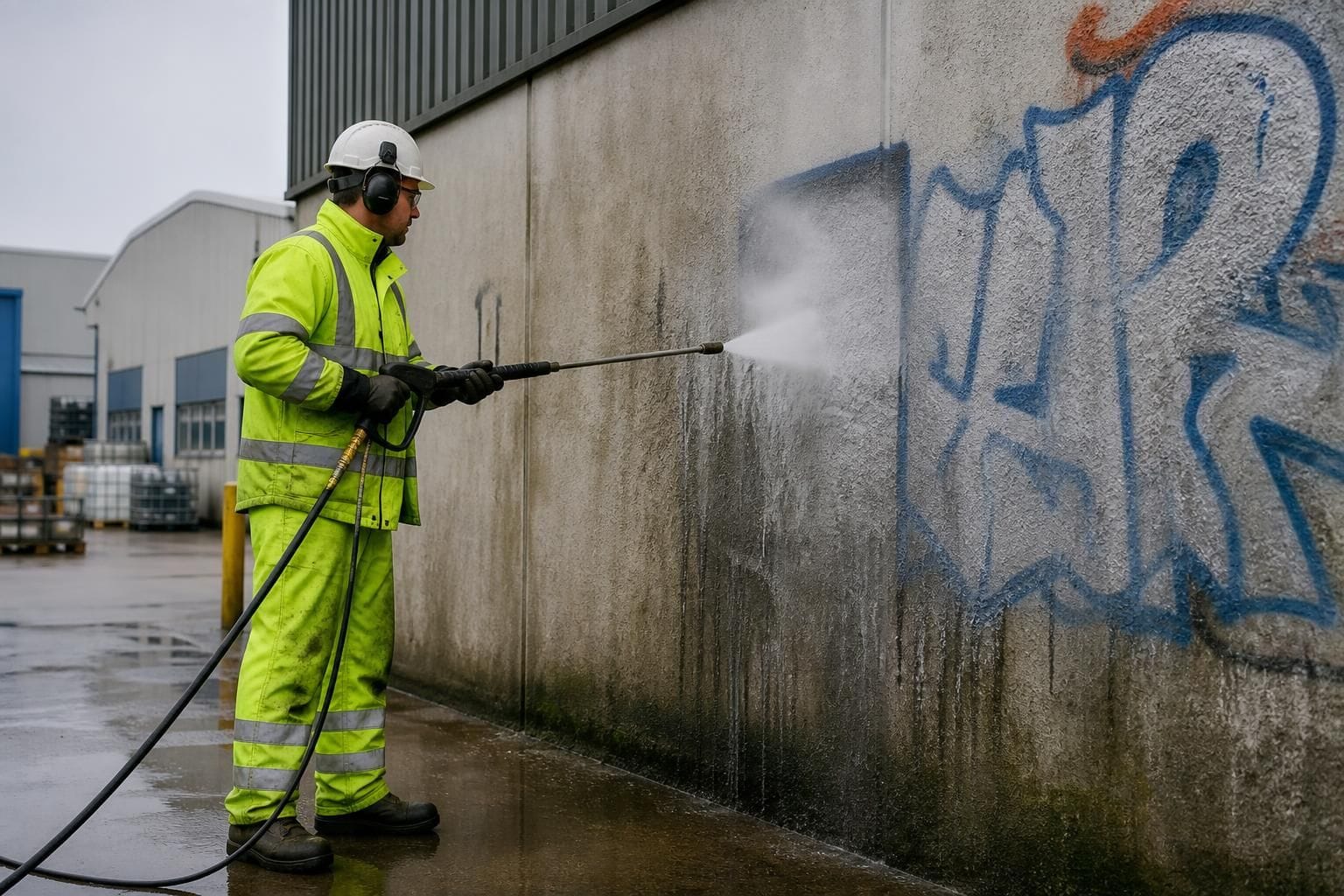
The contractor should explain why its chosen method is appropriate for each surface. Depending on the material and graffiti type, this may involve controlled pressure washing, steam cleaning, specialist chemical treatment, gentle abrasion or a combination of techniques. The method should prioritise removal with the least practical risk of etching, discolouration, coating failure, water penetration or damage to joints.
Pressure alone is not a measure of cleaning quality. Excessive pressure can mark masonry, strip protective coatings, force water into building fabric or damage seals and fixtures. Chemical products also require careful selection, correct dwell times and thorough rinsing. A professional method statement should identify the products and equipment to be used, the surfaces they are suitable for and the controls required around workers, vehicles, plant and occupied areas.
Health and safety arrangements
Industrial graffiti removal can involve work near traffic, operating machinery, electrical equipment, height, contaminated water, chemicals and members of the public. Review whether the contractor can provide suitable risk assessments and method statements, competent operatives, appropriate personal protective equipment and clear site controls.
Depending on the location, controls may include exclusion zones, pedestrian or vehicle segregation, work-at-height planning, access equipment checks, chemical handling procedures and coordination with the site’s responsible person. Where mobile elevated work platforms, towers or other access equipment are required, the contractor should demonstrate that the equipment and operators are suitable for the task and ground conditions. The service should also fit the site’s permit, induction and contractor-management requirements.
Environmental compliance and waste control
Graffiti removal can produce contaminated wash water containing paint residues, cleaning chemicals and dirt. The contractor should explain how run-off will be contained, collected, filtered or disposed of and should not allow contaminated water to enter surface-water drains without appropriate controls and authorisation.
Ask how the company minimises chemical use, prevents overspray, protects soil and planting, and manages waste materials. Environmentally responsible work is not simply a matter of choosing a biodegradable product; the full process, including containment, recovery, transport and disposal, must be considered. The proposed products should also be suitable for the surface and used in accordance with their safety and handling information.
Access equipment and site logistics
Large industrial elevations often cannot be treated effectively from ground level. Confirm that the contractor has access to suitable equipment, such as mobile elevated work platforms, long-reach systems or other specialist methods, and that the approach is compatible with the ground surface, overhead obstructions, loading bays and operational routes.
Access planning should cover equipment delivery, positioning, noise, water supply, power, drainage, working hours and the protection of stock, vehicles and machinery. A contractor that identifies these issues before issuing a quotation is more likely to provide a workable programme and avoid delays once on site.
Response times and ongoing availability
For industrial premises, graffiti may affect security, corporate presentation, tenant relationships or public perception. The contractor’s response process should therefore be clear. Establish how reports are received, how urgent work is prioritised, whether site surveys can be arranged promptly and how planned maintenance or repeat call-outs are managed.
Do not assess response time in isolation. A rapid attendance is of limited value if the contractor arrives without the correct access equipment, treatment products or controls. The best arrangement balances prompt mobilisation with enough preparation to deliver safe and technically appropriate work.
Scope of work and quotation
A written quotation should state exactly what is included. It should identify the areas to be cleaned, the expected level of removal, the proposed method, access arrangements, preparation, protection of surrounding surfaces, waste-water management and final inspection. Any exclusions or assumptions should be made clear, particularly where staining may remain in porous materials or where repainting could be required after removal.
Compare quotations on the complete scope rather than the headline price. A low quotation may omit access, containment, traffic management, testing, waste disposal or remedial work. Ask whether the price is fixed, what could lead to additional charges and how changes will be approved before extra work is carried out.
Insurance, competence and documentation
Check that the company carries appropriate public liability and employers’ liability insurance and can provide evidence when required by the site’s procurement process. Depending on the project, you may also need training records, equipment inspection information, product safety documentation and relevant contractor accreditation or pre-qualification evidence.
Documentation should support the work rather than replace practical competence. The contractor’s site team should understand the method statement, know how to respond to unexpected surface damage or chemical exposure and communicate effectively with the person responsible for the industrial premises.
Inspection, reporting and aftercare
Agree how the completed work will be checked and reported. A useful completion record can include the areas treated, any limitations, products used, photographs where appropriate, waste-handling information and recommendations for protective coatings or future maintenance. The contractor should report pre-existing damage or defects rather than presenting them as a cleaning failure.
Where recurring graffiti is a concern, ask whether the company can advise on sacrificial or permanent anti-graffiti protection, improved lighting, surveillance, access control and a planned inspection regime. Preventive measures should be selected for the particular substrate and operating environment, and they should not be treated as a substitute for correct removal.
Before appointing a contractor, ask for a site-specific method statement, evidence of comparable work, confirmation of insurance, details of the cleaning and run-off controls, an explanation of access arrangements and a fully itemised quotation. These checks provide a practical basis for selecting a company that can deliver a clean, compliant finish without creating avoidable risks or damage to the industrial site.
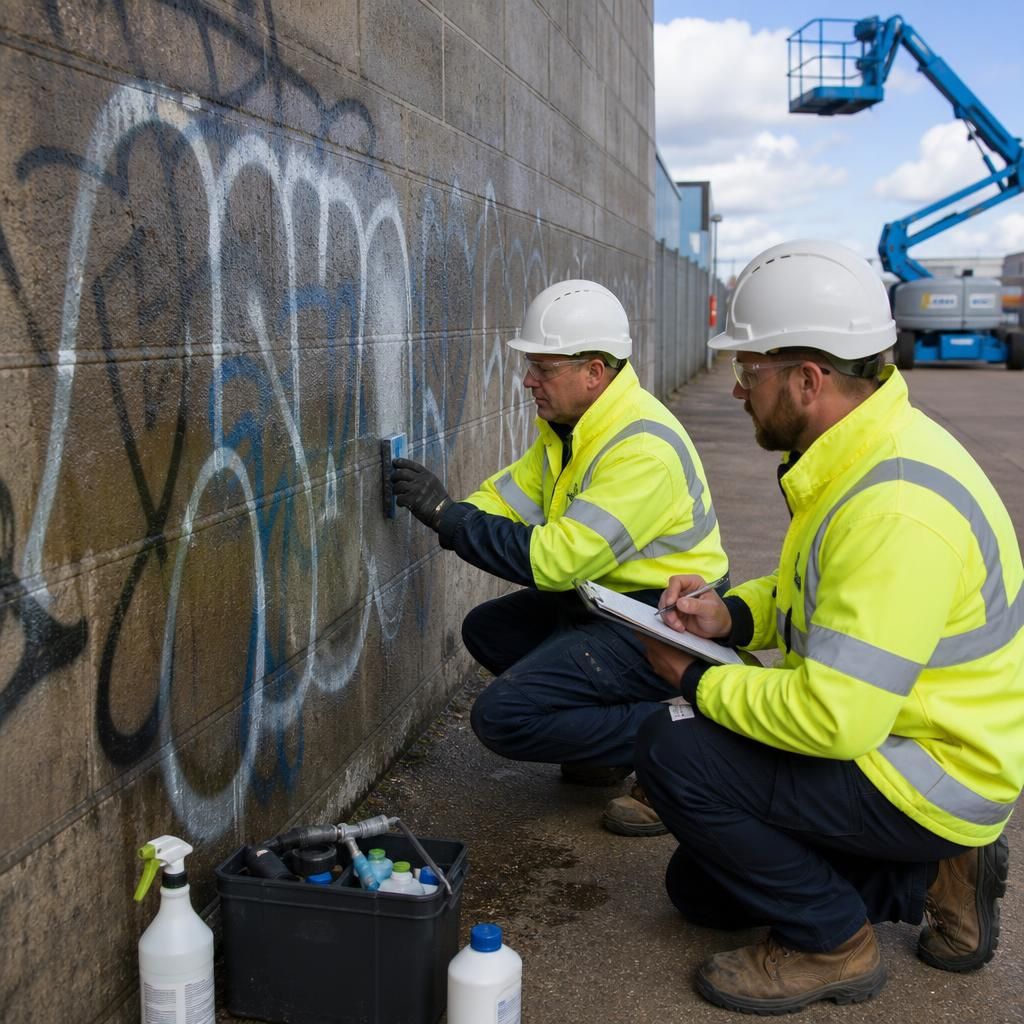
A site survey and test clean are essential when selecting a graffiti removal company for an industrial site. Before recommending a treatment, the contractor should identify the graffiti material, assess the substrate and coatings, and check for nearby hazards, drainage points and access restrictions.
Testing an inconspicuous area helps confirm that the proposed pressure, steam, chemical or abrasive treatment will remove the graffiti without etching masonry, discolouring cladding or lifting protective coatings. The contractor should explain the expected finish, record any limitations on porous surfaces and include the agreed method and protection measures in a site-specific quotation.